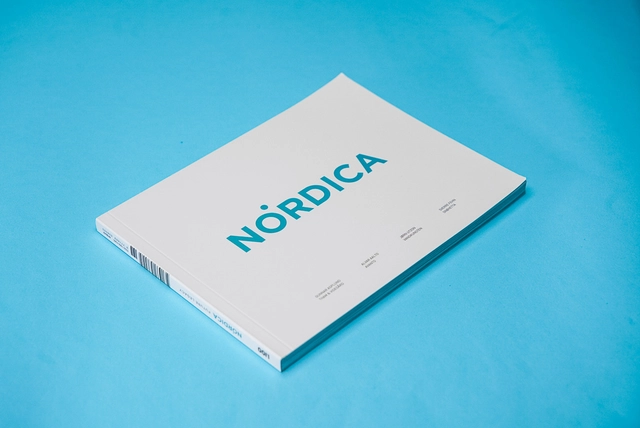
The inspiration that the masters of modern architecture in Sweden, Finland, Denmark, and Norway drew from their places of origin, combined with the experience they gained during their travels around the world, sparked a radical shift in history known as Nordic Architecture.
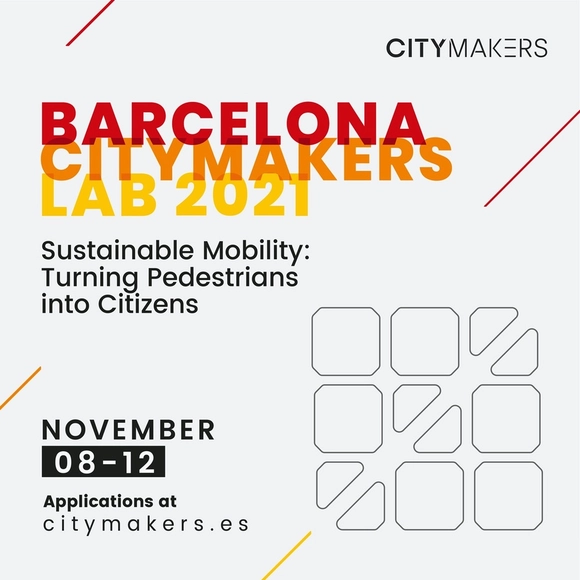
In collaboration with ArchDaily and as part of the "Support for Young Professionals in Emerging Countries" program, CityMakers is offering ArchDaily and Plataforma Arquitectura readers the opportunity to secure a spot in the Barcelona Lab 2021—Sustainable Mobility: Turning Pedestrians into Citizens, taking place from November 8 to 12, 2021, in Barcelona, with a 40% scholarship.
The ability to develop new advanced solutions in architecture, construction, urbanism, and design will be fundamental to responding to the challenges posed by the current crisis. A commitment to innovation and the education of professionals and students toward new models represents a key element in driving radical change, providing tools for the professionals of tomorrow.
With a career focused primarily on the public sector, Cristóbal Tirado is the architect behind major projects throughout Chile, such as the renovation of the Mercado Providencia, the Aysén Regional Museum, the International Antarctic Center, the restoration of the Valparaíso elevators, and the remodeling of Plaza Sotomayor in the same city, among others. These are projects in which he has participated through competitions or public tenders.
Today, more than half of the world's population lives in urban areas, a process of sustained growth that has persisted in cities and materialized through their expansion. This phenomenon is expected to intensify in the coming years due to several factors, including the concentration of capital, services, facilities, and infrastructure, which has fostered the perception of the city as a place of «opportunity».
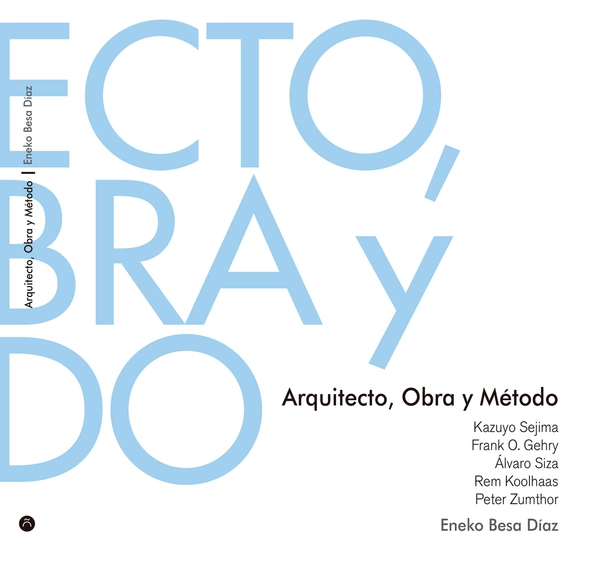
This book approaches the question of method in architecture by focusing its analysis primarily on five specific works from the contemporary scene, attempting to unveil the underlying motivations that constitute them.
This book is a study of the relationship between architecture and painting through the work of Francisco Méndez Labbé, a pioneer of non-figurative abstract art in Chile and co-founder of the Institute of Architecture at the Pontificia Universidad Católica de Valparaíso. Méndez Labbé transitioned to painting after training as an architect, at a time when the arts and architecture in Chile were navigating a complex period of integration into the modern art debate.
The house has evolved from an individual concern into the built element with the greatest impact on the planet. In this study, Fernanda Canales analyzes the evolution of this space over the last two centuries through projects, exhibitions, and books that have transformed ways of living toward a collective understanding of housing.
In almost every civilization, the garden, much like paradise, has always been an enclosed space—a landscape factory designed to project and embody ideals of life. However, in the 20th century, the garden transcended its enclosure, giving way to ecology and, with it, a different form of boundary. The garden shifted in scale, becoming planetary.
“The desert has enslaved me, and I am happy to say that I am still astonished to find that this is so,” writes Reyner Banham in this book, one of the last he wrote during his lifetime, not in his usual role as an architectural historian, but as a “desert fanatic”—a visitor intrigued and bewildered by the arid lands of the American Southwest.
In this book, French architects Anne Lacaton and Jean-Philippe Vassal, winners of the prestigious 2021 Pritzker Prize, present their work through three concepts, each illustrated by a specific type of content. In a conversation with Enrique Walker, they explain the thinking behind their entire body of work, particularly through one of their most significant projects: the Palais de Tokyo in Paris.
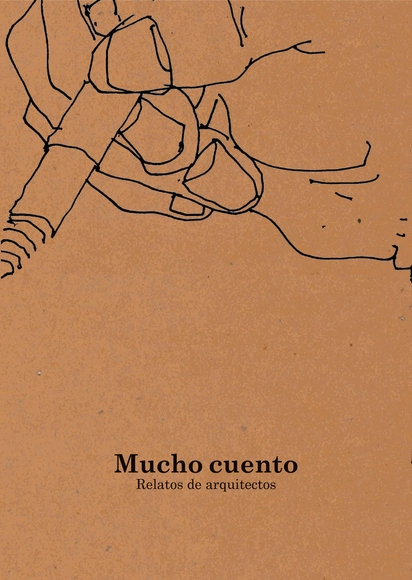
"Mucho cuento: Relatos de arquitectos" brings together 20 stories by prominent figures in the Ibero-American architectural scene, offering a completely new perspective on them—through fiction. The collection includes pieces that border on surrealism, fable-like narratives, first-person accounts, drama, comedy, utopias, an epistolary story, mythology... and, of course, the occasional reference to architecture.
In antiquity, architects sought to defy the passage of time through their solid constructions. This chimera was challenged at the beginning of the 20th century by the Futurists' concept of planned obsolescence: “Houses will last less time than we do... Each generation must build its own city.”
This text explains how time has become an active material in the work of the contemporary architect. Architecture, like music, literature, or film, is a temporal discipline. We will see how, during the Renaissance, architecture became aware of its own history. We will also see how, with Palladio, the printed page became a more effective medium for conquering the future than the built reality itself. However, the true shift arrived in the 20th century, when a new temporal consciousness—infiltrating from the sciences, the arts, and the media—began to transform architectural discourse in the second half of the century. From the assimilation of space-time to the cinematic time-image or the spectacular time of capitalism, the author proposes a journey through the multiplicity of time, which inevitably reverberates in contemporary architecture.
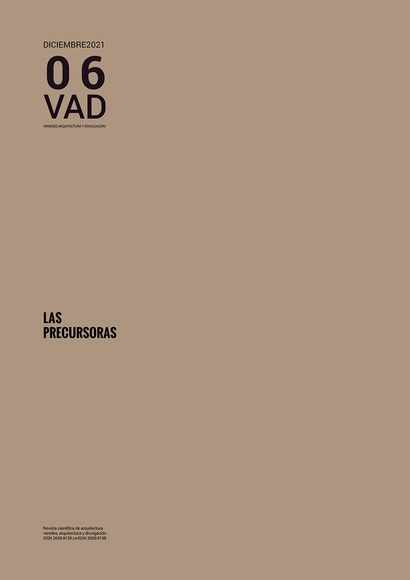
Women have pioneered new ways of practicing, not only by specializing in peripheral and often transdisciplinary subjects but also by proposing new forms of business organization that generally facilitate a better balance between professional and personal life. These working methods, in the face of a reassessment of production and business models, as well as workplaces and schedules, are fundamental to addressing the challenges of a profession that—in the midst of an internal transformation—is confronting the need for economic, social, and environmental sustainability.
"The City Inside the House" is a collection of essays by various authors written during the 9th edition of the URBANBATfest architecture, urbanism, and social innovation festival. The experience of lockdown—spending so much time in our homes—has forced us to focus on the domestic sphere, a concept that has gained particular relevance in current reflections, research, projects, and public policy.
Opportunity is a decidedly optimistic, positive word that brings to mind that ideal moment when everything is possible. However, it also has a dark side, as it is frequently linked to the negative concept of crisis. This duality seems to be an essential condition for defining the value of an opportunity as inversely proportional to that of its opposing crisis. In this sense, the proposal of VAD could not be more relevant at a time when we, as a society, are facing one of the greatest and most universal crises in living memory.