For this issue of Dearq, "The Spatial Dimension of Urban Mobility," we are seeking contributions that critically analyze the interrelationships between urban mobility, space, and the territorial dimension, while considering social dynamics and environmental aspects. We place special emphasis on understanding how mobility practices, policies, and projects interact with the built environment and contribute to producing—or transforming—urban and regional landscapes.
For this issue of Dearq, "Tectonic Matter," we are seeking contributions that address tectonics not as a style or a fetishization of detail, but as a rigorous field in which the material realities of architecture—such as provenance, craft, labor, structural systems, fabrication protocols, and performance criteria—become inseparable from how space is perceived, inhabited, and understood. Who can participate: We welcome contributions from architects, historians, theorists, engineers, educators, and researchers addressing this theme. Interdisciplinary approaches and perspectives from specific contexts are encouraged, provided they remain anchored in tectonics as a conceptual and practical field of architectural invention. The editors invite submissions of research articles, case studies, visual essays, and projects, provided they are original, unpublished, and comply with the journal's editorial policy. Guest Editors: Nader Tehrani (The Cooper Union, USA) Julián Palacio (The Cooper Union, USA) Rafael Villazón (Universidad de los Andes, Colombia) Submission period: April 17, 2026 – August 30, 2026 Issue publication: September 2027 (Dearq 49) More information: https://revistas.uniandes.edu.co/index.php/dearq/callforpapers
The Museum of Contemporary Art of Panama (MAC Panamá) announces the launch of an international architecture competition for the design of its new headquarters, an initiative that marks a milestone in the institution's history and in Panama's cultural projection within the Latin American context.
Promotional poster for the Professional Qualification Course in Modern Architecture Conservation. Credit: Ascom COC Fiocruz
This professional qualification course aims to enable architects and urban planners to work effectively in the conservation of recent heritage, strengthening professional practice in the preservation of architectural, urban, and landscape heritage. In this edition, the course focuses on reinforced concrete construction systems and their application in modern buildings.
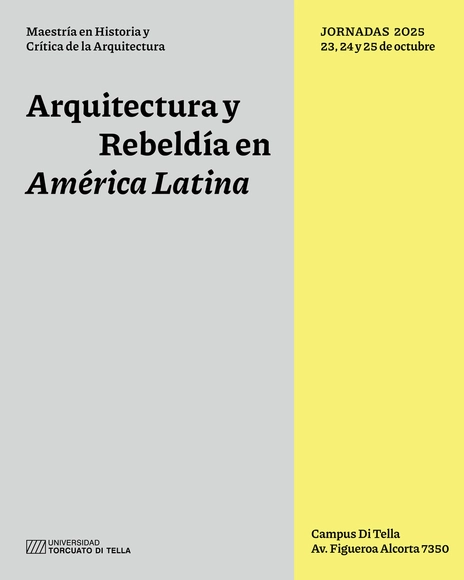
2025 Conference on the History and Criticism of Architecture | ARCHITECTURE AND REBELLION IN LATIN AMERICA. Alternative pedagogical experiences; from "everything is political" to "disciplinary autonomy"; 1963–1983. Organized by: Master’s Program in the History and Criticism of Architecture.
Colors can define atmospheres, shape spatial perception, and translate ways of being, memories, and collective affects. Consequently, understanding them has become an essential part of contemporary creative and constructive processes. Behind every shade lies a field of research that bridges sociology, psychology, aesthetics, and technology, connecting color to broader cultural shifts and revealing how it can serve as a tool for reading and expressing the present.
The ground we walk on is composed of layers of history buried over time: infrastructures, vegetation, animals, and human beings who inhabited these territories form a collection of sedimented layers and historical deposits that combine with geological layers from deep time. This interrelation between the artificial and the geological is especially evident in the forgotten infrastructures buried beneath our cities. How can we unearth both the memory and the material evidence of these? And what does this tell us about what we have collectively forgotten?
An architectural award serves as a legitimizing mechanism, indicating which approaches, materials, and strategies are beginning to take center stage in the discipline's discourse. By bringing together projects with different programs, scales, and constraints, these initiatives bring to light emerging priorities and directions in the field. Within this context, the Shaw Contract Design Awards have established themselves as a global recognition platform for interior design and a barometer of the transformations reshaping the discipline, prompting reflection on the role of design in building more responsible, inclusive, and sustainable environments.
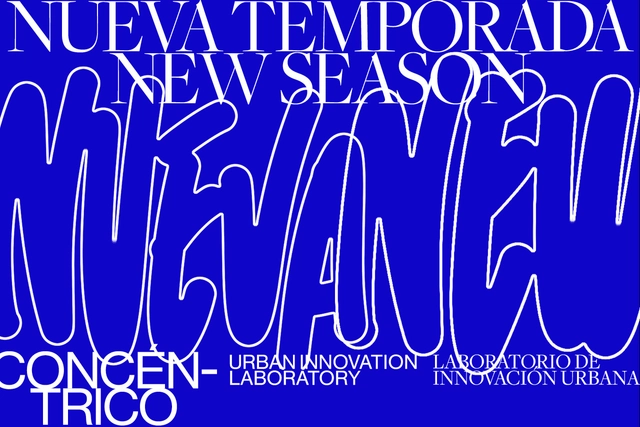
Concéntrico begins its 2025/2026 season by reinforcing its role as an Urban Innovation Laboratory, a collective creative space that explores how architecture, design, and art can transform urban life.
The Secretariat of Culture, Economy and Creative Industries of the State of São Paulo (SCEIC-SP), in partnership with the Institute of Development and Management (IDG)—manager of CULTSP PRO, a professional qualification, innovation, and sustainability program—and the Pinacoteca Art and Culture Association (APAC), is hosting an in-person, free lecture on December 9, 2025, at 7:00 PM, featuring designers Levi Girardi and Mario Fioretti on the topic "Behind the Scenes of Iconic Industrial Design Projects in Brazil." The event will take place at the Questtonó / QNCO office in the Pinheiros neighborhood of São Paulo.
First Prize Winner: Seeds in Forgotten Soil. Image Courtesy of Buildner
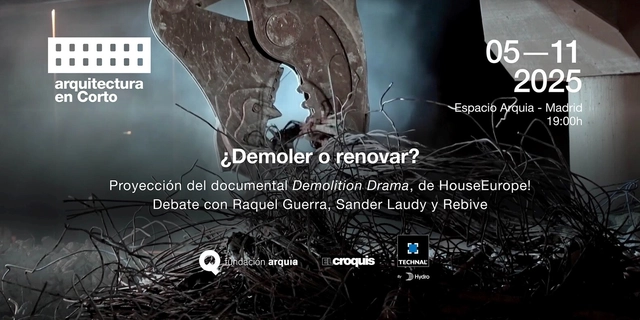
Buildner has announced the results of its Re-Form: New Life for Old Spaces, second edition, an international ideas competition examining the adaptive reuse of small-scale existing buildings. The competition invited architects and designers to propose transformations of used, abandoned, or overlooked structures with an approximate footprint of 250 square meters, located anywhere in the world. With no fixed site or program, participants were encouraged to explore alternatives to demolition and new construction through reuse strategies grounded in contemporary social and environmental concerns.
This workshop is not only a great opportunity for professionals and students from various fields interested in Technical Assistance for Social Interest Housing (ATHIS), but it is also the first in a series of workshops across several states aimed at expanding the ATHIS Network, which began in São Paulo with the "Vivência em ATHIS para Melhorias Habitacionais" course. This network seeks to promote this practice, facilitate information exchange, and provide support to those involved through the "Arquiteto de Família" (Family Architect) methodology.
This workshop is an excellent opportunity for professionals and students from various fields who have an interest in Technical Assistance for Social Interest Housing (ATHIS).
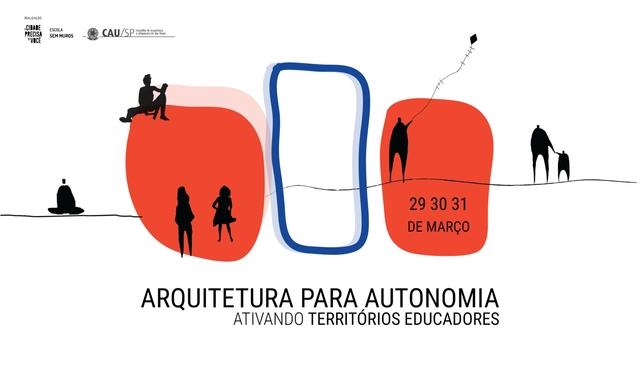
Architecture has always been a tool for power: political institutions, economic symbols, and religious monuments. Asymmetric and dominant relationships still persist in the profession's modes of production, whether on the construction site or in the design process. What would it look like to use architecture as an instrument for decentralizing power and fighting for the right to the city through community initiatives? In general, the management model for cities, public spaces, and facilities does not allow for shared, participatory management by the population. What, then, does it mean to conceive of an architectural practice that fosters autonomy?
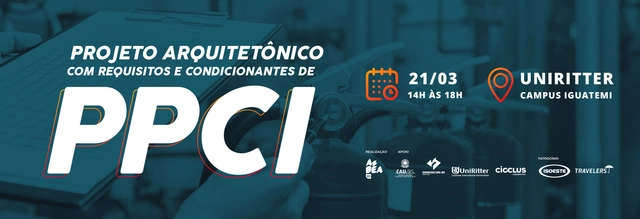
Seminar: Architectural Design with PPCI Requirements and Constraints. This seminar is based on questions submitted by AsBEA-RS members, which were previously forwarded to the Fire Department. We will also address the issues of civil liability and safe, sustainable construction. We appreciate the opportunity.