Rene Submissions

BROWSE ALL FROM THIS AUTHOR HERE

Risk: What Is It Worth In Architecture?

What is risk worth? Architecture is inseparable from uncertainty—sometimes embraced, sometimes resisted, but always present. We invent bold forms that may fail. We propose brighter futures that may falter. To practice architecture is to take on risk—with capital, with reputation, with the city, with the lives shaped inside it. For the innovator, risk is agency, progress, recognition, and the chance to improve lives. For those who mitigate risk, it’s value is inseparable from the scaffold that protects progress from catastrophe. For those outside the conventional practice, such as architect-developers, design-builders, and others, risk is currency, the price of control. Each stance reveals a different measure of what risk means and what makes it worth taking. These tensions will enliven the conversations at the heart of this event.

Call for Films

CALL FOR FILMS 2026
▶︎ 18th Budapest Architecture Film Festival (2026)
▶︎ organised by KÉK – Contemporary Architecture Centre

Open Call: Show Garden Competition for Seoul International Garden Show 2026

The Seoul Metropolitan Government is hosting the 'Show Garden Competition for Seoul International Garden Show 2026' to discover creative garden designs as a way to promote urban garden culture as everyday art. We look forward to receiving submissions by garden designers of great caliber.

Faveker’s Tailor-Made Tiled Facade Brings Personality and Efficiency to the New Muskiz Secondary School

 | Sponsored Content

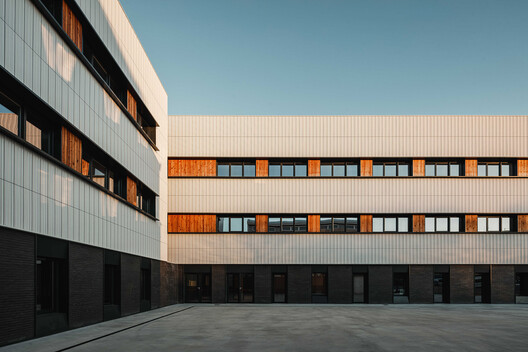
The new Muskiz Secondary School building (Vizcaya), designed by BAT Architecture studio, has become a leading symbol of sustainable architecture for educational centers. Designed in accordance with Passivhaus criteria and built using cross-laminated timber (CLT), the project combines innovation and comfort with environmental care.

In this equation, Faveker's tiled ventilated facade, tailor-designed using its GA16 system as a basis, plays a key role. This precise, luminous tiled skin enhances the building's energy efficiency and infuses it with a unique architectural personality that harmonizes with the surrounding natural setting.

Faveker’s Tailor-Made Tiled Facade Brings Personality and Efficiency to the New Muskiz Secondary School - Image 2 of 4
© Aitor Estévez
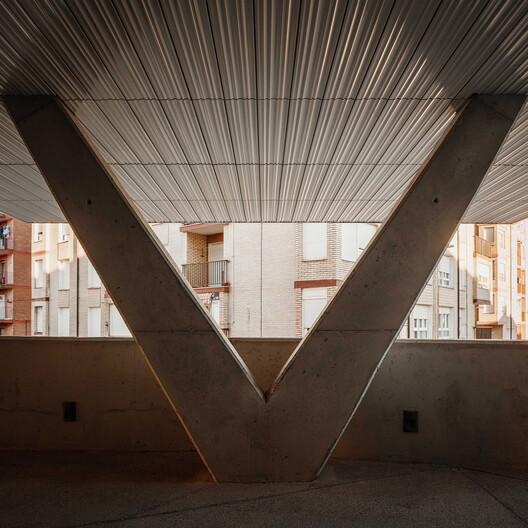
Faveker’s Tailor-Made Tiled Facade Brings Personality and Efficiency to the New Muskiz Secondary School - Image 3 of 4
© Aitor Estévez

Architecture at Zero 2026

Architecture at Zero is a design competition for decarbonization, equity, and resilience, open to students and professionals worldwide. It serves to engage the fields of architecture, design, engineering and planning in the pursuit of sustainable design.

Chaos White Paper Reveals How AI Is Transforming Roles, Risks, and Skills in Architecture

 | Sponsored Content

Nearly three years after artificial intelligence captured the world's attention, architecture is still searching for stable ground in the conversation. Between confident claims and cautious trials, many professionals still question whether—and how—AI is truly changing everyday practice.

A new white paper from Chaos addresses this through practitioner interviews and in-depth internal research, revealing how the technology is beginning to reshape productivity, authorship, and creative identity across the industry.

The white paper offers a closer look at where AI creates value, where it falls short, and how architects can navigate what comes next.

Exploring the New Technical Zone and Immersive Light Installations at LiGHT 25

 | Sponsored Content

Dedicated to high-end lighting specification, the UK's trade show LiGHT 25 will return to the Business Design Center in Islington, London, on November 19–20, 2025. Following LiGHT 24, which attracted more than 5,500 visitors, this year's edition will feature an expanded program of innovation, education, and networking opportunities. Key highlights for 2025 include the introduction of the Technical Zone, the return of the Associations Lounge, and a new large-scale immersive light art installation.

NASA India GSen Trophy

Pilgrim Towns, Civic Grounds: 3rd and Final cycle of the GSen Trophy is out now!

Industrial Design Trophy

This year’s Industrial Design Trophy invites students to design futuristic, sustainable products or spaces that merge art, technology, and ecology. Centered on the theme Catalyse, the competition challenges participants to imagine how design can shape life in 2035 and beyond where culture, technology, and sustainability coexist. It’s a call to create innovative, human centered solutions that inspire change and redefine the future of design.

Design with Curves: The Ultimate Fluidity Challenge

Introduction

Paradise in Silver Lake - Courtyards, Dingbats, and Density Dreams - Free Self Guided Architectural Trail Map

Each month, Friends of Residential Treasures Los Angeles (FORT: LA) curates a new self-guided trail, inviting Angelenos to explore the city’s rich architectural heritage. These immersive experiences highlight significant homes, hidden gems, and the designers who have shaped Los Angeles' built environment.

International Architecture Biennial of Antalya (IABA)

Back in the City After Eight Years

Designing for Climate - The Classroom of the Future

Event on Friday, 7th November 2025, 12:00 Noon (UTC+0)

Kreative Talk with Peter Murray OBE

Artificial Kreativity presents Kreative Talks with Peter Murray OBE
Kreative Talks are the stories behind the creatives and how they are shaping the world.

Deconstruct a Landmark: Call for Entries

Deconstruct a Landmark
Open Call for Students and Young Professionals

How Do You Make Every Step Count? Buildner Announces Stair Competition Winners and Launches New Edition

 | Sponsored Content

Buildner has announced the results of its international architecture ideas competition, Architect's Stair, and the launch of its third edition.

The event invited designers to reflect on one of architecture's oldest and most symbolic elements: the stair. Beyond its functional role as a connector of levels, the stair was positioned here as a medium of architectural storytelling—an invitation to explore ideas of procession, sequence, space, and form.

For this first edition, participants were asked to conceptualize a stair not as a technical solution but as an expressive artifact—an embodiment of their design sensibility and architectural values. There were no constraints on site, scale, material, or program. Instead, designers were challenged to reimagine the stair as a sculptural, poetic, and even philosophical construct—one that could provoke, question, or elevate our understanding of vertical space.