Rene Submissions

BROWSE ALL FROM THIS AUTHOR HERE

Open House Stockholm 2024

This year's edition of Open House Stockholm will take place from October 4 to 6, 2024, and expand its scope to showcase a wider variety of architectural sites across Greater Stockholm, offering a unique opportunity to explore both contemporary and historic buildings. The festival offers access to diverse spaces that are typically closed to the public, bridging the gap between modern architectural developments and historical landmarks.
"Open House Stockholm creates a unique forum where experts, decision-makers, and an interested public can meet and discuss the city's history, present, and future. It is a democratic piece of the puzzle in the development of our city," says Executive Officer Joanna Messmer.
The festival's program is thoughtfully curated to include a variety of building types — from newly constructed sites that highlight modern architecture to well-preserved historical landmarks that reflect Stockholm's past. It features functional spaces such as residential buildings, hospitals, and churches, alongside cultural venues like art galleries and theaters. Recognizing the importance of engaging diverse communities, the festival has extended into the Greater Stockholm area, allowing for broader audience participation.
As part of the Open House Europe 2024 programme, which focuses on accessibility and inclusion, a key component of this year's festival is its focus on inclusivity and providing a platform for diverse perspectives. For example, parks have been included in this year's program to create spaces where architecture, play, and learning intersect, particularly for our younger audiences. Additionally, an audio tour will be available during the festival weekend, offering insights into architecture and urban planning from an LGBTQ+ perspective, exploring how different groups experience and interact with the city.
Explore the full programme of the festival at openhousestockholm.com.
Open House Stockholm is part of the Open House Europe cooperation project, co-funded by the European Union. The project seeks to embrace a more inclusive debate about architecture and strengthen the role of architecture as a positive change-maker, addressing relevant social and environmental challenges. For more information about the project, visit openhouseeurope.org.
Open House Bilbao 2024

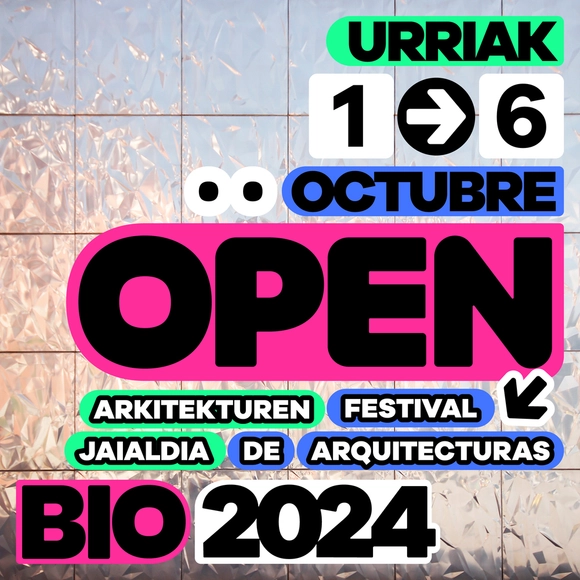
From October 1 to 6, Open House Bilbao returns with an exciting programme that invites the public to explore the city's rich architectural landscape through fresh and innovative lenses. This year, the festival embraces an open, inclusive approach, showcasing architecture in all its forms—from traditional spaces to new, unconventional practices that reflect the changing face of the profession.
The 8th edition of Open House Bilbao seeks to expand the public's understanding of architecture by highlighting its diversity. The festival will explore how the profession has evolved since the 2008 economic crisis, offering visitors the chance to engage with hybrid, sustainable, and participatory approaches to design. By featuring architectural practices that focus on community, ecology, and creative innovation, the festival aims to expand the public's view of architecture, showcasing not only iconic buildings but also lesser-known projects that challenge and diversify the traditional narrative of the field.
This year, Open House Bilbao introduces a range of activities designed to engage participants of all ages and backgrounds. The festival's programme is structured around six key actions: WALK, TALK, DESIGN, PLAY, SEE, and VISIT. Visitors can embark on thematic urban walks that explore the relationship between neighbourhood design and community life or join family-friendly tours that use play to explore Bilbao's architectural heritage. Creative workshops and exhibitions will offer additional ways to engage with the city's built environment.
As part of the Open House Europe 2024 programme, which focuses on accessibility and inclusion, Open House Bilbao places a strong emphasis on these issues. From guided walks led by experts in social design to creative workshops on inclusive urbanism, the programme is designed to engage participants from all walks of life. The interactive workshop 'Rethinking School Playgrounds' will explore the importance of inclusive and healthy educational spaces, while the discussion 'Ladies Make the City' will focus on the vital role women play in architecture, urban planning, and design.
As always, visitors will have the opportunity to explore over 70 architectural spaces throughout the city, including new additions to the festival's catalogue. Guided tours, many of which require no prior registration, will provide a unique chance to learn more about the city's architectural treasures, from contemporary buildings to historically significant sites. Special visits to peripheral areas and emerging local studios will also offer a behind-the-scenes look at the challenges and opportunities faced by today's architects.
Open House Bilbao 2024 celebrates architecture's diversity, innovation, and potential to transform communities. With a wide variety of events, tours, and activities, there's something for everyone to enjoy. Don't miss your chance to explore Bilbao's architectural heritage and discover new ways of thinking about the spaces we live and work in. Explore the full festival programme at openhousebilbao.org.
Open House Bilbao, organised by Asociación Open Urbanity, is part of the Open House Europe cooperation project, co-funded by the European Union. The project seeks to embrace a more inclusive debate about architecture and strengthen the role of architecture as a positive change-maker, addressing relevant social and environmental challenges. For more information about the project, visit openhouseeurope.org.
AMT 2025 Architectural Material Technologies Commons

The "Architectural Material Technologies Commons" conference aims to revolutionize our approach to material responsibility in architecture and design. By focusing on novel, regenerative, resilient, indigenous, and traditional materials, AMT2025 seeks to foster sustainable practices that respect our environment, honor cultural heritage, and empower practitioners through the democratization of knowledge and skills.

Water is Coming

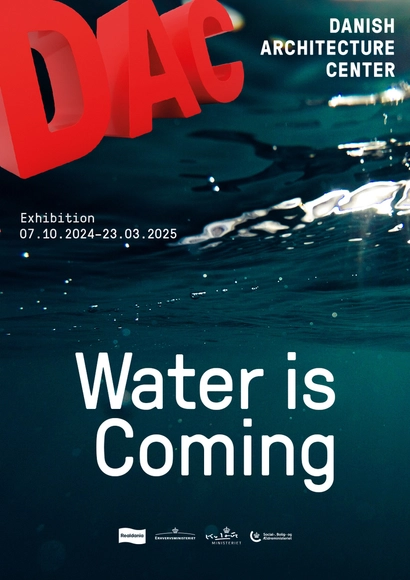
New Exhibition at Danish Architecture Center Water is Coming

FLUX: Architecture in a Parametric Landscape

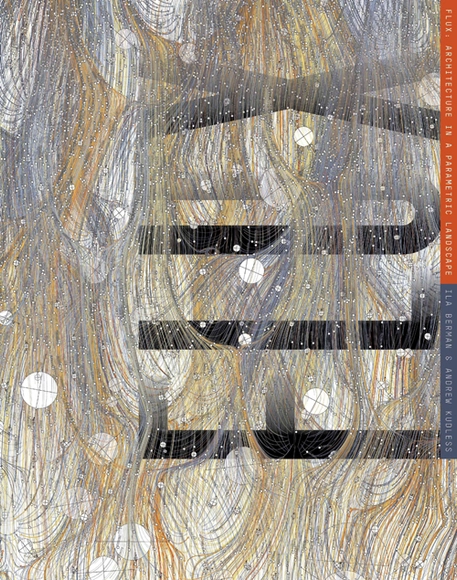
‘FLUX: Architecture in a Parametric Landscape’ focuses on the radical evolution of computational and material technologies that, during the last 25 years, have catalyzed one of the most creative and prolific periods in architecture since the early 20th century. The widespread uptake of computational tools did not yield a singular architectural or urban typology despite the sharing of genetic traits derived from the use of common tools, methods and even materials. Rather, the heterogenous products of this period, organized in this book through a taxonomy of eight themes—Stacked Aggregates, Modular Assemblages, Pixelated Fields, Cellular Clusters, Serial Iterations, Woven Meshes, Emergent Surfaces, and Multi-Agent Networks—each of which explores a dominant logic and set of morphological traits, reflect the complexity of advancing tools, logics, and systems whose evolution continues to breed new evolutionary types and an unlimited diversity of architectural species. These themes are theoretically explored and elaborated through the presentation of 145 built works and experimental architectural projects, which are then expanded through analytical and generative diagrams and models that further the design potential of the logics used to create them. Within the book, the architectures presented are considered as a population of objects responsible for the evolution of something that far exceeds the trajectory of a single project. They are thus explored less as autonomous works than as a collection of interrelated and interacting cultural artifacts in flux, whose formation, methods, and tools, as well as their experience, perception, and meaning are necessarily tied to a broader field of cultural production, contributing to the dynamic generation of new architectural and urban models.

ADFF: Toronto 2024

The Architecture & Design Film Festival (ADFF) returns to Toronto, delivering three days of the very best global contemporary cinema celebrating architecture and design. With panel discussions, parties and big-screen experiences, ADFF: Toronto 2024 promises to be the best year yet. ADFF: TORONTO is presented by Eventscape and runs at the TIFF Lightbox, October 23-26.

Autonomous Urbanism: A New Transitopia

‘Autonomous Urbanism: Towards a New Transitopia’ is a research and design monograph that explores the latent and transformative impact automated vehicles will have on the urban and spatial future of cities. Grounded in a discussion of our recent urban transportation history, the book speculates on an automated mobility paradigm shift through multi-scalar design typologies and transportation policies, visioned through the unique format of an architectural graphic novel.

UCLA AUD Spring 2025 Events: Frederick Fisher (MArch ‘75), “Themes”

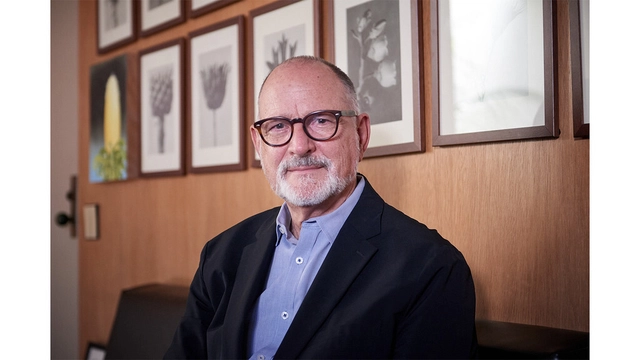
As Founding Partner of FF&P, Frederick Fisher, FAAR, AIA is a self-described “liberal arts guy.” He is an avid reader, traveler, and arts-lover, and his approach to architecture reflects his innate intellectual curiosity and broad cultural and social perspective. His list of projects includes the renovation of Princeton’s Firestone Library, MoMA/PS1 in New York, The Annenberg Community Beach House, Sunnylands Visitor Center and Gardens, Erburu and Fielding Galleries of the Huntington Library, Art Museum and Botanical Gardens, and numerous galleries, studios, and homes.

MVRDV’s Tianjin Binhai Library: A Case Study in Visualization Using D5 Render

 | Sponsored Content

The Tianjin Binhai Library is an iconic building designed by MVRDV, located in the Tianjin Binhai New Area. Its intricate geometry invites exploration through advanced visualization techniques, enriching the storytelling and unveiling the design's full potential. This piece delves into how D5 Render creatively illustrates the visual narrative of this architectural gem through its real-time rendering and animation capabilities.

SNU DAAE Fall 2024 Lecture Series

Seoul National University Department of Architecture and Architectural Engineering (SNU DAAE) is pleased to announce its Fall 2024 Lecture Series. This semester's lectures will feature speakers from various fields invited from around the world, offering diverse perspectives and international viewpoints at the forefront of contemporary architecture and architectural engineering.

Pocket Place

Architecture is about solving problems for people through the composition of light, space, and material. It is about embracing the way space can be sculpted to improve how we live.

Ronald Rael - Working with Muddy Robots

Come join us for the SMC NOMAS Fall Lecture by Ronald Rael on Wednesday, October 2nd at 6:30pm Santa Monica College 1900 Pico Blvd (Orientation Hall) Santa Monica, CA 90405. This event is free and Free Visitor Parking is available on the top level of Parking Structure 3 (entrance on Pico Blvd.).

The National Folk Museum of Korea Design Competition Call for Entries

In order to create a "local era that is good to live anywhere in Korea," the Folk Museum of Korea will be relocated to Sejong City National Museum Complex and will play a leading role in the balanced national development policy as a representative national museum of local culture in the south of the central region.

UCLA AUD Fall 2024 Events: BOOK TALK: Ferda Kolatan presents "Misfits & Hybrids: Architectural Artifacts for the 21st-Century City"

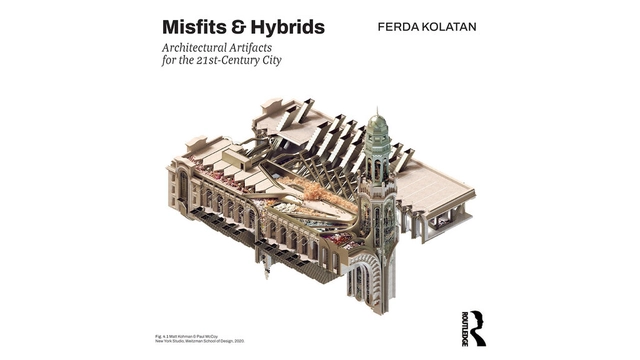
Ferda Kolatan is Associate Professor of Architecture at the University of Pennsylvania Stuart Weitzman School of Design and Founding Director of su11. In this event, Kolatan presents new book "Misfits & Hybrids: Architectural Artifacts for the 21st-Century City." Contemporary cities are shaped, Kolatan observes, by the unlikely adjacencies of objects that are vastly different in kind, origin, and scale: buildings, infrastructure, and other urban components that over time accumulate into mismatched configurations. However, despite the ubiquity of these oddities and their impact on the city, we rarely give them much consideration. In Misfits & Hybrids, Kolatan explores the untapped potential in these unexpected conditions for a new kind of architecture. A diverse array of projects, developed in Kolatan’s design studios at the University of Pennsylvania Weitzman School of Design, illustrates how hybrid artifacts can reveal the often overlooked cultural, socio-political, and material histories of a site, fostering design tactics invested in reinventing the existing. Set within the cosmopolitan megacities of Istanbul, Cairo, and New York, the projects are conceived as real fictions, conjuring novel narrative, aesthetic, and representational forms to reflect the pluralistic postindustrial city

Call for Entries: Reimagine The Future of Hospitality with A.I.

WATG's inaugural student design competition titled "Reimagine The Future of Hospitality with A.I." is aimed at harnessing the ingenious potential of young minds in redefining the way we conceive and design through A.I. The objective is to empower students' spirit of experimentation to explore the forefront of innovation and creativity in the rapidly evolving field of A.I.

Call for Applications: 2024 Robert L. Wesley Award

The SOM Foundation is pleased to announce the opening of the 2024 Robert L. Wesley Award.

Re-imagining Architectural Transformations in Post-Independent India

In the years following India’s Independence, the nation faced significant economic, social, and infrastructural challenges as it worked to rebuild and redefine itself. The legacy of colonial rule had left the country divided, its economy strained, and its social fabric frayed. Yet, the drive to forge a united and prosperous future pulsed strongly in the hearts of its people.
As the 1970s emerged, new trajectories of influence began to reshape the world order. Amidst the evolution of modernism and a growing resistance to Colonial-era social and moral structures, architects in India explored new dimensions and directions that resonated with the country’s autochthonous identity and aspirations.