
AZURE and the Italian Cultural Institute present Luca Nichetto and John Baker in conversation with Azure's Elizabeth Pagliacolo
AZURE and the Italian Cultural Institute present Luca Nichetto and John Baker in conversation with Azure's Elizabeth Pagliacolo
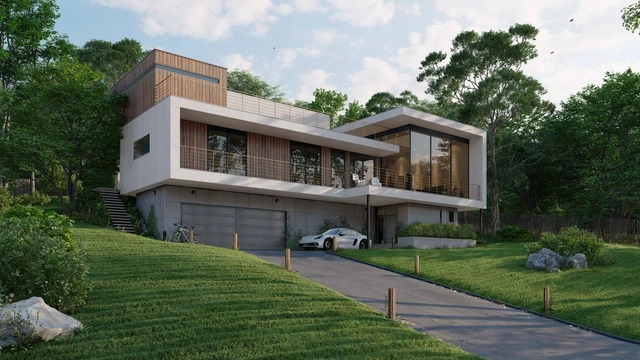
When it comes to architectural rendering software, Lumion makes the process of rendering an integral part of the architect's craft; it emboldens design and rendering workflows and inspires creativity. With the release of Lumion 11, realizing your design vision has never been easier. Using the new orthographic view feature, you can reduce the effort needed to create visually interesting plan and section views with your own unique twist. With animated phasing, you can show how the parts of your building connect and interact, choreographing a dialogue with the viewer.
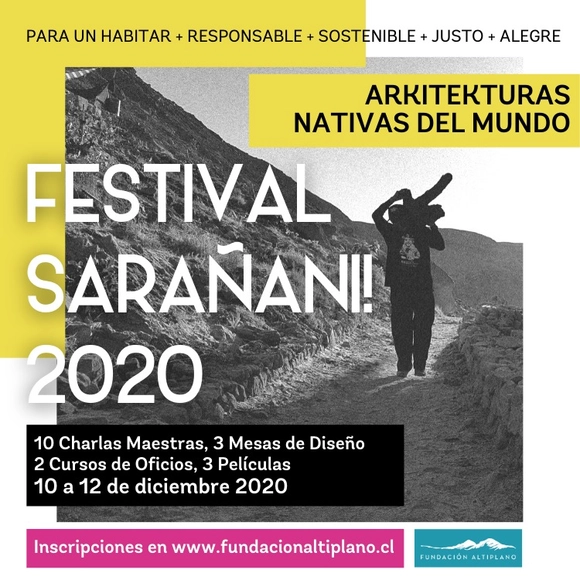
From December 10 to 12, the first Sarañani! (Let's Walk!) Native Architectures of the World Festival will take place, featuring guests from Angola, Japan, Italy, Mexico, Bolivia, Portugal, and Peru. The event is organized by the Altiplano Foundation through its Sarañani! (Aymara for "Let's Walk") School of Conservation.

Anales de Investigación en Arquitectura is an international, peer-reviewed, open-access scientific journal dedicated to disseminating research advancements in the fields of architecture, urbanism, landscape architecture, and sustainability. In line with its international scope, it publishes original research articles, essays, literature reviews, project catalogs, and case studies. The journal is open to schools of architecture and the community of researchers, professionals, academics, and interested readers. It accepts contributions written in Spanish, English, and Portuguese.
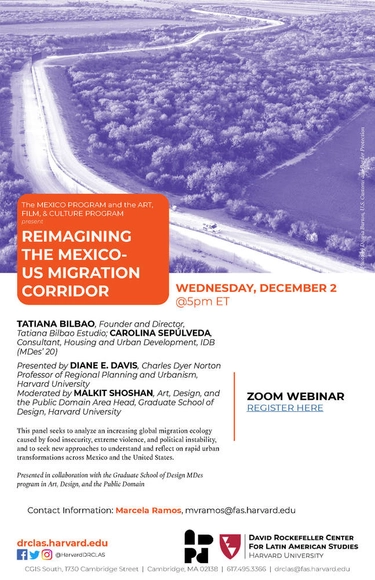
Speakers: Tatiana Bilbao, Founder and Director, Tatiana Bilbao Estudio; Carolina Sepúlveda, Chilean architect & researcher, MDes ADPD '20
Presented by: Diane E. Davis, Charles Dyer Norton Professor of Regional Planning and Urbanism, Harvard University; Moderated by: Malkit Shoshan, Design, and the Public Domain Area Head, Graduate School of Design, Harvard University

Today more than ever, architects are facing high expectations for the design, function and performance of a project. Careful building design takes the regional influences of climate into account, material origin, perhaps cultural building traditions. These are ways to lower the ecological footprint. But what do architects do to further enhance the building performance? That is an exciting element to explore. Finding out that today digital technologies are implemented in buildings in every region of the world is an interesting fact to discover!
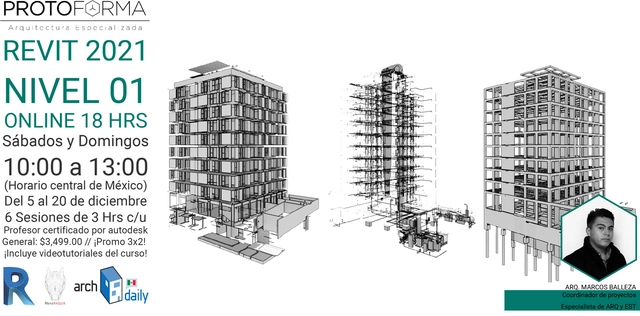
Autodesk Revit Level 01 Course

Proven and effective construction methods are not static, instead they're always improving. In Quebec, Canada, light wood frame and modular manufacturers are always pushing the limits of innovation. Their craft is now linked to building systems on a bold scale with offsite light wood frame construction.
Minga LAB 2020 Virtual is a free academic event that addresses the complex subject of Sustainable Collective Housing from both theoretical and practical perspectives, with a national scope across Ecuador.
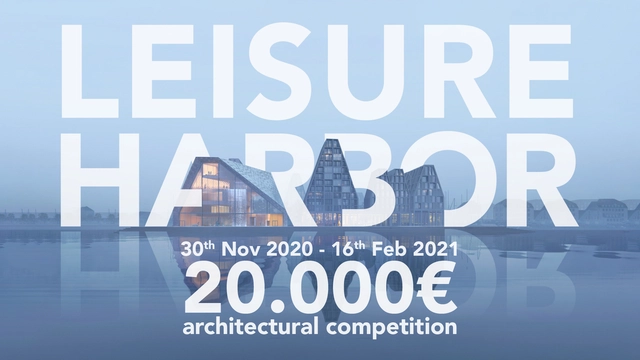
YAC –Young Architects Competitions–, BT Group, and Marina di Loano launch LEISURE HARBOR, a competition of ideas aiming to re-design one of the 10 most important marinas of Europe. The cash prize of € 20, 000 will be distributed to the winning proposals selected by an international jury panel made of, among the others: Manuel Aires Mateus, Patrick Lüth (Snøhetta), Huang Wenjing (OPEN Architecture), Paolo Matteuzzi (Zaha Hadid Architects).
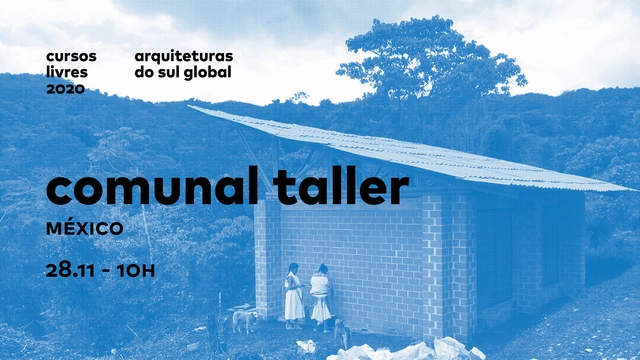
THIS WEEK'S GUESTS.
Comunal Taller - Mexico. Founded by Mariana Ordóñez Grajales and Jesica Amescua Carrera, Comunal is an architecture studio whose practice is deeply rooted in negotiation processes between consensus and dissent. They work against the notion of authorship as a static, artistic, and unchangeable object, viewing architecture instead as a social, collaborative, living, open, and constantly evolving process. They treat inhabitants as active subjects rather than objects of intervention. In their projects, they encourage and facilitate the participation of women—adults, youth, and children—in strategic, administrative, and construction processes, understanding the logic, performance, and collective definitions of these women and their community, while always respecting their cultural context.

The SEKISUI HOUSE - KUMA LAB is proud to launch our public program, lecture series. 2020 Fall Lecture series will be focusing on “Nature”. We will invite not only architects but also artists and philosophers, professionals from various fields. We hope to investigate "Nature" from multiple perspectives and reconsider our surrounding living environment and values. All fall 2020 lectures will be delivered via Zoom Webinar at 6 pm on Wednesdays (JST) unless otherwise noted.

Architects, not Architecture is turning five and we are celebrating it with a series of virtual events around the world. Welcome to our Virtual World Tour!

From December 7-11, 2020, Design Museum is set to host their first-ever virtual Workplace Innovation Summit. Packed with visionary speakers across a variety of disciplines, the 2020 Workplace Innovation Summit will harness the knowledge and star power of today's industry leaders with impactful conversations related to current and post-COVID workplace strategies and innovations. Normally held in a one-day, in-person format, the virtual expo will now host five days of curated content, interactive sessions, inspiring workshops, and even live podcast recordings.

Amplified by current changes in the workplace and work methods, technology improvements are proving that digital updates deliver measurable value. The AEC industry, is currently making strong shifts in ways of working. The industry is looking at intelligent construction management solutions that can monitor and improve productivity, and reduce the turnaround time of projects.

IDF DEBATES _ architecture: BUILDING BLOCKS
curated by Rajshree Pathy & Mrinalini Ghadiok
28th November & 5th, 12th, 19th December 2020

In Progress _ Live exhibition

As the domain where different vectors of the current climate crisis meet and interact, and where conflicts around its regulation are emerging, the atmosphere also produces multiple localities where these transformations can be observed and understood—and sites of mediation can be imagined. Far from being understood in all of its complexity, the atmosphere continues to elude our ability to model its dynamics—or to compute future scenarios.