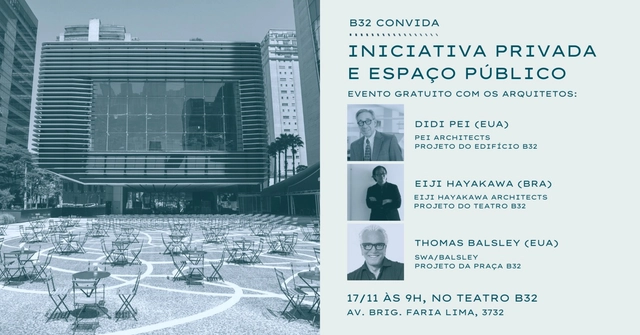
Free event to discuss Private Initiative and Public Space at B32
Free event to discuss Private Initiative and Public Space at B32
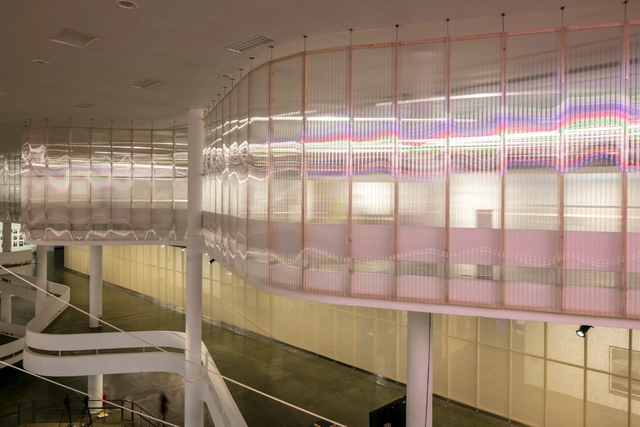
transparencies and depths
How was the lighting design for the 34th Bienal developed? Light is something we see all the time, yet little is commonly known about what happens in practice. This course aims to address key issues in lighting design through the illumination of the 34th Bienal de São Paulo: Faz escuro mas eu canto.

"Perhaps architecture is nothing more than the art of building climates that artificially correct what nature presents in its path," as Vitruvius maintained. For Swiss architect Philippe Rahm, architecture exists because the natural climate is often inhospitable to humans: too hot or cold, too dry or humid, too dark or sunny. Architecture must soften, intensify, mitigate, and regulate the natural climate to make it habitable.

In almost every civilization, the garden, much like paradise, has always been an enclosed space—a landscape factory designed to project and embody ideals of life. However, in the 20th century, the garden transcended its enclosure, giving way to ecology and, with it, a different form of boundary. The garden shifted in scale, becoming planetary.

The FOCO lecture series (launched in 2020) aims to highlight both commonalities and diverse perspectives surrounding a single theme within our discipline. This in-person event will take place on Thursday, November 11, at 6:30 PM at the Museo de Arquitectura y Diseño (MARQ), located at Av. del Libertador 999, at the corner of Av. Callao, in the Autonomous City of Buenos Aires.
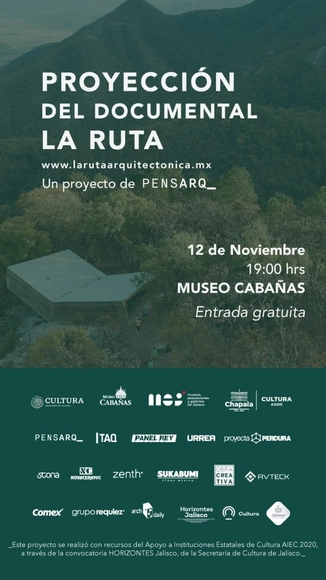
Screening of La Ruta, a documentary offering a multidisciplinary reflection on the architectural works along the pilgrim's route from Ameca to Talpa.
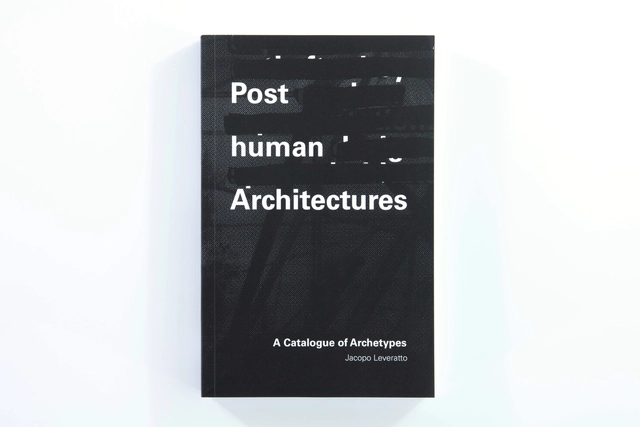
For a long period of time, spatial design has been seen as an action that could be performed by people, and for people only. Today, as some of the most meaningful projects of our times seem to challenge this concept, qualitative research still struggles to emerge. This book collects, reconstructs, and discusses archetypal models of posthuman architecture, from the cabin of Henry David Thoreau to the Svalbard Global Seed Vault. This book aims to show how architectural, landscape, and industrial designers, be they professional practitioners or not, redefined their tools in order to meet the functional and symbolic needs of new and different kinds of subjects. All this in ten monographic architectural tales, thought to trace the evolution of an extended idea of coexistence between humans and other species or technologies.

Emerging from the vivid landscape of California’s Central Valley, architect Maria Ogrydziak’s iconic, light-filled houses reflect a region where growth abounds, rich soil runs deep, and blue sky goes on and on. She designs for a new California dream, outside the hustle of the big cities, far from the deep turquoise of the Pacific.
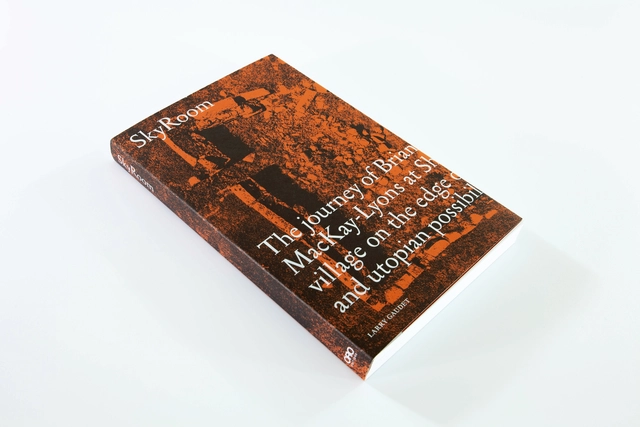
As you crest the ridge, the green valley below and the ocean beyond come into view. This is Shobac, a seaside village featuring an ensemble of buildings that, on first glance, looks like a monumental work of Land Art. What is this place? A fishing village from the future? A monastery teleported here from another planet? A utopian colony with a message for the world?
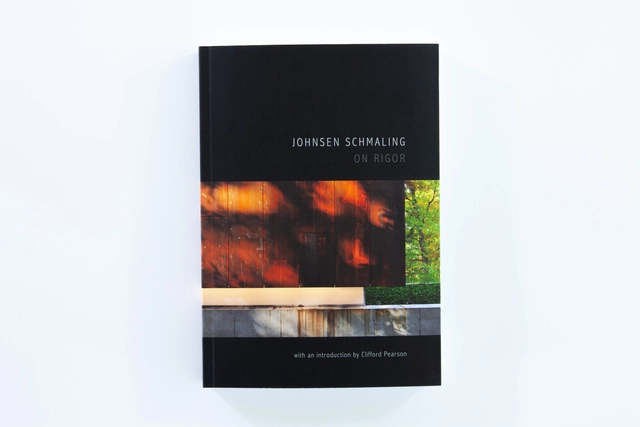
In a world that fetishizes aesthetic frivolity and iconographic bombast at the expense of substance and nuance, the critically acclaimed work of Johnsen Schmaling Architects stands out for its conceptual rigor, profound simplicity, and quiet repose. Formally restrained and informed by innovative tectonic and material experimentations, Johnsen Schmaling’s precisely crafted architecture creates poetic atmospheres of enduring clarity.
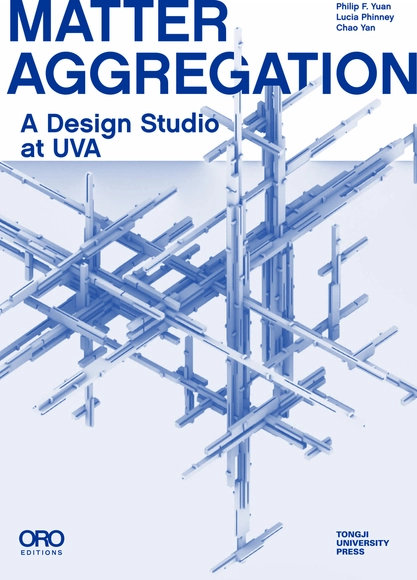
Within the human-machine collaborations cultivated in the digital age, crafts and materials are playing an increasingly important role in forming various ways of matter aggregation for architecture. Based on the pedagogical exploration of the design studio—Matter Aggregation at UVA, the book seeks new values of wood craft for contemporary architectural design, by introducing digital design and robotic fabrication techniques into the design process for timber building. The book integrates explorations of traditional crafts with digital fabrication technique, establishing a digital crafting as a new field for contemporary practice. The book explores the computational mechanisms and diagrammatic grammar within these craft-based aggregation systems, paying close attention to geometrical configurations, material effects and fabrication details and take advantage of these qualities to produce a unique spatiality.

The book tells the story of Sullivan’s development as an artist using architecture as his medium. It includes essays on his views of architectural design, which have been shaped by his personal history in the landscapes and the architecture of New England and Japan. Sullivan’s training as a potter informs his architecture in its interpretation of houses as “vessels of experience” and in his work’s focus on materiality and the craft of construction.

How does one envision architecture? Forays gathers the work of Joe Day and Deegan-Day Design into six diptychs, unified by this question. Working in a wide range of media and scales, Day’s work mines the differentials between perspective and projection. Forays is organized in six “diptychs,” the first two paired projects are books in their own right; the second pair, a clothing line and a first building; the third, two houses; the fourth, two plays on brand identity and design methodology; the fifth, permanent and transient cinema proposals; and the sixth, two series of speculative work in local and global registers. Modeled on a comparison of two classic cameras—the Leica M3 and Polaroid SX-70—each diptych includes a project with more “Leica” to it—a more bounded, Cartesian clarity or distilled focus—and another closer to an SX-70 in its moving or folding parts, its shape-shifting adaptability.

The region of Bundelkhand in India faces enormous challenges in development. With a population of 18 million people, it has one of the lowest human development indices in India. Groundwater, which the vast majority of people rely on for domestic and agricultural purposes, is being rapidly depleted, while droughts have become more frequent and severe. Livelihood options are narrowing quickly. A lack of public services, infrastructure, and market access has made the situation unlivable for many. The state and central governments carry out initiatives that are extremely expensive but highly ineffective.

Rooted in the modernist tradition, Erdy McHenry Architecture brings uncommon rigor to their work. Recognized for their uniquely diverse portfolio of mixed-use, institutional, office, agricultural, and residential design, Erdy McHenry Architecture presents this monograph as a window into projects developed throughout the firm’s twenty-year history. With an appreciation for place and creative constraints, Erdy McHenry Architecture considers each project challenge as an opportunity: how can architecture make great places? How can design elevate the human experience? How can a project team address the realities of construction without sacrificing programmatic intent? For each case study presented in this monograph, Erdy McHenry Architecture provides a brief narrative of the project’s design intent and evolution. Whether it is a tower, a school, or an office headquarters, Erdy McHenry Architecture leverages the challenges and opportunities of site, scale, and social context to reveal solutions that enable design as an outcome more than an objective.

As the number and distinctiveness of design directions in contemporary architecture expands, an outcome has emerged of a contradictory nature. While many of these directions hold great intrigue, a troubling aspect arises in that in their realization an “incompleteness” is often exhibited, one expressing a less developed architectural richness often expressed in an under-utilized nature of the architectural language itself.

From November 19 to 21, 15 architecture firms will present their work and their approach to intervening in historical heritage, transforming Logroño into a space for reflection on alternative ways of shaping the city.

The vast medium of jewelry and fashion artifact design continues to be a central pillar of fashion luxury goods industries and artistic practice, but there is a lack of discussions on the researches, value, and roles of it. Design is an expression of values and attitudes, and a tangible form of guiding the thoughts and desires of individuals and members of society. In the contemporary society, when science, technology, and craftsmanship reach a stage, whether products and services become luxurious or not, its quality, uniqueness, artistry, and rarity are all achieved through design. This book represents the articles from 20 outstanding design researchers from 11 countries, including many works from international designers, who are engaging with and pushing the boundaries of the medium. It contributes to these international debates on contemporary fashion and jewelry design while providing an accessible overview and a concise reference book.