This book is a compilation of essays in which architect Uriel Fogué reflects, through the lens of architecture, on some of the most urgent challenges of our time. In an era threatened by climate change, ecological challenges, and the looming horizon of a potential end of the world, architecture emerges as a crucial framework—not (only) for finding solutions, but for exploring, experimenting with, and testing other fantastic potentials for life, driven by desire.
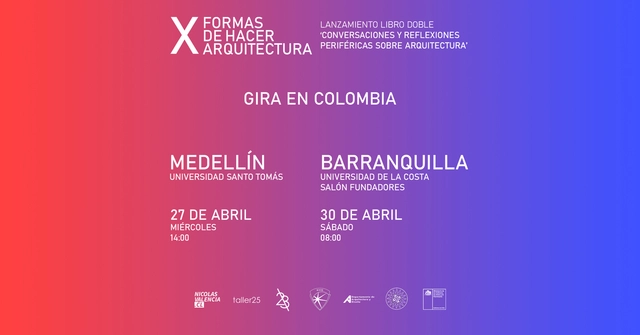
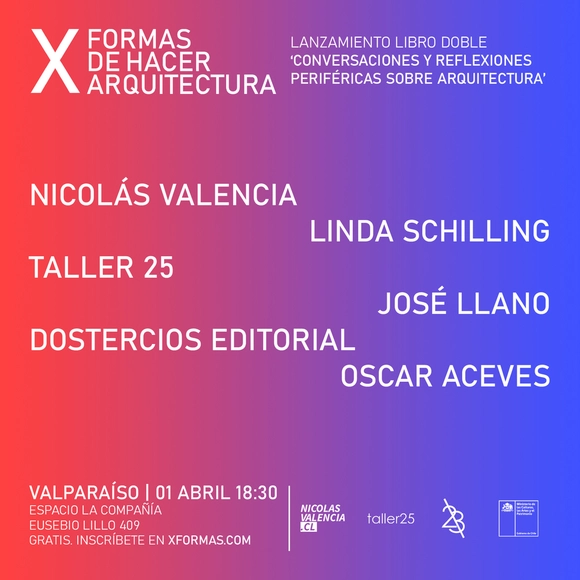
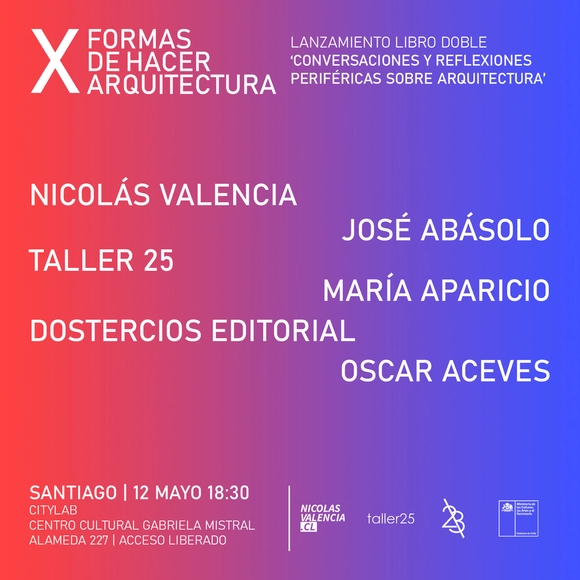
Published by Dostercios Editorial, "#XFORMAS: Conversaciones y reflexiones periféricas sobre arquitectura" is the first double book by Chilean architects Nicolás Valencia, Fabiola González, and Yair Estay, co-founders of X Formas de Hacer Arquitectura (#XFORMAS).
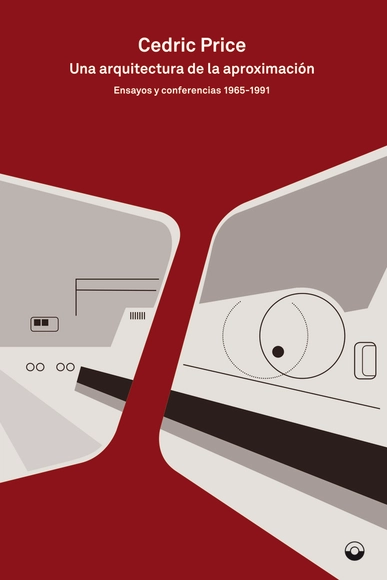
This book brings together, for the first time in Spanish, more than twenty writings and lectures by British architect Cedric Price. Drawn from diverse sources, Price’s texts reveal an exceptional understanding of architecture, filtered through a critical and complex—yet honest and ironic—personality.
Interior architecture today operates at the intersection of physical and mediated spaces, such as those of mass communication, digital platforms, or the visual arts. If we consider any form of representation as potential architecture—from writing to photography, from drawing to film—this essay addresses contemporary interiors as "expanded media" platforms that belong to different places and temporalities, reaffirming the role of interior architecture in the construction of contemporaneity.
"Everyone knows that myths never really happened, yet they are always happening. Now, they continue not only through the adventures of ancient heroes but also by making their way into the ubiquitous and most popular stories of contemporary film, games, and literature." - Olga Tokarczuk.
The decline of monasticism as a historical movement coincides with what Hannah Arendt proposes as the fundamental paradigm shift upon which modernity was built: "The inversion of the hierarchical order between the vita contemplativa and the vita activa." By elevating action to the highest state of the human condition, contemplation lost its traditional meaning and surrendered its honorary position as a source of access to truth.
Straddling theory-fiction, speculative fabulation, audiovisual research, and dramaturgy, Teatro Della Terra Alienata imagines a fictional scenario of territorial secession. It addresses the urgency raised in the 2018 UN IPCC report, which identified the decline of the Great Barrier Reef as part of a "wicked problem" that demands radical political action, as well as new imaginaries and aesthetic paradigms.
URBANBATfest is a festival that acts as a laboratory—or a laboratory that evolves into a festival. It is a research process focused on urban transformations and an environment for learning, experimentation, and collective creation designed to drive urban innovation.
In this new edition of URBANBATfest, under the theme "No future," we are opening a space for reflection on the future of cities. We are examining the responsibility of architecture and urban planning within this context of multidimensional crisis, their complicity and forms of resistance, their possibilities and limitations, their tools and working methodologies, their relationship with other disciplines, their areas of intervention, their capacity to create new imaginaries, and how to cohabit the present and the future.
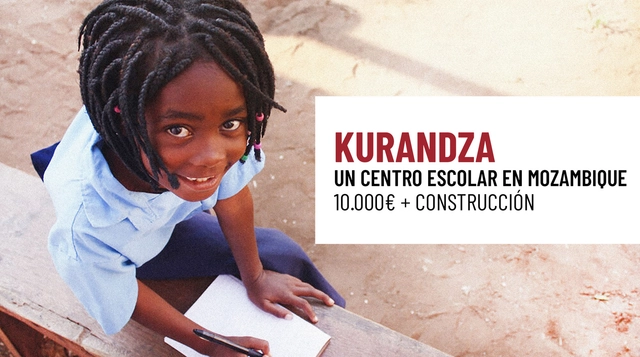
The new Archstorming competition takes us to Mozambique, a country defined by endless, persistent challenges. Although there has been a substantial increase in household income, more than two-thirds of the population continues to live below the poverty line.
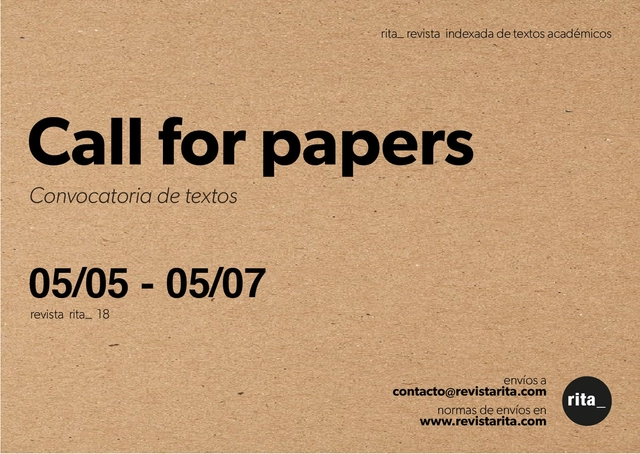
The call for academic papers for the upcoming 18th issue of rita_ journal is now open. Submissions in Spanish or Portuguese are welcome from faculty, graduate students, and professionals holding a master's or doctoral degree.
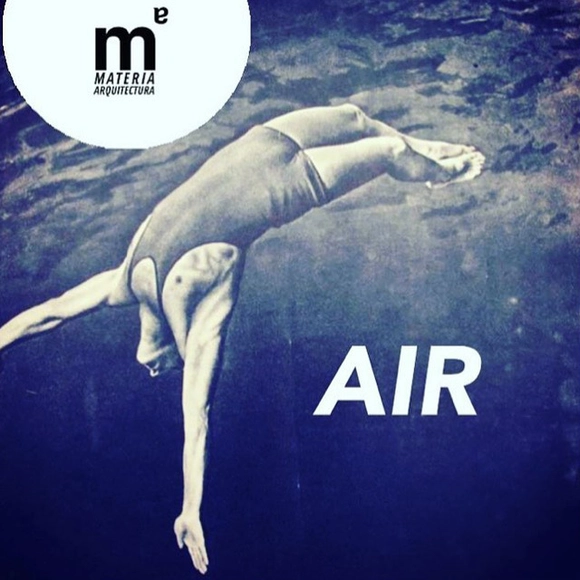
Since the beginning of the 20th century, Karl Marx’s famous dictum that "All that is solid melts into air" seems to have its own architectural trajectory associated with emerging ideas of lightness, transparency, and the dematerialization of the building, from Georgii Krutikov’s utopias for a flying city (1927) or Vladimir Tatlin’s Letatlin (1932), to H.G. Wells’s city of the future, governed by the "dictatorship of the air" (1936). "Maximum air - Minimum walls!" was Sigfried Giedion’s demand for transforming the old static sense of structure into renewed combinassions aériennes, and a new system of equilibrium in suspension that, in Konrad Wachsmann’s understanding, would transform the building into a breathing skin.
Harquitectes is one of the most compelling architecture firms on the current international scene. While their work has been extensively published—in various monographic magazine issues, among other publications—less attention has been paid to the thinking that underlies the nearly twenty years of work by these Catalan architects. This book compiles a series of texts and interviews that offer moments of reflection and unprecedented, long-awaited theoretical construction regarding Harquitectes' architectural production and their professional attitude. It provides broad context regarding the firm as a project in itself, as well as insights into the specific character of their work.
AceroLAB's mission is to drive innovation in steel through multisectoral development, connecting the public, private, and academic sectors. It approaches design at all scales, with a focus on quality of life, sustainability, and the productivity of buildings and public works in Chile.
Published by Dostercios Editorial, ‘#XFORMAS: Conversaciones y reflexiones periféricas sobre arquitectura’ is the first double book by Chilean architects Nicolás Valencia, Fabiola González and Yair Estay, co-founders of X Formas de Hacer Arquitectura (#XFORMAS).
Published by Dostercios Editorial, '#XFORMAS: Conversaciones y reflexiones periféricas sobre arquitectura' is the first two-volume book by Chilean architects Nicolás Valencia, Fabiola González, and Yair Estay, co-founders of X Formas de Hacer Arquitectura (#XFORMAS).
Published by DosTercios Editorial, ‘#XFORMAS: Conversaciones y reflexiones periféricas sobre arquitectura’ is the first double book by Chilean architects Nicolás Valencia, Fabiola González, and Yair Estay, co-founders of X Formas de Hacer Arquitectura (#XFORMAS).
Exhibition dedicated to the Coliseum building, its architecture, and its development as a performance space. This activity is part of the 2022 Zarzuela Conference program, which focuses broadly on the "unique spaces" of musical theater, and coincides with the 90th anniversary of the theater's inauguration on December 10, 1932.




.jpg?1654779211&format=webp&width=640&height=580)

![Launch of the Steel Innovation Center [AceroLAB] - Featured Image](https://snoopy.archdaily.com/images/archdaily/media/images/624e/f739/3e4b/318d/e200/00bb/slideshow/open-uri20220407-5824-1uln50j.jpg?1649342259&format=webp&width=640&height=580)