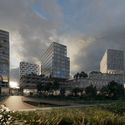
SPATIAL DEVELOPMENT VISION FOR ZUNDA PARK IN RIGA, AT DAUGAVGRIVAS 31
The aim of the open sketch design competition is to obtain high-quality, architecturally elaborate and economically justified solutions for the spatial development vision and the intent of construction of new buildings as part of Stage 1 in Riga, Latvia, at Daugavgrīvas iela 31 in the territory owned by SIA “DG31” by means of a creative rivalry, rational use of funds and free competition between participants.
The objective of the first Greater Bay Area Urban Design Awards (GBA Urban Design Awards) is to elevate the overall urban design standard in the Guangdong-Hong Kong-Macao Greater Bay Area (GBA) through recognition of excellence in urban design related projects in the GBA and foster collaboration and exchange among urban designers, planners, architects, landscape architects, engineers, surveyors and other urban design professionals, companies and organisations in the GBA.
Alternate Realities 2020 - Architecture Competition by the Charette
This competition exists in an Alternate Reality. You make the rules in this realm. Does gravity exist? Do humans live on Earth? How far has technology advanced? You decide!
Description via Amazon. Mediating Environments examines fundamental and radical environmental conditions in the Arctic and provides a spectrum of innovative design approaches and spatial outcomes. Climate organizes and sustains a broad range of activities in the Arctic, and it will dictate the future transformations in northern urban landscapes and their metabolic operations. As such, arctic urbanism must take into account the varied nuances of weather phenomena that are deeply engrained in everyday living practices and biophysical fabrics.
The typology of the architect's population is changing with a decrease in the average age of practitioners. Each year, hundreds of young laureates, mainly from national universities are joining the job market and the interest in architectural patrimony is perceptibly on the rise.
The Multi-Skilled Designer presents and analyzes different approaches to contemporary architectural design and interprets them through the theory of multiple intelligences. The book establishes a systematic framework that uses the lens of cognitive psychology and developments in psychometric and brain research to analyze the unique cognitive thought processes of architectural designers and compiles design projects that could serve as a pedagogical companion for the reader. The book is aimed at design practitioners and students interested in examining their own thinking styles as well as those involved in design cognition research.
Gala 2020: Open Doors Open Minds by Chicago Architecture Center (CAC)
Save the date and join us—from anywhere on Earth—for an entertaining virtual event to support the CAC. Listen in on a roundtable discussion between Juan Gabriel Moreno, Billie Tsien and Tod Williams, and alumni from CAC Education programs for teens.
Videos
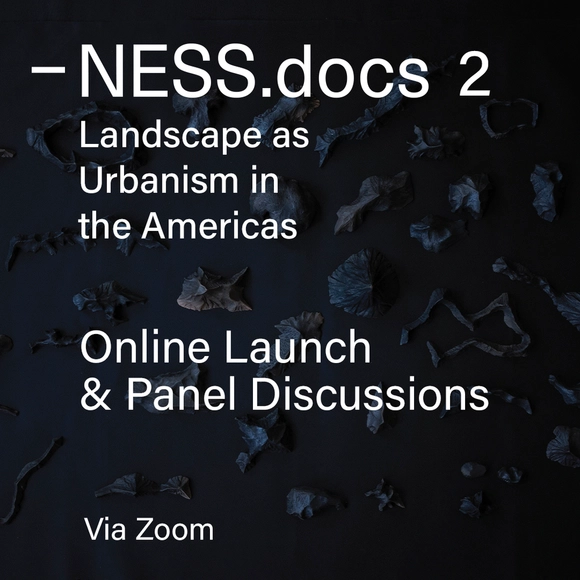
NESS.docs 2 LaUA_Cover_Photo: Pelagic Alphabet_LCLA Office_Luis Callejas and Charlotte Hansson
NESS and Lots of Architecture –publishers are pleased to present the second issue of our monographic series NESS.docs 2: Landscape as Urbanism in the Americas. The issue reflects on the project of Landscape as Urbanism in the Americas, led by Charles Waldheim and the Office for Urbanization at the Harvard Graduate School of Design, and was done with the support of the David Rockefeller Center for Latin American Studies. Curated together with Mercedes Peralta and Jeannette Sordi, it explores the potentials for landscape as a medium for urban intervention in the specific contexts of Latin-American cities.
Summer school Ticino RE-ACTIVATE THE NEIGHBORHOOD!
We are happy to announce the 5th «Summer School Ticino», an annual week-long workshop in the late summer that brings together students from multiple disciplines. The program aims to investigate the real – to understand and integrate the many facets and realities of small-scale planning and spatial development into a comprehensive and coherent approach.
The American Institute of Steel Construction is on the lookout for creative visions of the future from up-and-coming architects. The third annual Forge Prize competition is now open for entries!
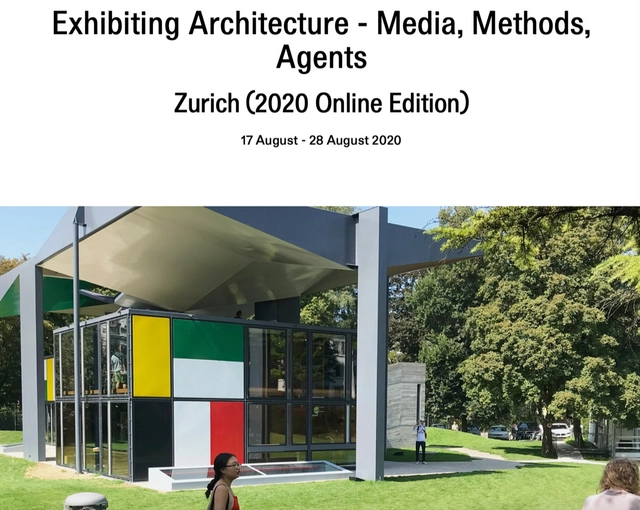
The AA Visiting School Zurich invites students and practitioners to re-imagine architecture exhibitions, its media, methods, and agents. It draws on the rich academic and cultural landscape of Zurich, fostering exchange with experts from museums and institutions such as Kunsthalle Zurich, the ETH and gta Exhibitions as well as artist-run space Longtang among others.
Africa like the rest of the world has a rich built heritage that faces the ever-present danger of extinction due to lack of documentation, conflict and gentrification. This lecture hopes to spotlight the gaps yet to be bridged in our public knowledge of endangered buildings in Africa and in fact, other parts of the world.
A Uniform hosted webinar series in which we'll be exploring the changing relationship with space & the built environment. In this 60 minute webinar, we will discuss how the world has changed and how we must change with it.
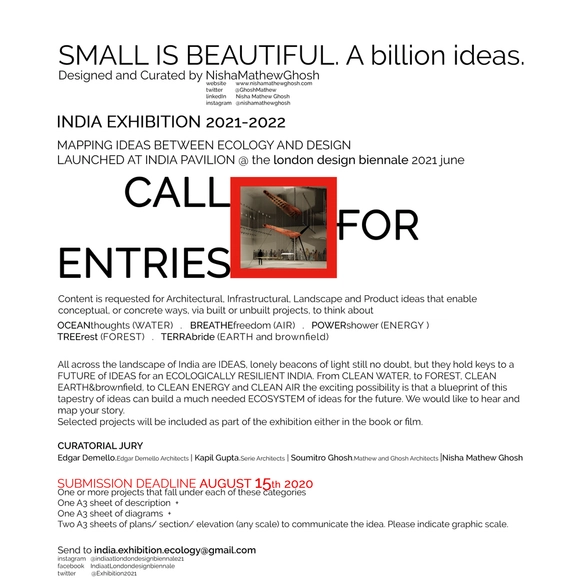
This mapping of seminal sustainable ideas across knowledge domains (from architecture to fashion design to product design to manufacturing et al) to showcase the traction between Ecology and Design in India will be launched at the London Design Biennale in June 2021, and thereafter travel across India.
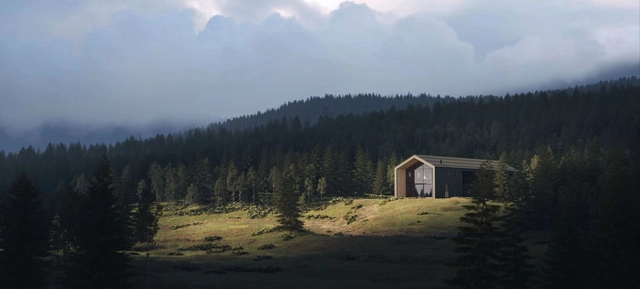
Architectural visualization company Brick Visual has been loading its most complex scenes into Chaos Group’s real-time 3D ray-traced engine, Project Lavina, since the private beta first launched. With the first public beta now available, Attila Cselovszki, CDO at Brick Visual, shares how adding Project Lavina to the architectural visualization (arch-viz) pipeline has revolutionized the way they work.
What would you do with an old and empty building? Would you tear it down, leave it abandoned, or could you transform it into something new? Cities all around the world are wrestling with this very challenge. The question then becomes, what can architecture do about it?