ABOUT ARCHITECTURE: an open lecture with Roger Riewe
The WAPW Academic Association together with the Faculty of Architecture of the Warsaw University of Technology cordially invite you to the next lecture in the "About Architecture" series organized as part of A-Academy's activities. Roger Riewe will be our guest.
According to recent studies, there are currently more than 1,750,000 active podcasts available via myriad streaming platforms. Once occupying a small niche of the media, podcasting is now thoroughly mainstream; its meteoric rise has only accelerated thanks to the solitary production and consumption of media under the social isolation brought on by the COVID-19 pandemic. Co-moderated by Mitchell Akiyama and Neil Verma, Hearing Stories: Narrative Audio in Isolation invites two leading practitioners, Jana Winderen and Kaitlin Prest, to speak to what it means to create sonic art in this moment. We will discuss how sonic practices can be used to create community, to tell stories, and to address pressing political issues.
To jumpstart the mainstreaming of additive manufacturing applications in architecture & other design related fields in Nigeria, this workshop starts by highlighting state of the art examples in 3D printing round the globe. It also aims to walk participants through the unique constraints of working in challenging contexts like Nigeria's but also navigating the terrain.
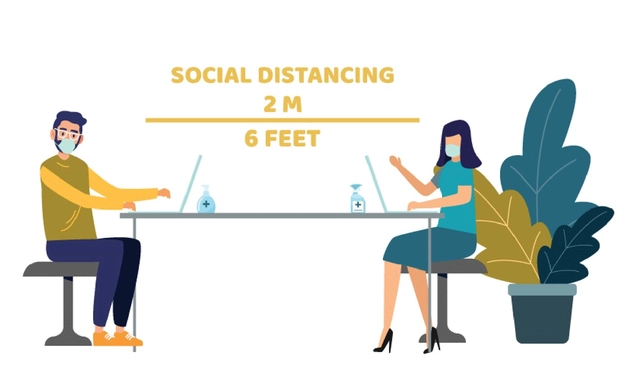
The 2020 COVID-19 outbreak has deeply redefined our relationship to public spaces. Fear of transmission (both direct and indirect) has closed schools, restaurants, office buildings, and transportation hubs, and has limited access to other densely populated locations and shared spaces. We have also learned that COVID-19 primarily transmits through the spread of water droplets from infected individuals, especially in scenarios of close contact, such as prolonged indoor activities. As a result, new building regulations have been put in place that reduce the circumstances in which the disease can spread. These safety precautions include mask mandates, redesign of ventilation systems, and social distancing policies. In this article, we will focus on social distancing.
Under the direction of Mexican architect Tatiana Bilbao, thirteen architecture studios and students across the United States and Mexico undertook the monumental task of attempting to capture the complex and dynamic region of the US/Mexican border. Two Sides of the Border envisions the borderland through five themes: migration, housing and cities, creative industries, local production, tourism, and territorial economies. Building on a long-shared history in the region, the projects covered in this volume use design and architecture to address social, political, and ecological concerns along the shared border.
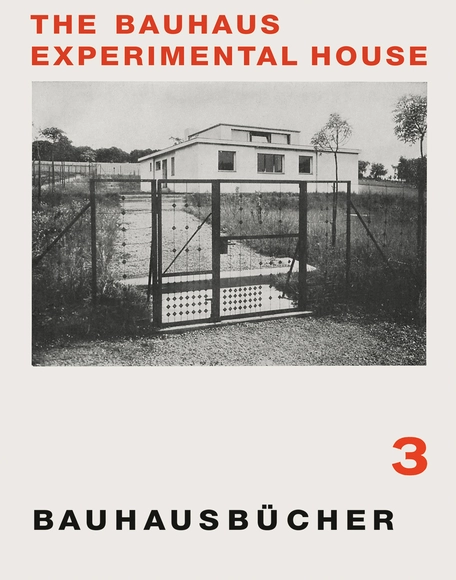
Adolf Meyer was Walter Gropius’s right-hand man, his planner and close confidant. As early as 1910, they jointly created the Fagus Factory, one of the most important modernist buildings. The experimental single-family home “Haus am Horn” was built for the first Bauhaus exhibition, in the summer of 1923 in Weimar. The house was planned by Georg Muche (design) and the architectural department at the Bauhaus. Adolf Meyer and Walter March were responsible for construction management.
How will the human body, collective and individual, cope with the estimated increases in global air temperatures and in the earth’s corresponding thermal stress? Atmosphere Anatomies: On Design, Weather, and Sensation offers an in-depth examination of design strategies that situate the body and its bioclimatic milieu at the core of their spatial formation.
How we deal with land has far-reaching implications for architecture and urban development. The last decade has seen a dramatic rise in the privatization of urban land and in speculation. Many European cities that today find themselves under extreme development pressure have virtually no land left to build on. In view of the acute housing shortage, the issue of who owns the land is therefore more relevant than ever: To what extent are we able to treat the land as a common good and guard it from the excesses of capitalism?
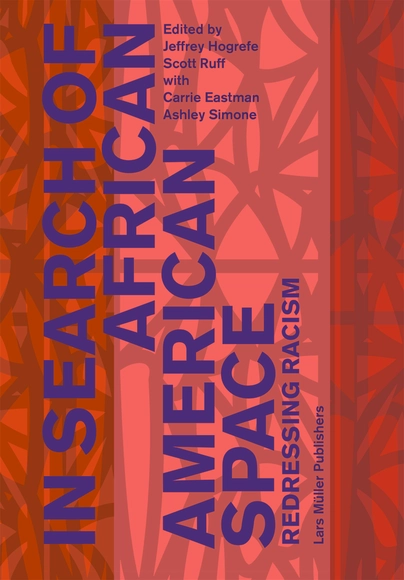
If African American experience emerges from the structure of slavery, how does architecture relate to that experience? African Americans have claimed space in unexpected locations – often in opposition to architecture as a Eurocentric discipline that has served to regulate and exclude them. In Search of African American Space examines both historical record and personal and collective memory to uncover these instances. African American space can be creative and aspirational, taking the form of speech and performance that reflects its fleeting nature.
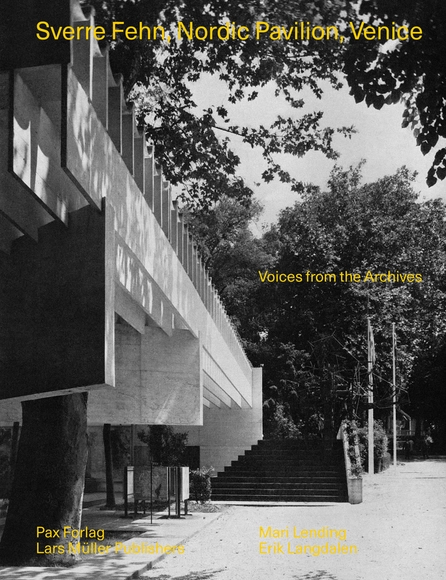
Sverre Fehn’s Nordic Pavilion in Venice is a masterpiece of postwar architecture. The young Norwegian architect won the competition for its design in 1958 and the building was inaugurated in 1962. Through six decades, the beloved structure has been mired in phenomenology, poetry, and the personal memory of the select. Looking at the archives, a very different story emerges.
This stunning two-volume publication introduces readers to one of the largest private collections of architectural drawings in the world. Showcasing drawings and related models and artefacts dating from 1691 to the mid 20th century, this lavish tome includes both a catalogue and innovative texts by leading authorities and provides a fascinating look at these striking by-products of architectural training and practice. Living with Architecture as Art introduces amateurs and specialists alike to the Peter May Collection, one of the largest private collections of architectural drawings in the world. Assembled over 30 years by investor and philanthropist Peter May, the collection is comprised of more than 700 sheets that have all been carefully preserved. Principally consisting of 19th- or early 20th-century competition or certification drawings by design students, the collection also includes presentation drawings for public commissions, reconstruction studies or interior designs. The catalogue, arranged by category, demonstrates May’s inclination towards specific building types such as commercial or cultural institutions, train stations and spas, landmarks and monuments, private and royal residences, and cast-iron architecture. Also included is a category for landscape designs and garden architecture. The extensive catalogue and texts by leading authorities present the raison-d’être for the production and preservation of these sometimes neglected artworks. Maureen Cassidy- Geiger discusses the formation of the collection and with Basile Baudez introduces the French system of architectural education, from which some of the finest drawings come. Charles Hind offers a history of design training in Britain and writes about patterns of collecting and the market for architectural drawings and Matthew Wells discusses the history of architectural models. In his introduction May informs the reader about his history as a collector and builder. Maureen Cassidy-Geiger is a curator and scholar with special expertise in European decorative arts, patterns of collecting and display and the history of architecture, court culture, gardening and travel. Her most recent book on architecture was The Philip Johnson Glass House: An architect in the Garden (Rizzoli, 2016). Charles Hind, FSA, is Chief Curator of Drawings at RIBA in London. A Palladio specialist, he was with Sotheby’s, 1986–93, as their expert in architectural drawings and British watercolors. Basile Baudez is Assistant Professor in the Department of Art & Archaeology, Princeton University, previously at Paris- Sorbonne University, University of Pennsylvania and at the Pratt Institute. Matthew Wells is Lecturer in the Department of Architecture at the ETH (Eidgenössische Technische Hochschule) in Zurich. His dissertation ‘Architectural models and the professional practice of the architect, 1834-1916’ was awarded the Theodor- Fischer Prize from the Zentralinstituts für Kunstgeschichte in Munich.
We would like to invite you to IE School of Architecture & Design first event in collaboration with The Developer UK, a publication for enlightened real estate developers working in the private and public sector along with their investors, local government, architects, placemakers and project teams.
AIA LA COTE is providing a conference that reflects the most relevant dialogues in society and has incorporated this thinking into a two-day split virtual symposium around Climate Action and Climate Justice. A diverse set of presenters will focus on a wide range of topics, inclusive of Carbon Neutrality, Healthy Building Environments, Resiliency, and Equity. Notable speakers include Farhana Yamin, an international environmental lawyer and activist, who has co-authored a number of international treaties on climate change, including the Paris Climate Agreement, will lead the days’ sessions. Also speaking is Ed Mazria the 2021 AIA Gold Medal recipient, and founder and CEO of Architecture 2030. This year he delivered the Roadmap to Zero Emissions to the United Nations Framework Convention on Climate Change (UNFCCC). Many others inspirational speakers will be featured throughout the course of the two-day event, as well as the opportunity to participate in Lunch Think Break Out Sessions, and a virtual exhibitor hall (hosted via Zoom and Whova Apps).
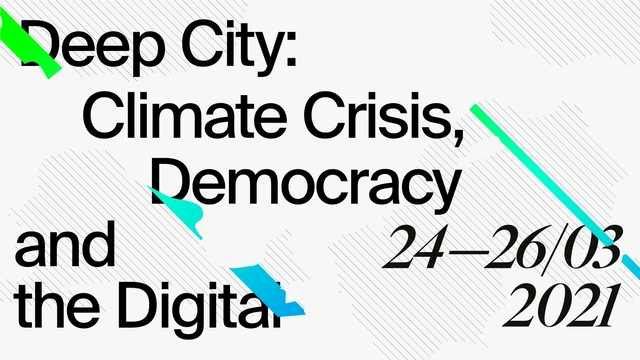
DEEP CITY Latsis symposium is gathering people from around the world to discuss and present written, built, coded, drawn, filmed, or modelled work around the topics of data, democracy and sovereignty. From digital tools for urban governance to AI and new forms of design and spatial agency, we will explore emerging negotiations between the technological, the ecological and the social.
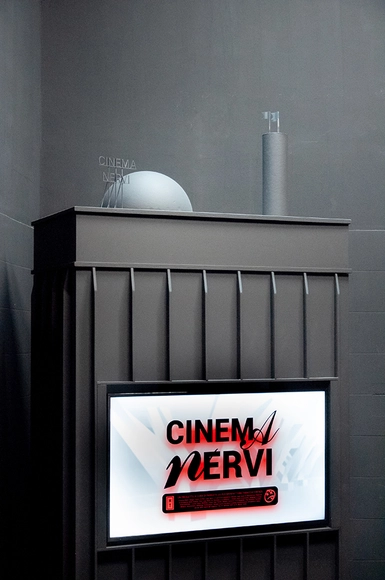
Florence, 13 January 2021 – Cinema Nervi is a videoart project which offers an enriching contemporary and experimental contribution to the exhibition Pier Luigi Nervi, Structure and Beauty*, dedicated to the work of the world-renowned Italian architectural engineer, on display in the temporary exhibition spaces at Manifattura Tabacchi.
Xu Tiantian is the founding principal of DnA _Design and Architecture. She has received numerous awards such as the WA China Architecture Award in 2006 and 2008, the Architectural League New York’s Young Architects Award in 2008, the Design Vanguard Award in 2009 by Architecture Record and the Moira Gemmill Prize for Emerging Architect in 2019. She has built a number of projects, such as Songzhuang Art Center and Ordos Art Museum. In the past years she has been engaged extensively in the rural revitalising process in Songyang County, China. Her groundbreaking “architectural acupuncture” is a holistic approach to the social and economic revitalization of rural China and has been selected by UN Habitat as the case study of Inspiring Practice on Urban-Rural Linkages. Xu Tiantian received her masters in architecture and urban design from Harvard Graduate School of Design, and her baccalaureate in architecture from Tsinghua University in Beijing.
In 1890, Tony Garnier started working on his revolutionary model for the “cité industrielle”. This ideal industrial city was conceived mainly from 4 separated programs: production, housing, health and leisure facilities in which the production program is the core concept of modern cities.