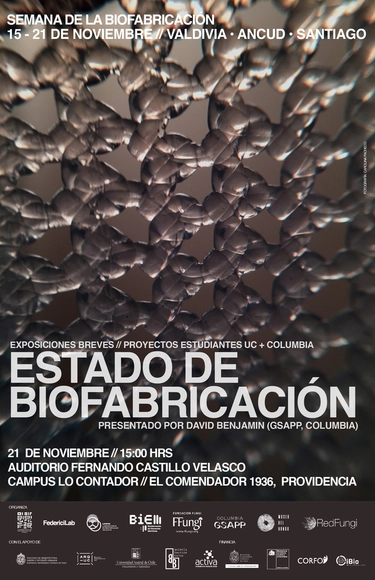
This activity is part of Biofabrication Week. November 15–21. Valdivia, Ancud, Santiago.
Biofabrication State aims to provide an overview of academic exercises on this subject conducted at the Universidad Católica and Columbia University. The event will consist of brief presentations by students from both universities and will feature a presentation by David Benjamin, an architect and professor at Columbia University's GSAPP.
2018 International Conference and Summer School: Sustainable Design of Open Spaces in Lisbon
"When architecture and urban design project their desire onto a (…) a terrain vague, they seem incapable of doing anything other than introducing violent transformations, changing estrangement into citizenship, and striving at all costs to dissolve the uncontaminated magic of the obsolete into the realism of efficacy. (…) Today, intervention in the existing city, in its residual spaces, in its folded interstices can no longer be either comfortable or efficacious in the manner postulated by the modern movement's efficient model of the enlightened tradition. How can architecture act in the terrain vague without becoming an aggressive instrument of power and abstract reason? Undoubtedly, through attention to continuity: not the continuity of the planned, efficient, and legitimized city, but of the flows, the energies, the rhythms established by the passing of time and the loss of limits... we should treat the residual city with a contradictory complicity that will not shatter the elements that maintain its continuity in time and space." Terrain Vague, Sola Morales, 1995
Still from the documentary "Intervenção - amor não quer dizer grande coisa" (Intervention - Love Doesn't Mean Much) by Gustavo Aranda, Tales Ab’Sáber, and Rubens Rewald.
CineCubo is the film club hosted by the Institute of Architects of Brazil, aiming to foster dialogue between audiovisual and architectural languages to broaden and debate perspectives on the city. On the third Tuesday of every month at 7:30 PM, CineCubo screens films followed by a discussion at the IAB-SP headquarters. Curated and moderated by Nana Maiolini, Travessia Filmes, and guests, the sessions are free and open to the general public.
Videos
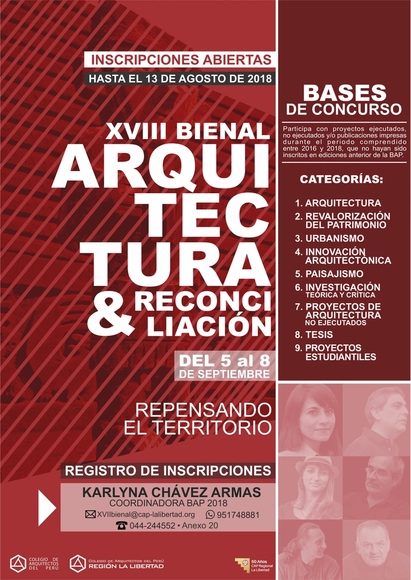
Submit your project to the 18th Architecture and Reconciliation Biennial – Rethinking the Territory. (CAP-RLL)
The 18th edition of the Peruvian Architecture Biennial, co-organized by the College of Architects of Peru – La Libertad Region and the College of Architects of Peru, will be hosted in the warm city of Trujillo from September 5 to 8.
Editorial Universitaria invites you to the launch of the urban history and ethnography book 'Voces de Lota: relatos de la ciudad del carbón' by researcher Dr. María Esperanza Rock Nuñez.
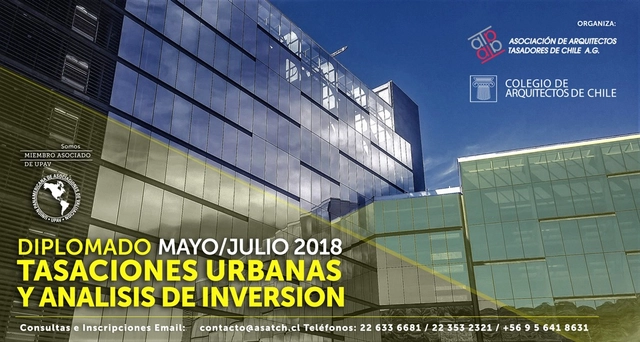
The Diploma in Urban Appraisals and Investment Analysis will take place between May and July 2018, offered by the Association of Appraiser Architects of Chile in conjunction with the Chilean Institute of Architects. The program provides all the fundamental tools for professionals to begin and pursue a career as an appraiser.
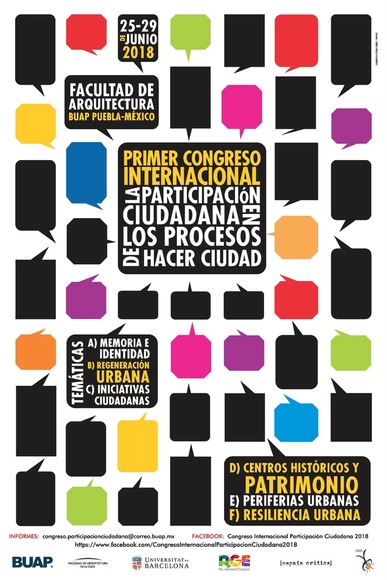
The Faculty of Architecture at the Benemérita Universidad Autónoma de Puebla, in collaboration with the Faculty of Geography and History at the University of Barcelona and Re Genera Espacio, invites submissions for:
The construction industry is one of the largest sectors in Brazil, with high rates of non-professional labor covering a large percentage of urban construction, conceived without the supervision of a technical professional, such as an architect or engineer. The high costs associated with construction lead a large segment of society to seek alternatives for building their homes. Throughout this process, these individuals acquire informal technical knowledge in the construction field; however, the lack of specific design and planning leads to problems such as poorly utilized, dimly lit, and poorly ventilated spaces, a lack of alternatives for material use, unnecessary demolitions, and extended construction timelines that generate expenses and unforeseen issues.
Image created by the hamaca arquitectura technical team
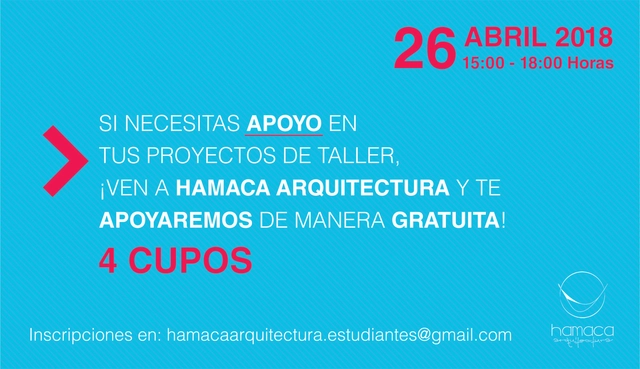
The team at Hamaca Arquitectura invites architecture students to the second season of their studio mentorship sessions. To participate, students must register for this initiative, which aims to improve undergraduate studio projects.
On March 16 at 10:00 AM, Belas Artes will host the inaugural lecture for its Professional Master’s Program in Architecture, Urbanism, and Design. In addition to welcoming new students, the event will initiate discussions relevant to the program's research lines and its concentration area in Architecture, Urbanism, and Design. Centered on the theme "From Taller Total to Participatory Design," the lecture will feature contributions from Professor Sylvia Adriana Dobry Pronsato, PhD, of FIAMFAAM, and Professor Wilson Caracol Ribeiro dos Santos Jr., PhD, of PUC-Campinas.
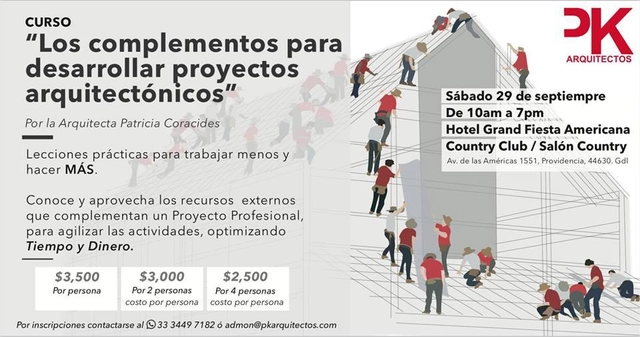
PK arquitectos invites the professional and student community of the Guadalajara architectural scene to the course "Complements for Developing Architectural Projects | Practical Lessons for Working Less and Achieving More," taught by architect Patricia Coracides.
a new environment - image: Lucas Girard and Gustavo Wierman
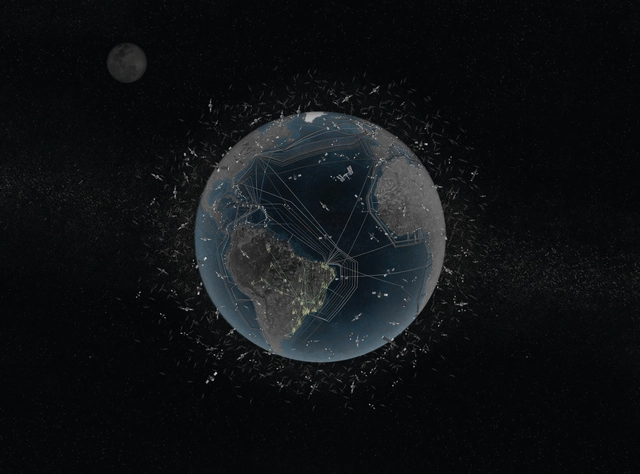
This course offers a historical overview of the development of digital communication technologies and their relationship with urban space. We will also explore why a movement known as "smart cities" exists today, as well as the implications and limitations of distributing this "intelligence" throughout cities.
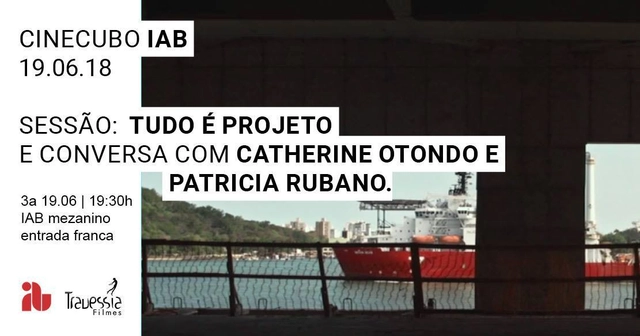
Still from the film “Tudo é projeto” by Joana Mendes da Rocha and Patrícia Rubano.
CineCubo is a film club hosted by the Institute of Architects of Brazil (IAB) designed to foster dialogue between audiovisual and architectural languages and to debate perspectives on the city. On the third Tuesday of every month at 7:30 PM, CineCubo screens films followed by a discussion at the IAB-SP headquarters. Curated and moderated by Nana Maiolini, Travessia Filmes, and guests, the sessions are free and open to the general public.
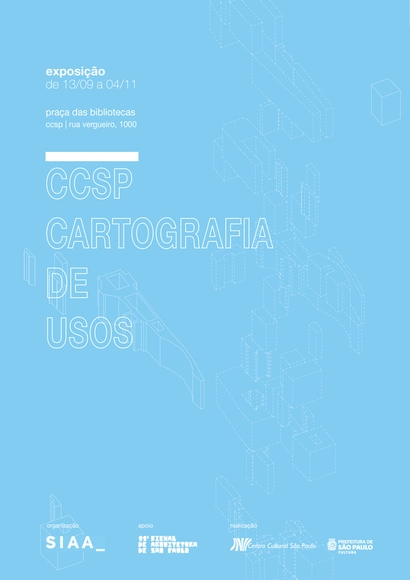
Drawing on the theme "In Project" from the 11th Architecture Biennial, the firm SIAA Arquitetos Associados reflects on the possibility of alternative relationships between architectural design, built space, and public occupation over time, whether anticipated or not. To this end, the firm uses the Centro Cultural São Paulo building—designed by architects Eurico Prado Lopes and Luiz Telles—as the foundation for its reflection, and not by chance. Following a period of immersion in the diverse uses that this space anticipates and enables, this exhibition presents a graphic record developed by the architects at SIAA. The work seeks not only to highlight what is already present in the daily life of the CCSP but also to make explicit the potential of its spaces and uses—whether programmed or appropriated—positioning the building as a powerhouse of cultural management and an architectural and urban object.
We are living in an era of global-scale innovation. Architecture and engineering are also being transformed by these innovations, with a new design concept called BIM at the forefront. According to Bilal Succar, BIM (Building Information Modeling) is a set of interrelated policies, processes, and technologies designed to manage building construction through a database, from the design phase through the end of the building's lifecycle.
As part of the first radio broadcast of the 2018 season—now in its third year on the air—Etéreo (arquitectura que se escucha) captures highlights from the sessions held during the course on urban resilience and climate change in Latin American cities, organized by CELFI (Latin American Center for Interdisciplinary Training).