Videos
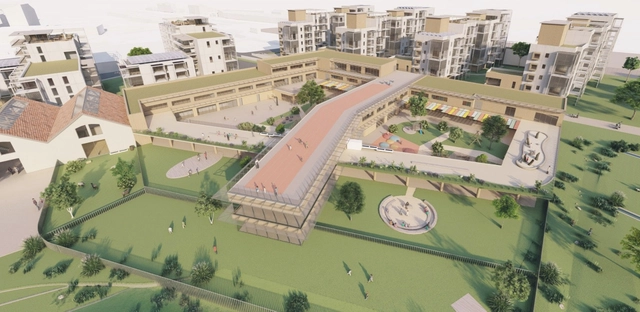
FRANCE - Architecture school of Bordeaux. Image Courtesy of Saint Gobain
Saint-Gobain has announced the results for the 16th edition of its international Multi Comfort Student Contest. This year, the challenge was to convert the post-industrial area of the Coignet company in Saint-Denis (France) into a space for living, learning, and leisure in the heart of a large green space, respecting both the historical heritage and the needs of sustainable development of modern neighborhoods, in collaboration with the city of Saint-Denis.
Learn more about the top three winning projects below.
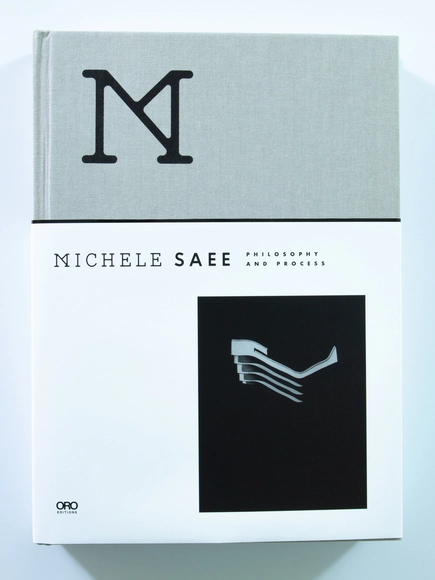
This book is Michele Saee’s life’s work. A collection of projects, built, unbuilt, conceptual, and experimental which expands over more than three decades. There are over 50 projects in different cities, countries, and continents, all with different programs, scales, and sizes on sites varying from the hillsides of Tempio, Sardinia in Italy to the Champs Elysees, Paris in France to the ocean front of the Pacific in California, USA to an apartment condo in newly developed towers in Beijing, and a new aquarium in Shanghai, China. This book is about an architect’s journey of discovery—a fluid emotional exercise in life, love, work, and architecture. The projects are presented based on their individual original design and their development. There are hand and computer sketch, drawings, and model studies of different stages of their development. The book covers everything from conception of the projects in their early stages through the process of their creation. The book clearly shows Michele’s way of working and his personal exploration in establishing his architectural philosophy and language.
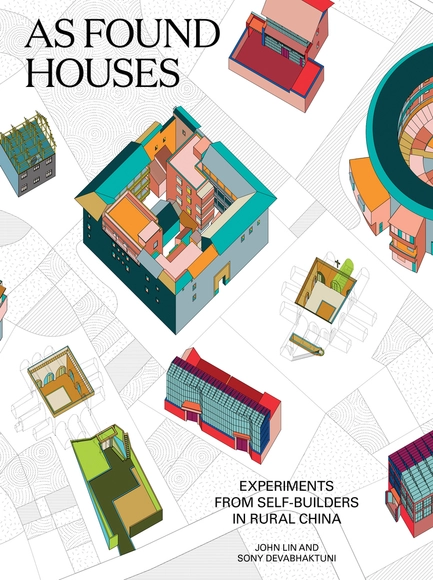
In rural China, an informal wave of building jump-started by economic and social transformations over the past 40 years has rendered some villages unrecognizable. The resulting building boom, taking place in a context of few regulations, has created densities more often found in urban areas. At the same time, the availability of new materials and industrial construction methods has led to remarkable hybrid experiments where rural self-builders adapt, modify, graft, cleave, and wrap traditional building types. These unexpected and innovative solutions address some of contemporary architecture’s most pertinent issues. As Found Houses argues that the manifold evolution of the vernacular is part of the everyday practice of villagers’ lives. The book documents surprising design decisions in the domestic architecture of rural China and is a resource for thinking about new ways of living together.
The contemporary building industry is addicted to new materials in an era that necessitates smarter practices. The concrete industry alone accounts for 8% of global CO2 emissions with alarmingly little attention paid to the inevitable obsolescence of that material. These buildings are destined for the landfill with concrete occupying the vast majority of that mass. THE CANNIBAL’S COOKBOOK mines solutions from an ancient practice known as cyclopean masonry—a practice that intelligently consumes the rubble of building stock to provide new structures. This book contextualizes these practices, deciphers the mysteries embedded in their cryptic geometries, and provides a series of recipes that can be adapted, automated, and applied today. Is the key to recycling our building materials locked inside the cryptic cyclopean masonry walls suspected of being built by primordial giants? THE CANNIBAL’S COOKBOOK challenges the inappropriate practices surrounding concrete by learning from the myths and legends of architectural cannibalism.
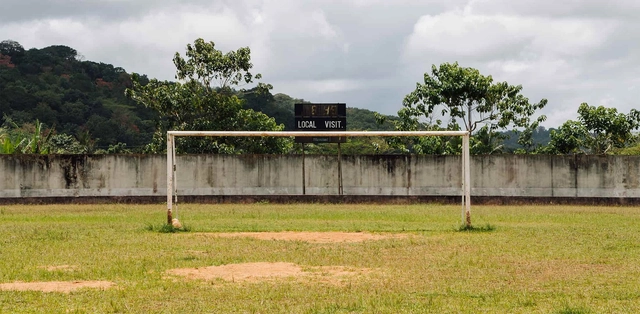
The Lisbon Triennale seeks proposals for self-financed projects that relate to the main programme of its 6th edition for the Autumn of 2022, and bear an independent and diversified character, essential for the living cultural mechanisms in the city and attentive to the liveliness of the debate around architecture.
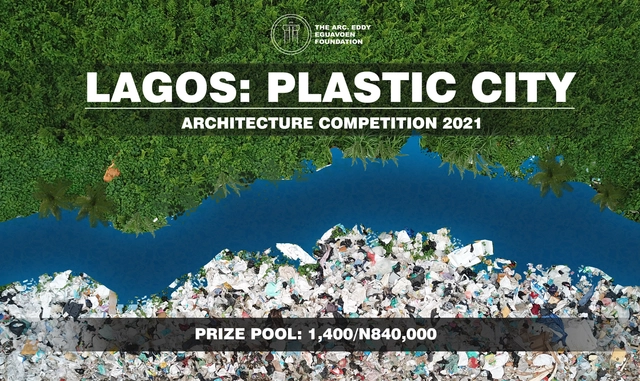
Plastic pollution has been a growing issue for decades and there have been various solutions presented by different global actors and bodies such as governments and international organisations. As architects and urban designers, it is important for us to be involved in this process and Lagos is a city that has seen bleak and limited amounts of solutions that respond to the context of the city. This is what led us to this year’s competition theme.
Universities are critical centres for the production of knowledge and innovation. Since the inception of the Triennale we have involved these institutions in the programme of each edition of its most emblematic event. As such, we invite schools from all over the world to participate in a transverse perspective of possible cooperation. The Millennium bcp Lisbon Triennale Universities Competition Award is part of the central programme for the 6th edition of the Lisbon Architecture Triennale to take place in the Autumn of 2022.
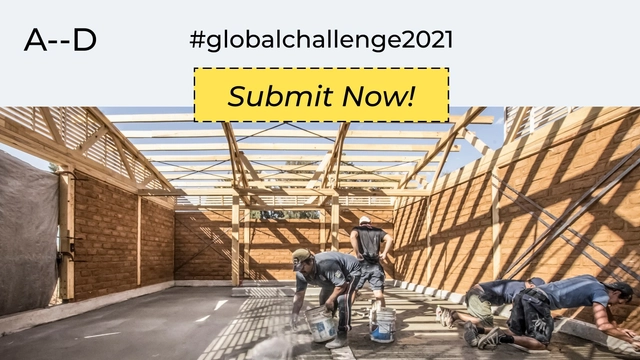
The Global Challenge is calling for high-impact community architectural initiatives. Finalists will have the opportunity to win an award and connect to A--D partners to bring their community project to life
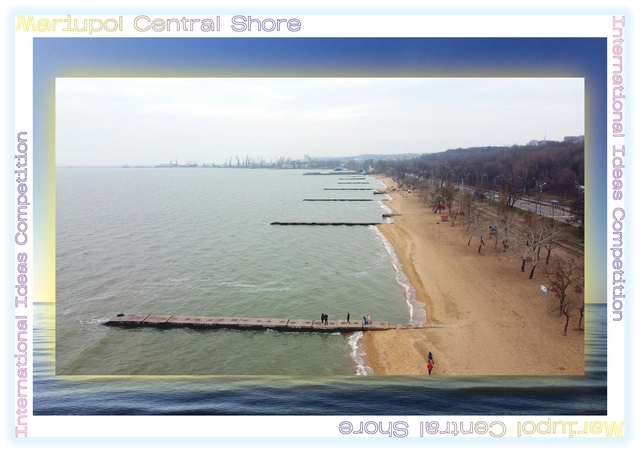
Mariupol Central Shore International Ideas Competition
The mayor of Mariupol (Ukraine) is inviting local and international architects, urbanists, landscape architects and interdisciplinary teams to put forward a bold and contemporary design framework for the reconstruction of the Mariupol Central Shore, a centrally located territory stretching for 2.75 kilometers along the Sea of Azov, with total area of 38 ha.
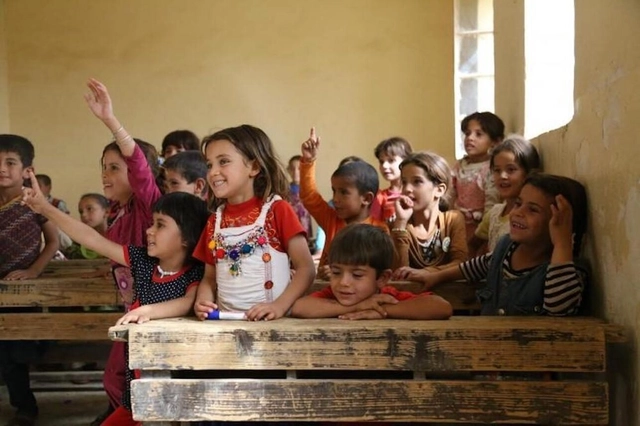
Tamayouz Excellence Award invites architects and designers to submit their ideas for a safe and comfortable space for homeless girls that supports their health, educational and psychosocial needs and helps them to achieve their own potential.
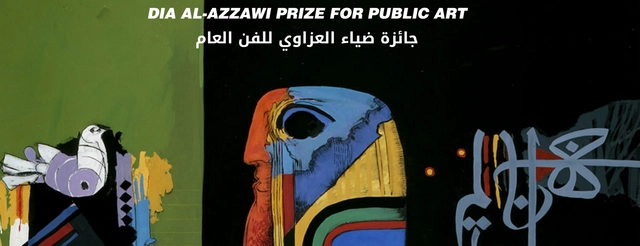
Tamayouz Excellence Award is delighted to launch its newest award, the biannual Dia al-Azzawi Prize for Public Art, as part of its programme of championing and celebrating the built and urban environment worldwide. The new award is named after the internationally celebrated Iraqi artist Dia al-Azzawi, one of the pioneers of modern Arab art, and will run biannually.
Eurasian Challenge is about exploring direct and metaphorical ideas of what architecture can be and do. It aims to foster creativity and expand the horizons of architecture and its meaning in our lives.
Sustainability in architecture addresses the negative environmental and social impacts of buildings by utilizing design methods, materials, energy, and development spaces that are not detrimental to the surrounding ecosystem or communities. The philosophy is to ensure that the actions taken today do not have a negative consequence for future generations and comply with the principles of social, economic, and ecological sustainability.
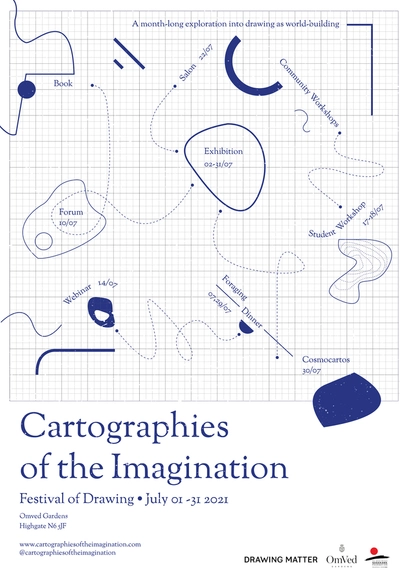
Cartographies of the Imagination is a month-long experimental drawing festival held in the RIBA award-winning Omved Gardens and Glasshouse in Highgate. The otherworldly setting forms the inspiration for a series of conversations, workshops, feasts and a growing exhibition exploring the world of drawing between the real and the imagined.
Head to https://linktr.ee/nusmarchgradshow to access the online exhibition and RSVP for the respective online dialogues!
The NUS M.Arch Show 2021 showcases the thesis projects of the graduating Master of Architecture students from the National University of Singapore; a collection of bold questions and propositions displaying the expertise obtained in architectural education. A year-long undertaking, the thesis is an arduous yet joyful journey, where conversations, critiques and references gently nudge students towards certain contemporary and relevant trajectories, organically converging into communities of practice where the works collectively resonate with one another. Convergence occurs along five discursive threads, which form the five clusters of the show: “Critical Architecture”, “History & Heritage”, “Sociopolitics & Geopolitics”, “Technologies” and “Urbanism & Environments”. Each cluster is uniquely positioned to probe the limits of the discipline, and to respond to the demands of wider society.