Paisaje Transversal

BROWSE ALL FROM THIS AUTHOR HERE

5 Basic Points for Dignified Architecture

Subscriber Access | 

When Paisaje Transversal was founded, 10 years ago, one of our driving motivations was to demand and advocate for a more responsible profession—one that is respectful of both its own guild and society as a whole. At the time, we saw—and we still see today—that one of the most damaging consequences of Architecture's self-absorption and self-sufficiency (the capital "A" is ironic; we prefer talking about architectures), both in the professional realm and, to an extreme degree, in universities, is the profound ignorance it fosters around fundamental topics like labor, business management, and the law, among many others.

This widespread ignorance—proudly imposed and self-imposed because these are dismissed as dry, secondary matters—has in practice led to an anomalous system where fraud, exploitation, precariousness, and self-exploitation are all too frequent. This, naturally, ends up harming professionals, the profession, and society at large.

A less obvious cause of this phenomenon is that, in many cases, this dereliction of duty is voluntary. It stems either from an unsupportive, anti-system liberal stance, or from the precariousness of a profession that was once wealthy and now refuses to accept its new economic reality.

Below, we list five principles we believe must be shared and championed to rebuild a dignified and responsible profession:

Is it possible to live in city centers again? #OlotMésB says yes

Subscriber Access | 

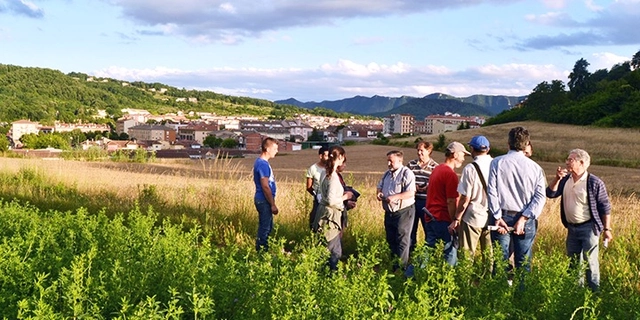
Many cities are watching their historic centers gradually wither away: businesses close, building renovations decline, rental rates drop, and there is no generational renewal in the area. The conveniences of newly developed areas (elevators, parking, shopping) mean that many young families do not even consider moving back to downtown streets. This is the case in Olot, Spain, which, unlike other cities, has decided to take action and clearly understand the reasons behind this progressive abandonment of its old town. To do so, they turned to a process that consistently bridges local resident opinions with expert panels, building on a model previously implemented in Olot's Sant Miquel neighborhood.

Since April 2017, the urban innovation office Paisaje Transversal has been working alongside the Catalan city council in its effort to improve the quality of life in the downtown area and restore the vibrancy it never truly lost. To understand this process, the Participatory Diagnosis was recently presented. This document corresponds to the second phase of the #OlotMésB project, which aims to design the PIAM (Comprehensive Improvement Action Plan) for the city's Nucli Antic (Old Town). The document's primary goal is to analyze the realities of the historic center through various instruments, such as gathering and processing community and technical data, serving as a tool to define strategic guidelines and improvement actions tailored to the studied context. Community participation has been vital since the beginning of the process and will continue to be so in the upcoming phases.

Smartcitizens: From the Smart City to Smart Citizenship

Subscriber Access | 

The *smart city*, that great contemporary promise for solving urban problems, carries a history of contradictions that has culminated in a new term, an heir to concepts deeply rooted in the knowledge society: smartcitizens. Indeed, the recognition of this term highlights the need to review the impacts of the exclusively technological urban solutions that shaped early smart city proposals. Thus, the *smartcitizens* concept represents initiatives arising from collective intelligence that pave the way toward changing the socioeconomic structure of our cities, based on the capacity to stay connected, share information, and proactively engage with our environment.

*Smart cities* here, *smart cities* there, *smart cities everywhere*. For several years, we have witnessed the smart city boom, to the point where, seemingly overnight, every city is *smart*1. As a result, the popularity of the term has grown exponentially, eclipsing other, more comprehensive prior concepts such as the "sustainable city"2, or others that aligned more closely with the networked era and its resulting socioeconomic relationships, such as the "knowledge city"3.

The Triple Dimension: A Methodology for Collaborative Public Space Design

Subscriber Access | 

Originally published as Collaborative Design of Public Space: The Triple Dimension, this new collaboration by Paisaje Transversal proposes a specific methodology for both evaluating the quality of public space and facilitating urban design "if we want to transform public space into a living fabric," the authors explain.

Public space is the fluid that unifies the city, the fabric that stitches buildings together and weaves social, economic, and environmental relationships. It shapes issues as crucial as mobility, coexistence, and a community's cultural exchange, as well as the environmental quality that directly impacts everyone's health.

Public space shapes our daily lives, either offering or depriving us of spaces for socialization. Consequently, it is a priority, both for the sustainability of the city and the lives of its inhabitants—a matter that demands the involvement of not only urban design professionals but also the general public. To achieve this, citizens must understand the factors that determine the livability and functionality of public space, just as they recognize the characteristics of decent housing.

Urbanism in permanent beta

Subscriber Access | 

We are witnessing a historic moment, standing at the dawn of an inevitable epochal shift. The economic, social, energy, and ecological crises in which we are immersed are some of its most evident symptoms. However, we must confront this bleak context from an optimistic perspective, viewing it as an opportunity to subvert the old paradigms that have led us to this dramatic situation.

But how do we prepare to face the urban challenges of a future that begins today? We certainly cannot do so by relying on outdated frameworks and tools; as Einstein famously said, “We need new ways of thinking to solve the problems created by old ways of thinking.”

The challenge of #ReadingMadrid: wayfinding and urban morphology

Subscriber Access | 

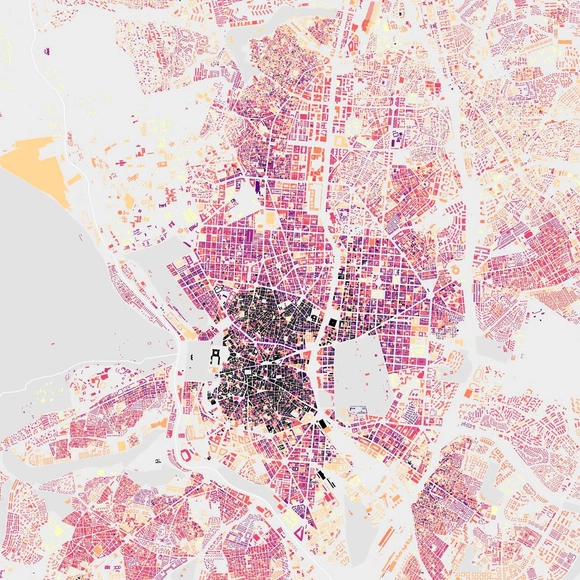
Do identical brick blocks confuse you? Are you unsure whether to turn at this corner or the next because all the perimeter-block buildings look exactly alike? Do you lose your way in the narrow, winding streets of the city center? As it turns out, this is a common challenge for many, which is why it is essential for cities to invest in wayfinding systems designed specifically for pedestrians.

The benefits are numerous. First, it is an excellent way to promote the cleanest form of transit: walking. The advantages of this include easing public transit congestion, reducing vehicular traffic, encouraging a deeper familiarity with the city, and revitalizing businesses on secondary streets—not to mention the positive impact on tourists and visitors. This is precisely what the #LeerMadrid project aims to achieve. The initiative is currently being developed by Paisaje Transversal in collaboration with Applied Wayfinding, Avanti Avanti, Urban Networks/CGR, and Dimas García Moreno.

Debunking Myths and Fallacies About Citizen Participation in Urbanism

Subscriber Access | 

In recent years, we have witnessed the rise of the concept of “citizen participation,” particularly in the political sphere. As is often the case, this surge is not without controversy and carries inherent risks. Much like what occurred with the term “sustainability,” participation can be relegated to a smoke screen used to conceal specific types of political despotism. A clear example of this can be found in the Netherlands; in September 2013, King Willem-Alexander announced “the transition to a participatory society” to justify dismantling the welfare state through neoliberal policies and some of the harshest budget cuts the country has ever faced.

Clearly, urbanism and urban planning have not been immune to this trend. While the development of statutory urban planning instruments (General Plans, Partial Plans, Special Plans, etc.) is legally required to incorporate public participation mechanisms, the reality is that these are often reduced to public comment and exhibition periods. Consequently, actual participation is replaced by mechanisms that belong strictly to the realm of communication and information sharing.

How to improve mobility without being 'anti-car'? The challenge of #CompleteStreets

Subscriber Access | 

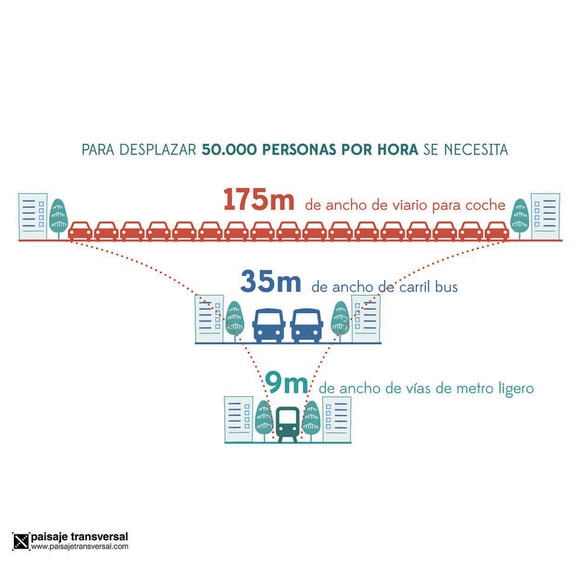
Numerous movements are demanding alternatives to current urban mobility—systems designed by and for vehicular traffic, burdened by an outdated planning mentality that centered everything around the car. Their reasons are equally diverse: improving public health, utilizing economic resources more rationally when commuting, lowering pollution levels (both noise and air), and even increasing efficiency by reducing travel times.

Yes, we are referring to the endless and inevitable daily traffic jams we have all experienced. 

If the benefits across all sectors are so clear, why haven't we implemented an alternative mobility system on our streets yet? There are several answers to this question, ranging from public resistance to change and a lack of prioritization in political agendas, to the simple fact that there is no universal, magic formula to solve every issue overnight everywhere. Once we overcome these barriers, we can begin by analyzing who currently uses the streets, who does not, and why.

From privatization to the collectivization of public spaces

Subscriber Access | 

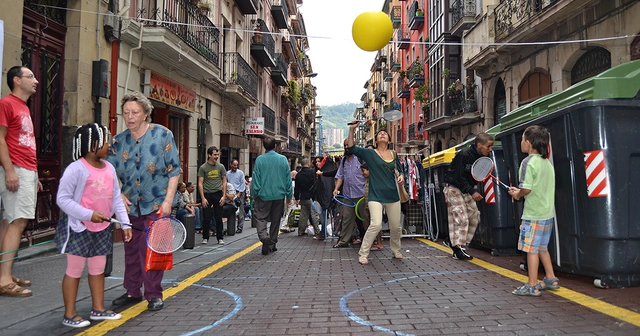
Since ancient Greece, public space has been the primary setting for gathering and socialization in cities and towns, supporting a wide range of activities as well as political debate and collective empowerment. It is a common good from which to foster equality, respect, and solidarity as the foundation of a fairer society. One of the primary characteristics of public space is its capacity to adapt and open itself up to new challenges and uses. 

However, in recent years, licensing the commercial use of public spaces has become a growing source of revenue for municipal governments. The regulation and legal restriction of how our plazas and other spaces are used, enforced through municipal ordinances and codes, represents one of the primary dimensions of the privatization of public space. Privatization is understood here as the process of establishing conditions that restrict free access to a common good. The overexploitation of public space for corporate profit promotes a consumerist urban model that is detrimental to the citizenry.

What tools do we have to collaboratively design public space?

Subscriber Access | 

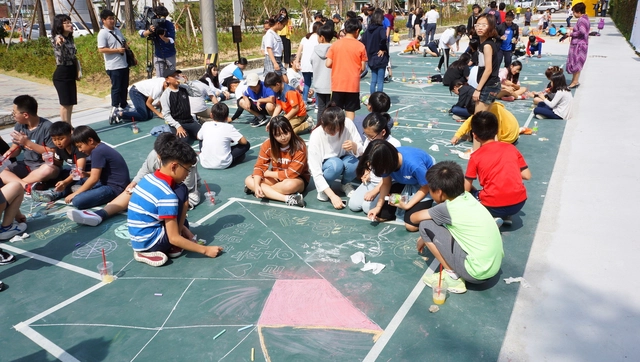
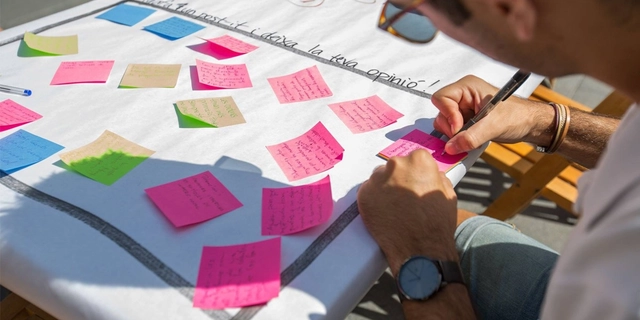
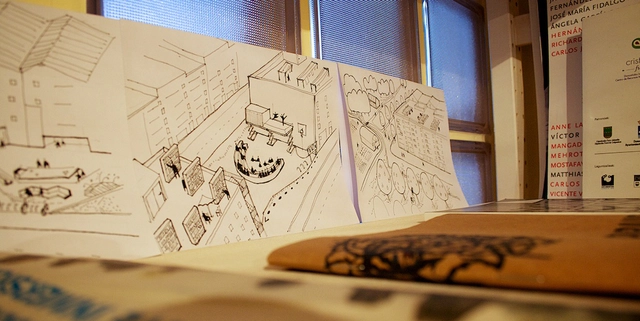
When it comes to design, the channels opened for information gathering are vital to the success of the process. The diversity and breadth of the audience to whom our questions and inquiries are addressed is so wide that we must design processes that allow everyone to contribute, and to do so constructively on a common playing field, as this is the only way to achieve a collective design. Through our experience, we have tested the effectiveness of different tools and selected those that we at Paisaje Transversal consider most effective.

Since it is always better to provide examples to understand and apply our work to reality, we have decided to use our project in Torrelodones to showcase these tools. This project involves the collaborative design for the remodeling of Pradogrande Park, a park of over 4 hectares located in the area of the Madrid municipality known as La Colonia, which extends through the urban center. The park's current use and the diverse activities it hosts—ranging from local festivals and occasional events to sports fields, play areas, and dog parks—make it even more critical to analyze every change and renovation alongside its users.

How, then, do we propose to listen to both the park and its users?