IAAC

BROWSE ALL FROM THIS AUTHOR HERE

Alexander Dubor: “Robots could play a fundamental role in the construction process”

Subscriber Access | 

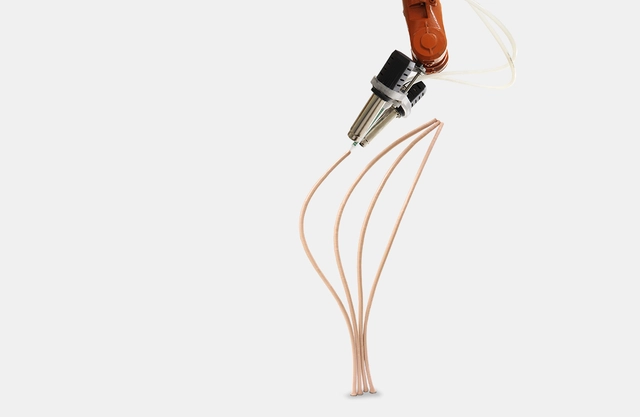
Alexander Dubor, an architect and researcher, combines new technologies in an effort to improve how we build and inhabit our cities. Currently, he heads the Open Thesis Fabrication (OTF) program as well as the Master in Robotics and Advanced Construction (MRAC) at IAAC. Alongside IAAC staff, students, and industry partners, he investigates how developments in materials, digital fabrication, and computational design can foster a better construction ecosystem, moving toward a more efficient, affordable, sustainable, and customized built environment.

As an expert in digital fabrication and robotics, Dubor discusses the current state and future prospects of robotics in construction. In this interview, he analyzes how the digital revolution can drive productivity, sustainability, and cost reduction across the construction sector.

Furthermore, he suggests that although most digital construction currently takes place off-site, future breakthroughs in robotics point to a scenario where robots evolve to play a pivotal role directly on-site.

Alexander Dubor: “Robots could play a fundamental role in the construction process” - Featured ImageAlexander Dubor: “Robots could play a fundamental role in the construction process” - Imagem 1 de 4Alexander Dubor: “Robots could play a fundamental role in the construction process” - Imagem 2 de 4Alexander Dubor: “Robots could play a fundamental role in the construction process” - Imagem 3 de 4Alexander Dubor: “Robots could play a fundamental role in the construction process” - More Images+ 19

5 Passive Cooling Alternatives Using Robotics and Smart Materials

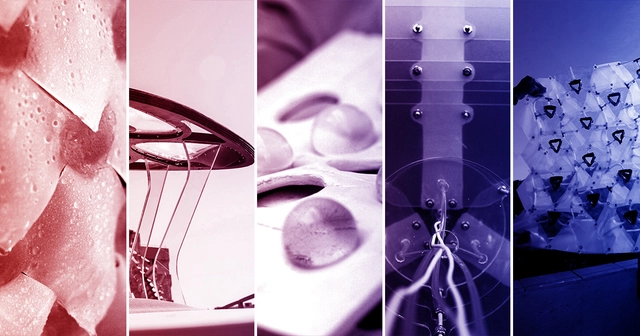
The IAAC (Institute for Advanced Architecture of Catalonia) has developed a series of advanced materials and systems for air conditioning and passive ventilation, allowing homes to reduce interior temperatures up to 5 degrees lower while saving the electricity consumption caused by the traditional air-conditioning. The systems are made from long-lifespan materials, which lower the costs of maintenance in the long-term and can be used as low-cost alternative building technologies.

The projects highlighted are the Breathing Skin, Hydroceramics, Hydromembrane, Morphluid and Soft Robotics - all developed by students of the IAAC's Digital Matter Intelligent Constructions (conducted by Areti Markopoulou). The passive air-conditioning of spaces is investigated using a combination of new materials that mimic organic processes, adaptive structures and Robotics that help regulate temperature and create sustainable micro climates.