Believing in the importance of supporting knowledge and policy production in the field of design and architecture, the Istanbul Design Biennial hosts a research programme titled Designing Resilience, in partnership with the Center for Arts, Design, and Social Research. The programme aims to work collaboratively with a selection of four women designers, curators, researchers, thinkers (two from Turkey and two from the US) who are actively investigating geopolitics to build new tools and systems for social, economic and mostly environmental resilience.
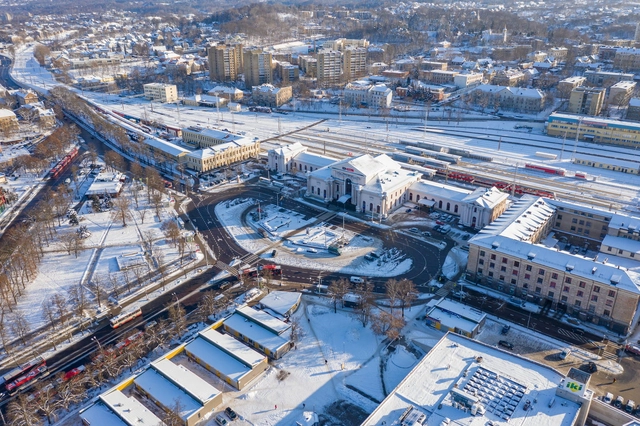
Vilnius city municipality, together with Lithuanian Railways (LTG), have just announced an open international architectural competition for reconstruction of Railway Station, Central Station Square and Public transport terminal in Vilnius, the capital city of Lithuania.
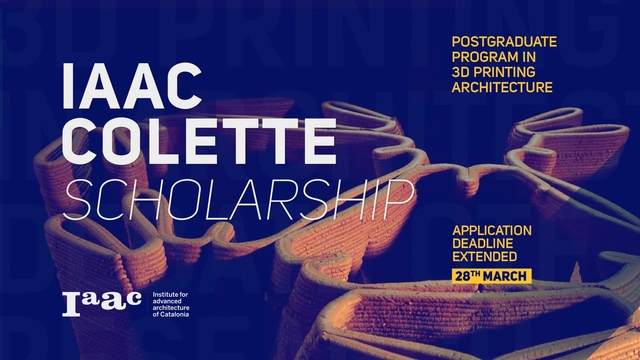
DEADLINE EXTENDED! Project Colette together with the The Institute for Advanced Architecture of Catalonia wishes to support this new generation and help them propose a new sustainable architecture and urbanism capable to face the challenges of our century.
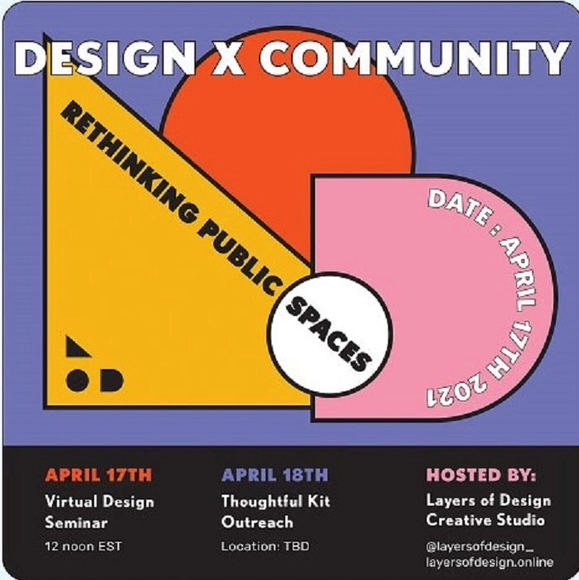
DESIGN X COMMUNITY: Rethinking Public Spaces. A competition by Layers of Design Creative Studio encouraging the design community to create solutions for people experiencing homelessness.
INFORMATION Layers of Design is launching a brand new and exciting competition that will look into developing temporary design solutions for people experiencing homelessness, an issue that is present all around us. There are so many reasons people become homeless. Many homeless people find it difficult to fit into society and feel unwelcomed. Public spaces should be a safe and fair space where all the members of a community can coexist together. This competition aims to bring positive strategies and scenarios that could aid people get back on their feet while transforming public spaces into becoming more energetic, engaging, and welcoming to all.
This Design Challenge offers student teams around the world the chance to design a concept for a real site in the 175-hectare Kalasatama neighbourhood near the centre of Helsinki, Finland.
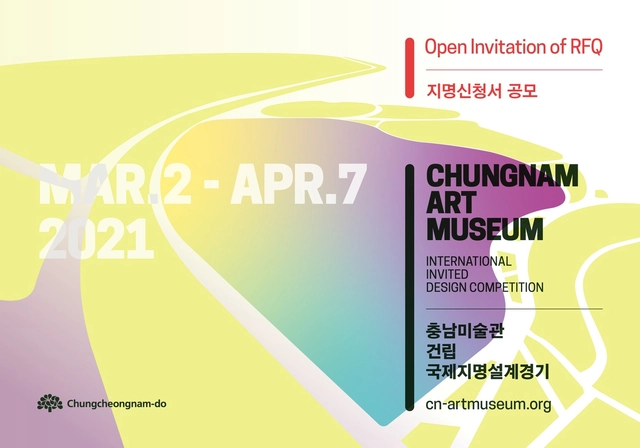
The Chungcheongnam-do Government intends to construct 「Chungnam Art Museum」, an art power plant that opens up new imagination and future in Naepo New City. In order to build a world-class contemporary art museum beyond the symbol of the region, the winning proposal will be selected through an international invited design competition. Therefore, we hereby encourage you to submit Request for Qualifications(RFQ) for selection of the teams to be invited.
New Urban Challenges - New Generations Call for Publications 2021
New Generations is a European platform that investigates the changes in the architectural profession ever since the economic crisis of 2008 by analysing some of the most innovative emerging practices at the European level, providing a new space for the exchange of knowledge and confrontation, theory, and production. The project was conceived by Itinerant Office in 2012.
INTRODUCTION: Have you ever imagined what the architecture of Africa would look like today, if the great civilizations of Egypt, Timbuktu, Mali, the Dogon, Zulu, Yoruba, and thousands of other African empires had continued to develop and evolve in their own unique identity? Imagine the transformation of the African landscape into sprawling metropolises filled with architectural masterpieces celebrating new interpretations of traditional design elements, portrayed with all the comfort of modern innovations and technique.
Deadline: Midnight (BST) on Tuesday 1 June 2021 4 Prizes of £1000 The Drawing Matter Trust is pleased to announce the return of the Drawing Matter Writing Prize. The competition invites participants to carefully look at drawings and to consider what they reveal about the process of design, and the buildings or objects they represent. The Writing Prize competition is open to anyone aged over 18, with or without a background in architecture or design. We welcome a broad range of approaches towards writing, and voices from art and architectural history, the sciences and humanities, alongside practitioners – architects, designers, artists and writers. This year the competition will be judged by Prof. Adrian Forty and Prof. Briony Fer, with support from the Drawing Matter editorial team. The competition winners, and other participants with outstanding entries, will be invited to publish their texts on Drawing Matter’s website. Covid-19 restrictions permitting, we hope to announce the winners on Saturday 17 July 2021 at the Drawing Matter Archive in Somerset.
Introduction Presentation skills are just as important as designing; one of the best mediums to present your architectural designs is through rendering. Architectural rendering aims to create life-like experiences of the buildings before they are built. Rendering aids the designer to convey his or her ideas, an image that represents the designers' imagination most realistically.
The RIBA has launched a competition for the design of a new mosque on a site near Preston in Lancashire on behalf of a local registered charitable trust.