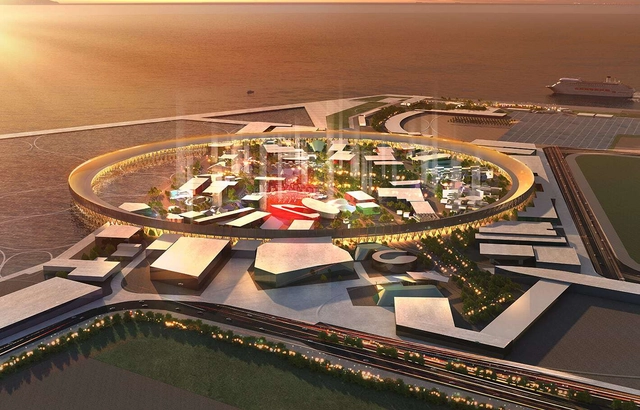
Expo 2025 Master Plan. Image via Expo 2025 Osaka, Kansai, Japan
The Brazilian Trade and Investment Promotion Agency (ApexBrasil) has launched the design competition for the Brazil Pavilion at the Osaka World Expo, which will take place between April and October 2025. The official call for entries was released on October 3, marking the celebration of World Architecture Day. Registration is open until November 7 on the official competition website, and the results will be announced on December 5.
https://www.archdaily.com/1132369/registration-open-for-the-brazil-pavilion-competition-at-the-osaka-2025-world-expoArchDaily Team
The Latin American Architecture Biennale (BAL) provides a perspective on the architectural scene—a bridge between Latin America and Spain. Currently organized by the AREA association in collaboration with the Pamplona City Council, the Basque-Navarre Association of Architects, the Government of Navarra, and the Ministry of Development, the event takes place primarily in Pamplona, with extensions in Madrid and Barcelona, alongside a traveling exhibition across the country.
The firm EArquitetos was awarded second place in the national design competition for the Casarão Gallotti Historical Center in Tijucas, Santa Catarina. Organized by the Institute of Architects of Brazil – Santa Catarina Department and the Tijucas Department of Culture, Youth, and Tourism, the competition aimed to "stimulate the preservation of the city's landscape and urban heritage" and "humanize the open spaces of the historical center."
Below, discover the proposal, accompanied by the project description provided by the design team.
Primer Premio. Image Cortesía de OP Arquitectos (Marcela Orcaje - Gonzalo Pérez)
Sponsored by the Argentine Federation of Architects' Associations (FADEA), the College of Architects of the Province of Buenos Aires District 5 (CAPBA D5) organized the National Preliminary Design Competition for the renovation, expansion, and restoration of the CAPBA D5 delegation headquarters in the city of Lobos, province of Buenos Aires. As a binding competition, the first-prize winner will develop the executive project and oversee construction supervision under separate contracts.
During the ceremony, the winning films in the two competition categories, feature films and short films, were announced. Learn more about each of them below.
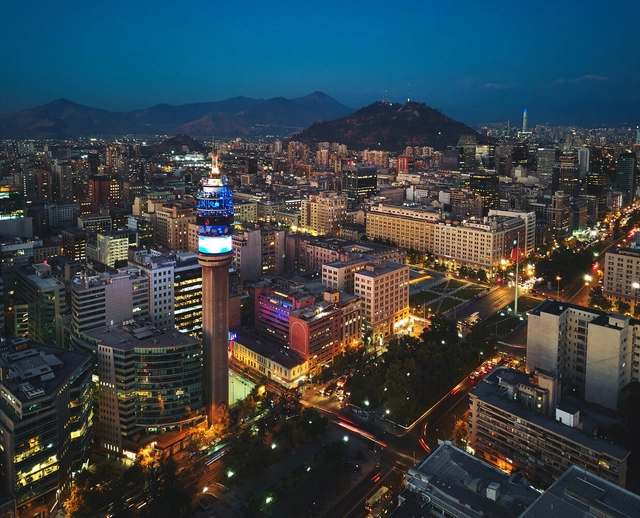
In early 2015, the Regional Government of Santiago in Chile launched a public competition for the redevelopment of the Alameda-Providencia axis, an 11.3-kilometer-long avenue that serves as the most important mobility corridor in the Chilean capital.
The winning proposal was awarded in October of that same year to a team comprised of the firms Lyon Bosch, Martic Arquitectos, and Groundlab. Although construction was scheduled to begin two years later, in March 2019, the project was canceled by the administration at the time due to budget constraints. They announced that only a segment of the western end of the corridor would be renovated, though no progress has been reported since.
Three years later, on December 28, 2022, President Gabriel Boric, alongside local mayors and authorities, signed a public cooperation agreement to reactivate the recovery and transformation of the Alameda-Providencia axis in its original scope: from Pajaritos Street in the east to Plaza Baquedano, popularly known as Plaza Italia or Plaza Dignidad.
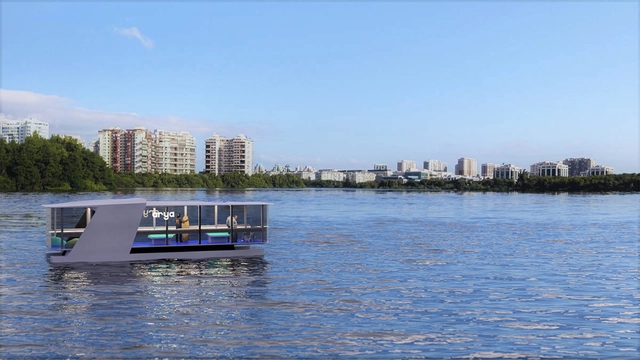
An eco-friendly autonomous vessel will begin transporting passengers through the waterways of Rio de Janeiro in December 2022. The new urban mobility project is the result of a partnership between travel platform Hotel Urbano – Hurb and TideWise, a Latin American autonomous boat company.
The new partnership will explore several of the city's water routes to connect tourist attractions and major hubs, such as Sugarloaf Mountain and downtown Rio, as well as the Península in Barra da Tijuca and the Jardim Oceânico subway station.
https://www.archdaily.com/1132086/autonomous-boats-will-transport-passengers-in-rio-de-janeiroArchDaily Team
A recent study revealed that, since 2014, marine heatwaves have become “the new normal.” The climate crisis is no longer a concern for the distant future. Extreme events are increasingly common; one only has to follow the news. While it may seem that public officials are being caught off guard, scientists have long warned of the need to focus on sustainable development.
Good examples are still few and far between, but they do exist. At COP26, a comprehensive guide featuring proven strategies to achieve urban cooling was launched.
During the International Union of Architects (UIA) 2020 International Forum, “Affordable Housing Activation: Removing Barriers,” the Higher Council of Spanish Architects’ Colleges (CSCAE) developed the first dynamic atlas on access to housing. The platform aggregates over 4,000 economic, urban, and development indicators into a single interface, making them easy to analyze and interpret. The data is sourced from major international organizations, including the World Bank, the Inter-American Development Bank, the International Monetary Fund, and the World Health Organization.
The call for entries for the European Award for Architectural Heritage Intervention (AHI), aimed at professionals and associations linked to architectural heritage, is open until March 17, 2023. Its primary objective is to recognize high-quality interventions in built heritage across all its dimensions. In doing so, the award aims to contribute to their dissemination and establish itself as a catalyst and observatory for the new challenges that contemporary architectural globalization poses to the conservation and intervention of built heritage.
In January of this year, a legal framework for distributed micro- and minigeneration of energy was established under Law 14,300/2022. The text ensured that the sector's previous rules would be maintained until 2045 for existing solar installations and new customers within a 12-month window. Now, with only three months left in the year, the topic is back in the spotlight, as the deadline to secure benefits like exemptions from certain tariff components is fast approaching.
The National Historical and Artistic Heritage Institute (Iphan) has launched the 35th edition of the Rodrigo Melo Franco de Andrade Award. The award recognizes outstanding national initiatives in the preservation and promotion of Brazilian Cultural Heritage. This year's theme is the Socioeconomic Sustainability of Cultural Heritage, and submissions are open until July 11.
https://www.archdaily.com/1132271/iphan-opens-applications-for-the-2022-rodrigo-melo-franco-de-andrade-awardArchDaily Team
The Mexican project Casa de Música, designed by Colectivo C733, and the Bío Bío Regional Theater in Chile, by architects Smiljan Radic, Gabriela Medrano, and Eduardo Castillo, have been jointly awarded the Grand Prize at the Pan-American Architecture Biennial of Quito BAQ 2022.
To celebrate its tenth edition, Open House will open the doors of more than 160 spaces and buildings of great architectural, cultural, and heritage value in the Autonomous City of Buenos Aires on October 1 and 2, 2022. As it does every year, this architecture and urbanism festival will offer the public the opportunity to rediscover the city's architecture and urban design, as well as its people, stories, and anecdotes, through free activities, visits, gatherings, and tours.
The CA Awards and Honors are among the most prestigious recognitions for architects in Chile, honoring 12 registered members for their work and contribution to the country's architectural field. Coinciding with the closing of Architecture Month and the commemoration of the 80th anniversary of the Colegio de Arquitectos de Chile, the award ceremony will take place on Thursday, August 25, at 6:00 PM. The event will also be broadcast via FB Live and on the YouTube channel of the Colegio de Arquitectos.
Registration is now open for the 24th IABsp Awards 2022—a traditional and prestigious award in the field of architecture and urbanism organized by the Institute of Architects of Brazil, an institution with over a century of history. “This edition seeks to consolidate the advances of the national edition held in 2021, aligning the categories and subcategories with the reality of our profession.” Hannah Machado, Co-president of IABsp
Until November 21, architects and urban planners can register for free through the website.Participation is limited to IAB members from any of the state departments across the country with works and proposals executed in the state of São Paulo since January 2017. Fortunately, applicants can also join the institute during the registration period.
https://www.archdaily.com/1131844/applications-open-for-the-24th-iabsp-awardsArchDaily Team
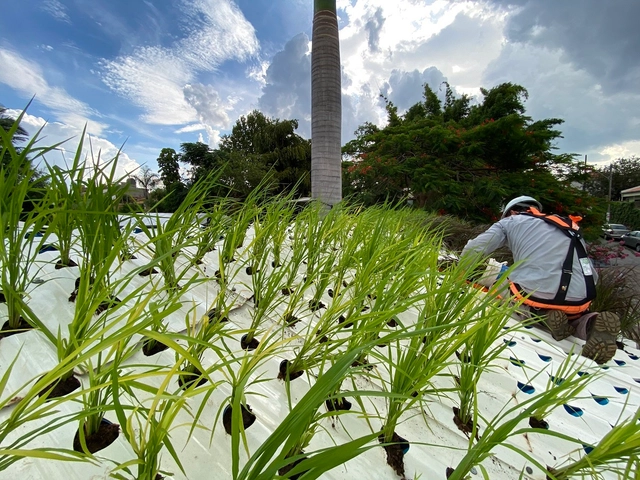
Telha permite o cultivo fácil no telhado. Image Cortesia de Kaatop
The desire to simplify and find new ways to bring more greenery to buildings and cities motivated agricultural engineer Sérgio Rocha to create Kaatop, a hydroponic roof tile designed for cultivating various plant species. The inspiration for the tile came from his professional experience developing green roofs and suspended gardens. Working in the field for over a decade, Rocha noticed that existing market systems and techniques struggled to gain traction in construction projects.
https://www.archdaily.com/1131850/brazilian-develops-the-worlds-first-commercial-scale-hydroponic-roof-tileMayra Rosa
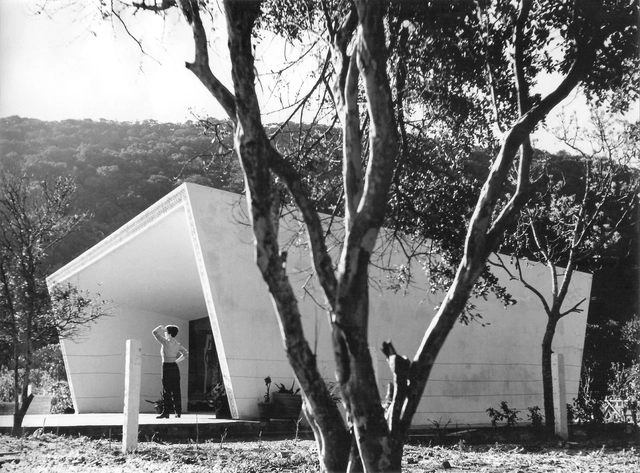
A new title from Edições Sesc SP, Oswaldo Corrêa Gonçalves arquiteto cidadão, highlights the main contributions of the engineer, architect, and urban planner across the various fields in which he worked. Born in Santos in 1917, he designed residential projects, sports facilities, schools, and institutional buildings, including the first Sesc/Senac units. Organized by architects Gino Caldatto Barbosa and Ruy Eduardo Debs Franco, the book also highlights his role in founding the School of Architecture and Urbanism at the University of São Paulo (FAU-USP), FAU Santos, and the Institute of Architects of Brazil in São Paulo (IAB-SP).