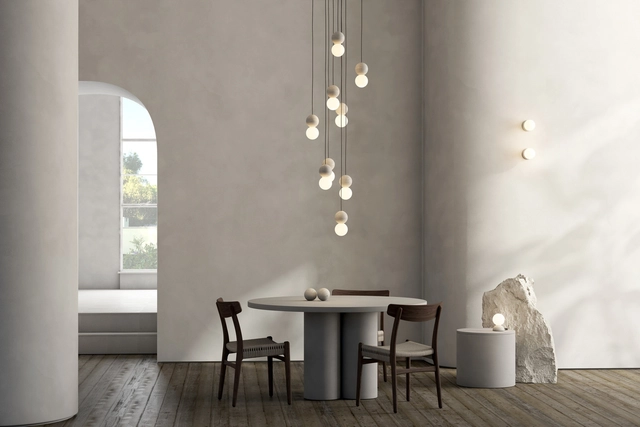
Founded in 2013 in Mexico City, David Pompa is a studio comprising designers, engineers, and makers based in Mexico and Austria. David Pompa grew up in both countries and studied product design in London. Over time, the studio has shown a strong interest in traditional materials and techniques, maintaining a commitment to Mexican culture since its inception, which is reflected in its creation of aesthetic and accessible design objects.
On Wednesday, December 16, Panel Rey brought together architects from across Mexico for its fifth annual New Year's toast in Monterrey, Nuevo León. This year, a special recognition was presented to architect Bernardo Hinojosa, who has an impeccable career of more than 46 years in the profession, with more than 1,750,000 square meters of planned projects spanning commercial, office, educational, sports, urban, industrial, and residential architecture.
Yesterday, the Mayor's Office of Bogotá shared on social media the first images of the Santa Clara Hospital renovation, which is part of the San Juan de Dios hospital complex in the Antonio Nariño district. They also announced the signing of the start-of-work agreement for its construction and renovation.
With the launch of ODA2020, this year we celebrate the twelfth anniversary of the Building of the Year Award (ODA), the highest recognition in the Spanish-speaking architectural world, where the winners are chosen by popular vote. Starting today, Tuesday, March 10, and for the next three weeks, our readers will be responsible for determining which projects inspired us in 2019, faithfully representing the identity of our local contexts while shaping the way architecture is practiced around the world.
Over the next three weeks, the entire ArchDaily en Español network (Plataforma Arquitectura, ArchDaily México, ArchDaily Colombia, and ArchDaily Perú) will serve as the platform for celebrating the best built architecture in Spain and Spanish-speaking Latin American countries.
From a pool of nearly one thousand projects published in 2019, you can easily find your favorites by browsing each category and using the search tool to filter projects by country and architecture firm.
Directed by Gerardo Panero, the documentary narrates the life and work of architect Amancio Williams, a key figure of the Modern Movement in Argentina. Amancio played an undeniable role in renewing the country's architectural ideals, gaining global recognition for his ideas and projects. Among these is the famous Casa sobre el arroyo (House on the Brook), designed in collaboration with his wife Delfina Gálvez de Williams between 1943 and 1946 in the city of Mar del Plata. Although many of his proposals were never built, his ideals and explorations brought about significant changes in the understanding of ways of living, technique, and aesthetics, leaving a valuable legacy for future architects.
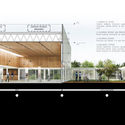
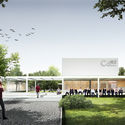
The winners of the Ideas Competition for the San Francisco Regional Cultural Recreational Space 2 have been announced. This public, province-wide call invited participants to design a building dedicated to community gathering, recreation, socialization, exchange, education, outreach, and civic participation.
We are pleased to present the finalist projects for the 2020 Building of the Year Award (ODA20). After two weeks of nominations, the favorite projects have been chosen from among hundreds of built works in Portuguese-speaking countries. Our jury of experts, made up of our own readers, has once again done an outstanding job in selecting these 15 projects. The finalists span a remarkable diversity of programs, ranging from cultural and educational projects and public spaces to high-end residences and temporary installations.
Slate 1 CAU+Plural, composed entirely of women architects and urban planners, received 11,568 votes in the election for CAU/SP, held on October 15. The election, which recorded the highest turnout of architects and urban planners in the history of the Council of Architecture and Urbanism of São Paulo, marked the first time a single slate garnered nearly 40% of the valid votes.
In an unprecedented achievement, the slate secured the majority of seats in the Council, winning 49 plenary seats. Out of 77 total seats, 52 will be occupied exclusively by women. Thanks to this strategy, the next term will see a 77% female composition—with 54 titular members and 66 alternates, respectively. This effectively reverses the previous composition, where 76% of the state council was represented by men.
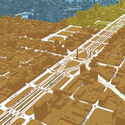
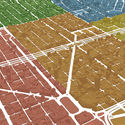
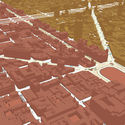
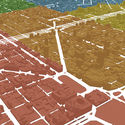
Through an open data system, the “Buenos Aires Data” program has made public the data from the survey of the entire urban fabric of the Autonomous City of Buenos Aires. Developed as part of the Open Government strategy, the project allows users to download and visualize maps of each of the city's neighborhoods along with their corresponding high-rise buildings.
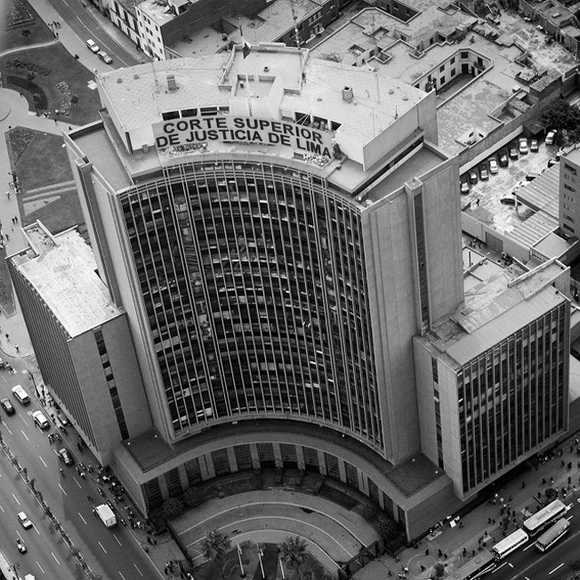
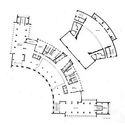
The Javier Alzamora Valdez building, designed by Peruvian architect Enrique Seoane Ros between 1951 and 1956 and conceived as the headquarters of the Ministry of Education, has been declared a Monument and part of the Cultural Heritage of the Nation. It stands as clear testament to the public civil architecture built during the Modern Movement in Peru, serving as a tangible and representative manifesto of mid-20th-century construction trends, when large government buildings were constructed for public administration as part of the urban renewal of Lima's Historic Center.
The winners of the National Ideas Competition "Emerging Habitats" in Argentina have been announced. Organized by the national government through the Ministry of Territorial Development and Habitat and the Ministry of Environment and Sustainable Development, the call invited university students, faculty, and researchers across the country to submit design proposals for environmentally efficient housing that can be built during emergencies.
The Inter-American Development Bank (IDB) recently published a practical guide for sustainable buildings, public spaces, and construction sites in Brazil. Authored by Esperanza González-Mahecha, Livia Minoja, Lucas Rosse Caldas, and Clémentine Tribouillard, the publication aims to simplify access for public and private managers to practical information on how to incorporate sustainability elements into projects, whether buildings (such as housing or public facilities) or public spaces.
No longer a space of purely functional hygiene, the bathroom has taken on a prominent role in architectural design, becoming an essential element in both public and private programs.
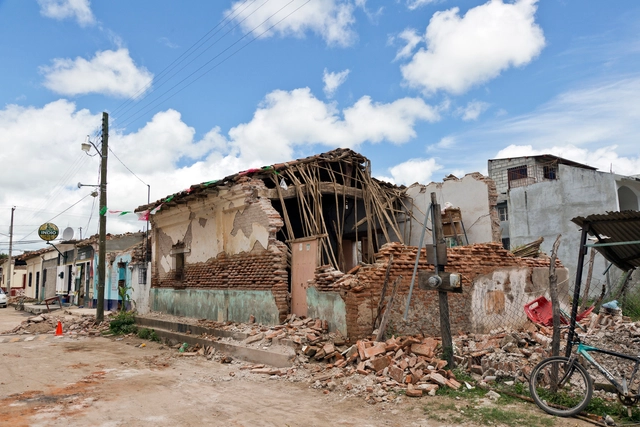
In light of recent developments surrounding COVID-19, the Mexico City government, in conjunction with the Mexico City Reconstruction Commission, announced that the reconstruction plan addressing the September 19, 2017 earthquakes will not be suspended. Instead, health and social distancing measures will be implemented to allow support and construction processes to continue.
Centered on the theme “Integrated Housing, Sustainable Communities,” the 2020 CAP Steel Design Competition for Students has recognized projects that promote the understanding of steel as a material, research into its vast potential, its technologies, and its multiple uses and applications in construction, developed within an appropriate architectural and structural framework.
Out of 26 preliminary projects submitted by 15 different universities, first place went to a team of students from Universidad Andrés Bello (Santiago), while second place went to students from Universidad Católica de Chile, and third place to students from Universidad Austral.
The winners of the Ideas Competition for the Casa de la Cultura, Former Governorate of the Department of Santa Cruz have been announced. Promoted and organized by the Municipality of Santa Cruz, the initiative invited Chilean students and architects to develop architectural proposals to convert the old Santa Cruz governorate building into the future Casa de la Cultura, highlighting the value of the property, which is considered of high heritage significance as the city's last remaining early 20th-century architectural vestige.
Architect Gabriela de Matos, creator of the Arquitetas Negras project, was named Architect of the Year by the Rio de Janeiro Department of the Institute of Architects of Brazil (IAB-RJ). Alongside her, IAB-RJ also honored the Oswaldo Cruz Foundation (Fiocruz) during an online event held this week to announce the winners of the 58th Annual Awards and the 37th Architect of Tomorrow Award.
Dedicated to exploring the intersection of race, gender, architecture, and the city, Gabriela highlighted in her speech the importance of recognizing that "although the field of architecture and urbanism is still elitist and racist, it is precisely the training of architects and urban planners who view architecture as a social tool that can help bridge the gaps and inequalities in our society."
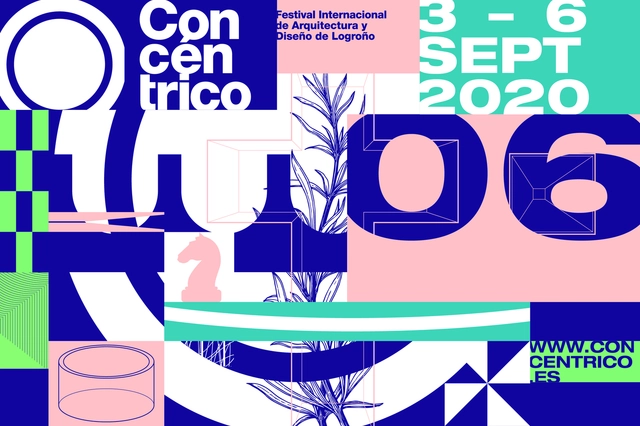
The renowned International Architecture and Design Festival of Logroño, Concéntrico, will hold its sixth edition—rescheduled due to the COVID-19 pandemic—from September 3 to 6, 2020. The festival invites reflection on 'the urban' and the contemporary city.