Oscar Niemeyer, sem título (Catedral de Brasília). Image Cortesia de Instituto Tomie Ohtake
Following runs in Rio de Janeiro in 2017 and Brasília, the exhibition “Oscar Niemeyer (1907-2012) – Territories of Creation”, organized to mark the architect's 110th birth anniversary, arrives at the Tomie Ohtake Institute with several new additions.
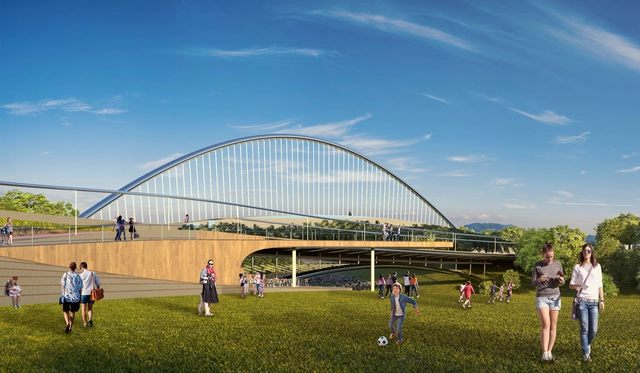
The firm EArquitetos has developed a design proposal for a bridge over the Vrbas River in Banja Luka, Bosnia and Herzegovina. The project received an honorable mention in the international competition. See the proposal below, accompanied by the project description.
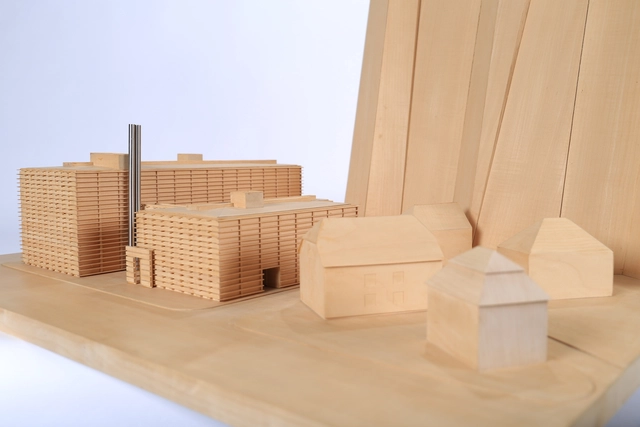
Maquete do projeto Salzburg Hotel. Image Cortesia de Casa da Arquitectura
The Casa da Arquitectura - Portuguese Centre for Architecture has reached an agreement with Pritzker laureate Eduardo Souto de Moura to deposit his archive at the Portuguese institution. Signed on May 6, the agreement adds approximately 8,500 drawings and all textual and photographic documentation detailing the projects from the architect's 40-year career to the 604 models already housed at the institution since 2009.
One of Belo Horizonte's main landmarks, the Pampulha Church, designed by Oscar Niemeyer, has undergone a meticulous restoration and will reopen to the public today, October 4. The building had been closed since June of last year, when work began to address water infiltration. This included a complex project to replace the wooden ceiling of the central nave, as well as general maintenance such as cleaning and restoring the external ceramic tile cladding, repainting the chapel, and repairing the Portuguese pavement sidewalks.
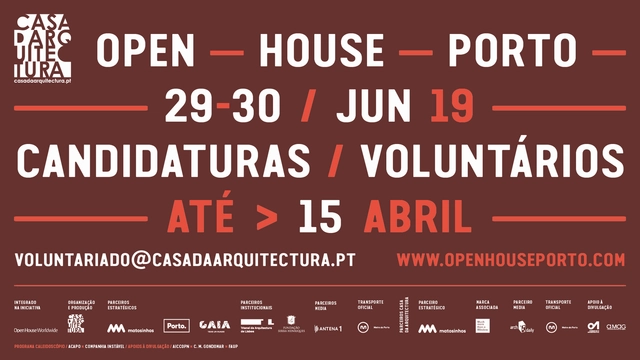
Following the massive success of the last edition, which recorded 32,000 visits, the dates for the 5th Open House Porto (OHP) have been set. On June 29 and 30, a wide range of spaces in Matosinhos, Porto, and Vila Nova de Gaia will open their doors for free, showcasing the excellence of the architectural heritage of the three cities. This itinerary features 70 spaces, 60 percent of which are new additions opening to the public for the first time. Since its first edition in 2015, OHP has welcomed nearly 100,000 visits.
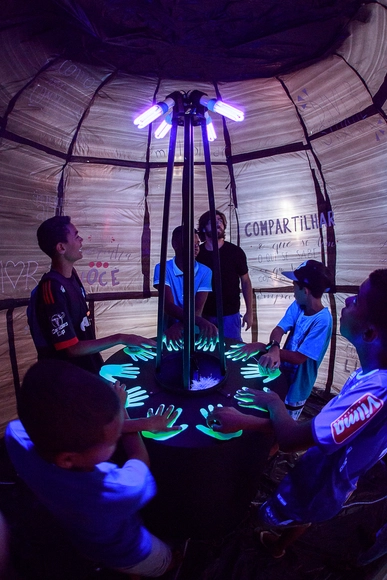
FLUTUA, instalação artística e arquitetônica, Luiza Dalvi e Rayssa Carvalho, com a colaboração de Isabela Magro, Rodrigo Pereira, Ariane Freitas e Alexandre Machado (UFU - MG). Image Cortesia de Instituto Tomie Ohtake
On January 23, 2019, during the opening of the exhibition showcasing the 20 selected projects out of 127 entries from 16 Brazilian states and the Federal District, the three winners of the 1st Instituto Tomie Ohtake Leroy Merlin Design Award and one honorable mention were announced.
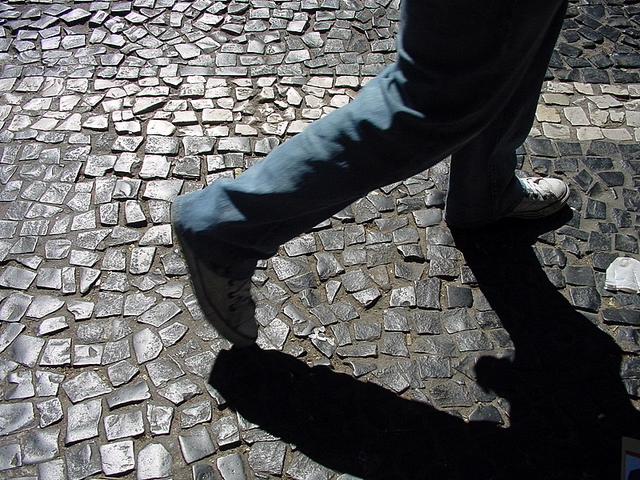
Sidewalk in São Paulo. Image: Marina Burity, via Flickr. License CC BY-SA 2.0
Walking is the simplest, most lightweight, economical, and low-impact way to travel in urban areas, especially for trips under two kilometers. More people walking means a better quality of life for residents and their cities, resulting in reduced government spending on public health. These concepts are universally accepted by urban planners and other contemporary thinkers.
Estação Júlio Prestes, 1938. São Paulo, Brasil. Image Cortesia de SouthAmerica.travel
Trains are not the primary mode of transportation in South American countries, whether for cargo or passengers. The rail networks across the continent are poorly connected and, even domestically, are largely outdated or in disrepair. Nevertheless, from an era when transportation relied primarily on rail, beautiful railway stations remain, still serving cargo and passenger trains today.
On March 1, 2019, MAM’19 - Maia Architecture Month - Fast Forward will open, curated by Portuguese architect Andreia Garcia. The event aims to envision the territory 100 years from now and will feature eight emerging architecture practices and four architecture critics. As part of a partnership between ArchDaily and MAM'19, we will publish a series of articles by guest critics in the coming days. See below for Andreia Garcia's introduction to the event.
https://www.archdaily.com/1121776/on-the-future-opening-of-maia-architecture-month-2019Pedro Vada
After graduating in 1960, Ruy Ohtake has practiced architecture for over five decades, having worked alongside other major names in Brazilian architecture, such as Vilanova Artigas and Paulo Mendes da Rocha. Until the mid-1980s, his work was characterized by projects closely aligned with what was being produced in São Paulo at the time—a highly Brutalist architecture, defined by a limited material palette and a well-defined vocabulary.
Since 2017, the extraction and sale of asbestos has been banned in Brazil by the Supreme Federal Court (STF). However, this ruling did not prevent the state of Goiás from authorizing the extraction of chrysotile asbestos last Tuesday (16). The law stipulates that the extracted material must be used exclusively for export.
Throughout the entire construction process—from the conception of the architectural design to its physical realization—the job site is perhaps where most issues arise. Varying widely in nature, construction setbacks become less frequent the more time is dedicated to the design and planning stages; in other words, the more time invested off-site, the lower the likelihood of major disruptions during construction.
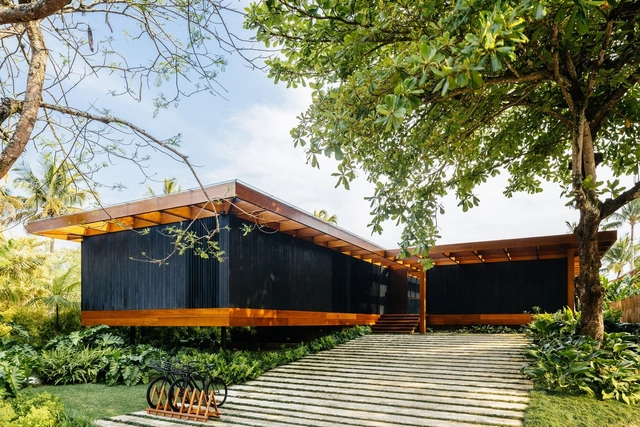
Bulevar e mercado. Image Cortesia de Estúdio Módulo
The City of São Paulo has begun the first phase of interventions to revitalize Largo do Arouche, a busy area in the city's central district. The project includes paving and leveling the square's promenade and installing new street furniture, including benches, bike racks, drinking fountains, bollards, and guardrails.
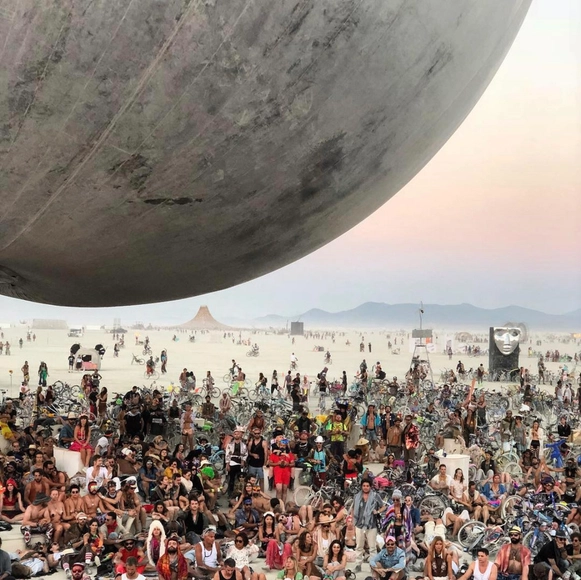
The 2018 edition of Burning Man featured a giant mirrored ball designed by Bjarke Ingels. Courtesy of Bjarke Ingels
Imagine a setting worthy of Mad Max, but filled with high-tech art installations. This is what the landscape of Burning Man looks like, the American art and counterculture festival that every year builds—and immediately afterward destroys—an entire city in the middle of the Nevada desert to host the event. Now, however, Brazil is joining the lineup, hosting its own annual edition of the festival: Tropical Burn.
The International Union of Architects (UIA) has launched a global competition to select the logo for the World Capital of Architecture, whose inaugural host city is Rio de Janeiro. The initiative aims to transform Rio, and future designated capitals, into open and creative platforms to discuss, exchange, and find solutions to urban challenges.
The streets of Los Angeles will serve as a testing ground for a new asphalt compound made from recycled plastic. Developed by TechniSoil Industrial, the material incorporates plastic waste that would typically be discarded, mixing it with recycled asphalt reclaimed directly from the streets.
Brazil has just surpassed the 2,000-megawatt (MW) milestone of operational capacity in centralized solar photovoltaic generation systems—large-scale plants connected to the National Interconnected System (SIN).
According to data from the Brazilian Association of Solar Photovoltaic Energy (ABSOLAR), solar photovoltaic power—based on the direct conversion of solar radiation into electricity in a renewable, clean, sustainable, and increasingly competitive way—reached a total of 2,056 MW of operational installed capacity, equivalent to 1.2% of the country's electricity mix. As a result, it becomes the 7th largest energy source in Brazil, surpassing nuclear power, which accounts for 1,990 MW (1.2%) from the Angra I and Angra II plants located in Rio de Janeiro.
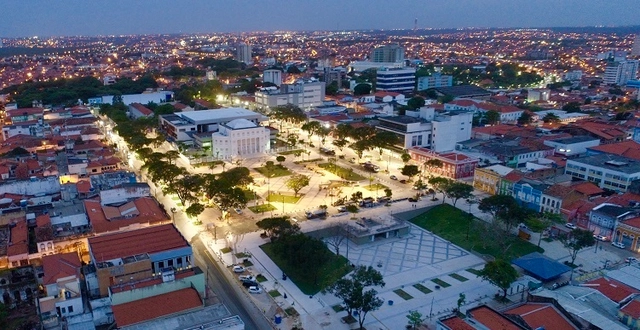
Aerial view of the Deodoro Complex, in São Luís (MA). Photo: Meireles Jr. Courtesy of Iphan
A high-quality public space that prioritizes pedestrians, features organized urban planning, and invites people to stay, enjoy, and socialize. This was the guiding premise of the first phase of the urban revitalization of Rua Grande, in São Luís, the capital of Maranhão. The project began with the restructuring of the entire Deodoro Complex, which now offers visitors and residents a new perspective on the Deodoro and Panteon Squares and the Silva Maia and Gomes de Castro promenades.
__S_d__caneta_hidrográfica_sobre_papel__33_x_48_cm.jpg?1553802678&format=webp&width=640&height=580)
.jpg?1570032524&format=webp&width=640&height=580)



.jpg?1563898173&format=webp&width=640&height=580)


.jpg?1553011212&format=webp&width=640&height=580)