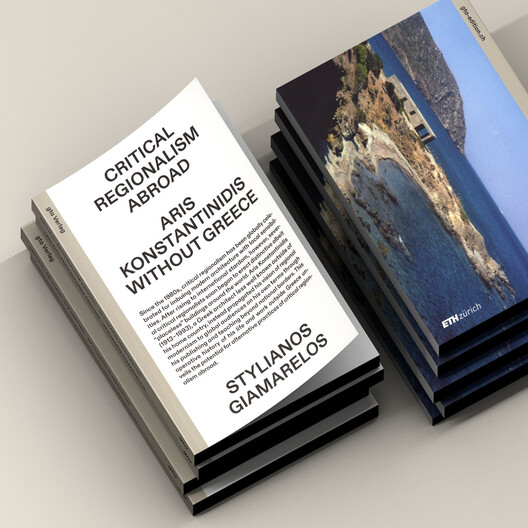
Since the 1980s, critical regionalism has been globally celebrated for imbuing modern architecture with local sensibilities. After rising to international stardom, however, several critical regionalists soon began to erect distinctive albeit “placeless” buildings around the world. This book examines how Aris Konstantinidis (1913–1993), a Greek architect less well known outside his home country, instead propagated his vision of regional modernism to global audiences on his own terms through his publishing and teaching beyond national borders.
Critical regionalism emerged as a theory from the work of Greek architects in Alexander Tzonis and Liane Lefaivre’s 1981 essay ‘The Grid and the Pathway’, and was further advanced when Kenneth Frampton recapitulated this terminology to advance his ideas about the future of modern architecture in a postmodern age. The ensuing worldwide celebration of critical regionalism in the 1980s gave rise to the 1990s question of critical regionalism abroad: how could architects make meaningful use of this modern and regionally specific design approach beyond its originary locus, in an increasingly globalised world?
