This course—offered in three monthly modules (April, May, and June) of four classes each—will discuss central issues in the history of modern art through iconic works by Paul Cézanne, Louise Bourgeois, Le Corbusier, Marguerite Duras, Federico Fellini, Toyo Ito, Rem Koolhaas, Kazimir Malevich, Hannes Meyer, Aleksander Rodchenko, Arnold Schoenberg, and Giuseppe Terragni. The modules can be taken individually or sequentially. By adopting a critical and non-linear approach to the history of art and architecture, the classes will explore paradigmatic points of the field in the 20th century. The diverse group of young speakers selected—including art historians, curators, architects, and psychoanalysts—provides, in itself, an overview of contemporary art criticism and research in São Paulo.
Module 2 . May
Deviations, Shocks, and Dissonances
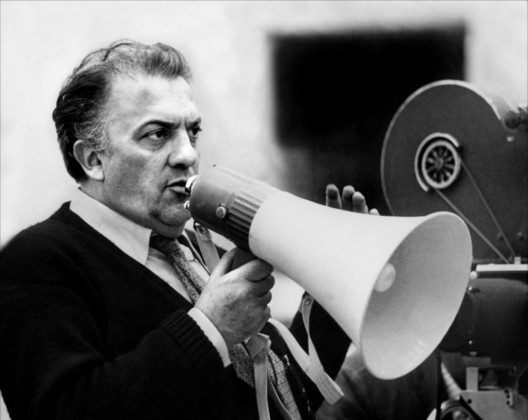
Beginning with the interwar period and the rise of totalitarian regimes, modern art entered a moment of self-questioning, intensifying the contradictions within the mechanisms of production and circulation of works. Artistic production became instrumentalized by autocratic regimes, as seen in the Exhibition of the Fascist Revolution, which will be discussed in the course through an analysis of Giuseppe Terragni’s panel. The postwar period brought an examination and critical investigation of this process and its consequences, rooted in a contradictory relationship with the modernist project. In this sense, the course highlights Fellini’s representation of Rome’s urban space—in which the director inserts subjective elements of his memory into the collective construction of the city—as well as the radicalizations of Schoenberg’s compositions from that period. Entering the 1960s and 70s, artistic production was once again called into question as a practice. In his project The City of the Captive Globe and, subsequently, in Delirious New York, the Dutch architect Rem Koolhaas presents a critical dialogue with both modern urbanism and the total emptying of form, which was a subject of debate at the time.
