David Chipperfield’s Neues Museum Receives 2011 Mies van der Rohe Award

© Ute Zscharnt

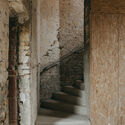
Announced today, the Neues Museum designed by David Chipperfield is the recipient of this years prestigious EU Prize for Contemporary Architecture – Mies van der Rohe Award.  The Neues Museum is the result of blending old and new; the original Museum was designed by Friedrich August Stüler in the mid-19th century. Substantially damaged in the Second World War reconstruction of the Museum began in 2003.

Jury Chair Mohsen Mostafavi, shared the following about the building, “The rebuilding of the Neues Museum is an extraordinary achievement. Rarely have an architect and client succeeded in undertaking a work of such historic importance and complexity; especially one that involves both preservation and new building. The project raises and addresses many aesthetic, ethical, and technical issues. It is an exemplary demonstration of what collaboration can achieve in the context of contemporary European architectural practice.”
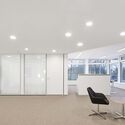
Also announced today was the recipient of ‘The Emerging Architect Special Mention’ award, given to Ramon Bosch and Bet Capdeferro for the Collage House in Girona, Spain.

The awards will be presented in a ceremony at the Mies van der Rohe Pavilion in Barcelona on June 20th.

More details about this announcement following the break.

LandyM / andOFFICE

©

Architects: andOFFICE
Location: , Germany
Project area: 651 sqm
Project year: 2011
Photographs: Courtesy of andOFFICE

AD Classics: Neue Staatsgalerie / James Stirling

© Flickr User: pov_steve

In 1977, as part of a city wide planning initiative, the Prime Minister of Baden – Württemberg, Hans Filbinger, held a private international competition to design the Neue Staatsgalerie that would revitalize and reinvigorate the cultural influence in , Germany. The competition posed the issues of making a connection to the older Staatsgalerie that dated back to 1843, as well as traversing the sites dramatic slope.  By 1979, the jury unanimously chose a design by of Michael Wilford & Associates in London.

Completed in 1984, Stirling’s design incorporated the sloping site as part of an architectural promenade that moved the public walkway through the museum that embodied the transitions of the classical art of the Alte Staatsgalerie and the modern art of the Neue Staatsgalerie into one seamless architectural response.

More on the Neue Staatsgalerie by James Stirling after the break.

Competition Entry for Galileum in Solingen / René van Zuuk Architekten

Courtesy of René van Zuuk Architekten

The Regional Industrial Heritage Organization of Solingen, has called for a competition to redevelop the local observation using an old spherical gas container in order to address the strong industrial character and historical context of the container and the local architecture. The following project is an entry from René van Zuuk Architekten.

More on this project after the break.

Update: Elbe Philharmonic Hall / Herzog and de Meuron

© Karen Cilento

On a recent visit to , we were able to see the progress of Herzog & de Meuron’s grand concert hall [check out our previous coverage here].  Although construction costs continue to escalate [almost 70 million Euro have been donated by private businesses for the project, and the project is well over its 240 million Euro proposed budget], once complete, it will be the highest inhabited building of Hamburg and bring even more life to the area’s harbor.

More images and more about the visit after the break.

Transmediale In Berlin / SAQ

Architects: SAQ
Project leader: Drew Seskunas
Location: Berlin,
Project team: Tibor Bartholomä, Joel Dunmore Florian Lippe, Irene Per
Photographs: Brice Dellastrada, Laura Gianetti

Murgles Playhouse / partnerundpartner-architekten

©

Architects: partnerundpartner-architekten
Location: , Black Forest, Germany
Design team: Jörg Finkbeiner, Klaus Günter, Christian Necker
Project area: 200 sqm
Project year: 2011
Photographs: partnerundpartner-architekten

Baufeld 10 / LOVE architecture and urbanism

©

Architects: LOVE architecture and urbanism
Location: , Germany
Project area: 3,150 sqm
Project year: 2005 – 2008
Photographs: LOVE architecture and urbanism

Simple-Tech-Kiosk / partnerundpartner-architekten

© Stefan Günther

Architects: partnerundpartner-architekten
Location: Potsdam,
Design Team: Jörg Finkbeiner, Klaus Günter
Project area: 19 sqm
Project year: 2009
Photographs: Stefan Günther

B9 Bridge Telekom / Schlaich Bergermann und Partner

© Thomas Mayer

Architects: Schlaich Bergermann Und Partner
Location: Bonn,
Client: Deutsche Telekom AG
Project area: 72 sqm
Project year: 2010
Photographs: Thomas Mayer

Oscar-von-Miller Tower / Deubzer König + Rimmel Architects

© Henning Köpke

Architects: Deubzer König + Rimmel Architects
Location: Garching,
Structural engineer: Barthel & Maus Beratende Ingenieure GmbH
Project area: 90,5 sqm
Project year: 2006 – 2010
Photographs: Henning Köpke

MTV Networks Headquarters / Dan Pearlman

© diephotodesigner.de

Architects: dan pearlman Markenarchitektur GmbH
Location: , Germany
Client: MTV Networks
Project year: 2010
Photographs: diephotodesigner.de

AD Classics: Vitra Fire Station / Zaha Hadid

© Wojtek Gurak

After a devastating fire in 1981 that crippled the design campus in , Germany, Vitra began an extensive mission to rebuild the campus as well as redesign the masterplan, which was designed by Nicholas Grimshaw. Almost a decade after the devastating fire in 1981, the company sought an architect to build a fire station for the Vitra campus to thwart any future reoccurrences and commissioned Zaha Hadid.  Completed in 1993, the Vitra fire station would be Hadid’s first realized project of her career, which would eventually launch her name and style to an international audience.

The Vitra fire station is Hadid’s showcased work that delves into the deconstructivist theoretical language that she developed through her paintings as a conceptual mediator of finding spatial relationships and form.  The Vitra fire station is a synthesis of philosophy and architecture that bridges the Vitra design campus to its surrounding context.

More on the Vitra Fire Station after the break.

Student Dormitory / Nickl & Partner Architekten

© Stefan Müller-Naumann

Architects: Nickl & Partner Architekten
Location: Im Neuenheimer Feld 136, D-69117 ,
Client: Studentenwerk Heidelberg
Project area: 3,800 sqm
Project year: 2008-2009
Photographs: Stefan Müller-Naumann

Renovation and Extension of the Hameln County Hospital / Nickl & Partner Architekten

©

Architects: Nickl & Partner Architekten
Location: Saint-Maur-Platz 1, D-31785 , Germany
Project area: 7,100 sqm
Project year: 2003 – 2007
Photographs: Courtesy of Nickl & Partner Architekten

BEP Baked Earthen Pie / Evgeny Didorenko

Courtesy of

Evgeny Didorenko shared with us his project whose aim of a landmark was not to create a monument to the power of the industrial age and conquest of nature, but rather a monument to nature. Doing so would acknowledge the generous gifts nature has given us that was produced centuries and even millenniums ago. Brown coal – one of it’s gifts. More images and architect’s description after the break.

AD Classics: Munich Olympic Stadium / Frei Otto & Gunther Behnisch

Courtesy of Wikimedia Commons

Often mentioned as a pioneer in lightweight tensile and membrane construction, yet overshadowed in the discipline of architecture, along with collaborated to design the 1972 Munich Olympic Stadium in Munich, Germany.  With the Olympics having already been held in Berlin in 1936, Otto and Behnisch took the second Olympics games in Germany as an opportunity and a second chance to show Germany in a new light.  Their goal was to design a structure that would emulate the games motto: “The Happy Games” as more of a whimsical architectural response that would overshadow the heavy, authoritarian stadium in Berlin.

More of the 1972 Olympic Stadium in Munich after the break.

Dental INN / Stasek

© Stefan Blume

Architects: Stasek
Location: , Germany
Cost: € 300.000
Project year: 2010
Photographs: Stefan Blume

AD Classics: Berlin Philharmonic / Hans Scharoun

© Courtesy of Wikimedia Commons

Hans Scharoun is a well known German architect best known for his design of the Philharmonic concert hall in , .  Completed in 1963, Scharoun’s organic and futuristic aesthetic interpretation for the concert was a replacement for the previous Philharmonic that was destroyed in WWII.  Scharoun’s design was fairly straightforward that focused on placing music at the center of his design, both conceptually and physically. From the center, the music would be amplified and filtered throughout the auditorium.

More on the Berlin Philharmonic after the break.

Bruder Klaus Field Chapel / Peter Zumthor

©Samuel Ludwig www.samueltludwig.com

“In order to design buildings with a sensuous connection to life, one must think in a way that goes far beyond form and construction.” This quote from rings true in his design of , where a mystical and thought-proving interior is masked by a very rigid rectangular exterior.

More on Bruder Klaus Field Chapel and Peter Zumthor after the break.

Arp Museum / Richard Meier & Partners Architects

Courtesy of , © Roland Halbe

The design of the Arp Museum represents the seamless integration of the building’s spectacular site with the museum’s mission to showcase the work of the Dadaist master Hans Arp and his circle. One of the unique features of the region in which the museum is located is the series of medieval castles that line a 35-mile stretch of the river Rhine. The Arp Museum, sited on a wooded escarpment overlooking the Rhine, is intended to respond to and echo the forms of these captivating relics.

Video and drawings of the Arp Museum in Remagen-Rolandseck, Germany following the break.

Architects: Richard Meier & Partners Architects LLP
Location: Remagen-Rolandseck, Germany
Principal in Charge: Richard Meier
Design Partner: Bernhard Karpf
Project Architect: Stefan Scheiber
Designer: Bernhard Stocker, Michael Thanner
Collaborators: Clay Collier, James Luhur, Aaron Vaden-Youmans
Associate Architect: Ehrensberger & OertzArchitekten
Principal: Matthias Oertz
Site Administration: Thomas Böhling, Marco Theil, Thilo Bergmann
Structural Engineers: Buro Happold, Draheim Ingenieure
Geotechnical Engineer: Dietrich Beratende Ingenieure Witt, Jehle & Kriechbaum
Mechanical Engineer: Zibell – Willner & Partner Freiländer & Partner
Electrical Engineer: Müller & Bleher
Façade Consultant: Albrecht Memmert & Partner
Lighting Consultant: Müller & Bleher, LichtDesign, Zumtobel Staff
Acoustic Consultant: Trümper – Overath – Heimann – Römer, Ingenieurgesellschaft für Bauphysik
Client: Ministery of Finance Rheinland Pfalz, Arp Museum Bahnhof Rolandseck
Client Representative: Landesbetrieb Bau Koblenz
Photographs: Courtesy of Richard Meier & Partners Architects, Roland Halbe ARTUR IMAGES