Exploratory Science Museum of Unicamp winners announced
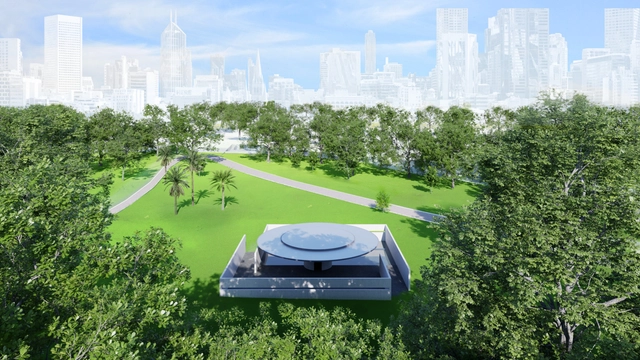
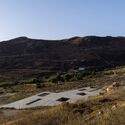
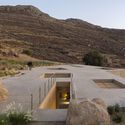
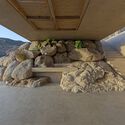
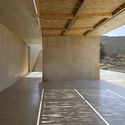
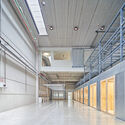
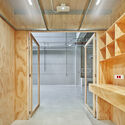
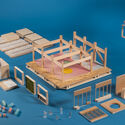
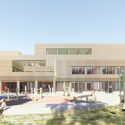
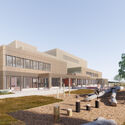
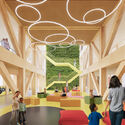
The International Competition for the Exploratory Science Museum of Unicamp winners were recently announced. Daniel Corsi, Dani Hirano and Reinaldo Nishimuro from CHN Arquitetos won the competition.
The Exploratory Science Museum was instituted in 2006 as an organ of the State University of Campinas (Universidade Estadual de Campinas – Unicamp), one of the most important universities in Brazil. The Mission of the Exploratory Science Museum is to promote the dissemination of scientific culture in a space that values learning, companionship and social inclusion. It intends to accomplish its mission by unveiling the processes by means of which science and technology are constituted and contributing towards the comprehension of its impacts on everyday life, as well as on the biological and social environment at large.
In general terms, UNICAMP’s Exploratory Science Museum aspires to be a museum that accompanies the most recent trends in museology, becoming both a national and international reference, and attaining the same level of excellence as the best museums in the world. It’s main priority are those individuals that attend schools (elementary, junior high school, high school and college students), without, however, excluding other visitors from its potential public, those that are out of school, that is, that are not currently attending formal education.
First and second place projects after the break.
2009 Open Architecture Challenge: Classroom
In a few minutes, Barack Obama will give his Back to School speech (read full text at the Huffington Post), just after the results for the 2009 Open Architecture Challenge are announced.
Near the ending, Obama says “I’m working hard to fix up your classrooms and get you the books, equipment and computers you need to learn. But you’ve got to do your part too”. Cameron Sinclair, founder of Architecture for Humanity, responds on Twitter “Sir, your welcome”.
This year the Open Architecture Challenge called architects, designers and engineers to rethink the classroom of the future. Sounds like a typical competition, but it is not: they were required to collaborate with real students in real schools in their community to develop real solutions.

The winner of this year’s Challenge is the Teton Valley Community School, with a project designed with the emerging practice Section Eight [design]. The Teton Valley Community School in a non-profit independent school located in Victor, Idaho, which is one of the most underfunded school systems in the nation. Currently the school is based out of a remodeled house, but thanks to this award they are closer to get a full classroom.
There are also other awards that I will describe later, but this is more than just prizes. The Challenge received over 1,000 entries, entries that can become real projects that can help improve the quality of education around the world. Architecture for Humanity established the Classroom Upgrade Fund, that hopes to provide seed funding and support to local schools in implementing the design solutions they have developed.
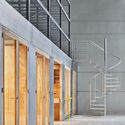
FDE Public School / Forte, Gimenes & Marcondes Ferraz Arquitetos
Architects: Forte, Gimenes & Marcondes Ferraz Arquitetos
Location: Várzea Paulista, São Paulo, Brazil
Architects in Charge: Fernando Forte, Lourenço Gimenes and Rodrigo Marcondes Ferraz
Coordinator: Renata Davi
Collaborators: Adriana Junqueira, Ana Paula Barbosa, Fernanda Alpiste
Trainees: Paloma Delgado, Luciana Muller
Structure: Catuta Engenharia
Contractor: Construtora Linic
Site Area: 6,344 sqm
Constructed Area: 2,703 sqm
Project year: 2007-2008
Photographs: Pedro Kok & Nelson Kon
The Lavin-Bernick Center for University Life / VJAA

Architects: VJAA in association with James Carpenter Design Associates and Transsolar
Location: New Orleans, Louisiana, USA
Client: Tulane University
Principals in Charge: Vincent James, FAIA; Jennifer Yoos, AIA; Nathan Knutson, AIA
Senior Project Architect: Paul Yaggie, AIA
Consulting Architect: Wayne Troyer Architect, Louisiana
Landscape Architect: Coen + Partners
General Contractor: Broadmoor; Boh Bros. Construction
Constructed area: 13,750 sqm
Budget: US $28,000,000
Project year: 2007
Photographs: © Paul Crosby
Songdo IBD / Kohn Pedersen Fox
We’ve featured several master plans where countries implement eco-friendly community measures in their newest developments. The desire for a well planned, green city now belongs to South Korea, who announced not one, but two master plans (Foster + Partners’ plan soon to be featured on AD). For the Songdo International Business District, Kohn Pedersen Fox has created a functioning network of over 120 green buildings placed amidst acres of landscaped open spaces. Located on 1,500 acres on the waterfront of Incheon, the $300 billion plan will provide housing for 75,000 residents and handle 300,000 commuters.
More about the sustainable community after the break.
Palm Springs Residence / Sander Architects
Sander Architects have designed a residence for the historic Movie Colony of Palm Springs that can combat the site’s harsh environment. Facing the San Jacinto mountains, the house features a simple roof that opens to the home toward the surroundings. With temperatures in Palm Springs reaching over a stifling 120 degrees, the western exposure of the home ”has created an enormously difficult problem with solar exposure”. Sander’s design of a fifteen-foot horizontal cantilever reduces (to practically zero) the time when the setting summer sun’s rays will penetrate the interiors; however, the cantilever is angled in such a way to allow winter sun to ”more readily enter the house to warm it when the weather turns colder.”
More about the residence after the break.
House in Otake / Suppose Design Office
Architects: Suppose Design Office
Location: Otake city, Hiroshima, Japan
Program: Personal house
Site area: 372.63 sqm
Building area: 56.99 sqm
Total floor area: 115.51 sqm
Photographs: Toshiyuki Yano from Nacasa&Partners Inc.
2009 BIMFusion.com International BIM Awards Competition
Building Information Modeling is quickly becoming the back bone of the Architectural, Engineering, Construction and Facility Management industries. As the transition progresses and projects are designed and constructed using BIM tools various methodologies and techniques have been developed.
The intent of this competition is not to review the appearance or special aspects of a particular design but instead the process and methodologies used to design, coordinate and construct the project both digital and physically.
More information on categories, submission, schedule and fees in the competition’s official website.
Community centre Herstedlund / Dorte Mandrup Arkitekter

Architect: Dorte Mandrup Arkitekter Aps
Location: Albertslund, Denmark
Client: Freja Ejendomme A/S
Constractor: N. H. Hansen og Søn A/S
Construction Engineer: Jørgen Nielsen A/S
Engineering, Electricity & Plumbing: Jens-Peter Madsen ApS
Landscape: Svend Kierkegaard A/S
Site Area: 875 sqm
Construction Area: 408 sqm
Project Year: 2009
Photographs: Adam Mørk
Speed Limits, an exhibition
Speed Limits is currently on exhibition in the Canadian Centre for Architecture (CCA), till November 9 in the main galleries. Speed Limits addresses the pivotal role played by speed in modern life: from art to architecture and urbanism to graphics and design to economics to the material culture of the eras of industry and information. It marks the centenary of the foundation of the Italian Futurist movement, whose inaugural manifesto famously proclaimed “that the world’s magnificence has been enriched by a new beauty: the beauty of speed.”
The exhibition explores five key domains of the powers and limits of the modern era’s cult of speed, beginning in 1900: circulation and transit, construction and the built environment, efficiency, the measurement and representation of rapid motion, and the mind/body relationship. Critical rather than commemorative in spirit, it explores a single Futurist theme from the standpoint of its contemporary legacies. Speed Limits is an exhibition about complex choices and complex consequences, about polarities but also about intertwinings between the fast and the slow.
More information on the exhibition, on the official website.
Sun Valley Music Pavilion / FTL Design Engineering Studio
Architects: FTL Design Engineering Studio – Nic Goldsmith. Matthew Hilyard, Amedeo Perlas, AmyPalmer, Ashish Soni
Location: Sun Valley, Idaho, USA
Project Architects: Ruscitto/Latham/Blanton Architectura P.A; Nicholas Latham, Thadd Blanton, Michael Bulls ,Scott Heiner
Engineering of Cable net and Fabric: FTL Design Engineering Studio; Joe Schedlbauer, Mary Korotkova
Structural Engineering: ES2Engineering; Dough Weber, Terrol Bateman
Acoutical Engineering: Jaffee Holden Acoustics; Dr. J. Christopher Jaffe, Mary Cook, Mark Reber
Theatrical Design& Lighting: Auerbach Pollock & Friedlander; Steven Friedlander, Don Guyton
Landscape: Eggers Associates; Kurt Eggers, Nathan Schutte
General Contractor: Intermountain Construction, Inc,Jeff Ogden, Derek Wright
Interior Design: Frank Nicholson, Inc.
Mechanical Engineering: Van Boerum & Frank Assoc., Inc.
Electrical Engineering: Paul Stoops Associates
Budget: $30 Million USD
Project year: 2008
Photographs: FTL
The Termite Pavilion

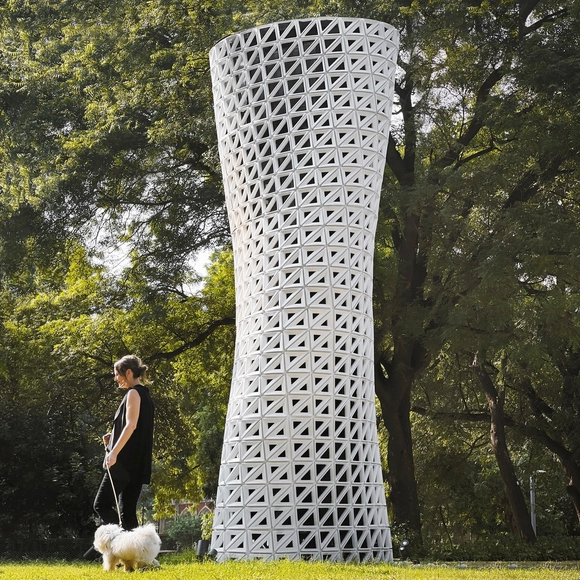
The much anticipated Termite Pavilion arrived at the International Arts Pestival in London earlier this week. The Pestival is “a festival celebrating insects in art, and the art of being an insect…it is a rare creature: an international, inter-disciplinary, community-led festival.” Inspired by the Namibian termite mounds, the six square meter walk-in solid timber structure ”allows Pestival goers a unique insight into these extraordinary organic forms.”
More about the Pavilion after the break.
Roof garden pavilion / Hoogte Twee Architecten
Architects: Hoogte Twee Architecten – Arnhem
Location: Arnhem, The Netherlands
Client: GB family
Project team: Peter Groot, Martin-Paul Neys
Contractor: Kuijpers Bouw Heteren bv.
Structural Engineer: Krekon bv
Project year: 2004-2005
Photographs: Hoogte Twee Architecten
Edible Restaurant / Sander Architects
Sander Architects shared their Grace Restaurant design with us. Located in the rectory of the decommissioned St. Vibiana’s cathedral, the project includes an addition on a triangular piece of property adjoining the rectory. The addition includes a new kitchen on the first floor with additional cooking facilities and a private chef’s table on the upper floors. Putting a new spin on restaurant design, the building itself will provide great food. Working with the idea “the building you can eat”, the project becomes an edible form that is sheathed in a vertical garden, covered with tasty plants. Passers-by will be free to pick fruits, vegetable and herbs from the building as they walk along. An open street-side counter will also cater to walk-up orders. With this edible idea, the building become both environmentally and people friendly.
Images and drawings after the break.
Architecture & Design Film Festival
The first film festival celebrating the creative spirit of architecture and design will be held in Waitsfield, Vermont during the height of fall colors. An exciting selection of films, including feature-length films, documentaries and shorts will engage the audience with how architects and designers think, work and create. The films profile visionary architects, the creative design process, environmental issues and the brilliant designs that we see and use every day. The program includes conversations with filmmakers, architects and designers.
The Architecture & Design Film Festival will benefit the Yestermorrow Design/Build School. Yestermorrow inspires students to create a better and more sustainable world by providing an architectural education that integrates design and building into one continuous process.
More information and the complete list of films on the festival on the official website.
Rose am Lend / INNOCAD

Architects: INNOCAD Planung und Projektmanagement GmbH
Location: Graz, Austria
Project Architect: DI Oliver Kupfner
Project team: DI Martin Lesjak, DI Roland List, Reinhard Schütz, DI Margit Spreitzer, DI Bernd Steinhuber
Site area: 509 sqm
Constructed area: 1,085 sqm
Budget: 980,000 Euro
Project year: 2005-2008
Project year: 2007-2008
Photographs: Paul Ott
Yoga Deva / Blank Studio
Architects: Blank Studio
Location: Gilbert, AZ, USA
Architect in Charge: Matthew G Trzebiatowski, AIA
Electrical Engineer: Don Witt Engineering
Mechanical + Plumbing: Kunka Engineering
General Contractor: Stokum Construction
Clients: Shosh + Billy Vergara
Project Area: 260 sqm
Project year: 2008
Photography: Bill Timmerman
The Interlace / OMA

A year and a half ago, OMA unveiled the first images for a residential project in Singapore, on schematic design phase. Basically it was a set of stacked low-rise blocks.
Today OMA sent us an update on this project, The Interlace, and more details appear.
The project is located on a green belt outside the capital city, and consists on 31 stacked apartment blocks, each six-stories tall and identical in length, resulting in 170,000sqm of gross floor area for 1,040 apartments.
What is interesting about the project is how these stacked volumes achieve a high density, while still maintaining privacy and long-range views as you can see on the renderings.
The second result of this “stacked” strategy, are the common spaces filled with tropical green. By looking at the plan view of the complex, a series of inner courtyards appear on the empty spaces between the blocks. The project turns then into a rich vertical community, apart from the single tower projects seen in the area. Extensive residential amenities and facilities are interwoven into the lush vegetation and offer opportunities for social interaction, leisure, and recreation.