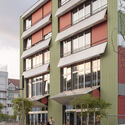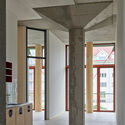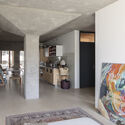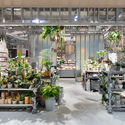
Abengoa Tecnological Campus Palmas Altas / RSH+P & Vidal y Asociados arquitectos

Architects: Rogers Stirk Harbour + Partners & Vidal y Asociados arquitectos
Location: Sevilla, Spain
Project Team: María Álvarez-Santullano, María Astiaso, David Ávila, Stephen Barrett, Almudena de Benito, Jean-Pierre Casillas, Pablo Codesido, Luis Colino, Eva Couto, Esther Crespo, Marta Cumellas, Ana Belén Franco, Jason García, Claudia García-Nieto, Isabel Gil, Lennart Grut, Ivan Harbour, Carolina Hernández, Amarjit Kalsi, Verónica van Kesteren, Juan Laguna, Carmen Márquez, Irene Méndez, Mariola Merino, Héctor Orden, María Ortega, Javier Palacios, Almudena Pérez, Bárbara Pérez, David Pérez, Naira Pérez, Sonia Pérez, Martina Rauhut, Richard Rogers, Irene Rojo, Roberta Sartori, Amelia Seisdedos, Gentaro Shimada, Simon Smithson, David Sobrino, Graham Stirk, Oscar Torrejón, Paloma Uriel, Josefina Vago, Laura Vega, Luis Vidal, Laura Villa
Client: Centro Tecnológico Palmas Altas S.A.
Engineering: ARUP
Quantity surveyor: D-Fine
Project Area: 96,000 sqm
Budget: $132,000,000 Euro
Design Year: 2005-2009
Construction Year: 2007-2009
Photographs: Víctor Sájara
Iceland Pavilion for Shanghai World Expo 2010
Iceland Pavilion for Shanghai World Expo 2010 was designed by Plús Arkitektar. The concept for the Icelandic Pavilion is to create the image of an ice cube made of backlit printed fabric on the exterior that captures the complex ice patterns that are only visible within a glacier.
More images and architect’s description after the break.
Boca del Lobo Restaurant / Jose Maria Saez & Daniel Moreno
Architects: Jose Maria Sáez y Daniel Moreno
Location: La Mariscal, Quito, Ecuador
Collaborator: David Barragán, Arquitecto
Structural Engineer: Herberto Novillo
Interior Design: Ricardo Luque y Jorge Marcos
Contractor: Jaime Quinga
Clients: Ricardo Luque y Jorge Marcos
Project Area: 258 sqm
Project Year: 2008
Photographs: José María Sáez, Daniel Moreno, David Barragán y Gabriela Delgado
Topoi Engelsbrand / Office for Architecture Stocker

Architect: Office for Architecture Stocker
Location: Engelsbrand, Black Forest, Germany
Contractor: Karl Köhler GmbH
Site Area: 9,800 sqm
Project Year: 2009
Photographs: Brigida Gonzalez, Germany
And the 2010 Pritzker goes to…
Last year our readers got it right, when majority voted for Peter Zumthor at our poll, who was later announced as the Pritzker Prize 2009 laureate.
Will you guys guess the Pritzker once again?
The Pritzker Prize laureate will be announced this Sunday. In the meanwhile vote on this list we compiled via Twitter:
Update
Today, japanese practice SANAA has been announced as the 2010 Pritzker Prize laureate.
Codina House / A4estudio

Architects: A4estudio – Leonardo Codina Arch and Juan Manuel Filice Arch.
Location: Mendoza, Argentina
Materials: Concrete, natural aluminum, black perforated aluminum, glass and wood.
Project Area: 450 sqm
Budget: U$ 550 per sqm
Project Year: 2009
Photographs: Courtesy of A4estudio
Graz Architecture Diploma Award 2009 Winners
The Graz Architecture Diploma Award choose the best diploma projects from Graz University of Technology. The jury, Robert Hösl (Herzog & de Meuron), Kathrin Aste (Aste Architecture), Florian Fischer (Fischer Architekten) and journalist/curator/designer Lilli Hollein spent nearly nine hours of intense discussion to select the four winning entries out of the 31 nominees.
Winners, after the break.
BHC Colombo / Richard Murphy Architects

Architects: Richard Murphy Architects
Location: Colombo, Sri Lanka
Project Director: Richard Murphy
Project Architect: Matt Bremner
Architectural Assistant: Tim Bayman
Client: The Foreign and Commonwealth Office
Exec. Architects: Milroy Perera Associates
Contractor: Gibs Ltd.
Project Manager: Edmond Shipway
Structural Engineers: SKM Anthony Hunts
M+E Engineers: Fulcrum Consulting
Landscape Architects: Gross Max
Lighting Designers: Speirs and Major Associates
Project Area 3,400 sqm
Budget: Euro $7.5 M
Project Year: 2009
Photographer: David Morris © Richard Murphy Architects
Athikia Building / Daniel Bonilla Arquitectos

Architects: Daniel Bonilla Arquitectos
Location: Bogotá, Colombia
Client: Apiros
Project Team: Pedro Pulido, Alejandro Méndez, Seir Amaya, Raúl González, Alejandra Torres, Sebastián Chica, Alexander Roa, Giancarlo Mainero
Project Area: 1982 sqm
Project Year: 2007-2008
Photographs: Rodrigo Dávila
Longford Community School / Jonathan Clark
Jonathan Clark’s renovation of the 1960s Longford Community School adds a colorful front for the two storey extension and partial conversion project. Extending from a lifeless masonry building, the choice of using colourful timber offers a nice contrast with a more aesthetic touch. Timber was chosen because the clients desired that the main material selection include environmentally friendly materials. The extension includes two classrooms and a fitness center on the ground level, and a library on the first floor. The interior also incorporates the vibrant color palette of the exterior, making the interior feel more “relaxed.” Aluminium grating panels provide solar control as well as some structural stiffening to the external structure. For the roof, the timber is clad with silver ‘Trespa’ panels that give the impression of “floating/sliding across the exposed timber roof beams.”
More images after the break.
2010 YAF/COD Ideas Competition
The AIA Young Architects Forum (YAF) and the AIA Committee on Design (COD) invite architects, students, and allied design professionals to submit sketches to the international 2010 YAF/COD Ideas Competition: Temporary/Permanent Relief Housing. In this year’s unique sketch competition, submitters are asked to explore the issue of temporary relief housing that could have a permanent function, through a concept design problem.
Entries will be submitted electronically through an online submission site. Submissions will consist of drawings and renderings presented in PDF format. All materials must be uploaded through the submission site before by 5pm ET on May 10, 2010. **The link for beginning a submission will be found as of April 1, 2010 when the site goes live for submissions. For more information, please click here.
House Equanimity / Joseph N. Biondo, Architect

Architect: Joseph N. Biondo, Architect
Location: Northampton, Pennsylvania, USA
Budget: US $97 / sq ft
Project Year: 2009
Photographs: Steve Wolfe
Rising Currents at MoMA
Organized by MoMA and PS 1 Contemporary Art Center, the Rising Currents exhibit cannot be missed by architects, ecologists, or green enthusiasts…let alone any New Yorker. The exhibit is a cohesive showcase of five projects which tackle the lingering truth that within a few years, the waterfront of the New York harbor will drastically change. Dealing with large scale issues of climate change, the architects delve into a specific scale that we can recognize and relate to. The projects are not meant to be viewed as a master plan, but rather each individual zone serves as a test site for the team to experiment. The projects demonstrate the architects’ abilities to look passed the idea of climate change as a problem, and move on to see the opportunities it presents. Barry Bergdoll, the Philip Johnson Chief Curator of Architecture and Design at MoMA, explained, “Your mission is to come up with images that are so compelling they can’t be forgotten and so realistic that they can’t be dismissed.”
More about each zone after the break.
Epinay Nursery School / BP Architectures
Architects: BP Architectures member of Collective PLAN 01
Location: Epinay-sous-Senart, France
Project Manager: Solveig Doat
Structural Engineering: EVP INGENIERIE
Acoustic Engineering: ACOUSTIQUE VIVIE & ASSOCIES
Project Area: 1,500 sqm
Budget: $2,000,000 Euro
Project Year: 2006-2010
Photographs: Courtesy of BP Architectures
Oceanscope / AnL studio

Architects: AnL Studio / Keehyun Ahn, Minsoo Lee
Location: Song-do New City, Incheon, South Korea
Planning & Producing: Chang Gil-Hwang, Kim Yong-Bae
Construction team: Ju Kwon-Jung, Choi Hui-hyun, Kim Chung-bong, Lee Seung-Ho, Park Kwon-ui, Kang Jung-Tae, Ham Yun-Ki
Client: Incheon Metropolitan City, South Korea
Site area: 350 sqm
Building area: 91 sqm
Project Year: 2010
Photographs: AnL Studio
Four Salvaged Boxes: wHY@work

The 4 Salvaged Boxes document the design approach and process wHY Architectureapplied toward quality design and creative environmental sustainability, with focus on the Grand Rapids Art Museum, the first new art museum building in the world to receive the LEED Gold certification, and other current projects from wHY Architecture and Design.
The boxes are made with salvaged materials from the Museum. When closed, the boxes function as their own traveling crates, protecting their inner contents. When opened, the boxes unfold to present information about the sustainable design features of the Grand Rapids Art Museum and other innovative green projects, through the use of diagrams, models, material samples and videos. Being made from recycled materials and designed to produce minimal waste in its installation and transportation, the boxes are like a traveling “cabinet of curiosities,” moving from one place to another to interact with their audience.
Previous locations include Grand Rapids, Bangkok, Mumbai, Louisville and Tyler, Texas. The University of Oregon in Portland is proud to host this exciting exhibition and invites you to come explore the “4 Boxes: wHY at Work.” The exhibition will take place until April 15. Additionally, Yo-ichiro Hakomori, AIA and Kulapat Yantrasast, AIA will discuss recent work and design approach in a lecture March 30 at the White Stag Block Commons in UO. For more information, visit www.4salvagedboxes.com.
The MA: Andalucia’s Museum of Memory / Alberto Campo Baeza

Architect: Alberto Campo Baeza
Location: Granada, Andalucía, Spain
Client: Caja de Granada
Collaborators: Alejandro Cervilla García, Ignacio Aguirre López
Structure: Andrés Rubio Morán, Mª Concepción Pérez Gutiérrez
Engineering: R. Úrculo Ingenieros Consultores S.A.
Estudiantes: Miguel Cabrillo, Sergio Sánchez Muñoz, Petter Palander
Project Area: 15.000 sqm
Project Year: 2006-2009
Photographs: Javier Callejas
Austrian Pavilion for Shanghai Expo Update
Almost a year ago, we featured the Austrian Pavilion designed by Vienna based firms SPAN and Zeytinoglu Architects for Shanghai World Expo 2010. Now, the pavilion is almost complete. See more images of the construction after the break.