Since the beginning of the pandemic, educator Camila Regina and cartographer Henrique Lima have noticed a significant increase in kites in the skies over Rio de Janeiro's peripheral neighborhoods. These colorful paper diamonds and deltoids are guided by the hands of children and adults who cannot leave their homes, but can go up to their rooftops to fly kites.
Inspired by this reclaiming of the skies and their own histories with kites, the two kite flyers founded Pipasgrafias, a multimedia project about the activity. Video, text, and illustrated stories—along with an interactive map—portray what it is like to fly a kite in Rio's various peripheral neighborhoods.
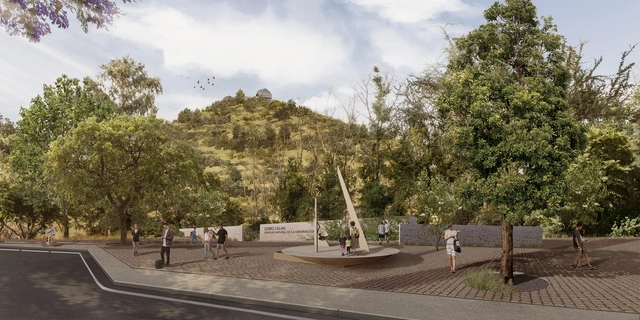
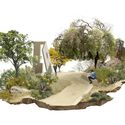
Acceso al parque . Image Cortesía de Parque Observatorio Cerro Calán
The panel of judges overseeing the design contest for Parque Observatorio Cerro Calán in Santiago (Chile) publicized their final decision on January 28, naming Chilean firm Jadue-Livingstone as the winner out of the five finalists.
Organized by the Las Condes Municipality in collaboration with the University of Chile and the Cerros Isla Foundation, the contest aimed to find the best architectural and landscape design for an upcoming park in Santiago, Chile: the Parque Observatorio Cerro Calán, a 45 hectare space to be built around the already existing Observatorio Astronómico Nacional.
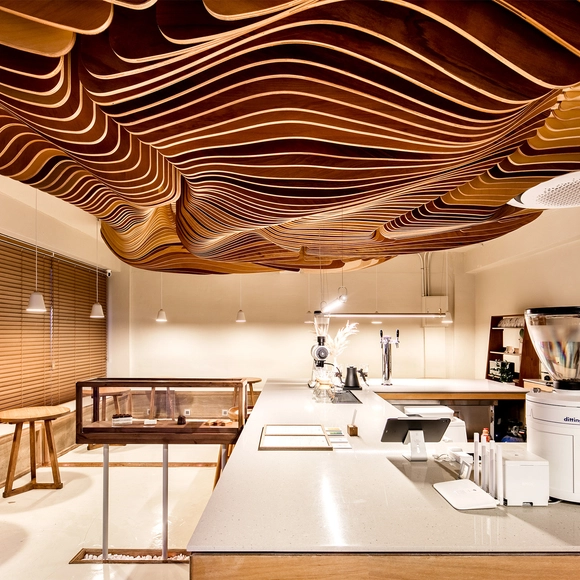
Perception Cafe / Haejun Jung - Feelament. Image Courtesy of A' Design Awards
If you've been debating whether to submit your work to the 2021 A’ Design Award Competition, now is the time! This is your last chance to enter your design, because the final call for entries ends February 28th, 2021. The international A' Design Awards give designers an opportunity to showcase their work to a global audience, whether you're a designer, architect, or an innovator from any other design field. Among other design competitions and awards, the A' Design Award stands out for its exceptional scale with over 100 design categories.
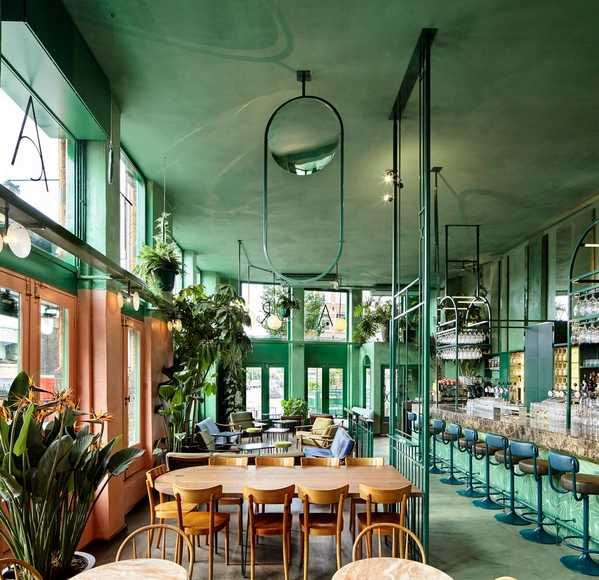
How many changes have you done to your interior space during this past year? Whether it was a change of furniture layout, repainting the walls, adding more light fixtures or perhaps even removing them, after spending so much time in one place, the space you were once used to didn’t make sense anymore. We could blame the overall situation for how we’ve been feeling lately, but as a matter of fact, the interior environment plays a huge role in how we feel or behave as well. However, if you were wondering why some neighbors seem much more undisturbed and serene even in the midst of a pandemic, it could be because the interior is greener on the other side.
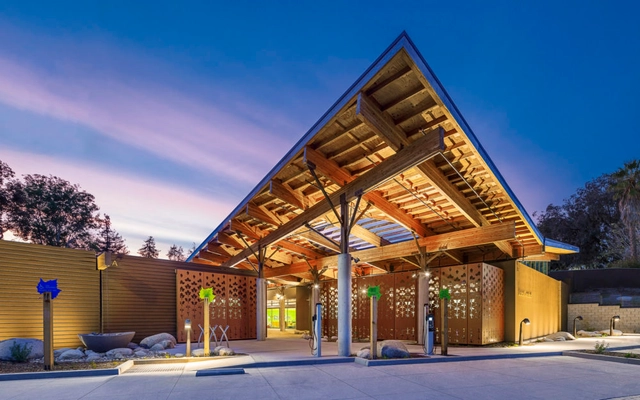
Sustainable design in the United States is for many a sort of Rorschach test. The construction industry is either making steady progress toward the ultimate goal of a carbon-free building sector, or it’s moving entirely too slowly, missing key targets as the ecological clock keeps ticking. The perplexing truth to all of this is: both are ostensibly true. In recent decades the industry has become significantly more energy efficient. We’ve added building stock but flattened the energy curve. The cost of renewables continues to drop. But way more is required, much more quickly. At the same time, huge hurdles remain. Without a renewable grid and stringent energy codes, it’s hard to see how we can fully decarbonize the building sector in even 20 years, let alone at the timeline suggested by increasingly worried climate scientists. It’s the classic good news/bad news scenario (or vice-versa, depending on your mood).
With LIGHTPAD, Swiss manufacturer Regent Lighting has created a modern lighting solution: formally minimalist, unobtrusive and timeless, it can be set up for single desks, two-person desks and even for four-person desks. Image Courtesy of Regent Lighting
Which kind of light is best for working? The one you have to think about least. With LIGHTPAD, Swiss manufacturer Regent Lighting has created a modular system that optimally lights the workspace – whatever the time of day.
https://www.archdaily.com/957115/minimalist-and-customizable-a-modular-lighting-system-that-adjusts-to-every-working-spaceArchDaily Team









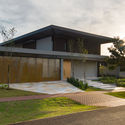
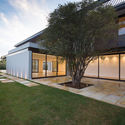
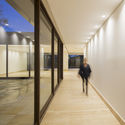
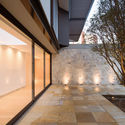














.jpg?1613584447)
.jpg?1613584406 "© Kim Jae Yoon")
.jpg?1613585238 "© Kim Jae Yoon")
.jpg?1613585293 "© Kim Jae Yoon")
.jpg?1613584490 "© Kim Jae Yoon")
.jpg?1613585957)






.jpg?1613521970)
.jpg?1613521969 "© Olivia Bull")
.jpg?1613522053 "© Olivia Bull")
.jpg?1613522315 "Courtesy of Scott and Scott Architects")
.jpg?1613522353 "Courtesy of Scott and Scott Architects")
.jpg?1613521970)
.jpg?1613592348&format=webp&width=640&height=580)

.jpg?1613592348)