

- Year: 2021


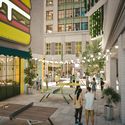
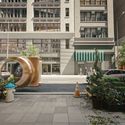
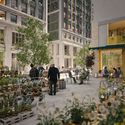
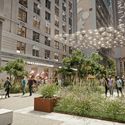
ODA has just launched its latest project, an urban vision for the future of the streets of New York. The project titled Beyond the street- Reimagining the flower district proposes to transform a city block from the outside in, altering the pedestrian experience and introducing new zoning changes that would give landowners air rights or tax credits in exchange for handing over their inner courtyards to be transformed into public/private spaces.
ArchDaily had the chance to talk with Eran Chen, founding principal and executive director of ODA, about the firm’s very special proposal that seeks to improve our urban environment. Check the interview and watch ODA’s explanatory movie.
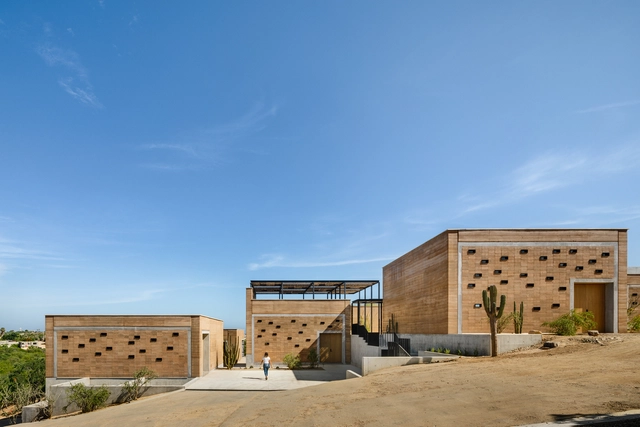

Paul Clemence has released a new series of images, showcasing the on-going construction works on Manhattan's Central Park Tower. The project is designed by Adrian Smith + Gordon Gill architecture and is set to be the tallest residential building in the world once completed. The building, as seen in the photographs, has neared completion and is set to open later this year.

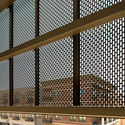
Perforated wall panels offer a variety of benefits: they can provide passive ventilation, shade, and unique aesthetics to any façade. In the case of companies like Dri-Design, which specializes in customizable and sustainable metal wall panels, perforated panels can be produced according to a wide variety of specifications, including different colors, materials, sizes, textures, shapes, and styles of perforation. Dri-Design’s perforated imaging series even allows architects to apply images onto their facades by varying the size, location, and density of the perforations.
Below, we examine three case studies of buildings using different perforated panels, considering each of their panel specifications and overall aesthetic effect on the buildings.
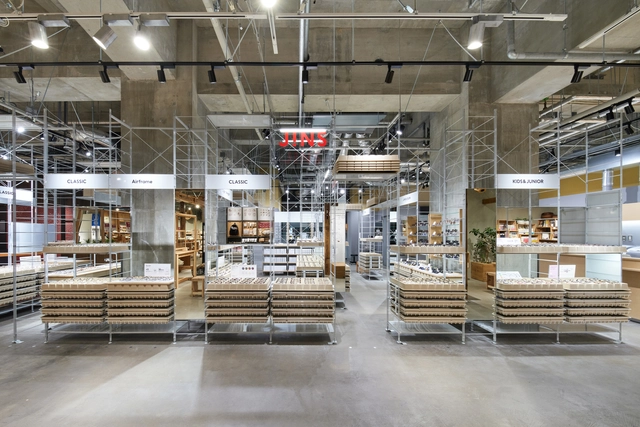
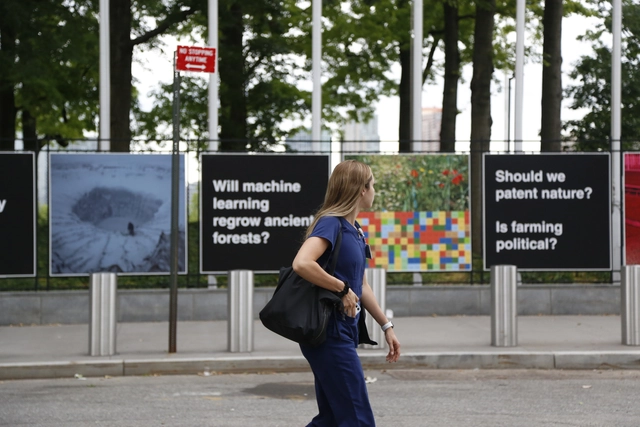
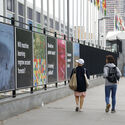
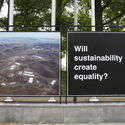
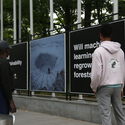
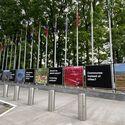
OMA's research and publication branch AMO has taken over the fences of the United Nations Headquarters in New York for a public exhibition showcasing a follow-up of the 2020 Countryside, The Future project. Curated by Rem Koolhaas and Samir Bantal, director of AMO, Countryside at the United Nations, invites reflection and public discussion on the topics of agricultural innovation, ecological change and food production in anticipation of the UN Food Systems Summit taking place in September 2021.
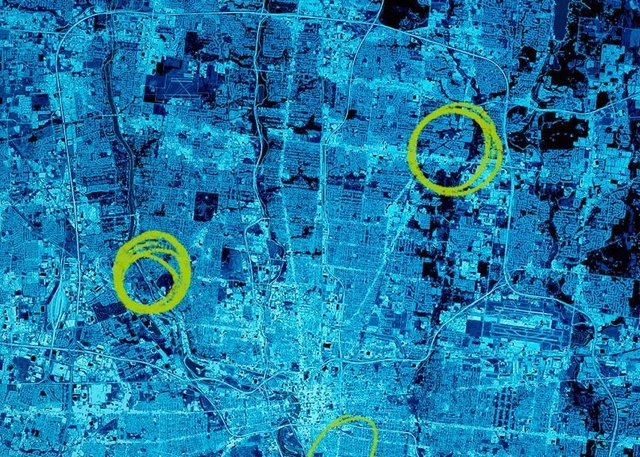
“If you gave me your shoe, I could tell you with about 90% accuracy the city in the world from which you came,” says Christopher Mason, Ph.D., a professor at Weill Cornell Medicine in New York, NY, co-author of the first global atlas of urban microorganisms. The study, carried out by the international Metagenomics and Metadesign of Subways and Urban Biomes (MetaSUB) consortium, creates a map of the microbiome of some of the largest cities in the world.
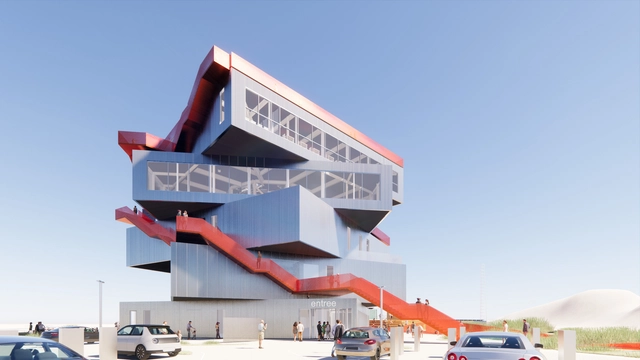
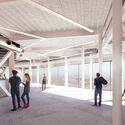
MVRDV has revealed the design of an exhibition and visitor centre for the Port of Rotterdam, which would tell the story of Europe’s largest port. Scheduled to open in 2024, The Harbour Experience Centre features a stack of five rotated exhibition spaces framing views of the surroundings, and outdoor staircases wrapped around the structure provide visitors with a route up the various terraces and to the rooftop. The project is the successor of FutureLand, a temporary information centre from 2009, whose success prompted the creation of a permanent exhibition.
.jpg?1592346164&format=webp&width=640&height=580)
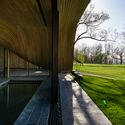
Charles (June 17, 1907 – August 21, 1978) and Ray Eames (December 15, 1912 – August 21, 1988) are best known for their personal and artistic collaboration and their innovative designs that shaped the course of modernism. Their firm worked on a diverse array of projects, with designs for exhibitions, furniture, houses, monuments, and toys. Together they developed manufacturing processes to take advantage of new materials and technology, aiming to produce high-quality everyday objects at a reasonable cost. Many of their furniture designs are considered contemporary classics, particularly the Eames Lounge & Shell Chairs, while the Eames House is a seminal work of architectural modernism.

Adaptive reuse or the process of transforming an older building by reusing the structure and changing its original purpose, has gained relevance over the years especially because it allows a complete optimization of the performance of the existing built environment. In a piece, originally published on Metropolis, author Elissaveta Brandon explores how "architects and developers are transforming the staples of the South—located throughout a 120-mile region from Winston-Salem to Fayetteville—into infrastructure fit for today". Transforming historic mills into design hubs, and mixed-use complexes, the article highlights 3 examples from North Carolina.