STUDIO Issue #4: TRANSFORMATION

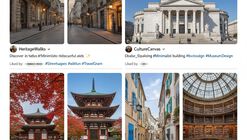
STUDIO magazine just released their Issue #4: TRANSFORMATION which focuses on how the city is a place involved in a continuous Transformation where man is the main creator and user. Furthermore, this issue uses several architectural projects to demonstrate how the city withstands continuous changes in its form, generating new and different landscapes. Through various scales and facets of architecture, the magazine clearly presents to its readers, from basic to in depth analyses, this transformation process cities undergo. For more information, and to read the magazine, please visit here.
Resurrection of Buildings: Case Analysis of Renovated Architecture
This book selects more than 50 excellent projects of renovated buildings worldwide. The architects adjust measures to local conditions and ingeniously carry out reposition and design for the buildings’ exterior, interior and landscape environment, thus creating some resurrection for them. Each project inside this book has its peculiar characteristics. Some focus on ecological and sustainable parts, such as rebuilding a factory neighboring to residential communities into a library, which decreases pollution, while at the same time produces some cultural atmosphere.
XX Models: Young Belgian Architects
Presented here are twenty recent projects by an equal number of young Belgian architectural firms, published in conjunction with the exhibition ‘XX Models: Young Belgian Architecture’, at the Centre for Fine Arts in Brussels. The exhibition showed one architectural model every two months beginning September 2008. Most projects include a public or collective dimension, public rather than private commissions were privileged, and a balance was sought between Flemish and Francophone firms. Each projected is examined in depth; selected offices include JDS Architects, Matador, URA, A229, Dierendonckblancke Architecten, B612 Associates and noA, among others.
Belgian Architecture Beyond Belgium
A+Editions provides the first overview of the export of Belgian architecture. Belgian Architecture Beyond Belgium is aimed at both amateurs and professionals of architecture and building. A critical synthesis of the history of Belgian architecture on the international stage since the 19th century and the opinions expressed during a round-table discussion by key figures currently involved in export provide elements of response to some important questions: What are the stakes, difficulties and specificities of Belgian architecture? Why, how and where has the know-how of Belgian architecture been disseminated? How do architects take into account local and cultural features in international projects?
Lincoln Center Inside Out / Diller Scofidio + Renfro
The redesign of Lincoln Center is one of the most challenging and innovative civic projects in recent urban history. Over the past eight years, Diller Scofidio + Renfro (DS+R), in close collaboration with FXFOWLE, Beyer Blinder Belle and Lincoln Center’s leadership, has transformed the 50-year-old modernist citadel into a porous and democratic campus. This visually rich document is the first comprehensive book to feature the extensive redevelopment in its entirety. Inside-Out, and still Lincoln Center details DS+R’s interpretation of the modernist project after several generations of social and political change. Through a combination of photographs, drawings, renderings, archival records and texts, the book describes the innovative strategies that have dissolved the public/private divide and effectively turned the campus inside-out, extending the spectacle of the performance halls into the Center’s mute public spaces and surrounding streets.
Digital Workflows in Architecture: Design – Assembly – Industry / Scott Marble
The logics of digital processes in architecture have begun to structure the way that architects design, the way that builders build, and the way that industry is reorganizing. The process of architectural design has become a complex workflow. At the core of the shift toward more expansive forms of digital production within the design and construction industry is the integration of communication through digital networks. The goal is to develop a continuous, easily accessible and parametrically adaptable body of information that coordinates the process from design through a building’s lifecycle. Organized around the key fields of Designing Design, Designing Assembly and Designing Industry, this book is a reference work on digital technologies as key factors in architectural design, fabrication and workflow organization. It presents essays and case studies from some of the leading voices on the topic.
What’s Up?: 15 Young European Architects / Salvatore Spataro
Fifteen firms of young european architects show their most relevant works and meditate on the current conditions of design production. while pragmatically anchored to the present, this generation confronts the transition to a different, more cooperative and social, existential situation: to an architecture that can overcome the obsession for individual self-representation and formal and stylistic research in order to contribute to an ecology of interaction.
Mark Magazine #43
Just arrived to ArchDaily, Mark Magazine #43. New museums keep popping up in the USA. Farshid Moussavi’s Museum of Contemporary Art in Cleveland, Zaha Hadid’s Broad Art Museum in East Lansing and Morphosis’s Perot Museum of Nature and Science in Dallas. In the Netherlands, Ector Hoogstad gave Eindhoven University of Technology a new library and Powerhouse Company added an impressive villa to their growing portfolio. On the eve of the launch of his new feature film, Oblivion, director Joseph Kosinski talks about his background in architecture. Finally, we checked out Zhujiajiao, near Shanghai, where Atelier FCJZ, Atelier Deshaus and Mada s.p.a.m. realised a milestone in China’s urban development, thanks to the reintroduction of a small-scale methodology coupled with respect for local identity.
BRUTALISM / CLOG
Brutalism. It’s the architecture movement that the public loves to hate, and architects dare to love. It’s also the latest topic tackled by CLOG, the quirky publication that takes a long slow look at what’s important in architecture now.
While Brutalism, a movement that reached its height in the 60s, may not seem a timely topic, nothing could be further from the truth. With Brutalism’s monolithic beasts reaching their not-so-golden golden years, the question to re-model (often prohibitively expensive, considering these projects’ complexity) or just demolish (as the public often begs for) is an urgent one – as the recent preservation debates over Paul Rudolph’s Orange County Building (successful) and Bertrand Goldberg‘s Prentice Women’s Hospital (not) reveal.
However, while this edition of CLOG of course mentions these debates, Brutalism shines in exploring the bigger questions these debates provoke: Why is Brutalism so loathed? What is it, really? And – can Brutalism be saved? Should it be?
Stadia: The Populous Design and Development Guide
The London 2012 Olympic Stadium is one of several landmark international sports venues to feature in a fully-updated and redesigned fifth edition of Stadia, the essential and long-established guide to stadia design.
Almost 20 years since it was first published in 1994, Stadia remains the most comprehensive guide to all aspects stadium design, from local club buildings to iconic international venues.
2G #64 / Bak Gordon
For years Portugal has captured the attention of the international architecture scene, but has also proven to be a breeding ground for architects beyond the great masters such as Fernando Távora, Álvaro Siza and Eduardo Souto de Moura. The famous Porto School has given way to a new generation of talented architects from other parts of the country, including the Aires Mateus brothers from Lisbon (2G 28, 2003) or the architect Paulo David from Madeira (2G 47, 2008). And from an even more recent generation comes another Lisboan, Ricardo Bak Gordon, who combines the best architecture of his own country with an awareness of what is happening abroad.
Patterns and Layering: Japanese Spatial Culture, Nature and Architecture
According to renowned Japanese architect Kengo Kuma, “this book aims to establish the interrelation between patterns and layering within architecture. These two previously detached notions can now be integrated into one methodology mediated by structural concepts. Patterns and Layering is the first book to introduce this new interrelationship, which has the potential to begin a new architectural and design revolution.” More information + full content after the break.
Mark Magazine #42
What better place to explore inventive homes and innovative architects than a country with a housing crisis? Mark #42 head to Poland, where theylook at an architecture scene in transition, checking in on a 152 cm wide house by Centrala and a drive-in home by Robert Konieczny. Elsewhere, Shintaro Fujiwara and Yoshio Muro discuss the challenges of the Japanese architect, and we visit ‘weird Austin’ to discover a house by Bercy Chen that literally emerges from the bush.
BUILDING: Louis I. Kahn at Roosevelt Island / Barney Kulok
In September 2011 Barney Kulok was granted special permission to create photographs at the construction site of Louis I. Kahnʼs Four Freedoms Park in New York City, commissioned in 1970 as a memorial to Franklin D. Roosevelt. The last design Kahn completed before his untimely death in 1974, Four Freedoms Park became widely regarded as one of the great unbuilt masterpieces of twentieth-century architecture. Almost forty years after having been commissioned, it is finally being completed this year, as originally intended.
LE CORBUSIER REDRAWN: The Houses / Steven Park
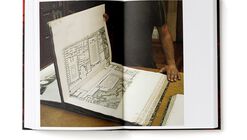
Le Corbusier (1887-1965) was the most significant architect of the twentieth century. Every architecture student examines the Swiss master’s work. Yet, all too frequently, they rely on reproductions of faded drawings of uneven size and quality. Le Corbusier Redrawn presents the only collection of consistently rendered original drawings (at 1:200 scale) of all twenty-six of Le Corbusier’s residential works. Using the original drawings from the Le Corbusier Foundation’s digital archives, architect Steven Park has beautifully redrawn 130 perspectival sections, as well as plans, sections, and elevations of exterior forms and interior spaces.
Original Copies: Architectural Mimicry in Contemporary China / Bianca Bosker

A 108-meter high Eiffel Tower rises above Champs Elysées Square in Hangzhou. A Chengdu residential complex for 200,000 recreates Dorchester, England. An ersatz Queen’s Guard patrols Shanghai’s Thames Town, where pubs and statues of Winston Churchill abound. Gleaming replicas of the White House dot Chinese cities from Fuyang to Shenzhen. These examples are but a sampling of China’s most popular and startling architectural movement: the construction of monumental themed communities that replicate towns and cities in the West.
Todd Saunders: Architecture in Northern Landscapes
Swiss architecture and design publisher Birkhäuser has released a monograph of Todd Saunders’ work. Based in Bergen, Norway, award-winning Canadian architect Todd Saunders has built work in Norway, Finland and Canada. Todd Saunders: Architecture in Northern Landscapes covers his work over the last decade. The simple yet powerful aesthetic of the book mirrors the elegance of Saunders’ own architectural style and compliments the potency of the natural settings in which his work is often situated.
Architectural Design: Human Experience and Place – Sustaining Identity
Human Experience and Place: Sustaining Identity is the latest title in the successful and prestigious Architectural Design (AD) series. Officially launched at the Sustaining Identity Symposium in London’s Victoria & Albert Museum at the end of November, this issue features both well-known and emerging practices worldwide.
By drawing on examples from across the world, this issue of AD demonstrates that, in a time of commercial globalisation, it is possible for architects, designers and engineers to create outstanding buildings that retain a sense of local identity, both in terms of cultural heritage and the conservation of the environment.
Torre David: Informal Vertical Communities / Urban-Think Tank & Iwan Baan
Torre David, a 45-story skyscraper in Caracas, has remained uncompleted since the Venezuelan economy collapsed in 1994. Today, it is the improvised home to more than 750 families living in an extra-legal and tenuous squat, that some have called a “vertical slum.”
Urban-Think Tank, the authors of Torre David: Informal Vertical Communities, spent a year studying the physical and social organization of this ruin-become home. Richly illustrated with photographs by Iwan Baan, the book documents the residents’ occupation of the tower and how, in the absence of formal infrastructure, they organize themselves to provide for daily needs, with a hair salon, a gym, grocery shops, and more.
National Mall / CLOG
Nearly a million people crowded the National Mall yesterday to witness the second swearing-in of President Barack Obama. The Mall was transformed – from the oft-trampled, dusty track of land separating the Capitol from the Lincoln Memorial – into a space of civic pride and participation. It’s moments like these that reveal to us the latent potential of the National Mall, and it’s important symbolic value as our Nation’s “backyard.”
The National Mall has suffered decades of over-use and under-funding, but has recently come back on the National agenda. With many projects underway – and soon to be underway – now is the time to consider: What is the National Mall? What is its value? And how should it be designed for the future? With informative graphics, varied insights, and interesting case studies, CLOG: National Mall addresses these vital questions.
Read our review of CLOG: National Mall, after the break…
MAS Context #16: Production

The new issue of MAS Context, a quarterly publication released by MAS Studio, takes on the daunting issue of production and consumption impacting cities through the lens of a handful companies operating out of Chicago. Production and consumption have a negative connotation in today’s atmosphere of sustainability and conservation but architecture is fundamentally a celebration of the craft of inventing, designing and making. MAS Studio, in collaboration with Chicago-based collective The Post Family, looks critically at the social, environmental, and political implications of consumer culture while celebrating the excellence of production.
More after the break.