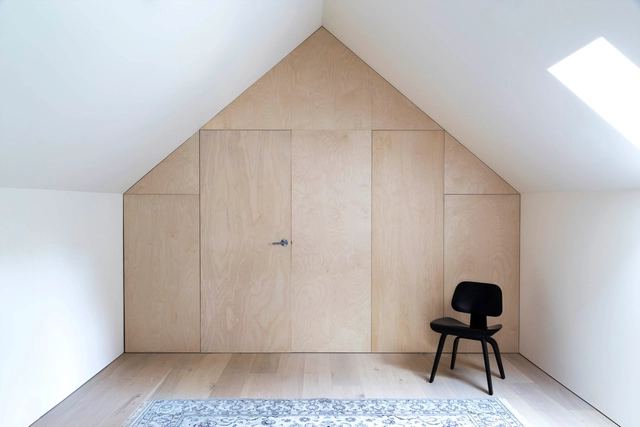
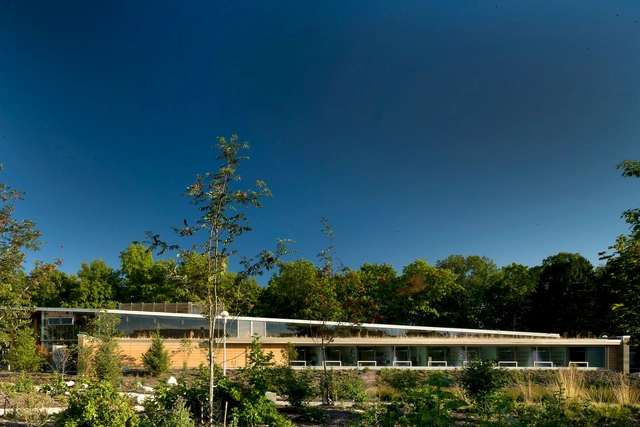
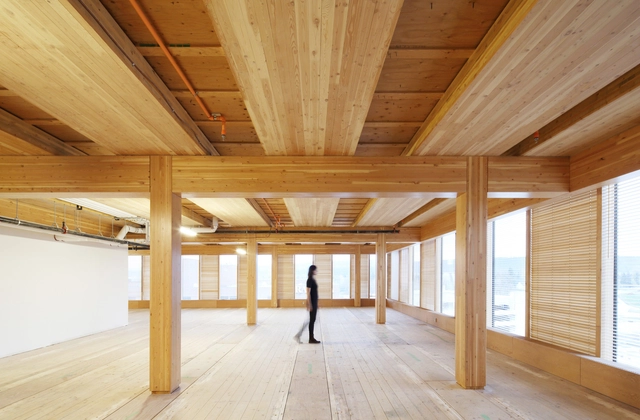
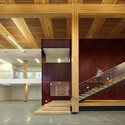
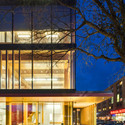
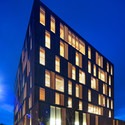
Although the term may seem recent, the concept of biophilia has been used for decades in architecture and design. The guiding principle is quite simple: connect people inside with nature to promote their well-being and quality of life. With all the ongoing design trends that have consolidated as a result, the demand has focused on organic materials that emulate outdoor environments. Among all the options, wood is one of the most popular materials to bring nature indoors, not only because of its functionality, but also due to its multiple physiological and psychological benefits.
Nordic Structures. Image Courtesy of Quebec Wood Export Bureau
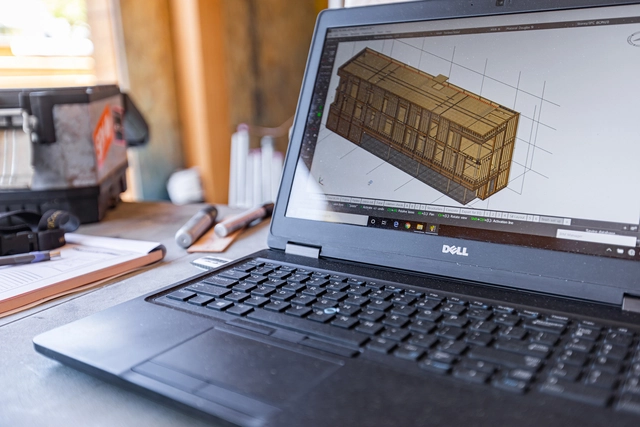
Offsite construction is a fast-growing sector within the global building construction industry. With that growth, many challenges lie ahead for all parties involved, especially architects, who have traditionally remained at arm’s length to the means and methods of construction. Cost challenges have led many firms to want to learn more about optimizing for offsite delivery methods. To help speed up industry transformation, a cooperative and open-source initiative led by the Quebec Wood Export Bureau has been developing a suite of nonprofit and collaborative tools for architects. At www.offsitewood.org, they offer a free Revit plugin, detailed content packs, and a BIM-integrated early-phase embodied carbon estimator called Carbon Fixers.
The history of architecture shows that the use of raw materials has always been somewhat common, whether in ancient vernacular techniques or within the Brutalist movement, to name a few. It is evident that the language of a project is often linked to its material, as various sensations and the perception of space are directed by the aesthetic and physical quality of the given element. For this reason, we have gathered ten buildings that highlight the quality of their materials, whether to make a statement, reinterpret a technique from the past, or to re-signify the potency of some of these elements.
In the original design for the Sydney Opera House, Jørn Utzon envisioned the shells supported by precast concrete ribs under a reinforced concrete structure, which turned out to be prohibitively expensive. As one of the first projects to use computational calculations, the final solution - reached jointly between the architect and the structural engineer - consisted of a precast ribbed system of concrete shells created from sections of a sphere. At the Guggenheim Museum in Bilbao, the project team used CATIA software (typically used by the aerospace industry) to model and materialize the complex curvilinear shapes of the titanium-coated volume designed by Frank Gehry. Challenging projects tend to spark the creativity of those involved to make them possible, but there are constructive systems that interact well with existing technologies. This is the case, for example, with engineered wood and the BIM system. When used simultaneously, they usually achieve highly efficient and sustainable projects.
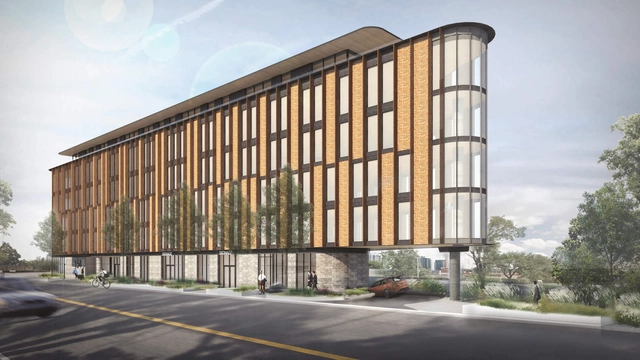
Canada suffers no shortage of flatiron buildings, with historic examples dotting the provinces from Toronto to Vancouver to Lacombe, Alberta, and beyond. Canada also enjoys its status as a hotbed of mass timber construction with Quebec serving as an epicenter of sorts for the movement. However, these two things—flatiron building design and the use of engineered wood products—have never yet been combined.
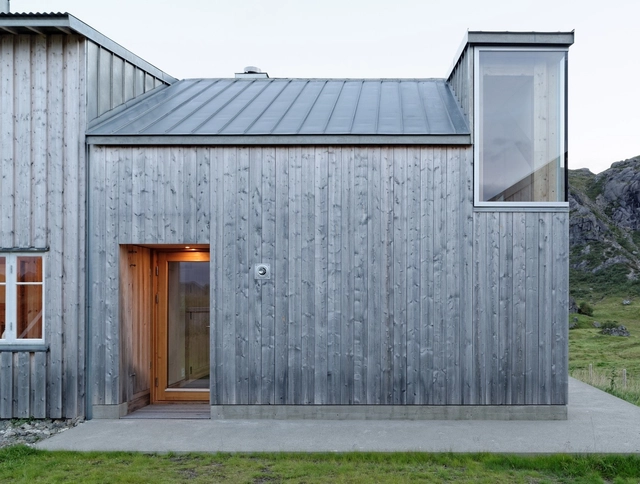
Summer House Gravråk / Carl-Viggo Hølmebakk. Image Cortesia de Carl-Viggo Hølmebakk
The moment a tree is cut down and its biological processes are interrupted, it can be said that the deterioration process of wood also begins. Steps such as the correct cutting of the trunk, drying and storage or the precise specification of the best species for each use will determine its durability. Composed basically of cellulose, hemicellulose and lignin, each wood species has a certain natural durability, also influenced by the environmental conditions of where it is inserted, such as temperature, humidity, oxygen content, and the microorganisms and insects present there. Generally, surface treatments are used to increase the protection of different parts, such as varnishes, oils and other chemical processes. But there are situations in which untreated wood can be used outdoors, achieving a gray and sober aesthetic that blends into the exterior and brings personality to the building.
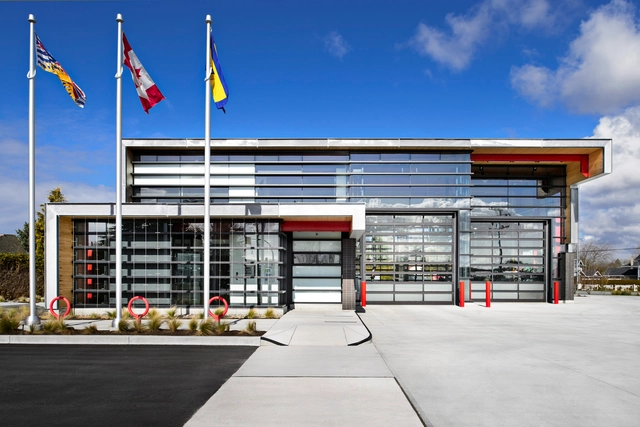
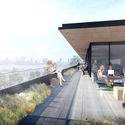
Henning Larsen and Ramboll have revealed the design of Marmormolen, a large timber building in Copenhagen. The building, which is expected to be one of the largest contemporary wood structures in Denmark, features office, retail, and commercial facilities on the Nordhavn waterfront with a green plaza, rooftop gardens, promenades, and a waterfront park.
Pablo van der Lugt is an architect, author and speaker. His research focuses on the potential of materials such as bamboo and mass timber for the construction sector, and their positive impacts on the world. “Throughout my professional career both in university (including my PhD research on the carbon footprint of engineered bamboo and wood) and industry the past 15 years I have found there are many misconceptions about these materials which hamper their large scale adoption. For this reason I ‘translated’ my research findings into two contemporary books for designers and architects about the potential of bamboo: Booming Bamboo, and engineered timber: Tomorrow’s Timber. They aim to dispel these myths and show the incredible potential of the latest generation of biobased building materials in the required transition to a carbon neutral, healthy and circular built environment.” We recently had the opportunity to talk with him about these topics. Read more below.
For some years now, wood has received an increasing amount of attention in the construction industry. With concerns raised about sustainability and the carbon footprint of buildings, new construction methods and innovative possibilities in the use of timber have developed rapidly. This interest in wood stems in part from its renewability, though this benefit is contingent on sustainable logging and the appropriate management of forests to be allowed to regenerate naturally. However, it is the versatility of wood that serves as the primary impetus for its widespread use. From boards, to beams, to floors, and even to thermal and acoustic tiles and insulators, wood can be used in several different stages of a single project and with different degrees of processing and finishing.
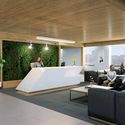
The use of organic and natural materials, as well as products that successfully emulate them, has been a strong ongoing trend that continues to gain popularity in interior design. Especially in the past year, where confinement restrictions have heavily influenced the amount of time people spend in their homes, the industry has experienced an increased demand for products capable of bringing nature and visual comfort indoors – whether it be in the form of furniture or other decorative elements. It is, without a doubt, a design movement that is here to stay.
However, besides the interest in nature inspired objects, architects’ and designers’ primary consideration when selecting a material is often its quality, resistance, and maintenance needs. It is, therefore, ideal to combine a natural look with functionality when creating a user-friendly indoor environment. With that in mind, wood-based materials manufacturer EGGER has expanded its lacquer portfolio to develop a new line that unites an organic look with other beneficial properties.
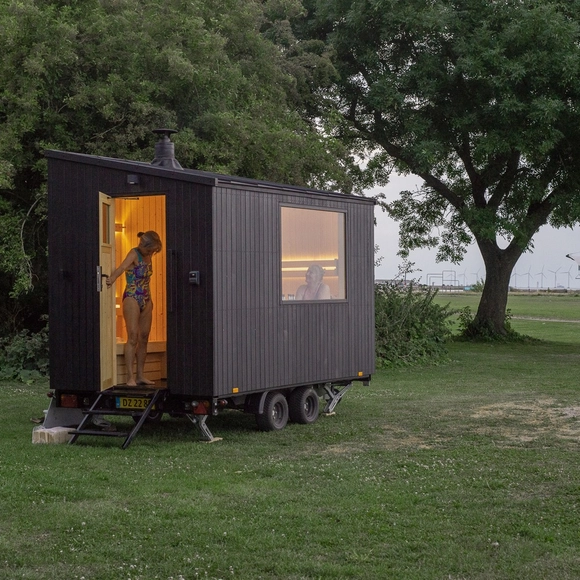
Saunas are inseparable from the culture of Nordic countries and they are increasing in popularity as a result of their many physical and mental health benefits. Their projects are usually quite archetypal, combining efficiency and sobriety.
We spoke with Jakob Gate, co-founder of Native Narrative & Scandinavian Sauna, who has been developing sauna projects that combine the flexibility of being transported anywhere, with the expertise and tradition of Scandinavian design. They work without electricity, heated by wood, while LED lighting is provided by a rechargeable battery. Learn more in the following interview:
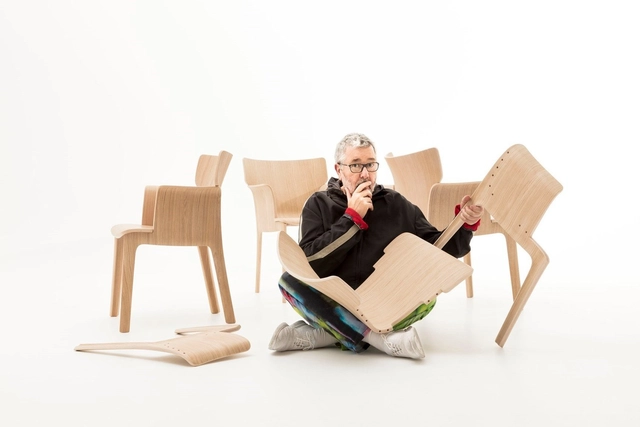
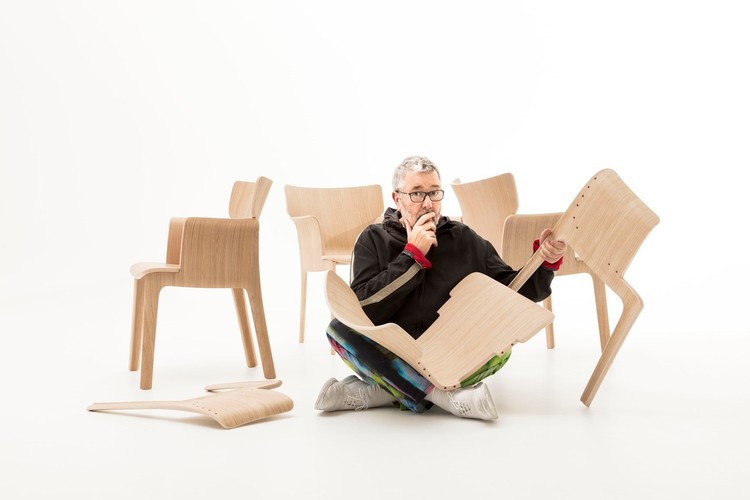
Believing that a creator has a duty towards society, Philippe Starck, is a multifaceted designer whose projects span across many disciplines. From architecture and interiors to industrial and furniture design, Starck’s portfolio is always, as he puts it, “focused on the essential”, and “must improve the lives of as many people as possible”. Author of Alessi’s famous lemon squeezer, he is known for pushing the boundary of design in everyday objects.
With 10,000 creations, completed or yet to come, Philippe Starck is a pioneer in “making things in the way of ecology”. In fact, ArchDaily had the chance to meet the designer at the 2021 Salone del Mobile, to discuss his design approach and visions as well as hislatest plywood creation for Andreu World.
"Here in the tropics, shade is the prime air conditioner and, unlike the stove, it can be created everywhere," says Bruno Stagno about architecture for the tropics. In this sense, how has Costa Rica been "building" it's shade over the years?
It is difficult to find someone who never played LEGO as a child. What if, like LEGO's, we thought of buildings as great assembling games? U-Build is a modular wooden construction system developed by Studio Bark to be easy to build, pleasant to inhabit, and simple to deconstruct at the end of its useful life. The system removes many of the difficulties associated with traditional construction, enabling individuals and communities to build their own homes and buildings. The system uses precision CNC machining to create a kit of parts, allowing the structure of the building to be assembled by people with limited skills and experience, using only simple hand tools.








Sora.jpg?1637834361&format=webp&width=640&height=580)
Sora.jpg?1637834374 "© Sora")
Sora.jpg?1637834334 "© Sora")
Sora.jpg?1637834417 "© Sora")
Sora.jpg?1637834405 "© Sora")
Sora.jpg?1637834361)