-
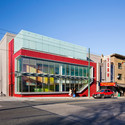
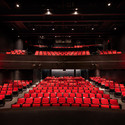
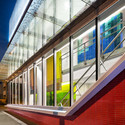
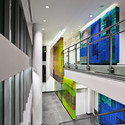
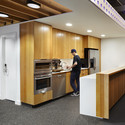
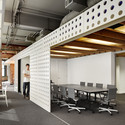
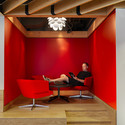
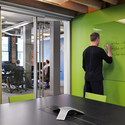
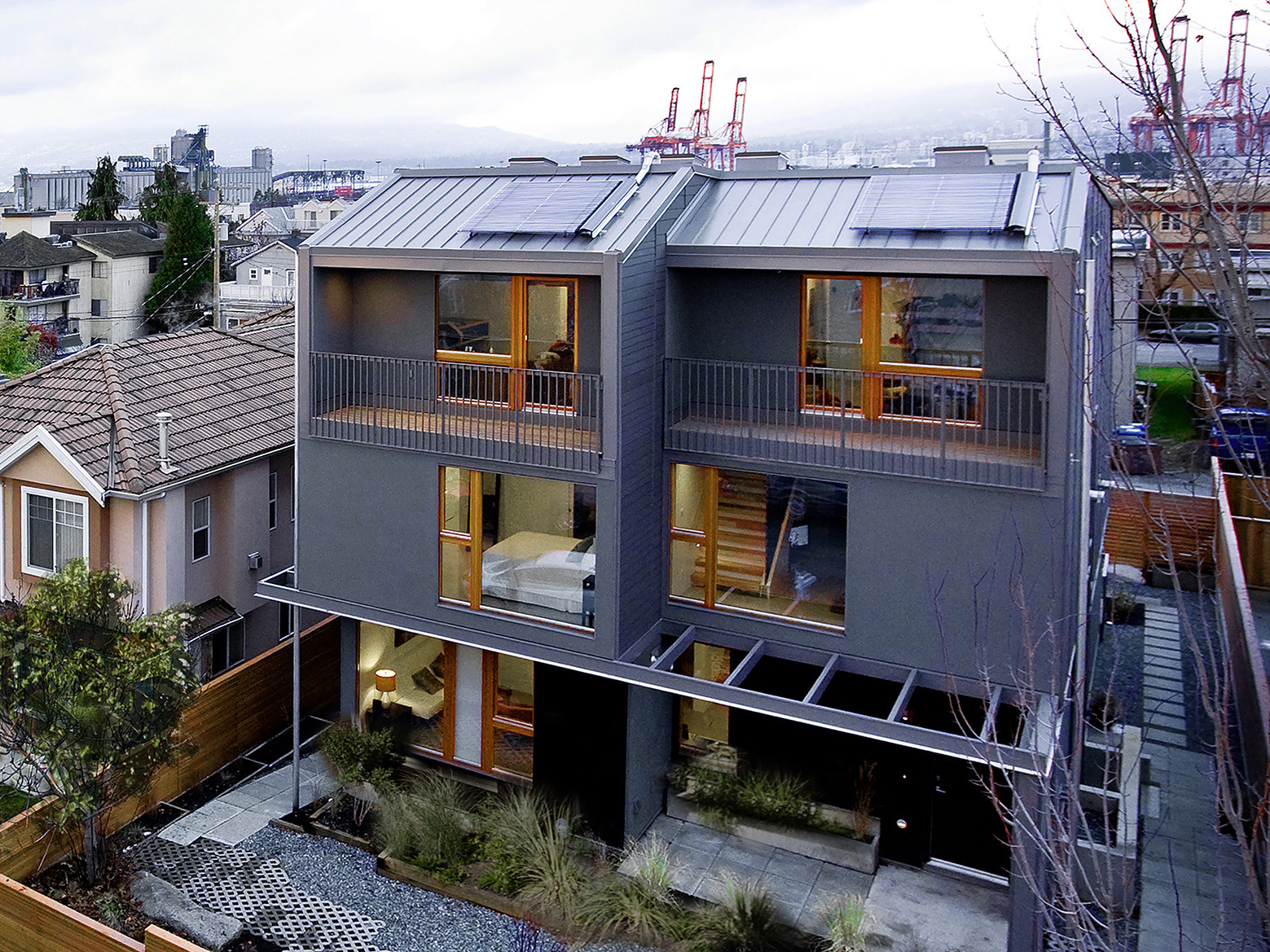
Architects: Ankenman Marchand Architects, Gair Williamson Architect
- Year: 2012



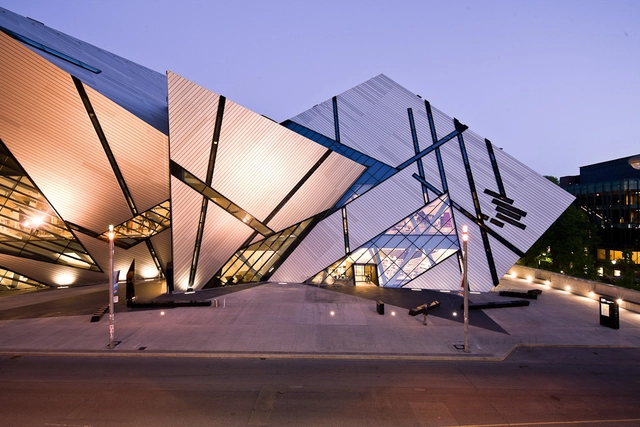
Today marks Canadian Thanksgiving, and to celebrate the occasion we've rounded up some of Canada's best architecture. Our five selections represent five Canadian cities, each with a unique architectural sensibility. We begin in Toronto with the Royal Ontario Museum addition by Studio Daniel Libeskind, a striking intervention using prisms of glass and steel fused to a 102-year-old museum structure; next we go to Montréal for Habitat 67 by Moshe Safdie, an interlocking modular housing project designed for the World Exposition of 1967; to Calgary for Santiago Calatrava's understated Peace Bridge, a stunning glass-encased red lightning bolt spanning the city's widest waterway; then to Winnipeg's Old Market Square Stage by emerging firm 5468796 Architecture, a chameleonic performance space wrapped by a mesh curtain of steel cubes; and finally to the outskirts of Vancouver for the Richmond Olympic Oval, a masterpiece of engineering and the centre of attention during the 2010 Vancouver Winter Olympics. Enjoy, eh.

How will sea level rise affect Metro Vancouver and what can we do about it? Take a look at the #RISEIDEAS competition from SFU Public Square – an open ideas competition with a Grand Prize of $35,000 to find innovative ways to address sea level rise. Form a team of one to four people, submit your idea online, and you could take home the cash, rub shoulders with experts at the October 19 public exhibition day, and win free event tickets. The deadline for competition submissions is October 6, 2014. Check out the website for all the details.

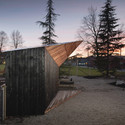
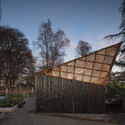
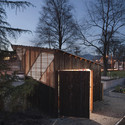
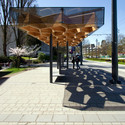
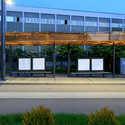
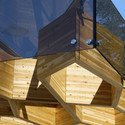
Imagine walking beneath an illuminated canopy of lush greenery, in the form of inverted pyramids sculpted to perfection. In early August 2014 visitors were welcomed by this succulent living roof to the Harmony Arts Festival in West Vancouver, British Columbia. Guests were guided through the fairgrounds beneath the 90-foot long canopy, creating an immersive sensory experience befitting the interdisciplinary creative arts festival. Designed by Matthew Soules Architecture and curated by the Museum of West Vancouver, Vermilion Sands was created as a temporary installation for the ten day festival.
Submerge yourself in Vermilion Sands with photos and more info after the break.
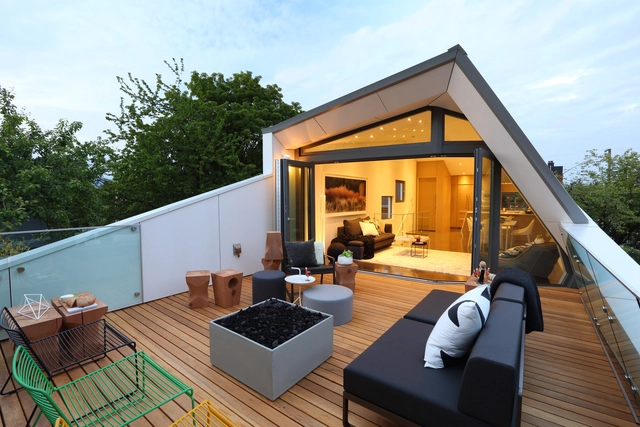
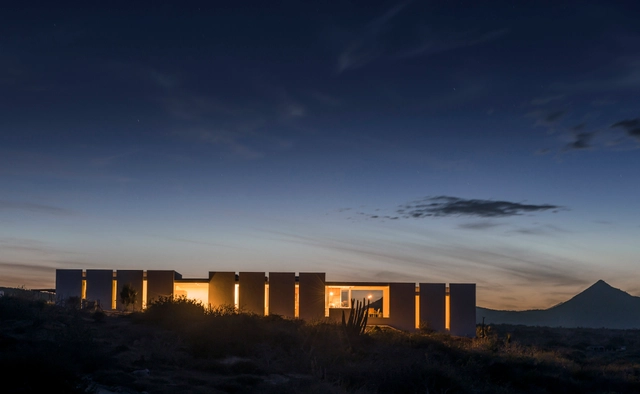
In the following interview, presented by ArchDaily Materials and originally published by Sixty7 Architecture Road, Canadian firm Campos Leckie Studio defines their process for designing site-specific, beautiful architecture that speaks for itself. Enjoy the firm's stunning projects and read the full interview after the break.
We asked Michael Leckie, one of the principals of Vancouver-based Campos Leckie Studio, about the importance of discovery in design and the textural differences between projects. Your website states that your firm is committed to a rigorous process of discovery. How do you explain that to clients?
Process is extremely important in our work. When we meet with clients we do not immediately provide napkin sketches or an indication of what form the work will ultimately take on. Rather, we focus on the formulation of the ‘design problem’ and the conditions that establish the basis for exploration and discovery. These contextual starting points include the site, program, materiality, budget, as well as cultural reference points. This is challenging for some clients, as our culture generally conditions people to expect to see the final product before they commit to something.

In this article, first published by Indochino as “What makes some buildings happy?” architect Bruce Haden, principal at DIALOG in Vancouver, discusses why some places feel good to be in and why some just have that awkward, quiet feeling.
Award-winning architect and urban planner. Dad. Researcher on happy vs. lonely cities. We talked to Bruce Haden about why some places feel good to be in, and some just have that awwwkward, quiet feeling.
Bruce Haden has only been an architect and a bartender. So ask him what he likes about it, and his answer is he doesn’t really know anything else. In high school, he didn’t want to pick between calculus and woodshop, so he ended up in a profession that’s part art, part engineering (and a fair amount of politics). Now, he works on a lot of large, public buildings. But he also spends a lot of time thinking about happy and lonely cities. He talks about how working with a client is like dating, why some buildings are worth being in and others are just empty, and whether adventure or luxury wins.

The Vancouver Art Gallery has unanimously appointed Herzog & de Meuron to design their new, 300,000 square foot gallery in downtown Vancouver.
Selected from a shortlist of five - including Diller Scofidio + Renfro, KPMB Architects, SANAA , and Tod Williams Billie Tsien Architects - Herzog & de Meuron was ultimately awarded the commission for their vision of the new Gallery and “proven ability to create innovative museum buildings that place prominence on artists and institutional mission.”
The new museum building, which will be the practice’s first Canadian project, will double the Gallery’s current space and accommodate for their expanding collections, indoor and outdoor exhibition space, and new educational programs. Conceptual designs are expected to be released in early 2015.
Preview the portfolio that landed Herzog & de Meuron the commission, after the break...
In the 1970s, the principal designers at DIALOG, Norm Hotson and Joost Bakker, were commissioned by the Canadian government to redevelop Vancouver's Granville Island, a former industrial site, into a people place. The architects envisioned a radically different type of waterfront characterized - not by beaches or parks - but by varied commercial and cultural programs. Today this iconic destination, popular with both citizens and tourists alike, is recognized as a pioneering precedent for urban development across Canada. In the video above, the DIALOG duo chronicles the success of the mixed-use design, touching on how it has influenced the city of Vancouver as well as the firm’s more recent work.
.jpg?1397621364&format=webp&width=640&height=580)
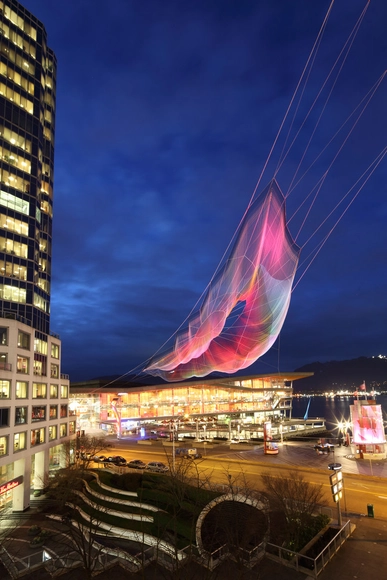
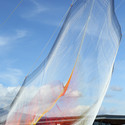
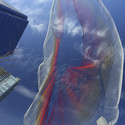
American Artist Janet Echelman is to premiere her latest, and largest, sculpture in Vancouver. Widely known for her artistic ability to reshape urban airspace, Echelman's sophisticated mixture of ancient craft and modern technology has led to collaborations with aeronautical and mechanical engineers, architects, lighting designers, landscape architects, and fabricators to "transform urban environments world wide with her net sculptures." Using a light weight fibre to elevate her monumental "breathing" forms above the streets of urban centres, Echelman's new sculpture will be of a size and scale never before attempted.


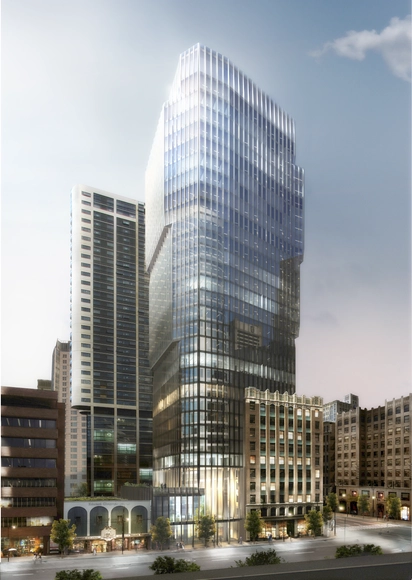
Construction broke ground last month for ‘The Exchange’ tower in Vancouver, Canada's first LEED Platinum heritage conversion and Harry Gugger Studio’s first North American building. The 31-floor office building resolves the strict urban regulations imposed on high-rise construction downtown and addresses the historical context by preserving and integrating the façade of the city's historic Stock Exchange building.

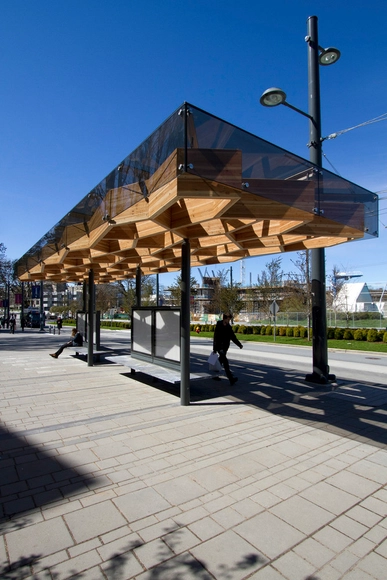






.jpg?1397621294 "Courtesy of Scott and Scott Architects")
.jpg?1397621531 "Courtesy of Scott and Scott Architects")
.jpg?1397621441 "Courtesy of Scott and Scott Architects")
.jpg?1397621526 "Courtesy of Scott and Scott Architects")
.jpg?1397621364)