I first encountered Manuel Gallego's work in Valencia, introduced to it by José María Lozano. There, at the school where I was studying, they had organized a symposium on Galician architecture.
I first encountered Manuel Gallego's work in Valencia, introduced to it by José María Lozano. There, at the school where I was studying, they had organized a symposium on Galician architecture.
What is it about the work of Joaquín Vaquero Palacios that still surprises us after all this time, making it worthy of an exhibition at the Museo ICO and so many visits by specialists? I have often been called upon—a role I gladly accept—as the local point of contact for those coming to Asturias to see Vaquero's work. The willingness of Hidrocantábrico, and now EDP (I still speak with the same people; many thanks to Nicanor Fernández and his team), is always absolute, stoically accommodating last-minute adjustments. After all, outsiders often fail to realize, for instance, that traveling to Grandas de Salime remains a major trek that takes up—and fills with joy—an entire day, and that security protocols are paramount.
On one occasion, we brought a busload of students from the Universidad Internacional Menéndez Pelayo, and by the end of the day, they were applauding on the bus as if they had just witnessed an opera. And indeed they had: Vaquero's grand formal opera. This year, in fact, I served as a guide for the Master of Advanced Architecture program at the Universidad Politécnica de Madrid, directed by Juan Herreros—a passionate admirer of Vaquero who has joined us on many occasions—with students from five different countries who were left awestruck upon seeing the power plants. We also crossed paths in Proaza, in the offices, and in Veriña with the young team of architects designing this exhibition, who were meticulously reviewing every element and archive they found in the buildings.
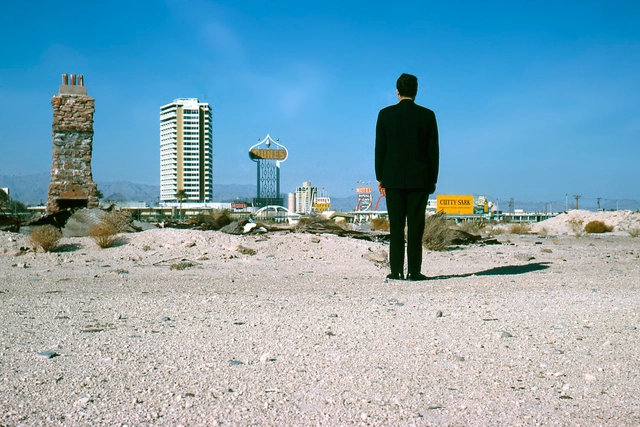
My mind is undoubtedly diffuse and scattered, gathering and comparing disparate elements, architectures from distant eras, reading and enjoying them with equal passion. There is no doubt that an early reading of this article's protagonist has shaped my thoughts and those of many of us. Having just passed away (on Tuesday, September 18), Robert Venturi, at the age of 93, remains an essential reference for us.
And why is that? Robert Venturi wrote a book titled Complexity and Contradiction in Architecture, which acted as a catalyst for the entire discipline. It seems that in this book, Venturi set out to explain a quote by Charles Rennie Mackintosh: “There is hope in honest error; none in the icy perfection of mere stylisticism.”

.jpg?1537636136 "Franklin Court / Venturi Scott Brown. Image © Mark Cohn")