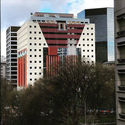
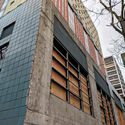
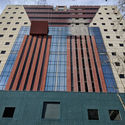
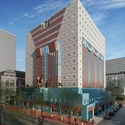
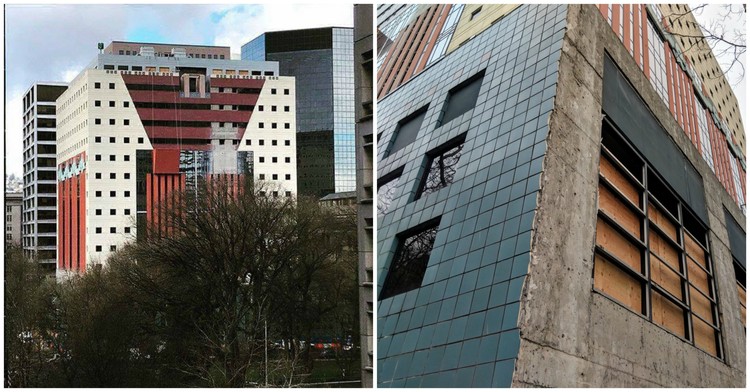
Work has begun on the dismantling of the facade of Michael Graves’ iconic Portland Building, part of a $195 million project that could see the building lose its inclusion on the National Register of Historic Places.
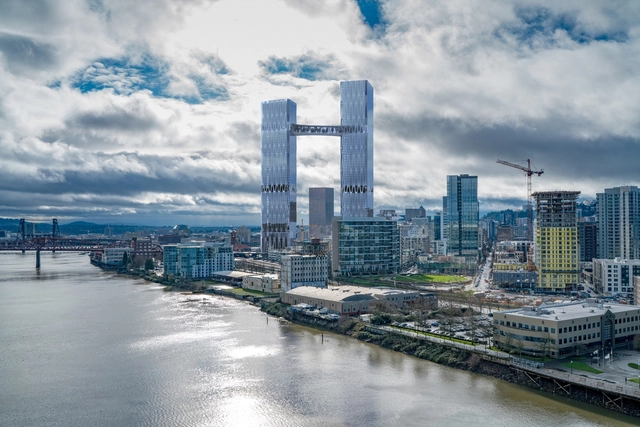
New renderings have been revealed of Kaven + Co. and William / Kaven Architecture’s plans for the new Broadway Corridor in Portland, showcasing the full masterplan for the first time. Conceived as a new mixed-use district and transportation hub connecting Union Station and the Pearl District, the Broadway Corridor will feature the city’s new tallest and one of the west coast’s tallest buildings.
William / Kaven and Kaven + Co. have unveiled plans for a bridged mixed-use skyscraper development that, if built, would become the tallest building in Portland, Oregon.
The project would replace the city’s soon-to-be-demolished USPS headquarters with a new 5-million-square-foot development consisting of multiple high-rise buildings containing facilities for retail, office, residential and a hotel.
The plan is organized around two central skyscrapers, the taller of which would top out at over 970 feet – more than foot feet taller than the city’s current tallest building, the Wells Fargo Center. The two skyscrapers would be linked at 680 feet high by a 236-foot-long glass-walled bridge housing a skygarden and offering unparallelled views of the city and the surrounding landscape.
In this six-minute-long video, Vox makes the argument that the primary reason behind the recent resurgence of streetcar systems—or proposals for streetcars, at least—in the USA is not because of their contributions to urban mobility, but instead because of the fact that they drive and sustain economic development. As it uncovers the causes for the popular failure of the streetcar systems in cities such as Washington DC, Atlanta, and Salt Lake City (low speed and limited connectivity, mostly) it asks why an increasing number of American city governments are pushing for streetcars in spite of their dismal record at improving transit. Is it solely due to their positively modern aesthetic? Are streetcars destined to function as mere “attractions” in a city’s urban landscape? Or is the real objective something more complex?
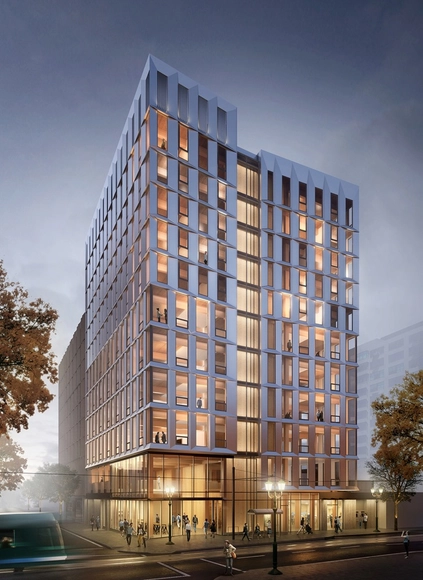
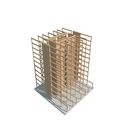
The United States’ first mass-timber highrise (defined by Emporis Building Standards as a building with an architectural height of 115-328 feet, or between 12 and 40 floors) has been granted planning permission, allowing construction on the landmark project to begin. Located in downtown Portland, Oregon, the building known as Framework will cap out at 12 floors and approximately 128 feet, ushering in a new era of tall building construction in the US.
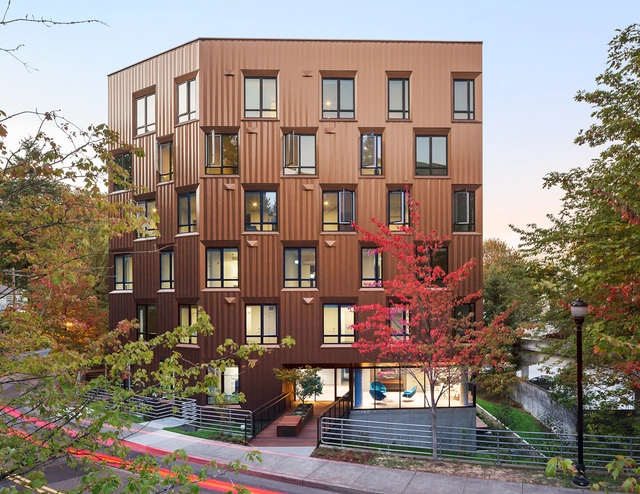
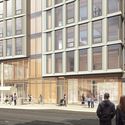
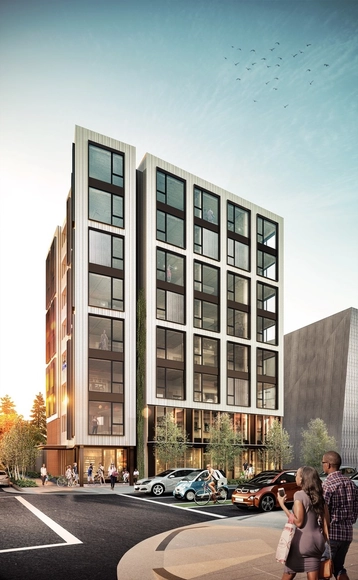
Continuing the ever-increasing growth of timber construction architecture in North America and around the world, Carbon12’s recent topping out has resulted in its newly achieved status as the tallest mass timber building in the United States. Situated in Portland and designed by PATH Architecture, the 8-storey condominium is an example of the cost-effectiveness and labor sensitivity of engineered wood products while helping regenerate Oregon’s local timber industry.
With a growing population and rapid development, much of recent focus has been on Portland’s city center, in an effort to preserve the existing natural landscape that surrounds the urban areas. Built of prefabricated cross-laminated timber panels and glu-lam beams around a steel core, Carbon12’s hybrid construction aids the city’s densification, given its off-site construction and quick assembly that help both reduce costs and respond to residential needs.
https://www.archdaily.com/872219/path-architectures-catalytic-condominium-in-portland-is-the-tallest-timber-building-in-the-usOsman Bari
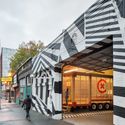
Höweler + Yoon Architecture, in collaboration with OFIS Arhitekti, has unveiled its design for a new building for The Circus Conservatory, which will house America’s first accredited degree program in the Circus Arts. Located in Portland, Maine, as the anchor tenant of a peninsula, the project aims to transform an undeveloped part of the city into a “vibrant artistic center complete with public performance venues and recreational facilities.”
Inspired by the historic circus shape—a circle with a radial audience—the design proposal utilizes a radial viewing strategy “in order to similarly activate the educational community.” Furthermore, in the design, acrobatics, performance, and classroom spaces are treated equally, “[challenging] the viewing relationship crucial to a circus and academic settings.”
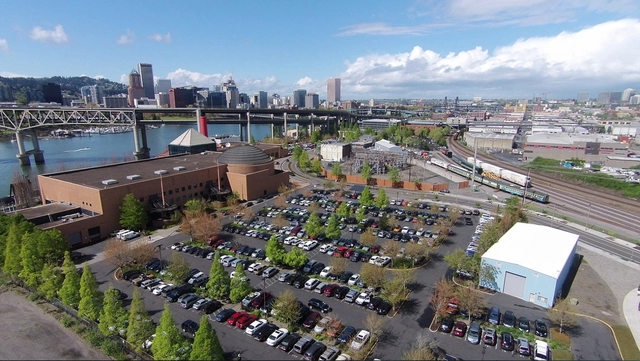
The overall goal of the master plan will be “to provide a market-driven strategy that outlines the best economic and environmental uses of OMSI’s physical property while highlighting the museum’s work as a cultural touchstone, science education resource, and trailhead to connect the community to learning and skill-building opportunities that equip them for 21st century jobs.”
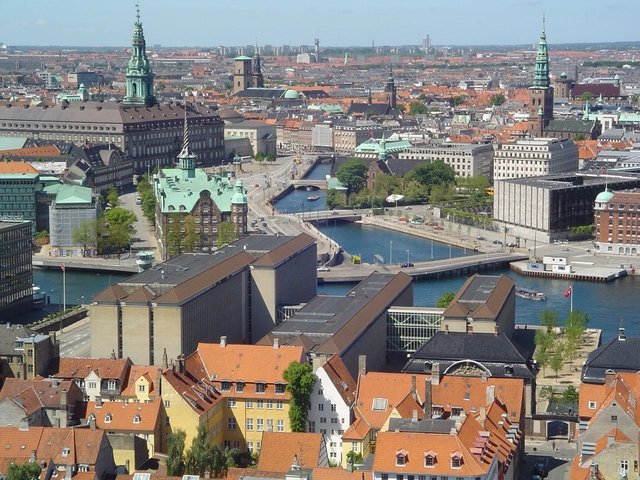
Metropolis Magazine has released their 2016 rankings of the world's most "livable" cities. Acknowledging that what makes a city "livable" can often be subjective, the team at Metropolis emphasizes that in creating the list they "focused on the concerns at Metropolis’ core—housing, transportation, sustainability, and culture." The result of this research was last year's top prize-winner Toronto dropping to the number 9 spot and Copenhagen, which last year took the number 4 spot, jumping to the top. Rounding out the top three are Berlin and Helsinki.