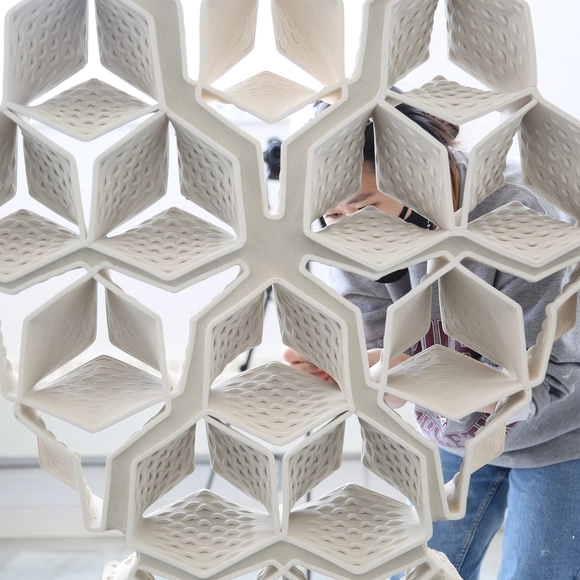
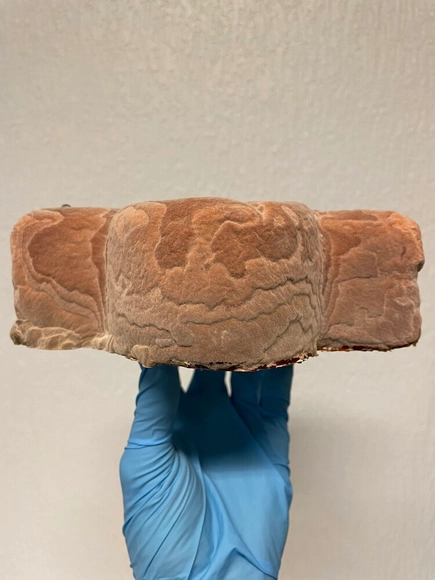
Since the 1980’s, 3D-printing has offered new ways of developing architecture, engineering, and objects of daily use. When it comes to digitizing analogue processes, it is vital for users to become familiar with current tech innovations and their benefits. HIVE Project reshapes the art and craft of building in clay by combining traditional ceramics, smart geometry, and robotic precision to construct a masonry wall composed of one hundred seventy-five unique 3D-printed clay bricks.
Wallpapers can be quite controversial. They can be typical of old-fashioned and antiquated homes, but at the same time, they can also add personality to otherwise dull spaces. One of the best parts of using these elements is that they can be quickly installed, and with relatively low costs. This also means that they aren't very long-lasting, and can therefore be quickly discarded and replaced, making them transient decoration items. As Joanna Banham—a researcher on wallpapers—states, “Wallpaper is often regarded as the Cinderella of the Decorative Arts – the most ephemeral and least precious of the decorations produced for the home. Yet, the history of wallpaper is a long and fascinating subject that dates back to the 16th century and encompasses a huge range of beautiful patterns created both by anonymous hands and by some of the best-known designers of the 19th and 20th centuries.” Today we are seeing another wallpaper resurgence, with numerous options of materials, patterns, and colors, and several examples of architects who have used them creatively in their projects. In this article, we go through the history of wallpapers and some of the current alternatives on the market, by diving into the Architonic catalog.
Food pyramids are familiar to all of us. They are visual guides that show us the proportions of foods that we should supposedly eat on a daily basis, in order to stay healthy. Composed of a series of layers with different food types–such as grains, flour, fats, vegetables, and others–, at the base are the foods that should be consumed in larger quantities. Towards the top, each layer becomes successively smaller, indicating the foods that are meant to be ingested rarely. The pyramid can vary according to countries and cultures, but its main purpose is always to provide a guide for a balanced life. There are no prohibitions, but it does indicate some foods that should be consumed with caution because of their impacts on our health.
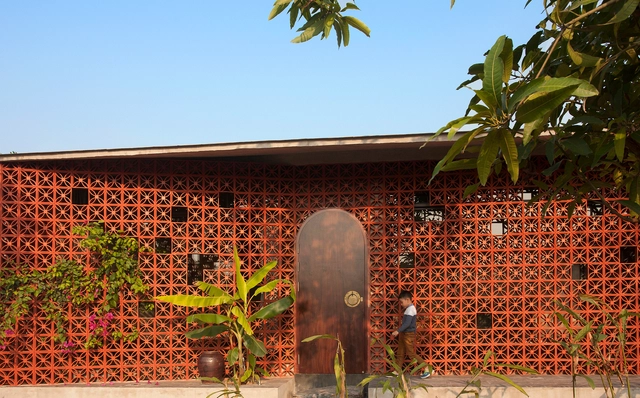
Façades don't always have to be opaque. Whereas in the past the only options were heavy and raw–such as stone and brick–in recent years façades have adopted an increasingly lighter appearance, with innovative materials becoming the protagonists. These give the building a different look, delicate and transparent, while still maintaining privacy and thermal comfort. Examples of these include polycarbonate, translucent sheets, perforated tiles, glass and even metal chain links, which was the chosen material for a building in Montpellier, France.
Stool S/M DBV-505-FD-01-01 / De Breuyn. Image Courtesy of De Breuyn
Reminiscing on his childhood, Peter Zumthor once said: “Memories like these contain the deepest architectural experience that I know. They are the reservoirs of the architectural atmospheres and images that I explore in my work as an architect.” These words allude to a fundamental concept behind kid friendly-design: everything we encounter in the first years of our lives, including architecture, can have a great impact on our future perspective of the world. When spaces are designed according to children’s specific needs, they stimulate their physical and mental well-being, as well as boosting autonomy, self-esteem and socialization skills. Therefore, architects have the responsibility to ensure that kids live, play and learn in environments that contribute to their long-term healthy development.
The terms critical regionalism, popularized by theorist Kenneth Frampton, proposed an architecture that embraced global influences, albeit firmly rooted in its context. That is, an approach defined by climate, topography and tectonics as a form of resistance to the placidity of modern architecture and the ornamentation of postmodernism. Bringing familiar elements to a particular location can allow the building to be better accepted and incorporated into the local context. This was the case of the New Maitland Hospital, which incorporated a large brick panel next to the main façade, as a reference to the community's traditional symbols.
Agriculture and the food industry seem to have little in common with architecture, but it is precisely the overlap of these three areas that interests Ghanaian-Filipino scientist and architect Mae-ling Lokko, founder of Willow Technologies based in Accra, Ghana. Working with recycling agricultural waste and biopolymer materials, Lokko searches for ways to transform the so-called agrowaste into building materials.
Ceramic fragments and figures found at the Neolithic site of Mureybet, in Syria's Middle Euphrates valley, indicate that clay and fire work date back to the 7th millennium BC. This means that dealing with ceramics is one of the oldest activities in human history. More than 9,000 years later, ceramic, and all its derivatives, has become one of the most used materials in construction, being used at different times, from structure to finishes.
Calla Pendant Ceiling Lights. Image Courtesy of Cocoweb
Characterized by a simple structure and a gable roof, the traditional barnyard typology responds to its original function: sheltering farm products and livestock. In recent years, however, the barn aesthetic has evolved tremendously, sparking the interest of designers with its enduring rustic charm, minimalistic shape, refined ornamentation and modularity – qualities that have long made it popular in countryside hideaways. Reinterpreted to fit a contemporary style, the vintage typology has conquered modern projects that seek to offer an escape from the fast-paced, dense reality of urban life. Whether refurbishing historic farms or building new homes designed to resemble barns, architects have drawn inspiration from the industrial origins of traditional barnyards, but adding a modern twist.
In the face of increasingly alarming predictions regarding the climate crisis, just increasing the efficiency of buildings is no longer enough. Zero energy buildings - or, better yet, energy positive buildings - make it possible to mitigate the negative impacts of the construction industry, which is responsible for 40% of all greenhouse gas emissions. These are buildings capable of producing more energy than they consume through the use of renewable sources. To reach this ambitious goal, it is necessary to follow three main steps:
HeartFelt® Multipanel. Image Courtesy of Hunter Douglas Architectural
Known as the “fifth wall,” a ceiling is the interior overhead surface that covers the upper limit of a room. Unlike decor, wallpaper, furniture and other pieces that define indoor ambiance, it is not usually emphasized as a crucial design component, often resulting in the classic plain white shade that continues to be the norm in many, if not most, interior spaces. Nonetheless, ceilings can serve multiple purposes in any architectural project. For example, they provide comfort, act as protective surfaces for other building systems, conceal structural elements, and add layers of texture, movement and color. They also allow the enclosure or separation of spaces and contribute to sound diffusion, hence reducing noise transfer between rooms.
Standing at 78 meters tall, the Museum of the Future (MOTF) is far from reaching Dubai’s famous skyline, which features skyscrapers like the unparalleled Burj Khalifa – the world’s tallest tower. However, with its bold shape and striking façade illuminated by more than 14,000 meters of Arabic calligraphy, it certainly succeeds in taking its place among the city’s most iconic buildings. The award-winning project by Killa Design and Buro Happold, described by many as ‘the most beautiful building in the world’, opened in February of 2022 in Dubai’s Financial District. In a total built up area of 30,000 sqm, it accommodates exhibition spaces for innovative ideologies, services, and products, as well as theater spaces, a laboratory, and a research center.
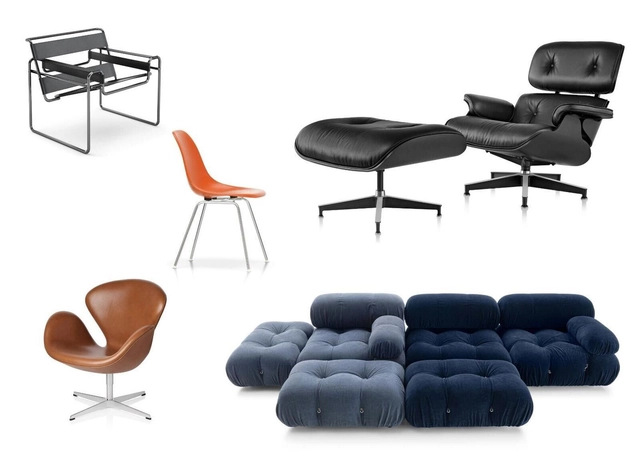
The Wassily Chair by Knoll Int. next to the VITRA/Herman Miller Eames Lounge Chair, B&B Italia's Camaleonda Sofa and the VITRA Plastic Side and Fritz Hansen's Egg Chair
In a way, classic furniture is like a mixture between a work of art and a gold bar: it is a safe investment and can often even increase in value with age. In our second selection of design icons from the 20th century, we present Ray and Charles Eames, Marcel Breuer, Arne Jacobsen and Mario Bellini and some furniture pieces from the past century that remain more modern today than ever, in terms of not only design but also comfort. Find out more on the Architonic Platform.
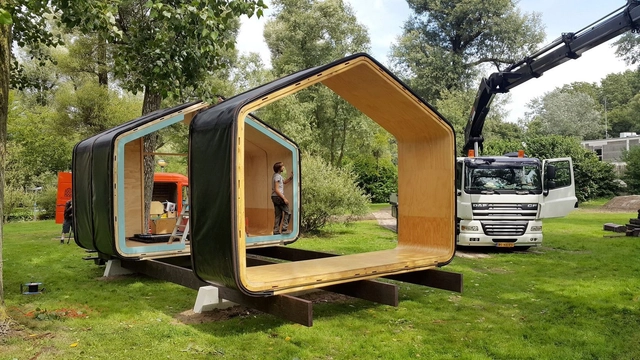
Wikkelhouse / Fiction Factory. Image Courtesy of Yvonne Witte
“Architecture does not change anything. It’s always on the side of the wealthy.” With these words, Oscar Niemeyer referred to architecture as being a privilege mostly destined to the upper class – a statement that has historically proven to be true, even as some would like to deny it. Today, only 2% of all houses around the world are designed by architects. This is largely due to the fact that, to the average consumer, architect-designed homes continue to be perceived as expensive and esoteric products available only to this select few; a luxury that many cannot fathom to afford, especially as housing prices rise. Ultimately, this makes good design inaccessible for certain segments, forcing them to settle for precarious living conditions in standardized spaces that fail to take their needs into account (that is, if they even have access to housing).
There are many myths and misunderstandings around sustainability in construction. First, the belief that what is sustainable must inherently be technological, complicated or out of reach. Or that the products will necessarily be more expensive, will be made of recycled materials or will not be so aesthetically pleasing. When it comes to material specification, there is often confusion. Is steel more sustainable than bamboo? Would it be better to use a material that is said to be sustainable, but which goes through numerous industrial processes, or one with a low level of processing? The answer is not so simple, and there are various comparison mechanisms to help guide us. But this is an important consideration to make, as one of the main ways the construction industry can help reduce its carbon footprint is to select materials with the lowest general contribution to emissions and environmental impact. Natural slate, which can be used for roofing and facades, is a great example of this.
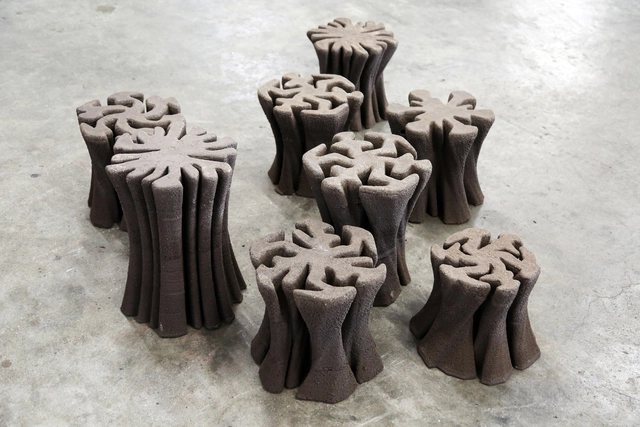
As humanity becomes aware of its impact on the environment, it has also sought ways to reverse some of the harm caused to fauna and flora, especially in cities. Our way of living, consumption and construction has caused severe damage to nature. In fact, according to a study from the Weizmann Institute of Science, we are at a point of inflection where the mass of all man-made materials is equal to the planet's biomass, and it should double by 2040. But not necessarily everything we build should have a negative impact. "The Tidal Stool" project is an example of this - part of a comprehensive revitalization project in Kuk Po Village in Shau Tau Kok in Hong Kong, which brings together two different ecologies, the anthropocentric and natural environment.
Choosing a career as soon as we leave high school can be somewhat challenging and even tormenting. Although it has been said that in the future it will be common to change careers or have various overlapping jobs, the fear of making the "wrong" choice causes many soon-to-be graduates to lose sleep. Having a good overview of what each profession entails is important to understand whether or not it is a good fit, especially in creative areas or newer and more dynamic professions. Architecture, for example, is a career that is well known for covering several areas - from mathematics to art history - but also for requiring many hours of dedication, critical thinking and mastery of computational tools. To give prospective students a taste of the experience of being an architect or an architecture student, Design Immersion Days (DID) is a four-week immersive summer program for future high school graduates to experience the world of design and architecture.






.jpg?1649785401&format=webp&width=640&height=580)