The Aggregate Architectural History Collaborative has organized a collection of essays, entitled The Destruction of Cultural Heritage: From Napoléon to ISIS, which examines several centuries of the demolition of monuments in the Middle East. With world events like ISIS and the protection of architectural heritage growing to be more and more topical, this collection is a useful tool in considering the role of violence, how ancient architecture is perceived as a cultural entity, what role the media has to play, and beyond.
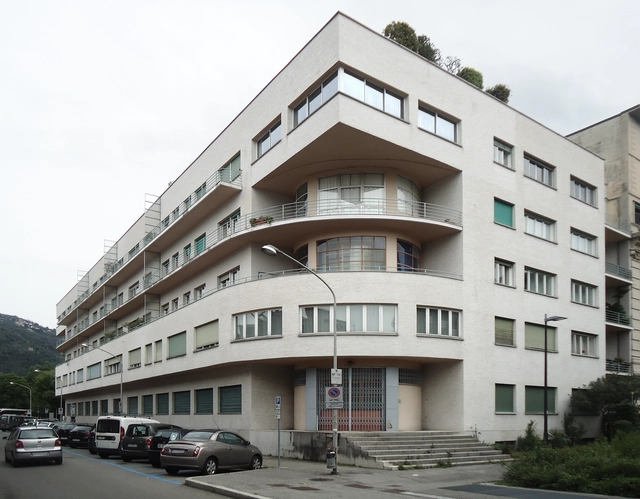
With a short career of only thirteen years, Italian architect Giuseppe Terragni (1904-1943) left an important legacy of built works that are now used as classic references of modern and rationalist architecture.
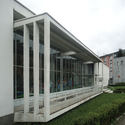
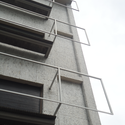
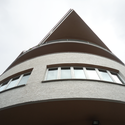
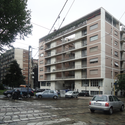
We traveled to Como and Milan to visit Terragni's emblematic works that clearly reflect his style. These projects are based on the organized configuration of architectural elements that individually appear clean, pure, and expressive, but together also form a harmonious whole.
These are: Novocomum, Casa Rustici, Asilo Sant'Elia, Casa Giuliani Frigerio and Casa Lavezzari.
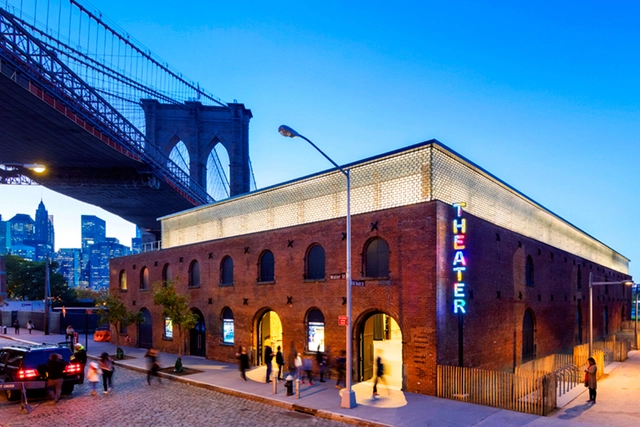
For a ruined Civil War-era warehouse in Brooklyn, there may have been no better organization than an avant-garde theater group to think creatively about its future.
Situated in the shadow of the Brooklyn Bridge in the popular Dumbo neighborhood, the 1860 tobacco warehouse was crumbling and forgotten when St. Ann’s, a 36-year-old theater company that began life in another Brooklyn church, sought to renovate it for its first permanent home. Attaining energy efficiency in historic buildings is not just possible—it can be the most sustainable and aesthetic choice.
St. Ann’s, led by artistic director Susan Feldman, hired a building team that included Marvel Architects; BuroHappold Engineering; and Charcoalblue, a theater, lighting, and acoustics consultancy. The resulting 25,000-square-foot complex, St. Ann’s Warehouse, includes two versatile and changeable performance spaces, lobby and event areas, and a triangular garden (designed by landscape architects Michael Van Valkenburgh Associates).
https://www.archdaily.com/791475/this-brooklyn-theater-renovation-shows-you-dont-have-to-choose-between-heritage-and-sustainabilityKim A. O'Connell
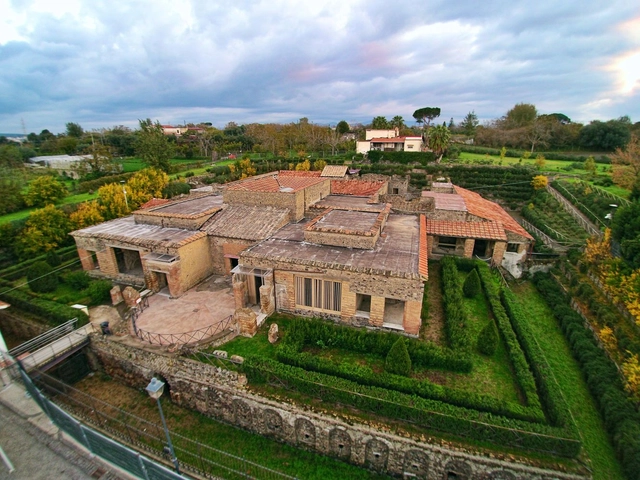
One of Pompeii’s most precious gems, the Villa of Mysteries, is now at risk of collapse due to seismic activity in the Bay of Naples, as well as vibrations from a nearby train line transporting tourists. That's the conclusion of a recent study conducted by Italy’s National Agency for New Technologies, Energy and Sustainable Economic Development (ENEA). The news comes only a few months after the reopening of the house, whose stunning frescoes had just been restored.
As The Telegraph reports, the high-tech study showed that “in addition to the vibrations from the Vesuvius light railway commuter trains, which ferry tourists to Pompeii from Naples, the protective structure around the villa, built in armored cement, wood and steel 50 years ago is threatened by its own weight and water ingress.”
National Trust's Edge City: Croydon, photo courtesy of Sophia Schorr-Kon
This July, a series of tours by the National Trust will delve into the contemporary heritage of Croydon and shine a spotlight on the Borough as one of the most important examples of the post-war ambition to build a new society. Following on from the success of previous projects by the Trust to change the perception of heritage from simply country houses and coastlines – including 2015’s Brutal Utopias – Edge City: Croydon will celebrate the real places in which people live, work and play.
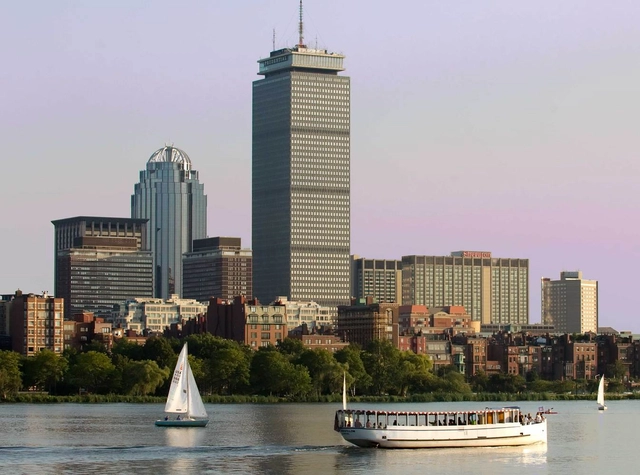
This 90-minute tour, co-sponsored by the BSA Foundation, hosted by Charles Riverboat Company, and led by Boston By Foot guides offers spectacular views of historic and contemporary Boston architecture while providing fascinating information about many renowned architectural landmarks, including the Hancock Tower, Marriott’s Custom House, and Rowes Wharf, as well as cutting-edge contemporary buildings by today’s top architects.
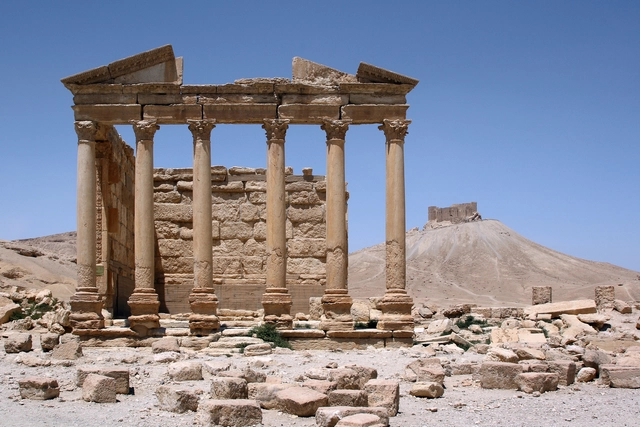
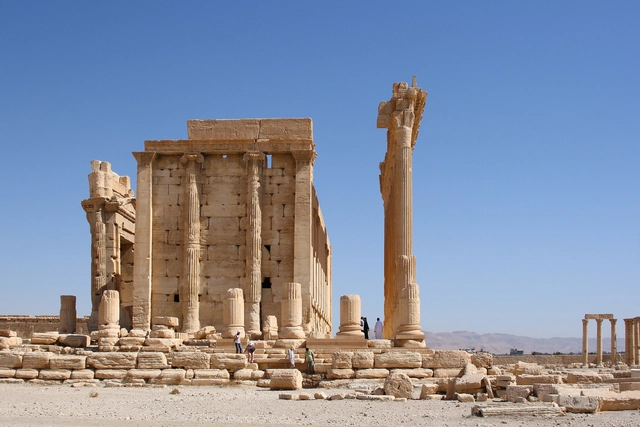
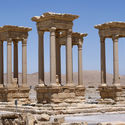
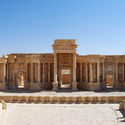
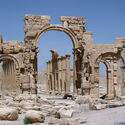
Last May, Islamic State forces took control of Palmyra, one of the world's most treasured UNESCO World Heritage Sites. In the proceeding months, the world looked on in shock as ISIS released a series of videos showing the destruction of the priceless ruins. Last month however, the ancient city was recaptured, marking the beginning of a difficult discussion about what the international preservation community should do next.
ArchDaily had the opportunity to interview Stefan Simon, the Inaugural Director of the Institute for the Preservation of Cultural Heritage (IPCH) at Yale University, an organization “dedicated to advancing the field of heritage science by improving the science and practice of conservation in a sustainable manner.” Simon earned his PhD in Chemistry from the Ludwig Maximilian University, Munich, and has broad experience in material deterioration diagnostics, microanalytics, climatology, and non-destructive mechanical testing. He previously served as Director of the Rathgen Research Laboratory at the National Museums in Berlin, as a member and Vice President of the International Centre for the Study of the Preservation and Restoration of Cultural Property (ICCROM), and as leader of the Building Materials section at the Getty Conservation Institute, Los Angeles, in 2005, among numerous other accomplishments.
The conversation that focused on cultural preservation in the wake of conflict, and specifically, how to proceed in Palmyra now that the Syrian site has been wrenched back from the control of the Islamic State. The tragic case of Palmyra guided a conversation that sought out specificity on the options and considerations that must be taken in the wake of trauma.
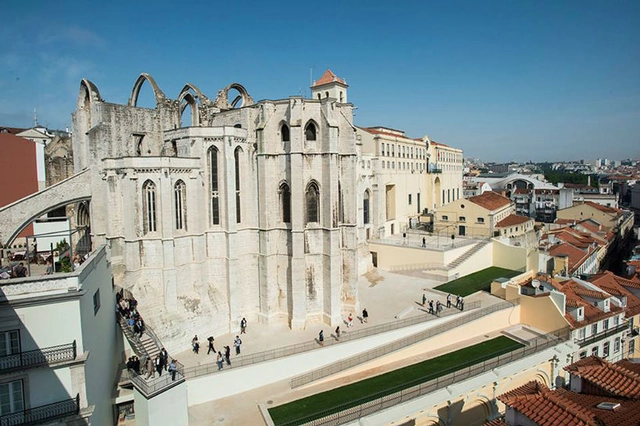
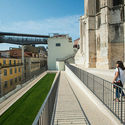
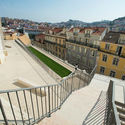
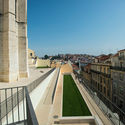
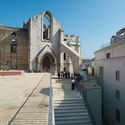
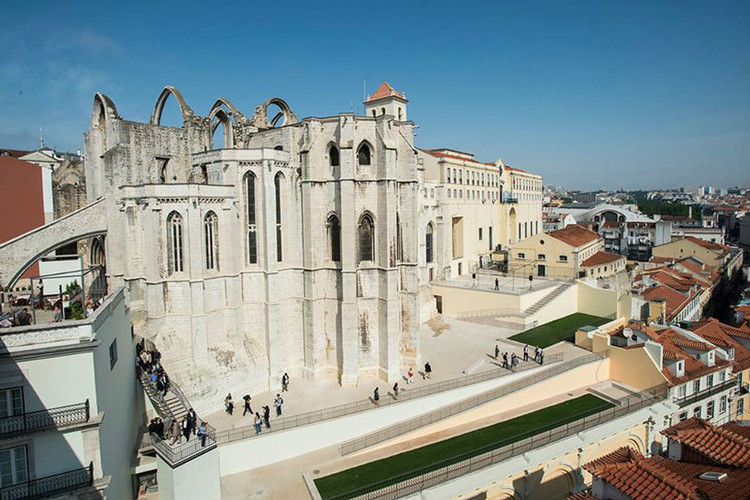
Due to a fire in 1988, the Chiado district of Lisbon had many of its buildings damaged or partially destroyed by the flames, and an intense restoration and recovery project led by Álvaro Siza has been going on for over a decade.
Among the strategies employed by the Portuguese architect (and winner of the 1989 Pritzker Prize) is the reorganization of routes and walkways, creating elevated walkways to facilitate access to the area and the flow of locals and visitors. According to the Municipal Council of Lisbon, Siza has recently completed the connection between one of the courtyards of the Carmo Convent (Patio B) to the Largo do Carmo square and the Carmo Terraces with a pedestrian path.
CONTEST FOR ART RESIDENCY GRANTS IN OFICINAS DO CONVENTO
PRESENTATION
Applications are open for the Art Residency Grants in Oficinas do Convento - Cultural Association for Art and Communication (OC) in Montemor-o-Novo, Portugal. We have launched three vacancies for Art Residencies to take place between September and December 2016.
This Contest for Grants by OC intends to implement a self-funded programme through the application fees. The application have a 20 euros fee and this amount will be used to create the three Residencies.
Artists from all areas, architects, engineers and designers are invited to submit their proposals for projects to be developed in
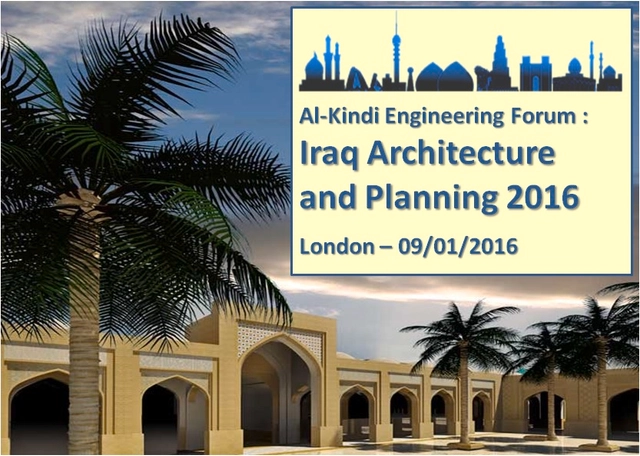
Al-Kindi Society for Engineers will be holding its annual engineering forum in London, titled “Iraq Architecture and Planning 2016”.
The forum will be held on Saturday the 09th January 2016 and will be attended by a host of distinguished professionals from international high profile engineering and architectural firms.
The forum will be held as a 1-day symposium and will feature expert speakers and presenters. It will also be complemented by a range of activities including an exhibition on architecture and technology.
Funded through Kickstarter, Luke Shepard’s short film Night Vision is a “visual exploration of European buildings, monuments and landmarks after dark.” The film travels through 36 cities across 21 European countries, “creating image sequences of some of the most awe-inspiring European buildings.”
Shepard has also created a series of GIFs in conjunction with Night Vision, revealing in just a few seconds the beauty of 10 European heritage landmarks, ranging from the Metropolis building in Spain (featured above) to the Brandenburg Gate in Berlin.
Empathetic historicism and romanticising older buildings has become an ever-common sentiment in modern Britain. In an article for the British daily The Telegraph, Stephen Bayley tackles this trend by questioning whether Victorian-era architecture is actually all worth saving? Victorian architecture, so called because it was implemented under the reign of Queen Victoria, was stylistically preoccupied by Gothic Revival — an attempt by architects and commissioners to impose a 'pure', chivalrous unifying aesthetic designed to instill a sense of civic importance and reaffirm a social hierarchy. Yet "their architecture," according to Bayley, "has an inclination to ugliness that defies explanation by the shifting tides of tastes."
This article was written by Rodrigo Bitencourt and Gláucia Dalmolin, and translated from Portuguese by Rodrigo Bitencourt.
The city and civilization are concomitant phenomena. The city can be seen as a receptacle that both accommodates and transmits civilization. In fact, as man differs from other creatures in his ability to learn indefinitely, his perfectibility (ants that lived six thousand years ago had the same features of current ants: they are confined to a narrow range of behaviors dictated by their genetic programs), he acquired the power to extrapolate nature and thus build in his own way, creating history. As every human life is unique and no one can predetermine how it will be carried out, it could be said that the human being bears a historical duality: the individual history, or education, and the collective history, or culture.
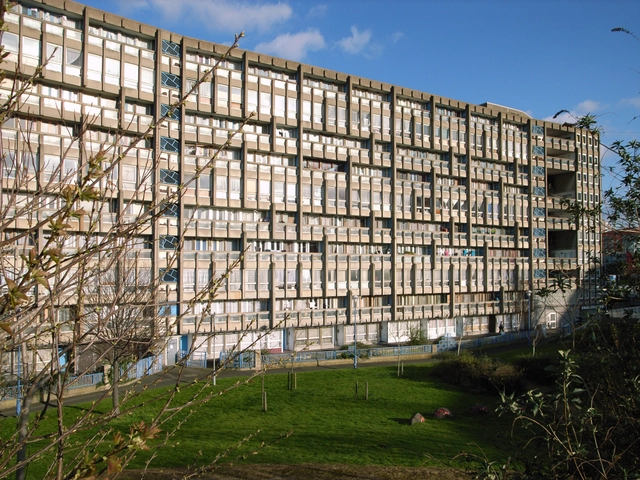
It has been reported that London's Robin Hood Gardens housing estate, which was thought to be finally condemned in March 2012, has re-entered a state of flux due to governmental indecision. The former UK Culture Secretary, Andy Burnham, gave the housing scheme an immunity from listing certificate in 2009, meaning that no concerned party could bid for it to gain protected status under British law. This certificate, designed to ensure that the buildings would be swiftly demolished, has now expired. This has led the Twentieth Century Society (C20) to launch a new bid for the estate to be both saved and protected.
Buddhas of Bamiyan (1963, 2008). Image via Wikipedia
In an article for the Financial Times(FT), writer and historian Simon Schama examines world conflict zones and the efforts to protect some of the world’s most vulnerable architectural and cultural sites. If history is a measure, then Schama's study of William “Basher” Dowsing - an Englishman who, in the winter of 1643, "made it his personal mission to obliterate as much as he possibly could of sacred art in the churches and colleges of East Anglia" in the name of religion - is pertinent now more than ever.
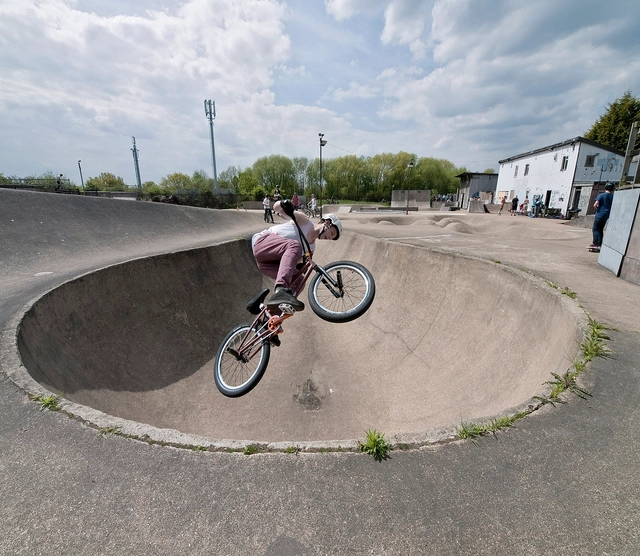
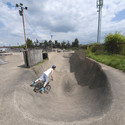
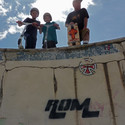
English Heritage has awarded a Grade-II listing to "The Rom," a skatepark in Hornchurch on the outskirts of London. Built in 1978, the Rom was one of the UK's first wave of purpose-built skateparks, and probably the most complete example found in the UK today. The listing makes the Rom the first protected skatepark in Europe, and just the second in the world after Tampa's "Bro Bowl" was added to the USA’s National Register of Historic Places last year.
In an article for the London Evening Standard, Robert Bevan examines one of the many often overlooked consequences of conflict: the destruction of monuments, culture, and heritage. With heightened conflict in the Middle East over the past decade an enormous amount of "cultural genocide" has occurred - something which Bevan notes is "inextricably linked to human genocide and ethnic cleansing." Arguing that "saving historic treasures and saving lives are not mutually exclusive activities," case studies from across the world are employed to make the point that with the loss of cultural heritage, most commonly architectural, the long term ramifications will resonate throughout this century.






-19.jpg?1468604454 "© User:MatthiasKabel [CC BY-SA 3.0], via Wikimedia Commons")
-03.jpg?1468604394 "© User:MatthiasKabel [CC BY-SA 3.0], via Wikimedia Commons")
-16.jpg?1468604611 "© User:MatthiasKabel [CC BY-SA 3.0], via Wikimedia Commons")




-2.jpg?1430924661&format=webp&width=640&height=580)