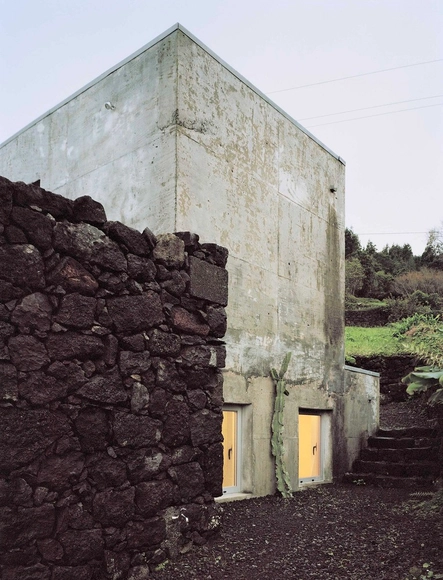
A ruin was the starting point for the design of a holiday house in the island of Pico. The project came from the will to maintain a ruin and thinking of a house that would value it, a house that could be modelled to it and take advantage at the same time, offering the most diverse and complex possibilities of living than the former typology.
‘Pulp Press (Kistefos) 2013’ is a permanent site-specific artist-architect commission for Kistefos Museum - one of Scandinavia's largest parks of contemporary sculpture. The museum occupies the grounds of a 19th century paper mill in Jevnaker, an hour north of Oslo, Norway.
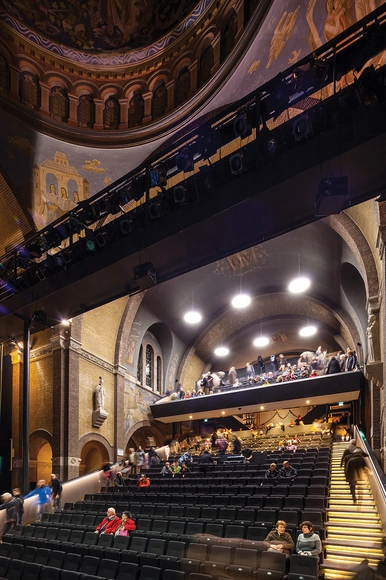
When the ’t Speelhuis theatre in Helmond, designed by Piet Blom, was destroyed by fire in December 2011, the town council opted for a temporary replacement in the Our Lady of the Assumption, a neo-Byzantine domed church near the centre that had become disused. There were important preconditions for the new theatre facility. The church is a monument, it remains the property of the Den Bosch diocese and the facility is temporary, so interventions must damage the building as little as possible and must be reversible. The theatre also had to be operational very quickly.
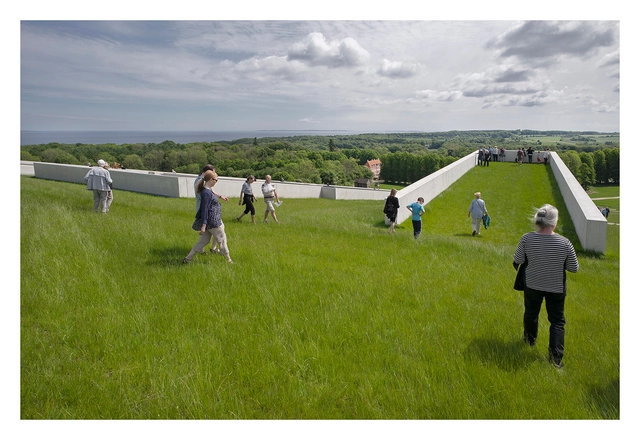
The new Moesgaard Museum is uniquely situated in the rolling bucolic landscape of Skåde. With its sloping roofscape of grass, moss and brightly-coloured wild flowers, the building is a powerful visual landmark perceptible even from the sea.
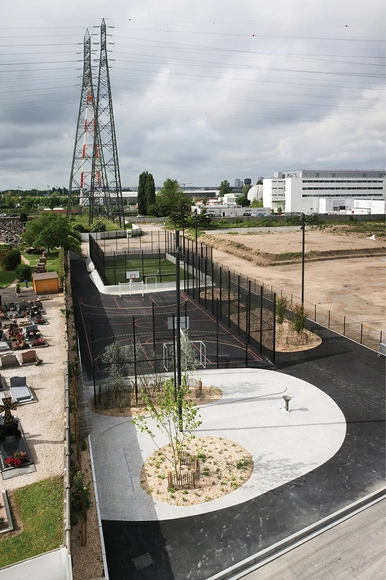
Embedded within the boundaries of the ZAC (coordinated developed zone) Chantereine, the “evolution” grounds of Alfortville represent a qualitative approach to which we lay claim in this district’s public spaces, and more generally in today’s city. Thus, the playground becomes a truly architectural space, integrated in the urban structure and open to the city’s other practices.
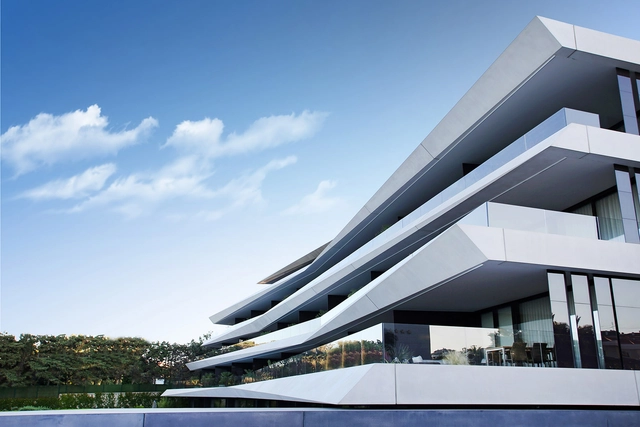
Mi’Costa Hotel and Residences Project is one of the nominated projects from Turkey for Mies Van Der Rohe 2015, that is most prestigious European Union Prize.
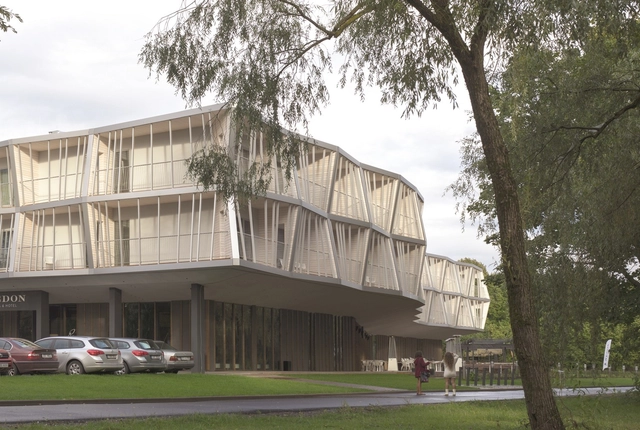
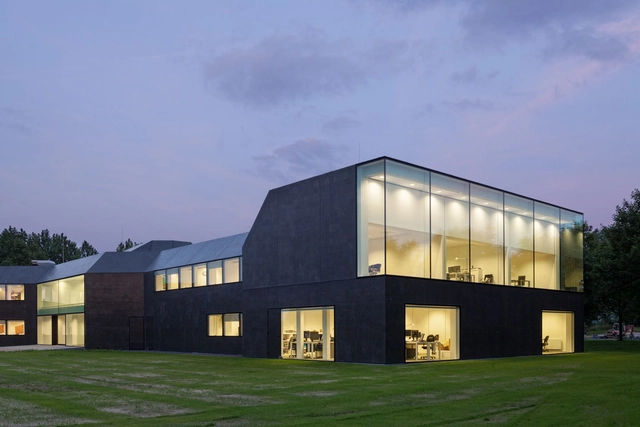
The building is a part of the technological park of the A Coruña University. This technological park is formed by another six buildings interconnected among them. The plan for the Technological Park established that each building must have two volumes; one of them of four floors and the other of two. These two volumes will be divided by a pedestrian public space that will connect transversally all the buildings of the park.
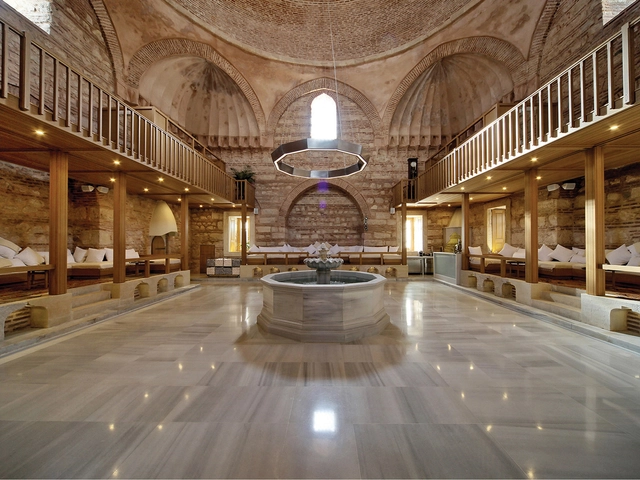
The Kılıç Ali Paşa Hamam was constructed in 1580 by Master Architect Sinan, on behalf of Ottoman Admiral Kılıç Ali Paşa as part of a larger ‘külliye’ complex, in the Tophane district of Istanbul. As the physical manifestation of a unique period in the historical harbor of the Ottoman imperial city, the Kılıç Ali Paşa hamam has become not only part of public space again in the Tophane area, but also part of an overall revitalization of a previously derelict area in the city. 430 years of layered materials and debris, literally ‘embalming’ the surfaces and ‘burying’ the structure, had to be removed in order to identify and restitute the original Sinan building, thus relinking this 1st degree historical monument back to its origins.
House C and House D are a part of the “Terra Panonica” estate, located in Mokrin, a settlement in the municipality of Kikinda, in Vojvodina region, in Serbia.
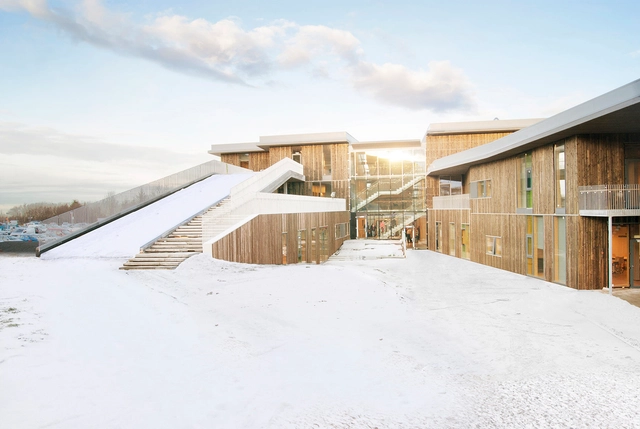
The first phase of FMOS, the new Upper Secondary School in Mosfellsbaer, provides space for up to 500 pupils. The building is intertwined with the landscape on the narrow plot, the diagonal lines of the building refer to the hills in the surroundings and one of the roofs turns into a green ramp to walk about on. Mosfellsbær is a town of approximately 9.000 inhabitants, situated 15 kilometers east of Reykjavik. It is the hometown of Iceland’s noble prize winner, writer Halldór Laxnes, from whom inspiration is sought: ”... and flowers grow on the roof”* – the landscape becomes the building which becomes landscape… The 12.000 sqm plot of the school is situated close to the town center and along Highway nr. 1, which lies through Mosfellsbær. This influences the shape and choice of material of the building, aiming to minimize sound emission.
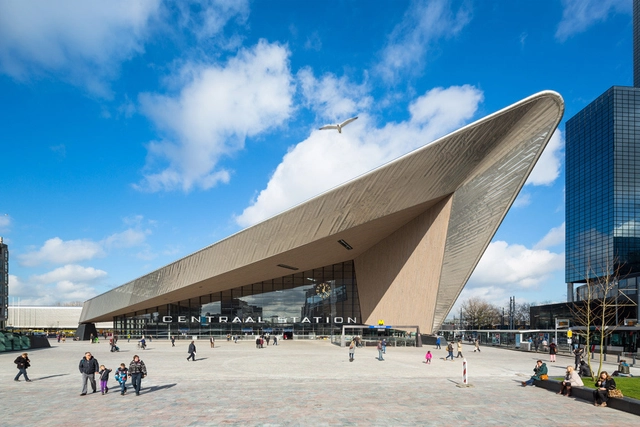
Rotterdam Centraal Station is one of the most important transport hubs in The Netherlands. With 110,000 passengers a day the public transport terminal has as many travelers as Amsterdam Airport Schiphol. In addition to the European network of the High Speed Train (HST), Rotterdam Centraal is also connected to the light rail system, RandstadRail. With the advent of both the HST and RandstadRail the number of daily travelers at Rotterdam Centraal is expected to increase to approximately 323,000 by 2025.
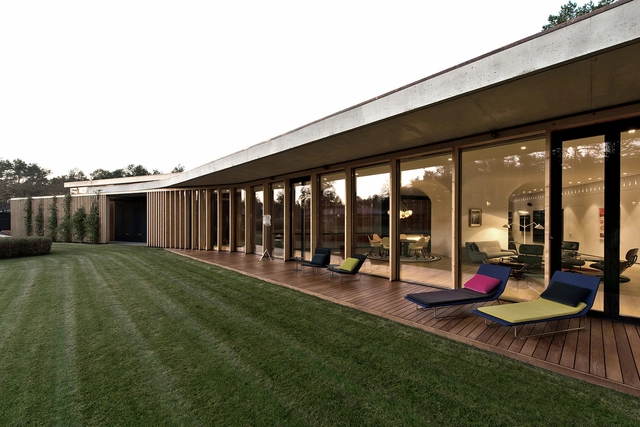
The main architectural idea was provided by its siting in the Pavilniai Regional Park : the house has to dissolve in the landscape. Curved roofs all the way to the ground, and fluid forms extended by timber pergolas, are the most important architectural means achieving this effect.
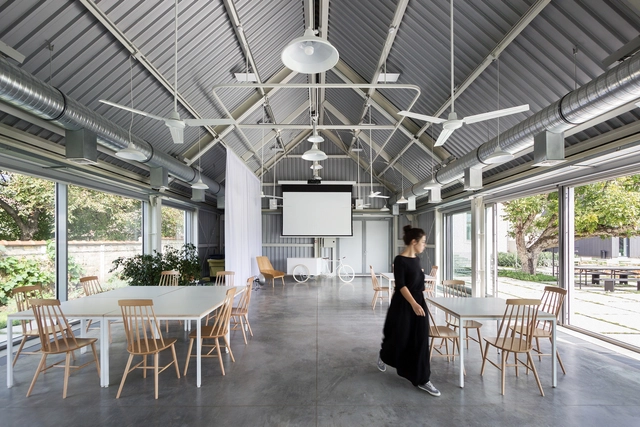
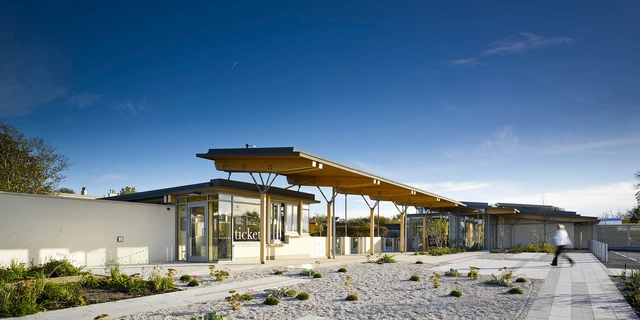
Airfield is a 35-acre working farm and estate located in the southern suburbs of Dublin, open to the public since 1998; it is an area of pastureland, woodland and walled gardens into which a patchwork of buildings has been introduced focused on Airfield House itself, which was the Overend family home from 1894. Airfield Trust was established in 1974 by the Overend sisters, Letitia and Naomi, as a charitable organisation with an educational and recreational remit provided through an environment connecting people and nature through the farm and gardens. To enhance the visitor experience and expand the facilities at Airfield a number of key spatial drivers have been put in place:
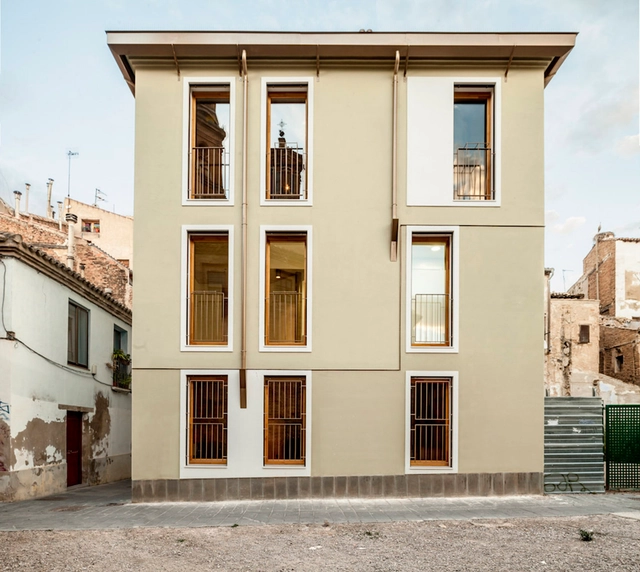
The design is carefully inserted into the urban fabric of the Tudela old quarter. This area is signified by the Jewish, Muslim and Christian footprints. Yet, the surroundings are defined by the massive condition derived from its medieval heritage. The narrow and tortuous streets are characterized by the texturized rendered walls and the wood galleries. The house merges into this both cultural and physical preexistence.
The municipality of Borsele in the Dutch province of Zeeland was founded in 1970 by the merging of 13 villages. Heinkenszand was assigned centre of this newly formed administrative unit and a new town hall was built for the 25.000 inhabitants. More then 30 years after the opening, the building was in need of rehabilitation. On the one hand, the façade as well as the roof weren’t fully waterproof anymore. Furthermore, the building had to undergo an asbestos abatement to adapt to modern building standards. On the other hand the interior of the building had to be renovated in order to create a flexible and modern office environment. The building climate had to be improved in order to reduce energy loss.