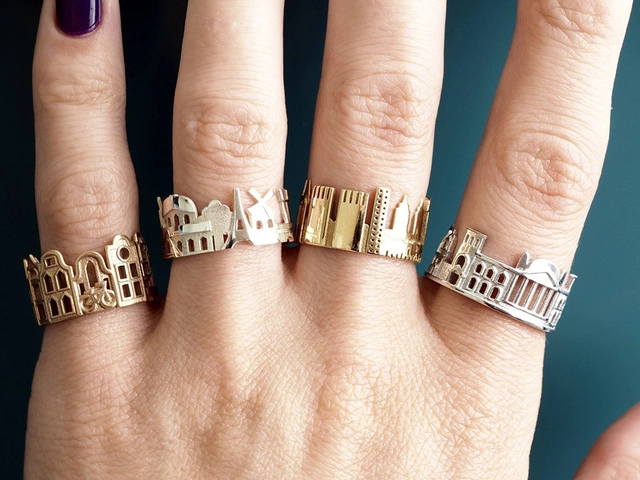
Have you ever fallen in love with a city, and wished you could carry the image of the skyline with you everywhere you go? Now you can turn that longing into a reality with these cityscape-inspired rings by North Carolina-based jewelry maker, Ola Shekhtman.
2015 Winning Entry by Jacques Gaffigan. Image Courtesy of The Knight Foundation
The John S. and James L. Knight Foundation has announced the names of the 158 finalists in the Knight Cities Challenge. The nationwide call was for innovative ideas to make the 26 communities where the Knight Foundation invests more social and vibrant places to live. More than 4,500 entries were submitted proposing a range of ideas from opening the world’s largest African American history museum in Detroit to a card game that encourages residents of Charlotte to visit new neighborhoods. The winners, who will split a prize of $5 million, will be announced in the spring of 2016.
When comparing 44 major cities, Arcadis' 2016 International Construction Costs Index has found New York to be the world's most expensive city to build in. London came in as a close second, reporting cost of building prices (on average) 20 percent higher than Paris. In contrast, Taipei was labeled as the "cheapest" city for construction. According to the study, "strong currencies and significant resource constraints" were a result in higher prices. Read on for the complete lists of most expensive, and least expensive, cities for construction.
We all know exercise and being in close proximity to nature boosts our happiness and overall heath. However, the impact of the "environmental aesthetics" of our cities has never been studied, until now.
A new study suggests that beautiful architecture is considered just as "scenic" and beneficial to our health and psyche as "greenery."
Landscape architect Cornelia Hahn Oberlander has won the 2015 Margolese National Design for Living Prize for her impact on Canadian cities. The School of Architecture and Landscape Architecture at the University of British Columbia, who awards the annual $50,000 prize, chose Oberlander for her "breathtaking, poetic, unforgettable, charged with meaning, and above all, Modernist" designs that have made "outstanding contributions to the development or improvement of living environments for Canadians of all economic classes."
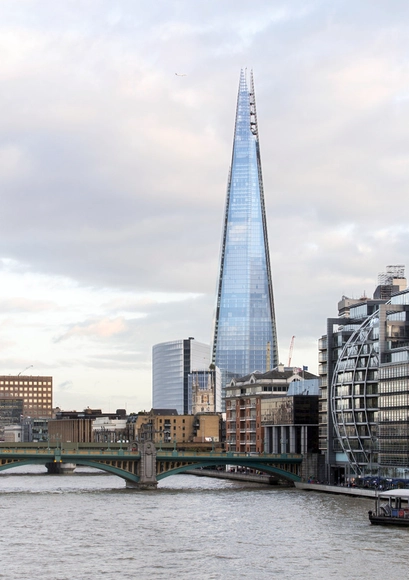
"Cities face a choice of building up or building out," says Renzo Piano, according to a recent article on the Daily Mail. Responding to backlash led by the Skyline Campaign, a campaign spearheaded by architect Barbara Weiss that "aims to stop the devastation of London by badly designed and poorly placed tall buildings," Piano is defending London's controversial skyscraper boom by saying it's giving the one thing the city needs most: "space on the ground."
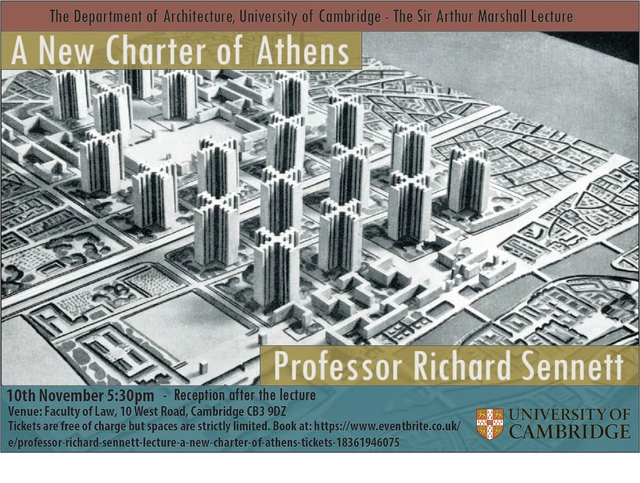
'Next year sees the opening of Habitat III, the environmental congress held every twenty years by the United Nations. For this event, a manifesto is being prepared about the design of cities. It aims to replace the guidance given by Le Corbusier and others nearly a century ago, in document they called "The Charter of Athens." The new Charter of Athens addresses issues emerging in the 21st Century about environmental crises, the uses of technology and big data, and the challenge of social inclusion. The lecture serves as an introduction to this modest proposal.'
The Urban Development Institute of Australia NSW office wants to create more affordable, connected and livable cities and it wants your help. The CityLife Project competition presents the opportunity for three organisations or research teams to partner with the UDIA NSW on research projects in exchange for cash and promotional opportunities worth up to $145,000 AUD each.
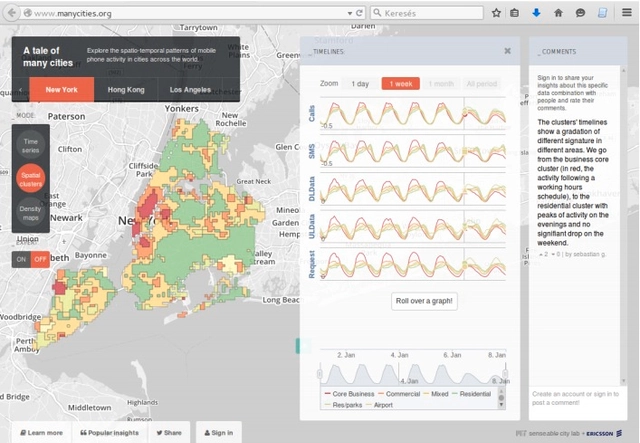
The SENSEable City Laboratory at MIT has developed a new tool with Ericsson to better understand human behavior. "ManyCities" is a new website that "explores the spatio-temporal patterns of mobile phone activity in cities across the world," including London, New York, Los Angeles and Hong Kong. Taking complex data and organizing it in a intuitive way, the application allows users to quickly visualize patterns of human movement within the urban context down to the neighborhood scale. You can imagine how useful a tool like this can be for urban planners or even daily commuters, especially once real time analytics come into play. Take a look at ManyCities yourself, here.
Today citizens, artists and activists are "reclaiming their city" by transforming hundreds of metered parking spaces worldwide into temporary public parks and installations in an effort to call attention to the need for more open space. The yearly occurrence, known as PARK(ing) Day, has become an international phenomenon since its establishment in 2005 by the San Francisco art and design studio Rebar. Check out the official PARK(ing) Day Map to see if there are any pop-up parks happening in your area.
While the term “ecosystem services” may sound like a corporate antithesis to the course of natural order, it is actually an umbrella term for the ways in which the human experience is favorably altered and enhanced by the environment. Ecosystem services are therefore an important factor in creating cities which provide the maximum benefit to their residents with the minimal harm to their environment.
Aiming to find out how city planning can affect the provision of these ecosystem services, a new study published in Frontiers in Ecology and Environment by researchers at the University of Exeter's Environment and Sustainability Institute and Hokkaido University's Division of Environmental Resources evaluates the repercussions of rapid and fragmented urbanization and the possible detriment to ecosystem services and human well-being. In particular, the study is concerned with approaches to land-use and the outcomes they yield on the environment. Studied are two opposing tactics: a “land-sharing,” sprawl model (think Atlanta or Houston), or “land-sparing,” tight-knit urbanism (think New York or Tokyo).
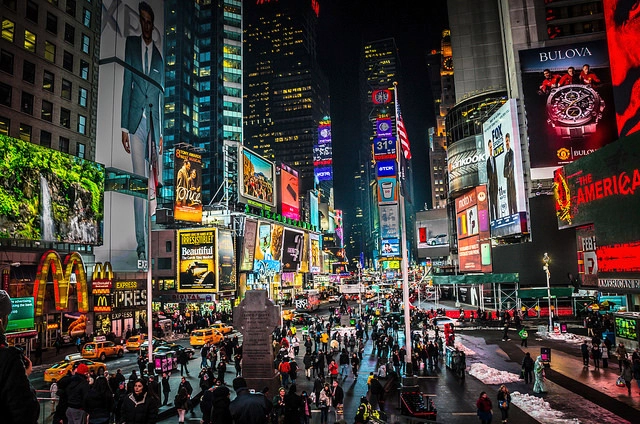
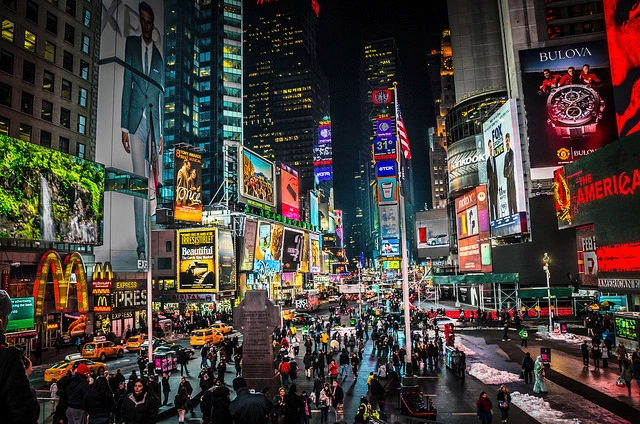
Danish architect and urban planning expert Jan Gehl has weighed in on New York Mayor Bill de Blasio's threat to remove Times Square as a"kneejerk reaction" to aggressive panhandling. Recounting beloved square's evolution, Gehl argues that public spaces need more than just to exist: "Civic culture needs cultivating and curating... Public spaces like Times Square are the great equalizer in cities: Improvements in the public realm benefit everyone. The city should view the challenge of Times Square’s pedestrian plaza not as a reason for retreat, but as a call to create a diverse, dense, intense experience of public life that we can all enjoy." Read Gehl's remarks, here.
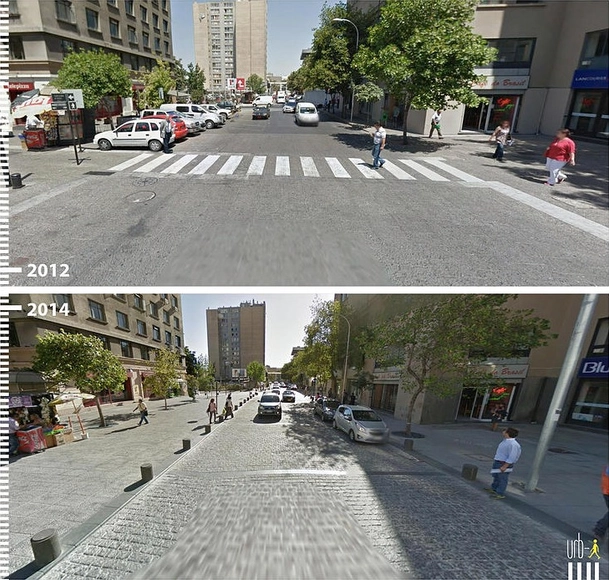
Padre Alonso de Ovalle, Santiago, Chile. Image Courtesy of Urb-I
Providing more public space for pedestrians is one of the main goals of urban renewal projects taking place in cities around the world.
By planting more trees, implementing more sidewalks and bike paths and establishing new seating areas, it is possible to design more welcoming places with less traffic congestion and that promote sustainable methods of transportation, such as walking or biking.
With the aim of publicizing urban renewal projects that have made cities more pedestrian friendly, Brazilian group Urb-I launched the “Before/After” project, which compiles before and after photos that show how cities have redistributed their public space.
The project is collaborative so that anyone can use Google Street View, or another similar tool, to raise awareness of the changes taking place in their cities.
Frustrated with the congestion of panhandlers, Mayor Bill de Blasio has shocked New York City dwellers by threatening to remove their beloved Times Square. As New York Times' architecture critic Michael Kimmelman reports, this comes at a time when dwellers fear that quality of life is declining in the city: "Entertaining the demolition of the plazas, the mayor sends a message that New York can’t support the sort of great pedestrian hubs that thrive in competing cities around the globe." Blasio said he will look into the "pros and cons" of returning Times Square to traffic. Read Kimmelman's full report on Blasio's threats, here.
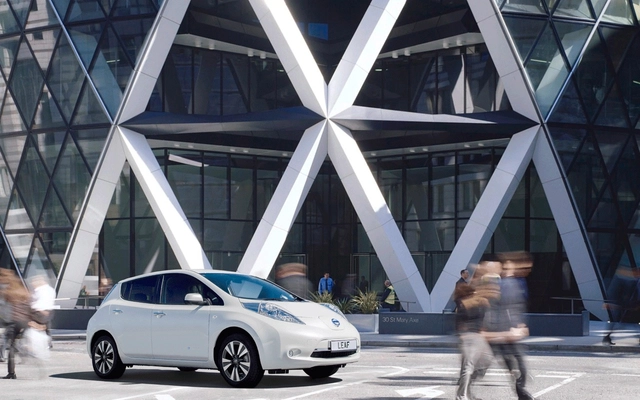
By 2020, almost one million electric vehicles are expected on the road. "It seems to be clear," says David Nelson, head of design at Foster + Partners, "that electric vehicles will be a major feature of the urban landscape." Thus, Foster + Partners has teamed up with Nissan to develop the Fuel Station of the Future.
Imagining how zero emissions technology will influence our cities, the innovative brands are centering their design on the understanding that "connected communities, autonomous drive and the Internet of things" are drastically changing our infrastructure models. Their concept is expected to showcase the benefits of a "smart electric vehicle (EV) ecosystem," harnessing the potential of battery storage and vehicle-to-grid systems.
In the 20th century, urban planning went through some big changes, creating much of our current urban environment in a mold that is now widely seen as anti-human. Fortunately, in recent decades urban planning has changed again - partly revising and partly reverting the theories espoused by the 20th century. In this article, originally published on Autodesk’s Redshift publication as "What the Future of Cities Can Learn From Ancient Cities," James A Moore looks at why old models for creating cities have proved so timeless, and the role that they will play in creating 21st century cities.
As legend has it, upon leaving Carnegie Hall after a dissatisfying rehearsal, violinist Mischa Elman ran into two tourists looking for the hall’s entrance. They asked, “How do you get to Carnegie Hall?”
It’s an old and simple joke, but it points to an important reason why people are drawn to cities. Why do people move to Hollywood? They want to be in movies. Why do they move to Wall Street? They want to be in finance. In the best cases, cities enable citizens to pursue their aspirations.
https://www.archdaily.com/772464/why-ancient-cities-can-still-teach-us-about-urban-planningJames A. Moore
Google has announced a major overhaul - the launch of their new parent company, Alphabet Inc. The new structure makes Google Inc. a holding company in an effort to provide more transparency to its investors and flexibility for its research endeavors. Thus, "G" will now stand for Google. The rest of the Alphabet will be a collection of companies that has yet to be entirely unveiled.
Calico, Fiber, Nest Labs, Wings, and Google X will all be part of the Alphabet, as well as a new urban innovation company known as Sidewalk Labs.
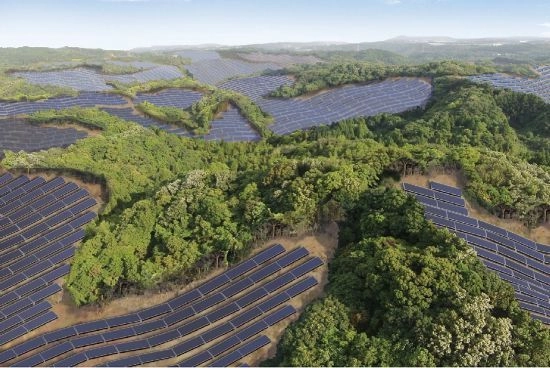
With a goal to double the amount of its renewable energy power sources by 2030, Japan has begun to transform abandoned golf courses into massive solar energy plants. As Quartz reports, Kyocera, a company known for its floating solar plants, has started construction on a 23-megawatt solar plant on an old golf course in the Kyoto prefecture (scheduled to open in 2017). The company also plans to break ground on a similar, 92-megawatt plant in the Kagoshima prefecture next year. Pacifico Energy is also jumping on the trend; with the help of GE Energy Financial Services, the company is overseeing two solar plant golf course projects in the Okayama prefecture. The idea is spreading too; plans to transform gold courses into solar fields are underway in New York, Minnesota and other US states as well.


.jpg?1451588728&format=webp&width=640&height=580)


.jpg?1440453412)