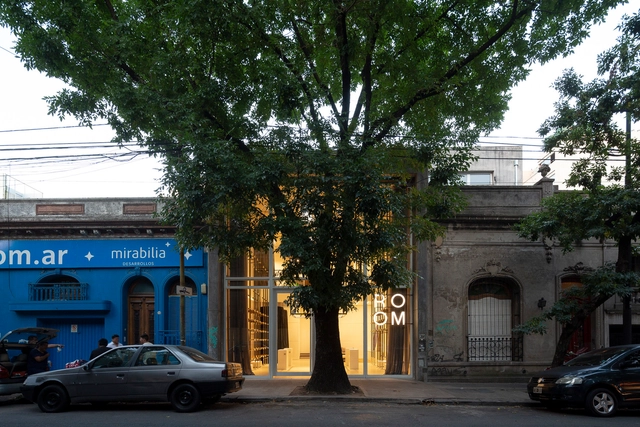
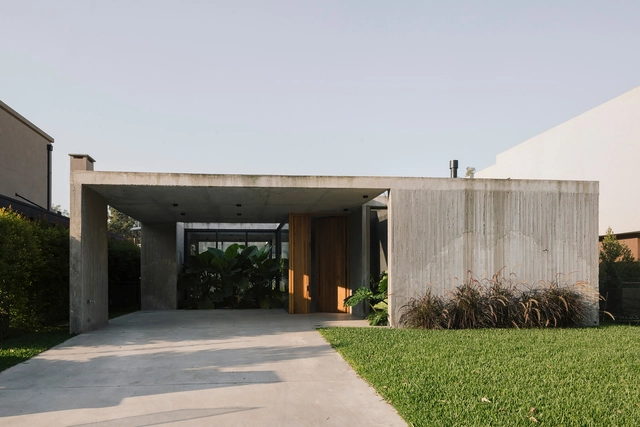
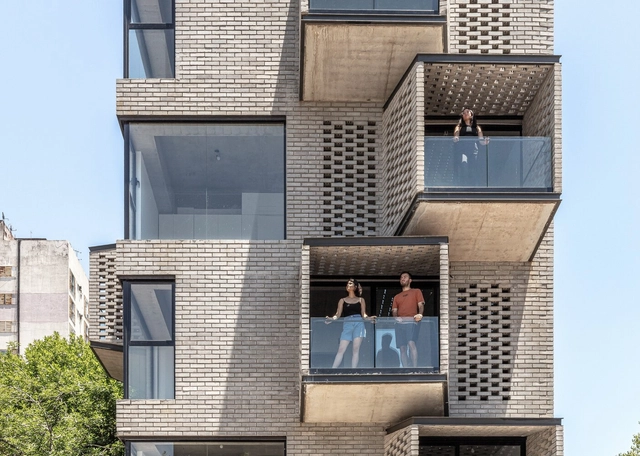
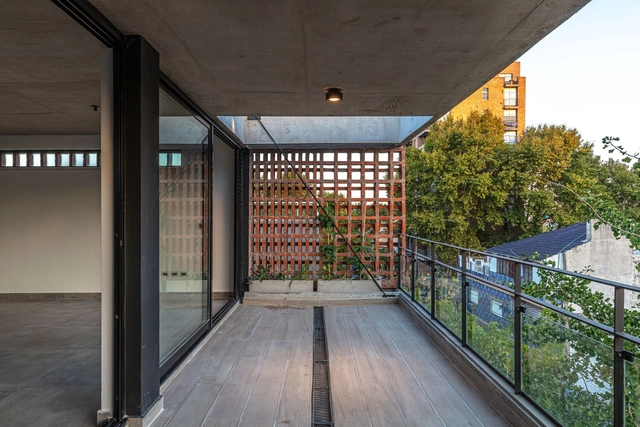
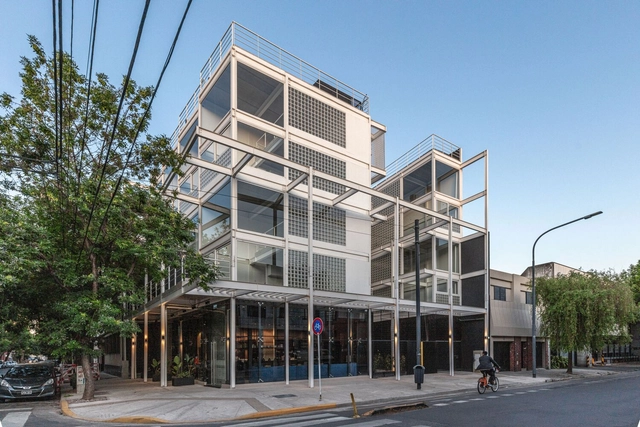
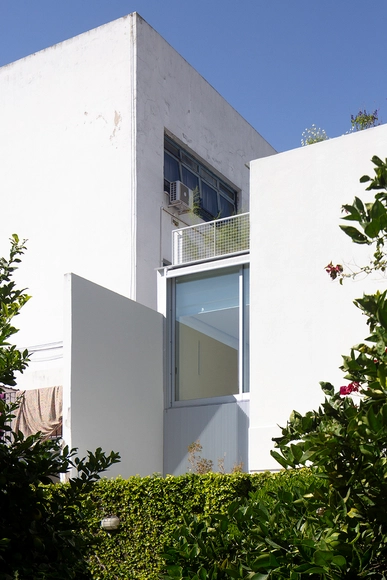
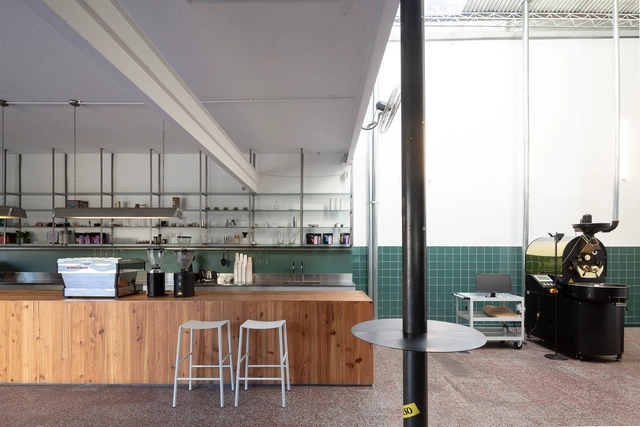
Francisco Cadau received the highest award at the recent Buenos Aires 2022 International Architecture Biennial. A recognition of his genuine trajectory that, from technique and materiality, consistently manages to position his favorite location on the map: The city of Campana on the edge of the Parana River in Argentina. His works in this place, such as House of Sieves or Damero Building, are references when it comes to thinking about project models where "construction and technology constitute the ideas themselves".
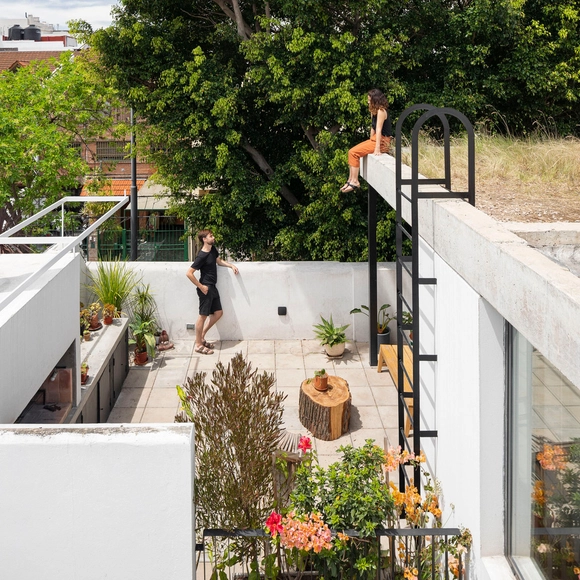
The search for outdoor spaces in dense city dwellings has become for some a necessity and for others a requirement to be fulfilled. In short, it is one of the most sought-after commissions that architects around the world receive on a daily basis. Beyond the fact that this phenomenon has been accentuated during the Covid-19 pandemic, since their origins, these expansion spaces have been conceived not only to increase the use of natural lighting and ventilation but also to promote the indoor-outdoor relationship, giving the possibility to accommodate various uses and functions even when square meters are scarce or when the connection with nature is glimpsed far over the horizon.
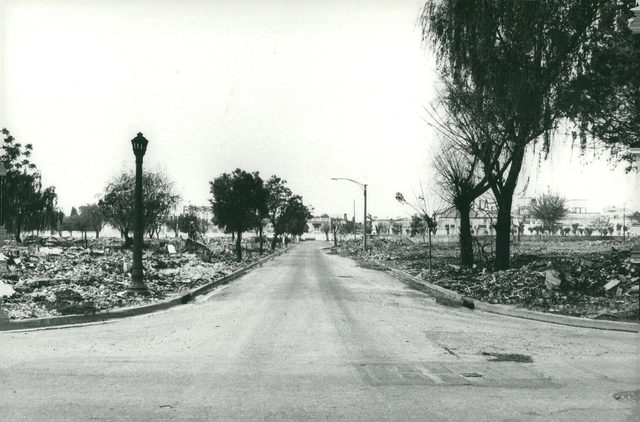
"History of the villas in the city of Buenos Aires. From the origins to the present day" is the book by Valeria Snitcofsky that reconstructs the historical background of the villas in the city of Buenos Aires based on research that began in 2003 and whose advances were expressed in a bachelor's and a doctoral thesis. It is framed within the objective of the Tejido Urbano Foundation, which is focused on promoting research and the generation of knowledge on the problems of habitat and housing.
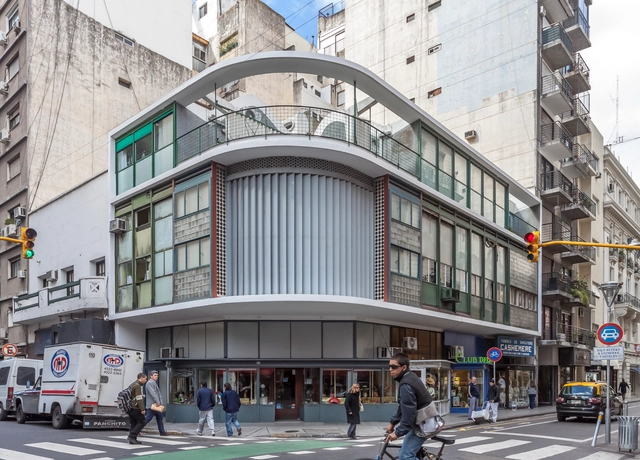
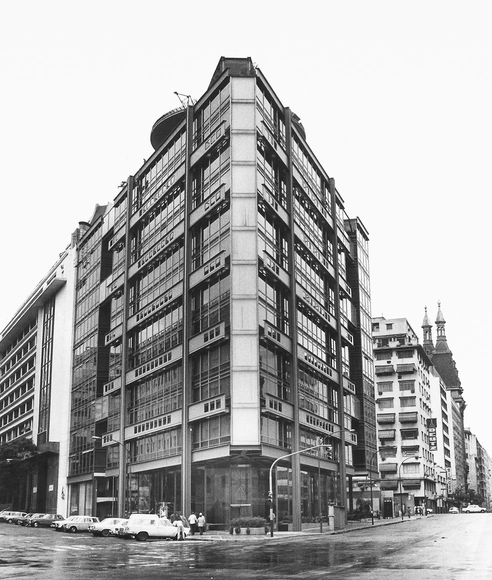
The building on the corner of Suipacha and Paraguay Streets in the city of Buenos Aires, designed by the Spanish architect Antonio Bonet, established from its realization the basis to begin certain reflections on international modern architecture in the Argentinian context of the 1930s.
In the central Recoleta neighborhood of Buenos Aires, in a large lot between Austria Street, Agüero Street, and Del Libertador Avenue, stands the current building of the Mariano Moreno National Library, designed by architectsClorindo Testa, Francisco Bullrich, and Alicia Cazzaniga.
Built on the basis of the project that won first prize in a national competition in 1961, and completed in the early 1990s, it has become a landmark of modern Argentine architecture and an example of the variant of 20th century expressionism known as "brutalism".
Edificio SOMISA / Mario Roberto Álvarez y Asociados. Image Cortesía de Estudio MRA+A
The Teniente General Castiñeiras building stands on a triangular plot of land in the heart of Buenos Aires, one of the most emblematic of the city's modern architecture. Better known as the SOMISA Building, its origin was the result of a design competition for the design of the new headquarters of the Sociedad Mixta Siderúrgica Argentina company. The first prize was won by MRA+A, Mario Roberto Álvarez & Associates, and its construction began around 1966, with the works completed in 1977.
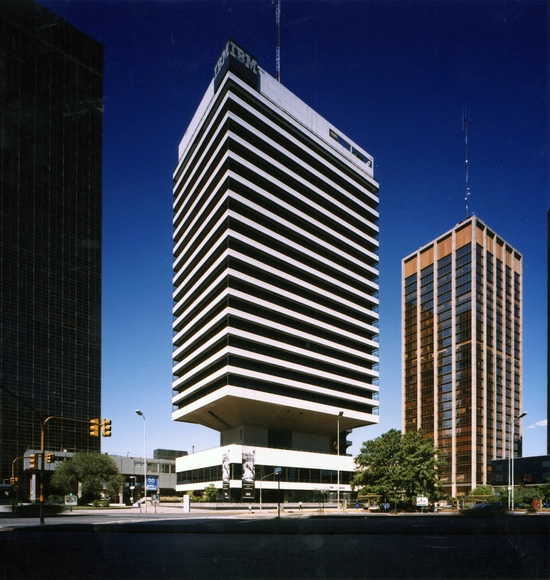
Located in the Retiro district of the Autonomous City of Buenos Aires is the IBM building designed by Mario Roberto Álvarez & Associates. Conceived to house the headquarters of the IBM company, this office building was designed around 1979 and consists of a tower supported by two large concrete structural cores on a base, which is separated from the ground and the shaft of the tower to house the ground floor and a level of common areas in order to maintain the urban scale. The language of the building is recognizable from a distance as it is formed by an enclosure of horizontal bands of glass and exposed concrete parapets-parasols, which achieve a dialogue and balance in the proportion of full and empty spaces.
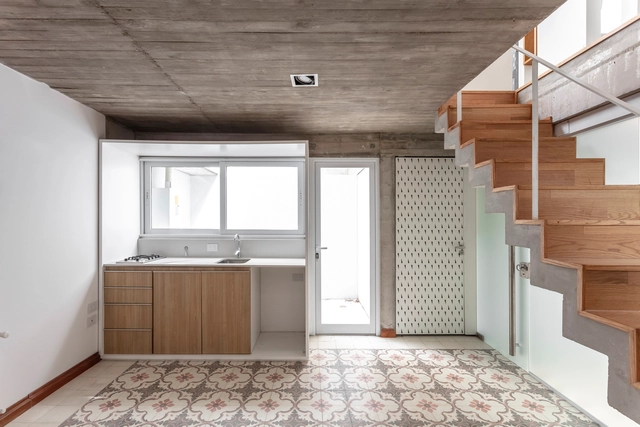
In large cities, it is becoming increasingly common to find buildings that are capable of admitting different configurations and layouts in their internal spaces. Towards the end of the 1960s, duplex typologies began to appear in buildings in the city of Buenos Aires, when the Building Code allowed them to be located in the obligatory setbacks of the upper floors.
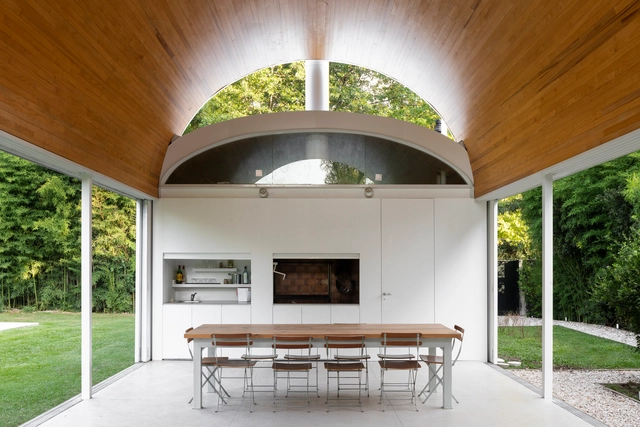
As a protagonist of the Argentinean culinary scene, the barbecue plays a prominent role. In architecture, beyond the dimensions of the spaces where they are installed, grills are consolidated as a meeting point for visitors and residents of the houses, coming into direct contact with the customs and culture of the country.