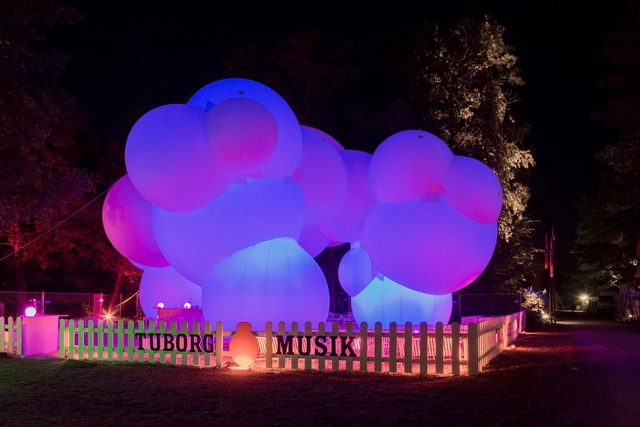
BIG Architects has designed an inflatable mobile pavilion to be displayed at three Danish events, including its original site at the Roskilde Festival 2016. Known as SKUM (Danish for foam), the structure met the challenge of creating an installation that has the ability to be both permanent and fully transportable by creating a whimsical, bubble-like form that can be blown up in just 7 minutes.
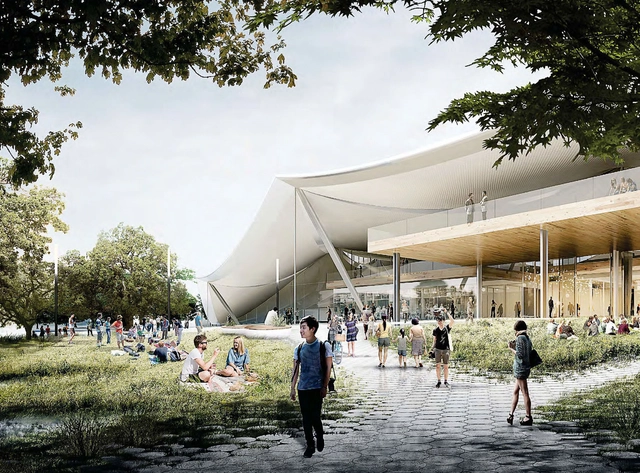
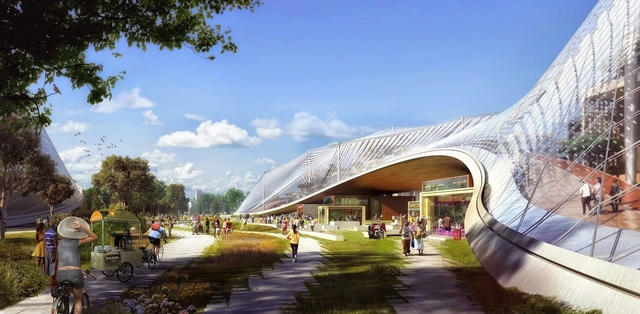
The “Googleplex” is back on. After the Mountain View City Council announced last year that they would be awarding the majority of the land needed to construct the futurist masterplan designed for Google by BIG and Thomas Heatherwick to fellow tech giant LinkedIn, the future of the ambitious glass-canopied corporate campus seemed to be dead in the water, with the architects even releasing images of a pared down design that would occupy a much smaller footprint. But all of that has now changed thanks to a surprising property swap between the two companies that will see over three million square feet of real estate switch hands.
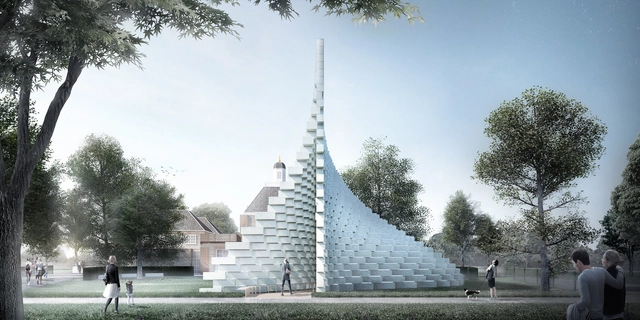
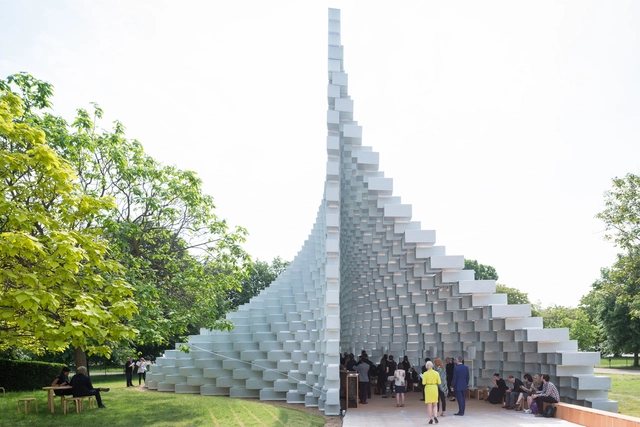
Earlier today, the 17th Serpentine Gallery Pavilionwas unveiled with a press preview ahead of its public opening this Friday. With its 13-meter tall "unzipped wall" of square fiberglass tubes, the pavilion is an impressive presence in Hyde park, standing next to the single-story Serpentine Gallery. As described by Bjarke Ingels in his design statement, the pavilion is all about its visual effects from various angles - going from an expansive, transparent rectangle when viewed from the side, and an opaque, curving sculptural shape when seen from either end.
With so much visual intrigue, the project offers plenty to be explored through photography - and accordingly, photographer Laurian Ghinitoiu was there at the opening to investigate the project's visual effects. He also captured the pavilion's neighboring Summer Houses, by Kunlé Adeyemi of NLÉ, Barkow Leibinger, Yona Friedman and Asif Khan. Read on to see the gallery.
The 2016 Serpentine Pavilion, designed by BIG, has today been unveiled at the Serpentine Gallery in Hyde Park, London. The design consists of an "unzipped wall" in which a straight line of tubular fiberglass bricks at the top of the wall is split into two undulating sides, housing the program of the pavilion. For the first time, the 2016 Serpentine Pavilion is also accompanied by four "summerhouses" designed by Kunlé Adeyemi, Barkow Leibinger, Yona Friedman and Asif Khan. The Pavilion and summerhouses will open to the public later this week, on June 10th, and will be in place until October 9th. Read on to find out more about all five designs.
Every year the Serpentine Gallery commissions an Architect to design a pavilion which will sit on its lawn, greeting the hundreds of thousands of people who will visit over the summer months. Temporary pavilions like this are an important chance for architects to test new ideas, and to communicate to the public what architecture is and could be.
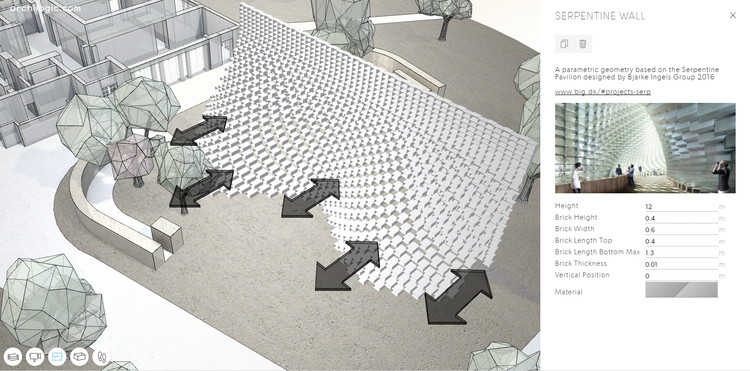
Unless you’re in London, you may not get the opportunity to visit the pavilion physically, but thanks to the web we can take you there virtually.
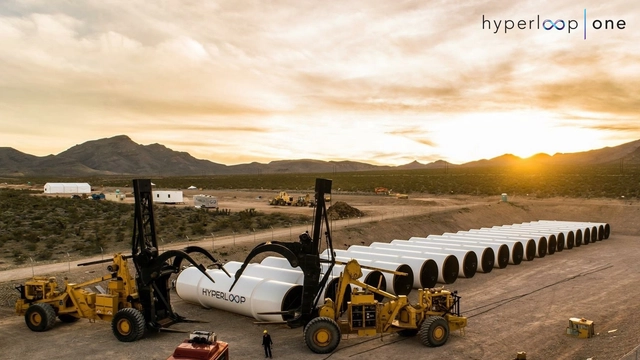
Elon Musk first proposed Hyperloop transit in 2013, but the innovator responsible for Tesla and SpaceX has yielded to outsiders to test and build the technology. In response to that challenge, Hyperloop One (formerly Hyperloop Technologies, Inc. rebranded as to not be confused with Hyperloop Transportation Technologies, a competitor) conducted its first test today on a track north of Las Vegas. Meanwhile as reported on Slate and The Verge, Hyperloop Transportation Technologies has simultaneously been working on a different passive magnetic levitation system developed by Lawrence Livermore National Labs. For those unfamiliar, Hyperloop is a tubular transit system that relies on maglev (magnetic-levitation) technology to transport passengers or cargo at speeds in excess of 700 miles per hour, in other words, traveling from Los Angeles to San Francisco in half an hour.
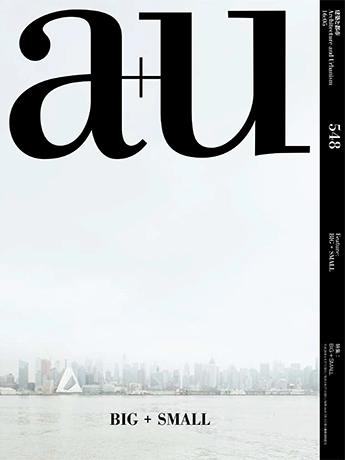
From the Publisher. The May 2016 issue of a+u is a special issue dedicated to recent works by BIG – Bjarke Ingels Group.
The team is engaged with projects both large and small in locations all over the world. The issue reflects that diversity, with the first half devoted to the large, urban-scale works for which the practice is best known, and the second half devoted to smaller works, including residences and a pavilion. Including those nearing completion, 20 of the 22 projects introduced here are currently underway. Over the next few years, we will see many more of their works finished.
https://www.archdaily.com/787062/a-plus-u-548-big-plus-smallAD Editorial Team
With the 2016 Salone del Mobile now behind us, Romanian photographer Laurian Ghinitoiu has shared his photos from Milan Design Week, along with his ranking of the top five architectural installations. Read on to see his exceptional collection of images accompanied by short descriptions of each project.
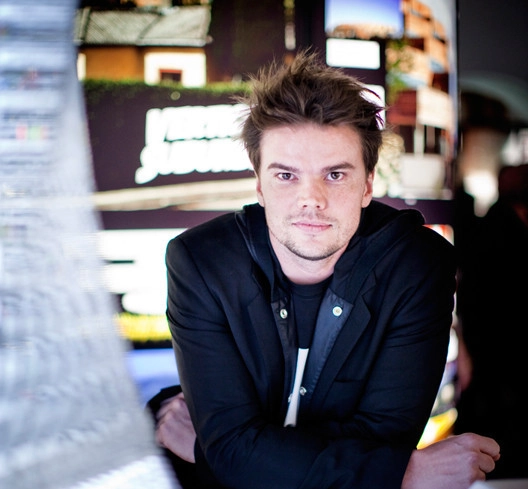
Bjarke Ingels has been named one of TIME's 100 Most Influential People in the magazine's annual list of groundbreakers in five categories: Pioneers, Titans, Artists, Leaders, and Icons. Other giants of the same field endorse the authority of each selected figure and, in Ingels case, former boss Rem Koolhaas offers poignant words of praise. “Bjarke is the first major architect who disconnected the profession completely from angst,” says Koolhaas. “He threw out the ballast and soared. With that, he is completely in tune with the thinkers of Silicon Valley, who want to make the world a better place without the existential hand-wringing that previous generations felt was crucial to earn utopianist credibility.” You can review the full profile and TIME’s complete list of people here.
In an interview with the Council on Tall Buildings and Urban Habitat (CTBUH), Bjarke Ingels reflects on the design of skyscrapers, noting how "sculpture is fine, but if its arbitrary it's not as interesting." Architects, Ingels argues, have the problem of "skilled incompetence:" the notion that they "already know the answer before [they've] even heard the question." This prevents them "from questioning the question, or having the question rephrased, or elaborating on the question, or even listening for the question – because [they] already know the answer."
Photographer Laurian Ghinitoiu has captured the latest photos of BIG's courtscraper, VIA 57WEST. Exploring the urban context of this unconventional high-rise, the images illustrate how the building's swooping facade and peak appear from different sight lines.
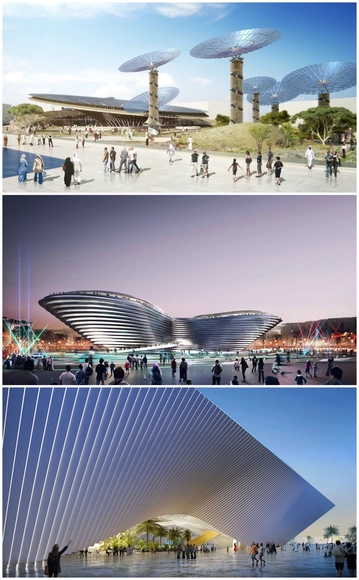
Foster + Partners, BIG and Grimshaw Architects have won a competition to design pavilions for Expo 2020 Dubai. Under the Expo’s 2020 theme of Connecting Minds, Creating the Future, the teams were selected from 13 invited practices to design three themed pavilions within the Expo's HOK-designed masterplan: Opportunity, Mobility, and Sustainability.
"A key criterion for the competition was ensuring that the designs not only embodied one of Expo’s core themes, but also had the flexibility and longevity to live on as landmarks and functional structures after the Expo is complete in 2021," said the organizers in a press release.
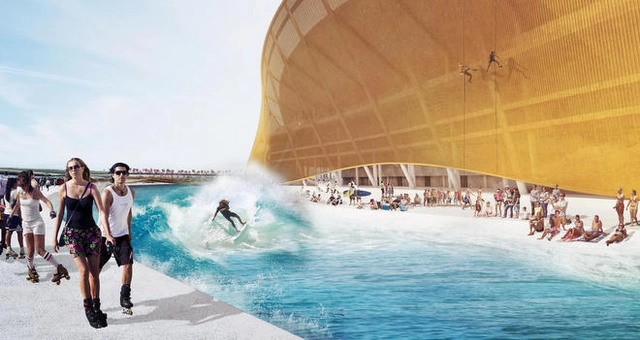
BIG has revealed their concept for the Redskins new stadium complex. Complete with a moat, the semi-transparent, undulating structure was designed to redefine the American stadium. Rather than being (mostly) preserved for game-day, BIG envisions the stadium to be a year-round destination used for more than just football.
“The stadium is designed as much for the tailgating, like the pre-game, as for the game itself,” Bjarke Ingels said on 60 Minutes. “Tailgating literally becomes a picnic in a park. It can actually make the stadium a more lively destination throughout the year without ruining the turf for the football game.”
Videos
Pavilion design by BIG. Image Courtesy of BIG
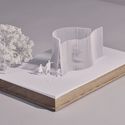
The Serpentine Gallery in London has unveiled the designs for this year's prestigious Serpentine Gallery Pavilion, designed by BIG, showing an "unzipped wall" which rises to a point above the entrance. In addition to the pavilion, this year the Serpentine gallery will host four smaller "summer houses" designed by Kunlé Adeyemi - NLÉ, Barkow Leibinger, Yona Friedman and Asif Khan. For these summer houses, the Serpentine Gallery asked the participants to take inspiration from Queen Caroline's Temple, a small, classical summer house near to the gallery that was built in 1734.
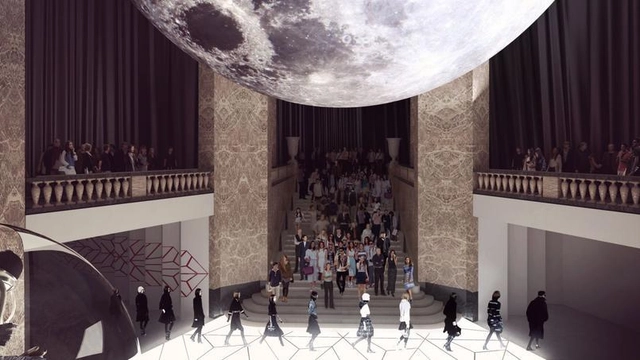
French department chain Galeries Lafayette has commissioned BIG to design its new flagship on Paris' historic Avenue des Champs-Élysées. BIG's first retail client, Galeries Lafayette hopes to position the project "as an upmarket department store for the 21st century" that will "endow the legendary boulevard with renewed cachet," according to a report on Business of Fashion.
Sited for 52 Champs-Élysées, the 7000-square-meter space will take its inspiration from the historic Art Deco building its housed in. As BIG described, they hope to enhance that space and respect the existing architecture, rather than radically transform it.
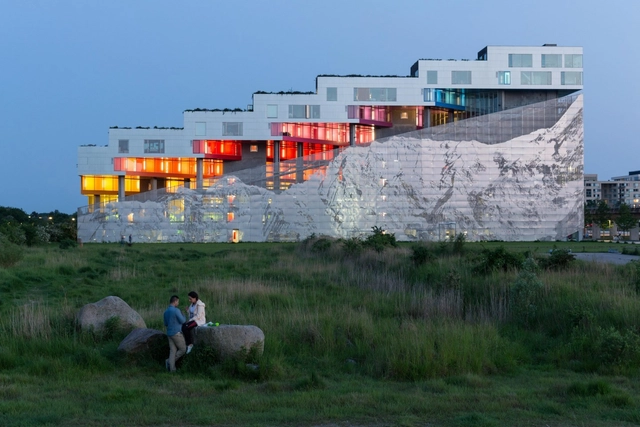
The Mountain, Copenhagen / BIG. Image Courtesy of Serpentine Galleries
The Serpentine Galleries have revealed that the 2016 Serpentine Pavilion will be designed by Bjarke Ingels Group (BIG), alongside a surprise announcement that four "Summer Houses" will also be built by internationally acclaimed practices. Kunlé Adeyemi – NLÉ (Amsterdam/Lagos), Barkow Leibinger (Berlin/New York), Yona Friedman (Paris), and Asif Khan (London) will each design a 25sqm structure inspired by the nearby Queen Caroline’s Temple, a neo-Classical summer house built in 1734 and "a stone’s throw from the Serpentine Gallery." In line with the criteria for the selection of the Serpentine Pavilion architect, each chosen to design a Summer House has yet to realise a permanent building in England.


.jpg?1465489880&format=webp&width=640&height=580)
.jpg?1465489121 "© Laurian Ghinitoiu")
.jpg?1465489810 "© Laurian Ghinitoiu")
.jpg?1465489930 "© Laurian Ghinitoiu")
.jpg?1465489412 "© Laurian Ghinitoiu")
.jpg?1465489161 "© Laurian Ghinitoiu")
.jpg?1465488871 "© Laurian Ghinitoiu")
.jpg?1465489842 "© Laurian Ghinitoiu")
.jpg?1465489672 "© Laurian Ghinitoiu")
.jpg?1465489015 "© Laurian Ghinitoiu")
.jpg?1465489880)


.gif?1465311775)


.jpg?1461272817&format=webp&width=640&height=580)
.jpg?1459794350)