20th Century Design in Flux

ArchDaily Topic

A curated selection of articles, interviews, and essays exploring a global reinterpretation of architectural history.

Thick Walls and Deep Openings: When Architecture Rediscovers Mass
Thick Walls and Deep Openings: When Architecture Rediscovers Mass

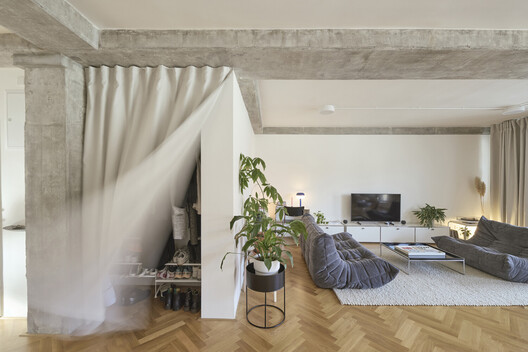
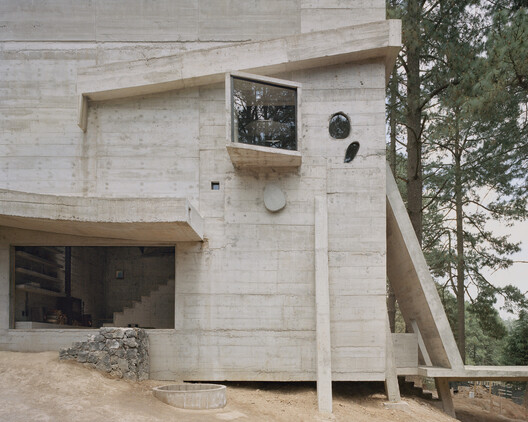
For much of the twentieth century, architectural culture was shaped by the pursuit of lightness. Steel structures and curtain walls reduced the building envelope to a thin layer separating interior from exterior, while façades became smooth, continuous surfaces where windows were cut as precise openings within an abstract plane. But for centuries, buildings were conceived as bodies of mass; walls possessed depth, windows were recessed within thick masonry, and space was often experienced as something carved from the solidity of construction. In recent years, several contemporary projects appear to revisit this older spatial logic, reintroducing thickness as an architectural condition through deep openings, monolithic volumes, and heavy envelopes.

Read more »
Designed to Repeat, Forced to Adapt: The Parallel Architecture of Socialist Housing

Designed to Repeat, Forced to Adapt: The Parallel Architecture of Socialist Housing

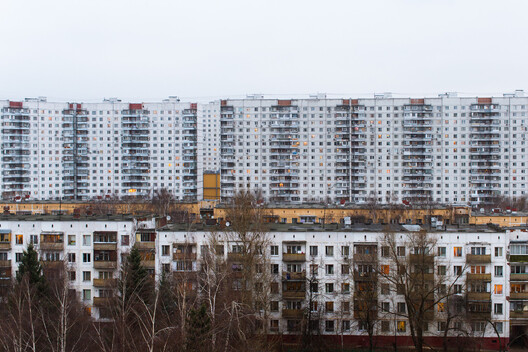
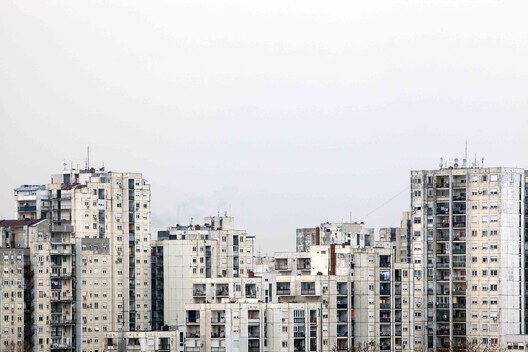
A housing block in New Belgrade appears orderly from a distance. Concrete slabs repeat with disciplined consistency, windows align into measured grids, and balconies stack with the confidence of a system certain of itself. However, proximity changes the reading. One balcony is enclosed in aluminum glazing, another softened with improvised shading. Insulation thickens part of a façade while laundry frames another edge like an accidental elevation study. The district still reads as planned, though occupation has made its order less uniform. Within that order, repetition has gradually been rewritten through occupation.

Read more »

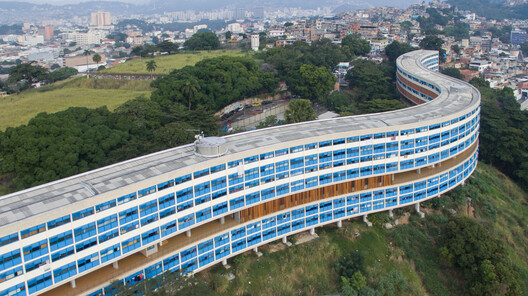
When Modernism Meets Local Resistance: Housing and Urban Friction in Latin America

When Modernism Meets Local Resistance: Housing and Urban Friction in Latin America

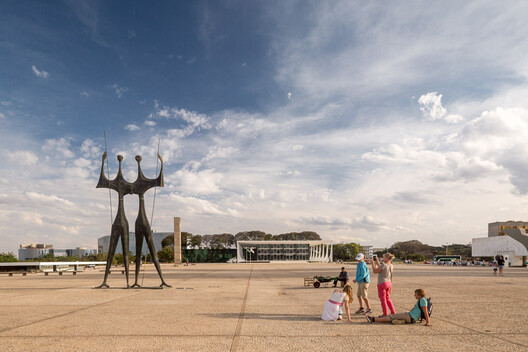
Modern housing was one of the places where modernism made its boldest promise: that architecture could reshape not only the city, but the way people lived within it. As Argentine architectural historian Ramón Gutiérrez has argued, popular housing is "the great unresolved subject, one that usually does not appear in histories of architecture." In Latin America, this absence is significant. Across the 20th century, expanding cities turned housing into one of the clearest ways to imagine urban change, and modernism entered not only plans and drawings, but apartments, neighborhoods, streets, and domestic routines.

Read more »

Material Culture and Heritage in Contemporary Cinema Architecture

Material Culture and Heritage in Contemporary Cinema Architecture

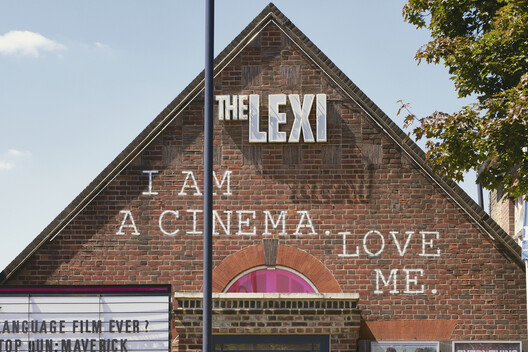
Over the years, cinema architecture has continually reinvented itself. From cinematic experiences that engage multiple senses to material technologies that reinterpret the aesthetics of past eras, the concept of the movie theater has enabled the recovery, revitalization, and renewal of numerous obsolete, ruined, or even historically protected spaces. Just as the Majestic Cinema reflects an important community function in Zanzibar, Tanzania, many twentieth-century buildings have found in adaptive reuse an opportunity to restore and preserve cultures, memories, and traditions that remain meaningful to their communities.

Read more »

Climate, Culture, and Modernism: The Postcolonial Campus as Architectural Laboratory

Climate, Culture, and Modernism: The Postcolonial Campus as Architectural Laboratory

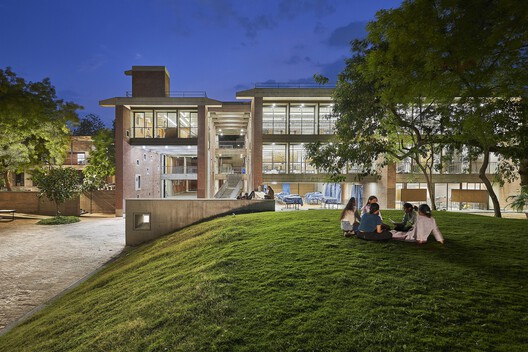
In the decades following independence, some of the most ambitious architectural experiments in the world did not emerge through museums, monuments, or government palaces. They emerged through universities. Across South Asia and Africa, newly formed nations turned campuses into testing grounds for entirely new ways of imagining collective life. These campuses functioned as more than educational institutions. They became territories where states tested how modernity might be organized, for citizens to gather, institutions to function, climate to shape architecture, and imported ideas to transform local realities.

Read more »

Case Study Houses and the Myth of a Universal Domestic Ideal

Case Study Houses and the Myth of a Universal Domestic Ideal

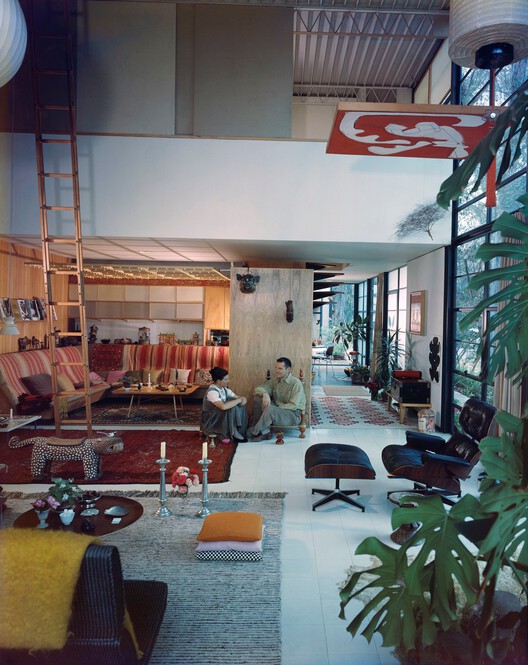
Sitting on low benches, casually talking, dressed in comfortable clothes, and surrounded by books, design objects, and works of art, Charles and Ray Eames appear in one of the most emblematic images of postwar modern domesticity in the United States. The house does not appear as an explicit architectural manifesto, but rather as an inhabited, appropriated, everyday space. Still, nearly everything in that scene functions as the condensation of a carefully constructed ideal: modern informality, the integration between architecture and daily life with the coexistence of industrial production. The photograph projects a way of living more than it represents a residence. And perhaps that was, from the very beginning, the central ambition behind the Case Study Houses.

Read more »

Reconsidering the Shotgun House: Between Preservation, Experimentation, and Displacement

Reconsidering the Shotgun House: Between Preservation, Experimentation, and Displacement

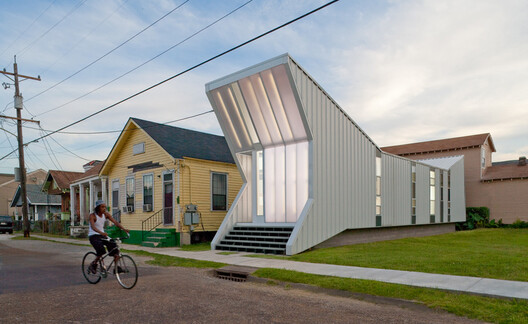
Emerging in port cities and working-class neighborhoods throughout the nineteenth century, the shotgun house became a durable response to density, climate, and constrained urban parcels, becoming one of the defining domestic forms of the Southern United States. Its narrow footprint, sequential plan, and deeply shaded porches produced a spatial logic that was economical and environmentally responsive before either term became central to architectural discourse. From New Orleans and Mobile to Houston and Louisville, shotgun houses formed the physical fabric of neighborhoods shaped by migration, labor, community, and cultural life. Though often dismissed as ordinary, vernacular construction, the housing typology has long embodied sophisticated ideas about climate adaptation, social adjacency, and incremental urban growth, making it one of the most influential domestic forms in the history of the American city.

Read more »

Architecture and Ideology: How Political Systems Shaped 20th-Century Design

Architecture and Ideology: How Political Systems Shaped 20th-Century Design

Architecture is often presented as the visible expression of its time, its desires, its faith in progress, its idea of order. Yet this reading tends to flatten the conditions under which buildings are produced. It suggests that architecture follows history when, in many cases, it actively participates in it. Few periods make this more evident than the twentieth century, when architecture became deeply entangled with political programs, economic systems, and competing visions of how collective life should be organized.

Read more »

Oil, Glass, and Identity: Gulf Modernism Between Global Image and Local Climate

Oil, Glass, and Identity: Gulf Modernism Between Global Image and Local Climate

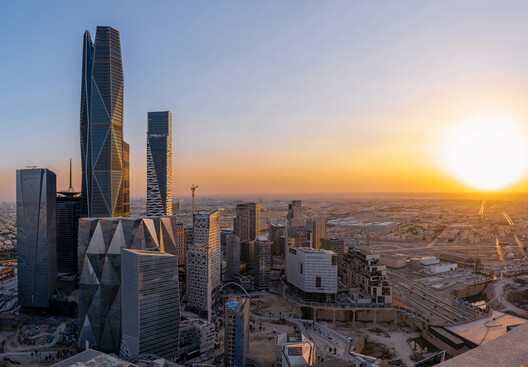
Step from the heat of Dubai into the lobby of a glass tower, and the desert seems to disappear. Outside, temperatures climb past 45 degrees Celsius; inside, the air is cold, sealed, and perfectly controlled. For decades, this contrast became the defining image of Gulf modernity. Architecture became less a negotiation with climate, and more a demonstration that climate could be overcome. Towers of reflective glass rose from the desert as symbols of arrival, projecting financial power, technological confidence, and global ambition. Beneath this urban image sat an infrastructure built on oil, cheap energy, and the continuous mechanical suppression of heat.

Read more »

Furniture as Architecture: Micro-Modernisms Inside the Home

Furniture as Architecture: Micro-Modernisms Inside the Home

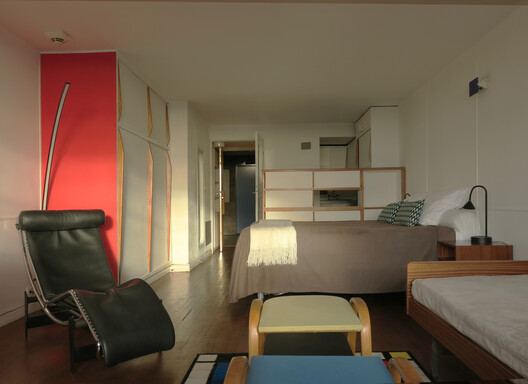
Modernism is often encountered through built form, photographed facades, canonical plans, concrete manifestos. For most people, its first encounter was far more immediate. It was a chair in an office, a shelf in a living room, a compact unit that reorganized how one sat, stored, or slept. Long before modern architecture could be widely commissioned, it was furniture that entered everyday space, carrying with it a new logic of living. Modernism's promise of transforming life was often delivered through these smaller, repeatable objects.

Read more »

Dogtrot House: Vernacular Knowledge and Climate-Responsive Design

Dogtrot House: Vernacular Knowledge and Climate-Responsive Design

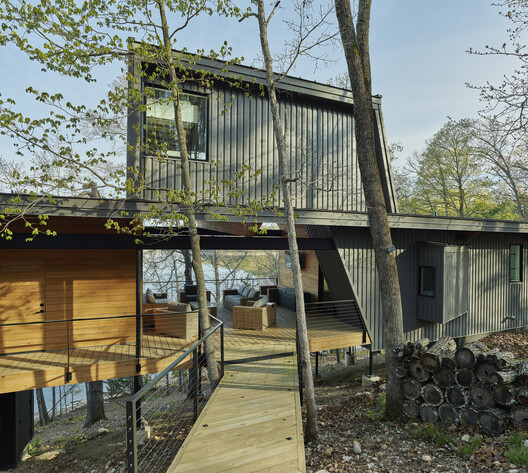
The dogtrot house emerged across the South of the United States during the late nineteenth century as a direct response to humid climates, material availability, and patterns of rural habitation. Found throughout the Appalachian Mountains, coastal Carolinas, and lowlands of Louisiana, the dogtrot house appeared in numerous regional variations, yet its fundamental spatial logic remained remarkably consistent. Two enclosed living masses are separated by an open central passage and unified beneath a continuous roof, creating a dwelling that is simultaneously economical and responsive to long, hot summers. Although architectural historians continue to debate the precise geographic origins of the dogtrot, the typology represents a broader vernacular intelligence that emerged through the convergence of environmental necessity, local construction practices, and rural living.

Read more »

Designing a Brand: How Apple Built an Architectural Language of Glass and Order

Designing a Brand: How Apple Built an Architectural Language of Glass and Order

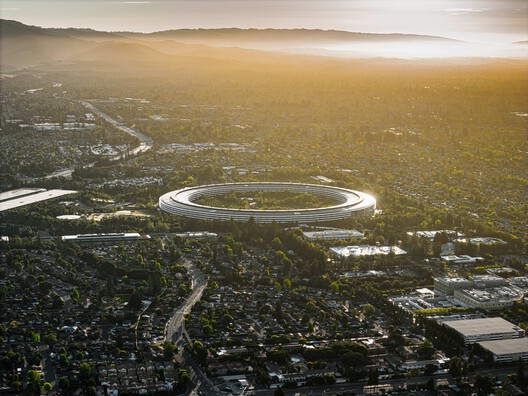
In 2026, Apple marked fifty years since its founding. Over the past two decades, Apple has developed a consistent architectural language that extends its brand into the built environment, transforming stores, workplaces, and public-facing spaces into active components of its identity. These environments guide movement, frame interaction, and condition the ways in which users encounter both products and the company itself.

Read more »

Beyond the Shell: Félix Candela’s Palacio de los Deportes for the 1968 Mexico Olympics

Beyond the Shell: Félix Candela’s Palacio de los Deportes for the 1968 Mexico Olympics

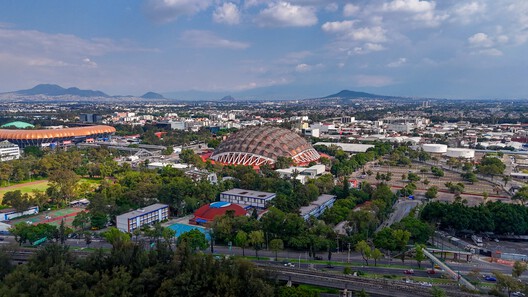
When Mexico City hosted the Olympics in 1968, it was the first time the Games had been awarded to a Latin American country as well as the first time for a Spanish-speaking nation to host them. This made the games a good opportunity to project Mexico and its culture internationally, thus prompting the government to constitute an organizing committee with prominent local talent. They appointed Pedro Ramírez Vázquez as its president, a Mexican architect who held significant influence over the state's mid-century building program. His approach was explicit: architecture as a synthesis of international modernist technique with Pre-Columbian references and local material culture. Under his direction, the committee would oversee the construction and adaptation of venues distributed across the southern districts of Mexico City, nearly all designed and built by local architects, engineers, and technicians. 

Read more »

After Le Corbusier: How Southeast Asia Turned the Satellite City Into a Transit Megaproject

After Le Corbusier: How Southeast Asia Turned the Satellite City Into a Transit Megaproject

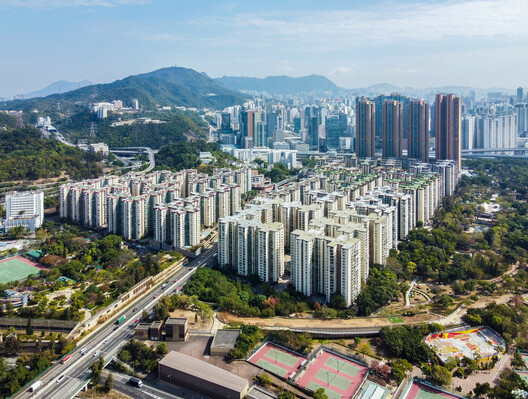
Southeast Asia is often narrated as a kind of architectural playground—an arena where modern and contemporary ideals have been tested at full scale through singular, iconic buildings. One can trace an easy lineage through names that have helped shape the region's skyline imagination: Paul Rudolph's Lippo Centre in Hong Kong and The Concourse in Singapore, I.M. Pei's OCBC Centre and Hong Kong's Bank of China Tower, Norman Foster's Supreme Court of Singapore and the HSBC Main Building in Hong Kong, Ron Phillips' Hong Kong City Hall, Moshe Safdie's Marina Bay Sands. Yet this familiar history—told through objects, colonialism, authorship, and signature forms—risks missing a deeper, more consequential layer of influence: the planning logics and infrastructural frameworks that have quietly structured how these cities expand, densify, and distribute everyday life.

Read more »

Alternate Futures: Five Modernist Landmarks Reimagined for the 21st Century

Alternate Futures: Five Modernist Landmarks Reimagined for the 21st Century

Modernism in architecture was perhaps the first truly global building design philosophy. Established at the beginning of the twentieth century, its early proponents were heavyweights from Europe, such as Le Corbusier, Walter Gropius, and Mies van der Rohe. In 1923, Le Corbusier published his seminal written work, usually translated into English as Towards a New Architecture. Newness, and a rejection of history, was one of the central tenets of modernism. This manifested itself in the use of new materials such as steel and concrete, which gave rise to an unprecedented freedom of formal expression. 

Read more »

Tropical Modernism Beyond Aesthetics: The Politics of Shade and Air

Tropical Modernism Beyond Aesthetics: The Politics of Shade and Air

The image is familiar, a façade layered with brise-soleil, light softened into a patterned shadow, interiors kept cool without machines. It appears as intelligence made visible, architecture that understands the sun. This image is rarely examined closely. The same devices that temper heat also organize access, distribute comfort, and depend on particular forms of labor. What looks like a climatic response is also a decision about who gets relief from heat, and how. Tropical modernism, often reduced to a visual language of shade and porosity, emerges instead as a set of situated practices where climate, labor, and power are negotiated differently across contexts.

Read more »