Rethinking Materials: Techniques, Applications and Lifecycle

ArchDaily Topic

A curated selection of articles, interviews, and essays exploring materials, presented by Sto.

Salt as a Building Material: Rethinking the Life of Minerals and Waste in Architecture with Mále Uribe

Salt as a Building Material: Rethinking the Life of Minerals and Waste in Architecture with Mále Uribe

In response to today's environmental, political, economic, and social challenges, material experimentation in architecture invites us to recognize the importance of researching and analyzing the properties of construction elements, and to understand the role of spatial design and its immediate surroundings. While various textiles, plastics, and even waste from different sources are being recycled and given a new life, the debate around the use of salt as a building material encourages the development of more sustainable practices to reduce the industry’s impact on the environment, as well as to explore the renewed life of discarded minerals and mining waste for implementation in architecture.

Read more »

Crossing Hemispheres: Thatched Roofs from America to Asia

Crossing Hemispheres: Thatched Roofs from America to Asia

Thatching is a traditional building technique that has been reinterpreted in different ways in contemporary projects, allowing its value to continue to endure over time. As well as being a culturally and historically valuable technique, given its presence in humanity for centuries, it also has a number of other constructive advantages, such as its great environmental value, as it is an accessible renewable material.

Read more »

Built to (Not) Last: How Reversible Architecture Is Redefining the Way We Build

Built to (Not) Last: How Reversible Architecture Is Redefining the Way We Build

What if we imagined buildings as living systems, designed for assembly and disassembly with minimal impact? A form of open, modular, and adaptable architecture designed to evolve with its surroundings, responding to seasonal changes and on-demand needs instead of remaining static. At first glance, the idea seems paradoxical, as many buildings were constructed to last, designed to endure, resist the effects of time, and avoid demolition. Because of this, reversing or undoing could be seen as a setback. But what if that way of thinking no longer fits every scenario?

Read more »

Laurie Baker’s Legacy and the Democratization of Indian Architecture

Laurie Baker’s Legacy and the Democratization of Indian Architecture

In India, brick as a construction material holds memory, meaning, and modernity. From the aligned fired bricks of the Indus Valley Civilization to the intricate brick jaalis that decorate homes, public buildings, and landmarks, the material's legacy is deeply embedded within the subcontinent's architectural identity. Yet no one has shaped the narrative of brick in modern Indian architecture more eloquently than Laurie Baker.

Read more »

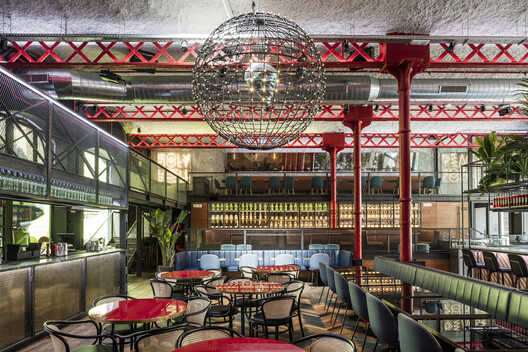
Interiors of Bars and Restaurants that Blend Cultures, Arts, and Materials: El Equipo Creativo and Their Works in Barcelona

Interiors of Bars and Restaurants that Blend Cultures, Arts, and Materials: El Equipo Creativo and Their Works in Barcelona

How does the design of contemporary interiors create different experiences through its materials? How does the adaptability and reuse of certain materials make it possible to generate contrasting and/or complementary atmospheres within a single space? According to each material's textures, proportions, colors, or properties, interior architecture currently recognizes the opportunity to create environments where materiality plays more than just an aesthetic role. With special attention to the final experience of its users, El Equipo Creativo aims to combine designs where landscape, nature, culture, and art stand out in interior compositions that accommodate broad programs and audiences.

Read more »

Unwrapped Interiors: A Case for Material Authenticity and Clarity

Unwrapped Interiors: A Case for Material Authenticity and Clarity

When designing a space—whether at the scale of interiors, architecture, or infrastructure—materiality is a central concern. Beyond aesthetics, materials determine how a project functions, ages, and endures. Some architects—such as Wang Shu and Kengo Kuma—have built their practices on a deep sensitivity to the potential and limits of materials. But even in the most pragmatic sense, the question arises: What lasts? What doesn't? And how do materials change over time?  Naturally, materials shape atmosphere and appearance—qualities that often matter most to clients. Yet increasingly, the discourse around materiality has shifted from structural substance to surface treatment. When did we start focusing more on "decorating" our spaces by layering one material over another, rather than relying on the inherent beauty and performance of the building fabric itself?

Read more »

Heat Resilient Design: How City Leaders Use Building Materials to Fight Urban Heat

Heat Resilient Design: How City Leaders Use Building Materials to Fight Urban Heat

Extreme heat is one of climate change's most urgent and rapidly growing consequences, especially in cities. Urban areas are particularly vulnerable because they trap heat in building materials and urban streets, creating dangerous conditions for residents. As temperatures continue to rise and heat waves lengthen, cities are grappling with how to remain livable in the face of this intensifying threat.

Read more »

What are Metamaterials? Innovations in Architecture from Acoustic Invisibility to Seismic Protection

What are Metamaterials? Innovations in Architecture from Acoustic Invisibility to Seismic Protection

The future of the architecture industry holds countless possibilities, as research in the domain progresses. One innovation is the ability for structures to be rendered acoustically invisible, absorb earthquake energy, or harvest electricity from the sounds around them. Qualities of this nature can help redefine the functionality and sustainability of buildings. Architects and scientists are at the forefront of this creation. What makes this possible are metamaterials that could offer alternative methods of designing good buildings.

Read more »

Grounded Interiors: Exploring Earth-Based Flooring Through 10 Contemporary Interiors

Grounded Interiors: Exploring Earth-Based Flooring Through 10 Contemporary Interiors

Earth-based flooring materials comprise natural elements such as clay, sand, silt, lime, and organic fibres. They offer both structural performance and sensory engagement when used in both outdoor and interior spaces. Due to their thermal properties, durability, and sustainable qualities, these materials have evolved from vernacular construction techniques into high-value architectural elements that are always being reinvented and optimized. There are several types of earthen floorings, each offering unique benefits, and they are increasingly used in interior settings.

Read more »

Nothing Is Lost, Everything Transforms: The Reusable Future of the Biennial’s Structures

Nothing Is Lost, Everything Transforms: The Reusable Future of the Biennial’s Structures

At the end of each edition of the Architecture Biennale, far from the public eye, tons of exhibition materials are transported across Venice in handcarts and boats. Only a small portion of these materials is reused. The main obstacles are the limited storage space in Venice and the high logistical costs—recurring challenges for circular architecture. As a result, most of the waste ends up in landfills or nearby recycling centers. But this scenario is beginning to change. In response to growing environmental concerns, architects are developing strategies to make reuse more viable. These efforts go beyond architectural and construction decisions—they also involve logistics and international trade.

Read more »

Understanding Soft Architecture: The Shift from Monument to Moment

Understanding Soft Architecture: The Shift from Monument to Moment

In recent years, architecture has increasingly embraced adaptability, flexibility, and responsiveness as core design principles. This evolution reflects a shift from traditional notions of static, permanent structures to dynamic environments that can adjust to changing needs and conditions. Central to this transformation is the concept of "soft architecture", which leverages pliable materials and innovative systems to create spaces that are functional, sustainable, and user-centric. Soft architecture takes shape through membranes that breathe, façades that move, structures that inflate or fold, and surfaces that bend rather than break. It involves designing for transformation — not only in how a building performs environmentally, but also in how it can accommodate shifting functions, user interactions, or temporary occupations. This approach to building challenges traditional notions of durability and control, proposing instead a more responsive and open-ended architecture. It reflects a growing awareness that buildings, like the societies they serve, must be able to evolve.

Read more »

Designing a Living and Dying Structure: Picoplanktonics and the Canadian Pavilion in Venice

Designing a Living and Dying Structure: Picoplanktonics and the Canadian Pavilion in Venice

The Canada Pavilion at the 19th International Architecture Exhibition – La Biennale di Venezia, hosted Picoplanktonics. A research that emerged as a radical rethinking of how architecture can become a platform that blends biology, computation, and fabrication to propose an alternative future, one where buildings don't just minimize harm, but actively participate in planetary repair. At its core lies a humble organism: marine cyanobacteria, capable of both capturing carbon and contributing to the material growth of the structure it inhabits. The project has been developed over 5 years by a group of researchers at ETH Zurich, led by Andrea Shin Ling and a group of interdisciplinary contributors and collaborators. Together, they formed the Living Room Collective, founded a year ago to build upon this work and showcase it at the Venice Biennale. The Core team members include Nicholas Hoban, Vincent Hui, and Clayton Lee. This conversation with the team behind the project shares the philosophy, technical challenges, and speculative horizons that animated their work from printing living sand lattices to maintaining microbial life in a public exhibition. Their aim is to inspire people to reconsider architecture not as a static object, but as a living, evolving process. One that requires care, patience, and a radical shift in mindset.

Read more »

Thinking Globally, Building Locally: Glocalization and the Ethical Use of Materials

Thinking Globally, Building Locally: Glocalization and the Ethical Use of Materials

"The times they are a-changin'," sang a young Bob Dylan in 1964, capturing a nation at a crossroads, gripped by the civil rights movement and overshadowed by Cold War tensions. Nearly a decade later, David Bowie turned that gaze inward with "Ch-ch-ch-ch-changes," a fragmented meditation on identity, reinvention, and personal transformation, echoing the collapse of countercultural ideals and the acceleration of globalization. By the 1990s, Tupac Shakur brought the focus back to the streets and urban centers. In "Changes," he laid bare the raw realities of racial injustice and systemic violence, offering not resignation but a forceful indictment: "That's just the way it is." 

Read more »

The Tactile Twin – Why Models Still Matter in a Virtual World

The Tactile Twin – Why Models Still Matter in a Virtual World

Building a monumental dome without the use of external iron chains or traditional centering was the enormous challenge faced by Filippo Brunelleschi at the Cathedral of Santa Maria del Fiore in Florence. To demonstrate the feasibility of his proposal and to guide the construction, he relied on a large-scale wooden model that played a fundamental role in studying proportions, the interlocking of ribs, and the innovative arrangement of bricks using the "a spina pesce" (herringbone) system. As an essential technical tool, this model — which is still on display at the Museo dell'Opera del Duomo in Florence — guided the master builders throughout the construction, establishing itself as a seminal example of the value of models in architectural planning, constructive communication, and experimentation.

Read more »