Architecture Without Limits: Interdisciplinarity and New Synergies

ArchDaily Topic

A curated selection of articles, interviews, and essays exploring how architecture can embrace interdisciplinarity and create new synergies.

Architects as Mediators: Three Cases of Dialogue Between Communities, Governments, and Businesses in the Global South
Architects as Mediators: Three Cases of Dialogue Between Communities, Governments, and Businesses in the Global South

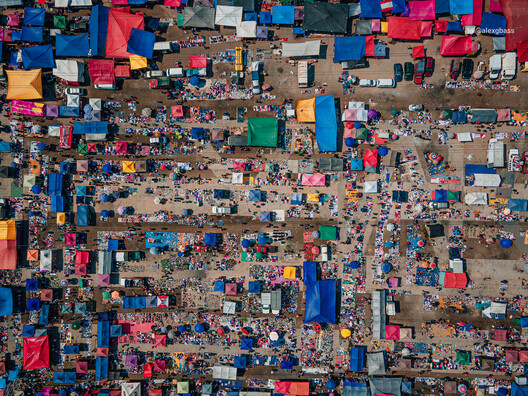
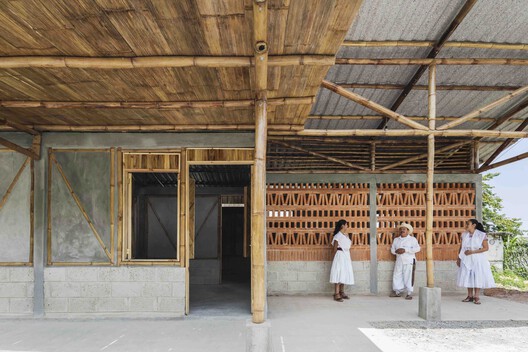
In contemporary times, architectural practice goes far beyond designing buildings or materializing ideas; it has become a multidimensional field, taking on broader and more complex roles. In contexts marked by inequality, environmental crises, and territorial disputes, architecture becomes a tool for negotiation, capable of mediating interests among diverse actors. In this scenario, architects also assume the roles of cultural translators, social facilitators, and, often, advocates for collective rights.

Read more »
Safe by Design: How Architects and Forensics Rethink Security across Scales

Safe by Design: How Architects and Forensics Rethink Security across Scales

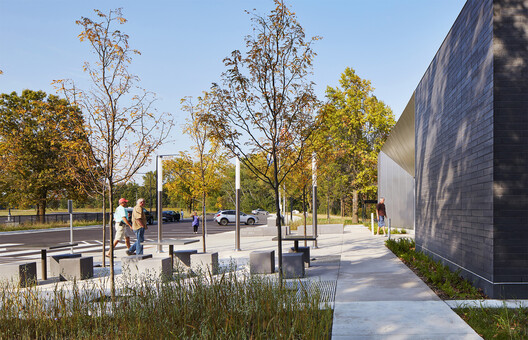
"The public square and civic infrastructure are the front lines against this kind of attack", proclaimed then-President of the American Institute of Architects, Thomas Vonier. The decades since 9/11 and mass violence have pressured cities, in the United States and globally, to reconsider what "safety" means. Is it about barriers, bollards, surveillance? Or is it about trust, visibility, evidence, resilience? Several projects confront these questions at various scales to demonstrate how architecture and forensic thinking can collectively protect communities and civic life. 

Read more »

Preserving a Legacy: The Role of Foundations and Architectural Archives Today

Preserving a Legacy: The Role of Foundations and Architectural Archives Today

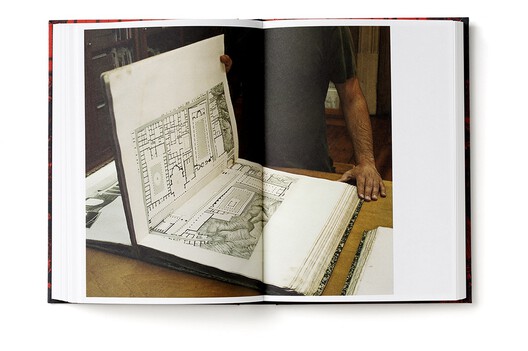
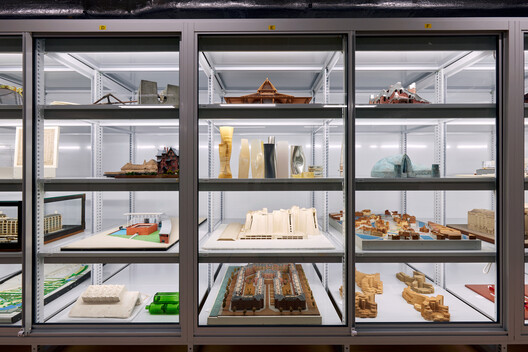
From projects, ideas, drawings, and sketches to photographs, models, material samples, and other documentation, these records embody years and memories of professional work responding to different needs, contexts, and purposes. Understanding that the architectural archive can serve as an effective method to inform and expand our understanding of collective intelligence, several foundations and architectural archives today take on multiple functions, extending their boundaries toward new horizons. Beyond preserving legacies and presenting them, they demonstrate the importance of promoting forward-looking cultural, social, and educational programs that engage younger generations in contemporary issues.

Read more »

Beyond Manufactured Landscapes: Quarries as Sites for Interdisciplinary Collaboration

Beyond Manufactured Landscapes: Quarries as Sites for Interdisciplinary Collaboration

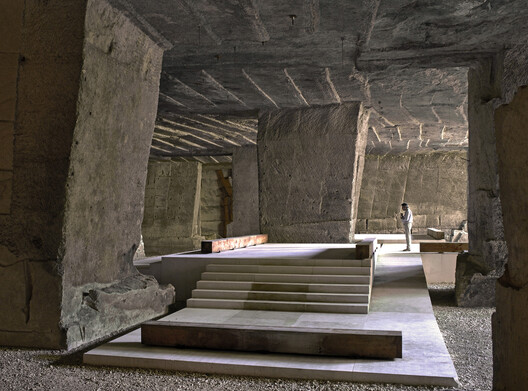
Quarries can be seen as indelible abandoned scars of human resource extraction. Man-made spaces, perceived as voids, and material gain, have fundamentally shaped our accelerating built environment. All the while, the earth stands still as a silent witness. For decades, these open-pit mines have been viewed as a necessary consequence of consumerism and urban growth, their raw, imposing forms a testament to the large-scale extraction of materials essential for building our cities. However, a global architectural movement is now emerging to engage with these existing forms, transforming these subtractive spaces into sites of innovation, collaboration, and renewed purpose.

Read more »

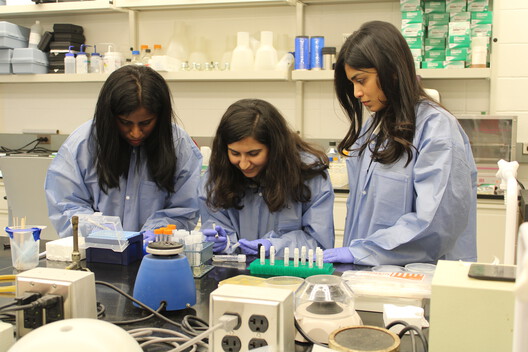
The Architect as a Scientist: New Materials Emerging Between Science and Design

The Architect as a Scientist: New Materials Emerging Between Science and Design

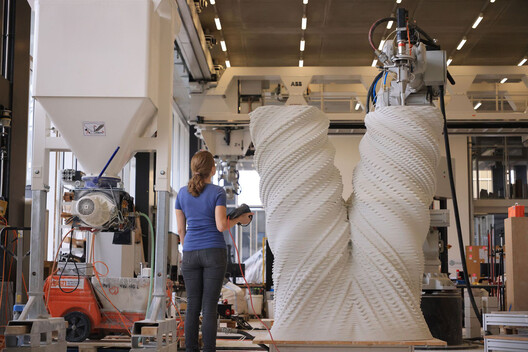
What is architecture? For some, its traditional role is to bring together imagination, technical knowledge, and problem-solving, allowing architects to design and construct while balancing ideas with the means to realize them. From the stone and wood of early buildings to the steel and concrete of the 20th century, each era demanded not only an understanding of form but also of the properties and potential of the materials in use. This grasp of materials has always been a core part of the creative process, though its scope was limited by the know-how and technologies available.

Read more »

Bridging Disciplines, Connecting Cities: The Interdisciplinary Approach to Urban Mobility in Portugal

Bridging Disciplines, Connecting Cities: The Interdisciplinary Approach to Urban Mobility in Portugal

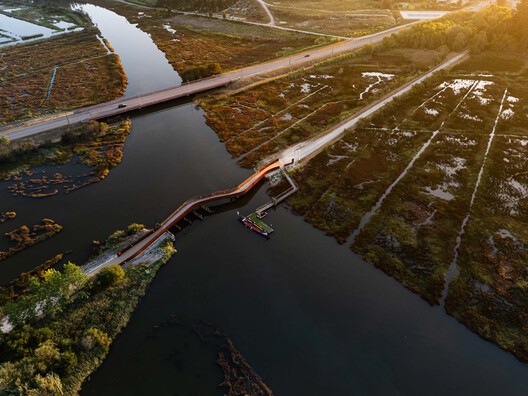
An architecture degree may provide a vast curriculum, but many of the skills needed for a project lie outside the discipline. This is especially true for urban-scale projects. They demand expertise in areas like traffic studies, structural calculations, landscape design, and technical installation forecasting. These are often seen as "complementary" but are, in fact, fundamental to the overall design.

Read more »

Choreographing Space: Architecture and Dance as Interdisciplinary Practices

Choreographing Space: Architecture and Dance as Interdisciplinary Practices

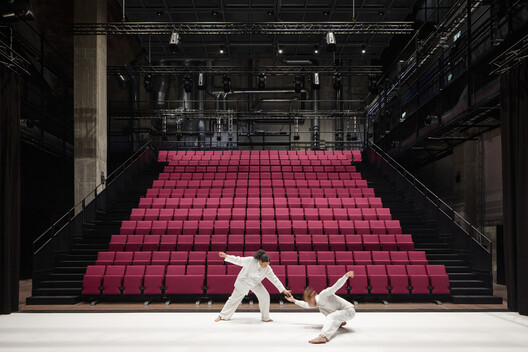
"Dance, dance… otherwise we are lost." This oft-cited phrase by Pina Bausch encapsulates not only the urgency of movement, but its capacity to reveal space itself. In her choreographies, space is never a neutral backdrop, it becomes a partner, an obstacle, a memory. Floors tilt, chairs accumulate, walls oppress or liberate. These are architectural conditions, staged and contested through the body. What Bausch exposes — and what architecture often forgets — is that space is not simply built, it is performed. Her work invites architects to think not only in terms of materials and forms, but of gestures, relations, and rhythms. It suggests that architecture, like dance, is ultimately about how we inhabit, structure, and emotionally charge the spaces we move through.

Read more »

Teaching Empathy: New Approaches to Architecture Education in Latin America

Teaching Empathy: New Approaches to Architecture Education in Latin America

Historically, the first universities in the contemporary model were established in Europe to educate elites for the State and the Church, rather than to promote social emancipation. With the rise of capitalism, they became privileged centers for producing and reproducing modern Western culture. However, from the 1960s onward—particularly after the student uprisings of May 1968—the academic focus shifted toward market-oriented values, displacing humanist and critical ideals. The humanities lost prominence, while technical fields gained central importance, often at the expense of reflecting on the social impact of their work.

Read more »

The Architect as Mediator of Materials: Lessons from Hybrid Habitats

The Architect as Mediator of Materials: Lessons from Hybrid Habitats

With deep roots, sturdy trunks, and the ability to withstand extreme temperatures, date palms (Phoenix dactylifera) are among the species best adapted to the arid desert environment. It is no coincidence that in many local indigenous cultures they are known as the "tree of life," as their fruits, leaves, and trunks have provided food, shelter, and building materials for thousands of years. Without them, much of human settlement in desert regions would not have been possible. Today, widely cultivated across desert regions around the world, the species continues to sustain traditional agricultural  practices, yet its potential can be further enhanced and expanded through the efforts of contemporary researchers.

Read more »

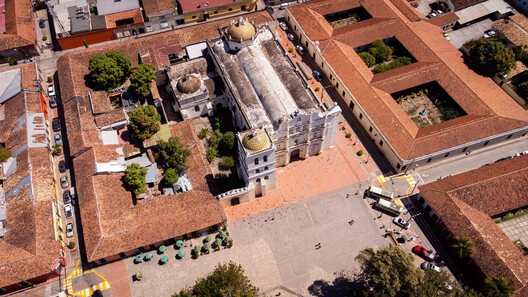
The Architect as Policymaker: The Case of Comayagua's Heritage Preservation in Honduras

The Architect as Policymaker: The Case of Comayagua's Heritage Preservation in Honduras

Comayagua is a city in central Honduras nestled in a valley with the same name. It holds a pivotal place in the nation's history, having served as its colonial and early republican capital for over 300 years. However, when the capital was relocated to Tegucigalpa in 1880, Comayagua's urban expansion halted, inadvertently preserving an ample and rich heritage. By the early 1990s, much of the city's architectural legacy was in a state of disrepair. Recognizing the urgent need to protect it, the governments of Honduras and Spain initiated a collaborative effort, with the objective of initiating a long-term restoration program to create a policy framework that would ensure the preservation of the city's historic center for years to come. 

Read more »

Becoming a City Scientist: How to Draw Urban Spaces with Data

Becoming a City Scientist: How to Draw Urban Spaces with Data

City Science, a rapidly expanding profession, is the scientific study and engineering of urban systems. It uses advanced technologies, big data, and complex systems physics to tackle challenges such as decarbonization, mobility, and livability. At its core, city science is about data-driven solutions. It employs statistics, modeling, and artificial intelligence to reveal the hidden dynamics of cities, from energy use to human movement. It employs strategies that reduce carbon emissions, enhance efficiency, and foster urban environments that are more sustainable and resilient.

Read more »

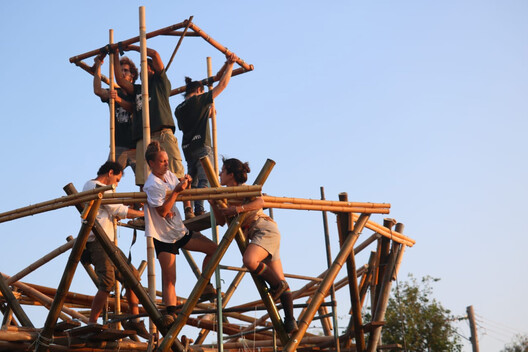
"Architecture Is Cooperation": Collective Projects that Build with Communities and Professionals

"Architecture Is Cooperation": Collective Projects that Build with Communities and Professionals

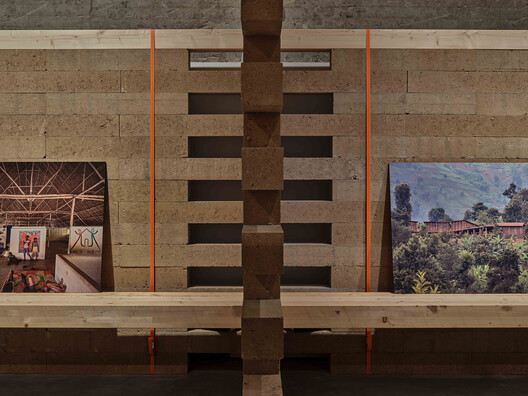
Working with the site instead of against it, the exhibition "Architecture is Cooperation," curated by Josep Ferrando, emphasizes the value of cooperation at the essence of architecture. Showcasing the work of professionals, organizations, and communities in cooperation projects driven from Spain, the installation takes shape through an exhibition design in earth and wood. The choice of these materials is understood not only from their aesthetic or symbolic qualities but also from their functionality and commitment to the principles of the circular economy. Until September 30, 2025, the exhibition will be on view at the Casa de la Arquitectura in Madrid, highlighting the necessary attention of architecture to the demands of the most vulnerable societies and communities by aligning the constructive language with the content of the exhibition.

Read more »

The Architect as Writer: Expanding the Discipline Beyond Buildings

The Architect as Writer: Expanding the Discipline Beyond Buildings

Architecture has always been more than bricks and mortar. It is equally constructed through words, ideas, and narratives. From ancient treatises to radical manifestos, from technical manuals to poetic essays, the written word has served as a spatial, pedagogical, and political tool within the field. Writing shapes how architecture is conceptualized, communicated, and critiqued — often long before, or even in the absence of, physical construction.

Read more »

September Editorial Topic: Architecture Without Limits

September Editorial Topic: Architecture Without Limits

Architects today work across many worlds: from designing furniture, landscapes, and urban blocks to creating film sets, photographs, and videos. They restore and retrofit old buildings rather than build anew, while also writing, researching, and publishing. Some design virtual spaces for video games or speculate on habitats in outer space and underwater. Others engage directly with society through politics, activism, or community projects. Many experiment with biology, test new materials, and step into the role of scientist. Architects are decolonizing old narratives and decarbonizing the construction industry, and by weaving together personal passions with pressing social and environmental challenges, they are pushing the limits of the profession and expanding its scope.

Read more »