BROWSE ALL FROM THIS PHOTOGRAPHER HERE
↓

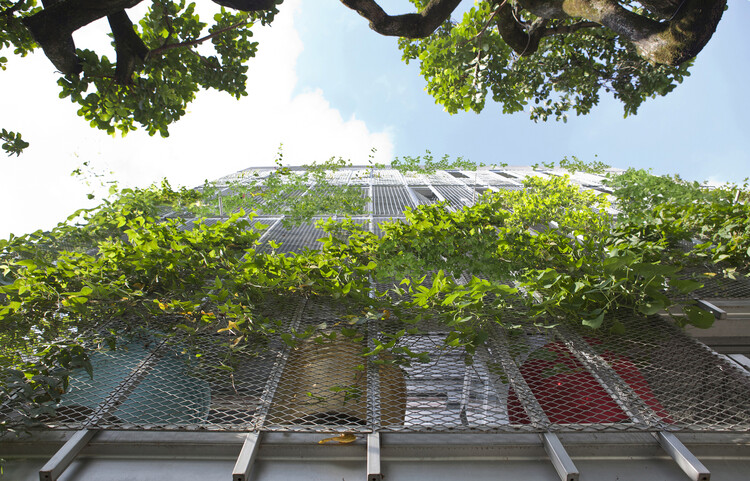
When Façades Become Habitats: Architecture Making Room for Other Species

Audio available

When we think of façades, we rarely think of them as habitats. We see them as the elements that separate interior from exterior, regulate temperature, reduce noise, and protect buildings from external conditions. They give architecture its visual language, but they are also expected to keep the outside world at a distance. In doing so, façades have often been understood as barriers: surfaces that define where human comfort begins and where the environment is meant to remain outside.

But the outside of a building is never empty. For centuries, architecture has unintentionally created opportunities for other forms of life. Birds nested beneath roof tiles, insects occupied cracks in masonry walls, and mosses or plants took root along ledges, gutters, and rough stone surfaces. These conditions were rarely designed with other species in mind, but they created small opportunities for life to inhabit them.

When Façades Become Habitats: Architecture Making Room for Other Species - More Images+ 21

Beyond Human-Centered Architecture: Designing Spaces with Other Species

Subscriber Access | 

As architecture moves beyond human-centered design, new practices are rethinking coexistence as an ethical and ecological framework. From political infrastructures to habitats, these approaches invite us to imagine architecture as a shared living system.

Modern architecture has long been written through an anthropocentric lens, placing the human at its center and rendering other species invisible. Yet this paradigm continues to shift, as architects and researchers redefine the role of design in more-than-human worlds. Studios such as Office for Political Innovation, Studio Ossidiana, and Husos Architects are questioning human-centered narratives and reframing design as a shared practice between species. In this context, architecture is no longer a tool of control but a medium for coexistence, a discipline that mediates between species, environments, and cultures.

Beyond Human-Centered Architecture: Designing Spaces with Other Species - More Images+ 23

Bioclimatic Prototype of a Host and Nectar Garden Building / Husos Architects

Bioclimatic Prototype of a Host and Nectar Garden Building  / Husos Architects - More Images+ 42

  • Architects: Husos Architects
  • Area Area of this architecture project Area:  510 m²
  • Year Completion year of this architecture project Year:  2012
  • Manufacturers Brands with products used in this architecture project
    Manufacturers:  Holcim, Acesco, Icomallas, Pallomaro, Pintuco