
-
Architects: Atelier WOA
- Area: 2227 m²
- Year: 2023
-
Manufacturers: Barthès bois, Briand Bois Construction, Philippe d’Art, Pouget Consultants




Almost a century after the iconic aesthetic emerged, Art Deco is finally having its comeback. As seen in new projects, interior spaces, and furniture around the globe, the glitz and glam that makes us long for the Roaring 20s of the early 20th century is now giving us a small taste of the Roaring 20s revival in the 21st century. As the distinct identity of Art Deco architecture and design has continued to inspire the world, what can we expect from new designs, and the preservation of existing ones?


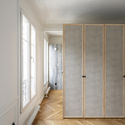
Wooden floors bring warmth, personality and style to any interior space, whether old or new. Rustic and elegant, wood also has excellent thermal properties, a pleasant temperature to the touch, and can even improve the acoustics of a space by absorbing sound waves. They are also highly durable and resistant to daily use. It is therefore no surprise that they are one of the favorite and most coveted materials for residential interiors. Wooden flooring is also very visually appealing, with a huge amount of variations possible in its design. Pieces can vary greatly depending on which part of the trunk they come from, even if they are from the same manufacturer and tree species. Colors and designs also vary according to different tree species, from light yellows to dark browns, with infinite possibilities. In addition, it is possible to create various types of patterns when laying the floor, according to the dimensions of the pieces used and the desired effect for the space. See below a selection of wooden floors in Architonic catalog.

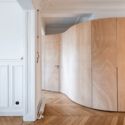
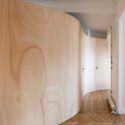
Take a second to imagine a building or a room. Chances are you are envisioning flat rectangular surfaces and straight lines. Whether it be walls, beams or windows, most architectural elements come in standard and extremely practical orthogonal shapes. However, the pandemic has shed light on designs that are not only functional, but also that improve our mood and well-being. In that sense, the power of curved, free-flowing surfaces is unmatched, which explains why they have been making a comeback as a modern design trend. Adopting beautiful nature-inspired shapes, organic curls and bends energize rooms and make users feel good. In fact, neuroscientists have shown that this affection is hard-wired into the brain; in a 2013 study, they found that participants were most likely to consider a space beautiful if it was curvilinear instead of rectilinear. In short, humans love curves.

Slate is a metamorphic rock formed from the transformation of clay under high pressure and temperature. Very homogeneous and sober, with shades ranging from dark gray to black, it is commonly used in floors and roofs due to its durability and appearance. Slate also works very well for façades, combining the aesthetics of natural stone, shaped by nature for over 500 million years, with the thermal comfort and ease of installation of ventilated façades.


From its starting to point as a tree to its product form as a beam or piece of furniture, wood used in architecture and interior design goes through several stages and processes. A renewable resource and popular traditional building material, wood is also often cited as a promising construction material of the future, one that is suitable for the new demands of sustainability. But unlike concrete, whose molds can create even the most complex curves, wooden architecture most commonly uses straight beams and panels. In this article, we will cover some techniques that allow for the creation of curved pieces of wood at different scales, some of which are handmade and others of which seek to make the process more efficient and intelligent at a larger scale.









cigu%C3%AB.jpg?1582741519 "Courtesy of cigüe")