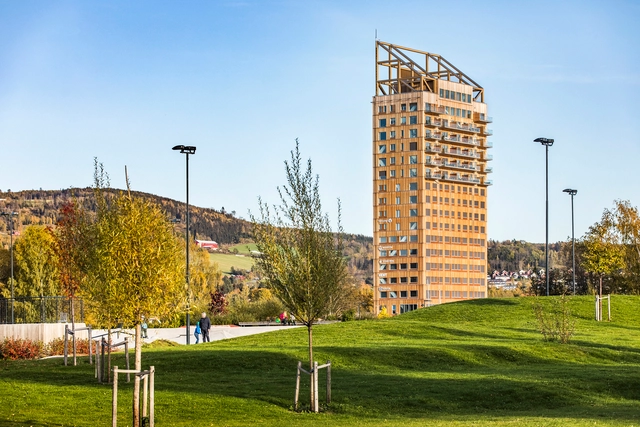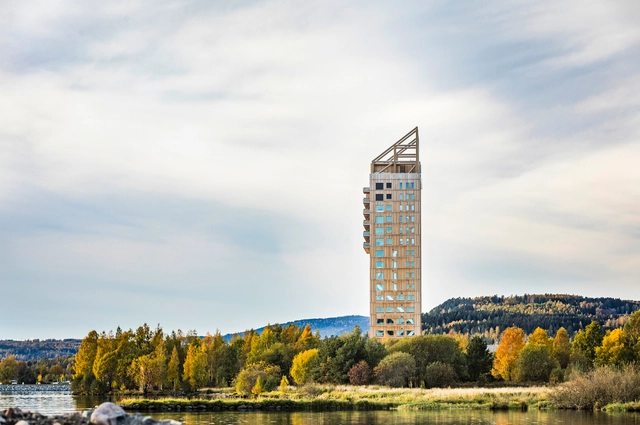
Atrium Ljungberg unveiled Stockholm Wood City in Sweden, the world's largest urban construction project in wood, and in Norway, just four years ago, Voll Arkitekter completed the Mjøstårnet Tower on Lake Mjøsa, one of the tallest wooden buildings in the world at 18 stories. On the other side of the planet, the Tamango project by Tallwood Architects is an example of the challenges and opportunities of wood construction in Chile, as it could become the first 12-story building with a prefabricated wood structure in Latin America. Meanwhile, in Peru, the Construye para Crecer project by Poggione+Biondi Arquitectos won the XIX National Architecture Biennial 2022 with a residential complex to be built mainly of wood. Nearby, Uruguay recently concluded its social housing in wood competition, paving the way toward innovation in social interest architecture. Furthermore, in 2020, Vicente Guallart won an international competition to define the standards for the buildings of a new city in China. The project, titled The Self-Sufficient City, was already a design that materialized a new urban model in wood across four city blocks.
Across the globe, sustainability and innovation in construction are constantly evolving, and wood structures are presented as a promising option. ArchDaily presented The Future of Wood as its monthly topic, opening up a discussion to explore and hear predictions and thoughts from our readers regarding the future of this material in architecture and urbanism. Is wood the key to a more sustainable and livable urban future? Or are there challenges we must address before embracing this trend? What are the implications for architecture, cities, the economy, and the environment?