Pascual Gangotena

BROWSE ALL FROM THIS PHOTOGRAPHER HERE
↓

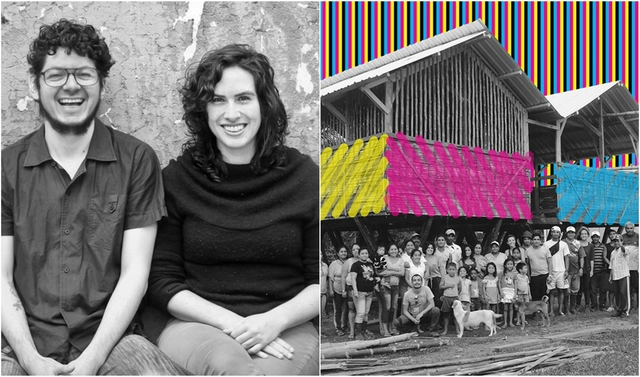
Al Borde: 'Participatory design is more about human connections than economic issues'

Subscriber Access | 

Al Borde: 'Participatory design is more about human connections than economic issues' - Imagen 1 de 4Al Borde: 'Participatory design is more about human connections than economic issues' - Imagen 2 de 4Al Borde: 'Participatory design is more about human connections than economic issues' - Imagen 3 de 4Al Borde: 'Participatory design is more about human connections than economic issues' - Imagen 4 de 4Al Borde: 'Participatory design is more about human connections than economic issues' - More Images+ 6

The 2018 International Housing Finance Summit, organized by INFONAVIT, brought together experts from various disciplines to discuss the future of cities and the lessons learned to date. Held on May 2 and 3 at the Camino Real Polanco, the event hosted prominent figures who examined urban transformation processes to evaluate models that could guide us toward an integrated urban plan.

The event featured the participation of Al Borde, a firm that has materialized its ideas across various Latin American countries, earning numerous awards and accolades. In 2016, they served on the nominating committee for the Mies Crown Hall Americas Prize (MCHAP) and were part of the official selection at the Venice Biennale, which was themed 'Reporting from the Front.' Currently, they are among the winners of the "Young Architects in Latin America" competition, a collateral event of the 16th International Architecture Exhibition at the Venice Biennale.

Bamboo in Ecuador: Contemporary Projects Built with Cane

Subscriber Access | 
Bamboo in Ecuador: Contemporary Projects Built with Cane - Imagem 20 de 4
Guadurnal Dining Hall / Al Borde + Taller General. Image © JAG Studio

Bamboo in Ecuador: Contemporary Projects Built with Cane - More Images+ 16

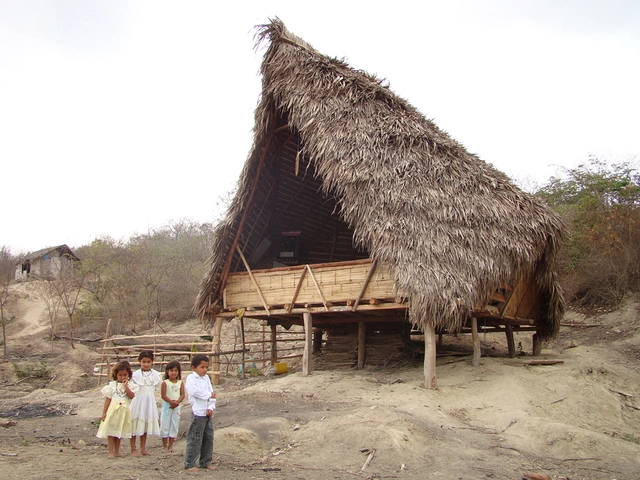
Due to its climate and territorial characteristics, Ecuador possesses an immense diversity of bamboos: it has 6 genera and 42 identified species, of which 11 are endemic. Among them, Guadua angustifolia cane is considered the most important species in terms of abundance and physical and mechanical properties. The indigenous term guadua was used by the native communities of Ecuador and Colombia to designate this species of "native bamboo," which was later renamed "Guadua angustifolia"—meaning "narrow leaf"—and taxonomically belongs to the Poaceae family and the Bambusoideae subfamily. The use of this material is so ancient that, according to the book *Nuevas técnicas de construcción en bambú* (1978), remains have been found in buildings in Ecuador estimated to be 9,500 years old.

Nueva Esperanza School / al bordE

Nueva Esperanza School / al bordE - More Images+ 42