


Since its founding, the National Workers' Housing Fund Institute (Infonavit) has conducted research to guide its urban, architectural, economic, and social approach to housing in Mexico.
Since its founding, the National Workers' Housing Fund Institute (Infonavit) has conducted research to guide its urban, architectural, economic, and social approach to housing in Mexico.
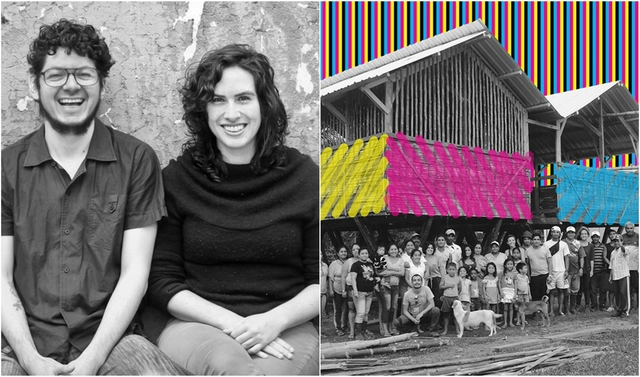
The 2018 International Housing Finance Summit, organized by INFONAVIT, brought together experts from various disciplines to discuss the future of cities and the lessons learned to date. Held on May 2 and 3 at the Camino Real Polanco, the event hosted prominent figures who examined urban transformation processes to evaluate models that could guide us toward an integrated urban plan.
The event featured the participation of Al Borde, a firm that has materialized its ideas across various Latin American countries, earning numerous awards and accolades. In 2016, they served on the nominating committee for the Mies Crown Hall Americas Prize (MCHAP) and were part of the official selection at the Venice Biennale, which was themed 'Reporting from the Front.' Currently, they are among the winners of the "Young Architects in Latin America" competition, a collateral event of the 16th International Architecture Exhibition at the Venice Biennale.
This national competition, managed by Infonavit, invites undergraduate students of urban planning, architecture, or related fields to develop design strategies and solutions for improved habitability and appropriate population density in housing for workers in Mexico, within the context of the COVID-19 pandemic.
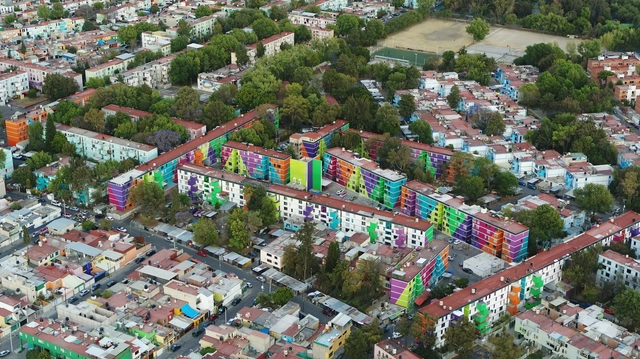
Forty-seven years after construction began on the El Rosario housing complex—the largest housing development in Mexico at 350 hectares—the Azcapotzalco borough of Mexico City, in coordination with the city's Social Prosecutor's Office and the ICA Foundation, inaugurated the photographic exhibition “The City within the City: El Rosario” on March 25 at Plaza El Parián. The exhibition aims to show residents and visitors the evolution this complex has undergone over time.

For the sixth time, INFONAVIT, through CIDS, has launched the call for entries for the Sixth Student Competition 2018, as part of its effort to promote and encourage creative practices toward new forms of construction, as well as to achieve better intra-urban social housing based on an efficient, compact, sustainable, and regional model.
The objective of this competition is to develop projects capable of adapting to the specific conditions of the territory and its inhabitants. Beyond defining a housing prototype, the goal was to identify processes and understand replicable procedures. This requires engaging with the community, listening to their stories, and understanding their dynamics and customs, as well as conducting extensive historical research to discover how ways of living have provided valuable lessons for housing design in each region.
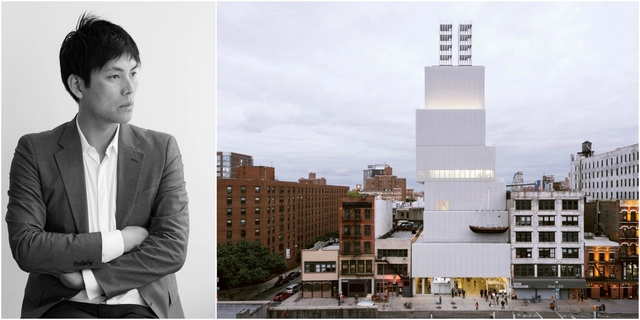
The 2018 International Housing Finance Summit, organized by INFONAVIT, brought together experts from various disciplines to discuss the future of cities and the lessons learned to date. Held on May 2 and 3 at the Camino Real in Polanco, the event hosted prominent figures who discussed urban transformation processes to evaluate urban models that could guide us toward a comprehensive master plan.
The event featured Shohei Shigematsu, a partner at OMA, a firm whose global projects have established it as one of the world's leading architecture practices. OMA operates within the traditional boundaries of architecture and urbanism and works in parallel with AMO, a research and design studio that applies architectural thinking to other domains. The firm is led by nine partners—Rem Koolhaas, Ellen van Loon, Reinier de Graaf, Shohei Shigematsu, Iyad Alsaka, David Gianotten, Chris van Duijn, Ippolito Pestellini Laparelli, and Jason Long—and has offices in Rotterdam, New York, Beijing, Hong Kong, Doha, Dubai, and Perth.
_19.16.16.jpg?1514942231&format=webp&width=640&height=580)
In Mexico, INFONAVIT's Urban Redensification project aims to identify strategies to curb urban sprawl across various Mexican cities. This initiative seeks to reconfigure the urban fabric by repurposing underutilized land and abandoned housing, aiming to create compact, efficient cities that offer a better quality of life for their residents.


