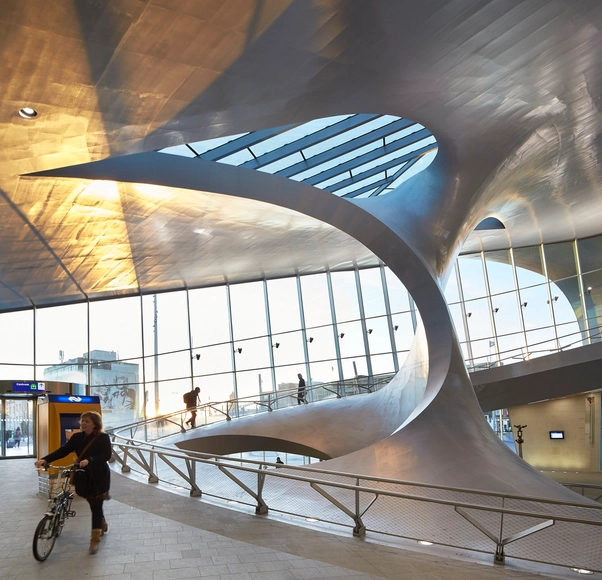
Hufton+Crow has shared with us their latest set of images taken within the new Transfer Terminal at Arnhem Central Station. Designed by UNStudio, the terminal features a "twisting structural roof geometry" that abandons traditional construction methods to free its lofty 60-meter-tall interior hall from the clutter of columns. As the architects describe, "the ceilings, walls and floors all seamlessly transition into one another," forming a 21st-century transfer hub.
For its fall season of architecture events, the Royal Academy’s working theme is “Architecture and Freedom: a changing connection,” in a program conceived and organized by Architecture Programme Curator, Owen Hopkins. One of these events was a recent lecture by Patrik Schumacher, Director of Zaha Hadid Architects, and ardent promoter of Parametricism. In his lecture, what starts out with a brief exercise in damage control over the barrage of criticism recently endured by the firm, emerges as an impassioned discussion of architectural politics, design philosophies, and social imperatives.
The Royal Institute of British Architects (RIBA) have revealed that Dame Zaha Hadid will receive the 2016 Royal Gold Medal — the first sole woman to be awarded the UK's highest honour for architects in her own right. Previous female winners (Sheila O’Donnell in 2015, Patty Hopkins in 1994, and Ray Eames in 1979) were each recognised alongside their husbands and practice partners.
Given in recognition of a lifetime’s work, the RIBA Royal Gold Medal is approved personally by Her Majesty The Queen and is awarded to those who have had a significant influence "either directly or indirectly on the advancement of architecture." Other notable Royal Gold Medallists include Frank Gehry (2000), Lord Norman Foster, Baron of Thames Bank (1983), Ludwig Mies van der Rohe (1959), Le Corbusier (1953), and Frank Lloyd Wright (1941). The medallists' names are engraved into the marble wall at the RIBA's headquarters in London.
Building projects are inherently complex: as projects progress, architects are joined by contractors, engineers, and myriad consultants. Architects, according to a recent report by RIBA, are considered the "spiritual leaders" of a building project. Cemented in this perception by a monopoly on design, architects continue to sit precariously atop project hierarchies despite a shifting landscape in building production. This begs the question: how can architects leverage this spiritual responsibility to translate into the best results for clients?
In their latest report Client & Architect: Developing the Essential Relationship, RIBA delves into the nuanced problem of connecting architecture to its owners, emphasizing the importance of a strong, functional and mutually educational relationship. Currently, architects have a tremendous opportunity to learn, improve and capitalize on understanding of clients, regardless of firm size, portfolio and established skills.
Read on to discover RIBA's findings from two years of client analysis
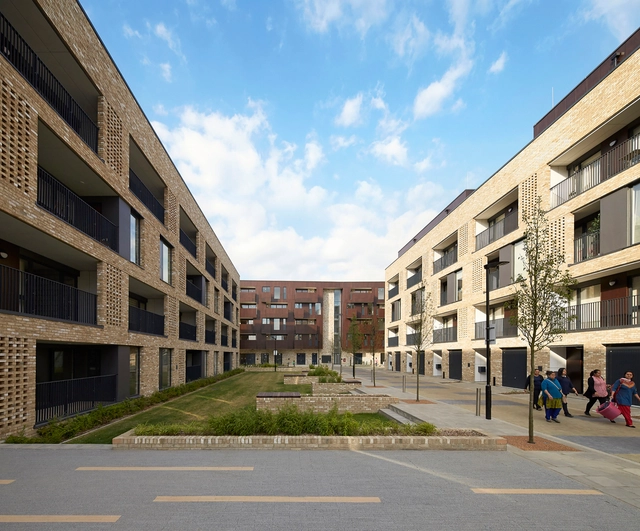
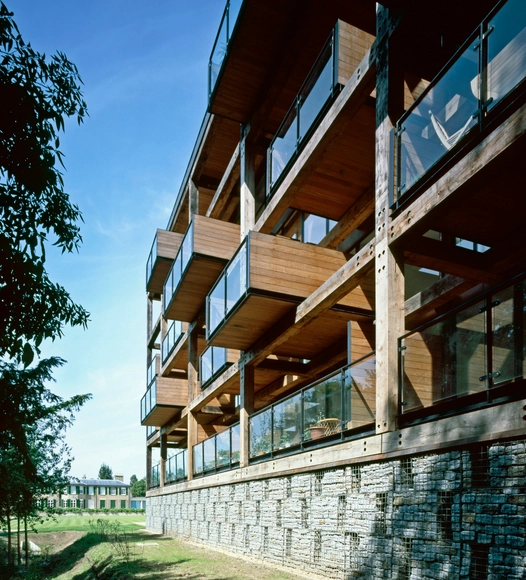
Founded in 1978, Feilden Clegg Bradley Studios has spent over thirty years refining its approach to sustainability, and is now regarded as one of the UK's leading practices in low-energy design. Yet their work still resonates on many other levels, bringing them multiple awards including the 2008 RIBA Stirling Prize for the Accordia Housing Project which they completed alongside Alison Brooks Architects and Maccreanor Lavington. In this interview from Indian Architect & Builder's May 2015 issue, Peter Clegg talks about the principles behind their work, explaining the concept of holistic sustainability which makes their designs so successful.
Indian Architect & Builder:The Yorkshire Sculpture Park, The Southbank Centre and many other projects desire to involve the social aspects for the larger good of the community. How would you describe the incorporation of these into the design process?
Peter Clegg: Architecture is an art form but also social science and we have a duty not only to work with our current client base and generate ideas collaboratively, but also think ahead and envisage the needs of future generations who are our ultimate clients. Our most creative work comes from working closely with creative clients who are more prevalent in the creative and cultural industries.
With 145 countries participating in the 2015 Expo, alongside input from international organizations, corporate partners and an extensive program organized by the Expo itself, there's a lot going on in Milan right now. So much so, in fact, that it can be a little overwhelming to get a handle on all the sights that are worth your attention.
To help you out, we've put together a guided tour of the key pavilions that are turning heads, including the defining vistas of the expo grounds, the displays that are worth your time and the oddities that might entertain. From the Expo's defining icon, the 30-meter-tall Tree of Life, to the exhibition on architecture's favorite consumable (that's coffee), and all the national pavilions in between, the things you need to see are here. Whether you're planning to visit the Expo and want a quick and dirty way to ensure you've covered the highlights, or whether you're simply hoping to live vicariously through the internet, this tour is for you.
Last week Patrik Schumacher, director at Zaha Hadid Architects and the practice's frontman in the field of architectural theory, took once again to Facebook to disseminate his ideas - this time arguing that "the denunciation of architectural icons and stars is superficial and ignorant." In the post, Schumacher lamented the default position of the architectural media which he believes sees success and reputation as "a red cloth and occasion to knock down icons," going on to outline his beliefs on why stars and icons are useful and even inevitable mechanisms of architectural culture.
Schumacher has made headlines via Facebook before, with a post last year in which he argued for an end to the "moralizing political correctness" that has led to the popularity of socially-conscious design - a post which attracted almost universaloutrage from architects, critics and social media users of all stripes. However this latest post had a very different feel; many people, myself included, seemed to find themselves at least partially agreeing with Schumacher. After all, at the most basic level he was asking for designs to each be judged on their individual merits - what's not to like?
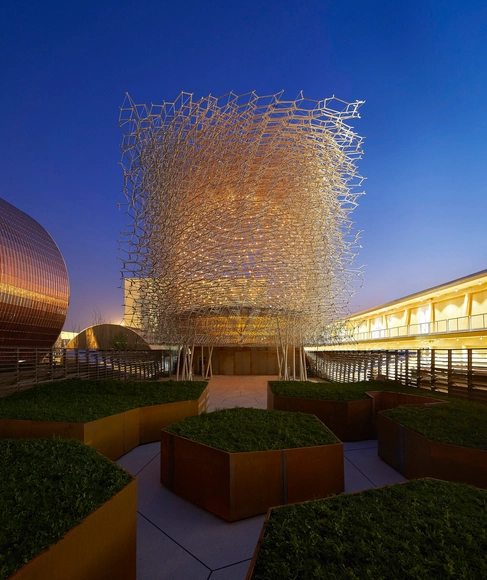
Wolfgang Buttress' “pulsating” beehive is one of the first pavilions to complete for the 2015 Milan Expo. Serving as the UK's contribution, “BE,” the “virtual hive” is designed to highlight the plight of the honeybee and offer an “immersive sensory experience” that leaves visitors with a “lasting flavor of the British landscape.”
Comprised of a 14-meter lattice structure, made from 169,300 pieces of aluminum and steel, the domed structure sits at the end of a meandering wildflower meadow that leads visitors to the "hive." Once inside, a sensory composition of audio and visual effects will mimic the activity of an existing beehive in Nottingham.
Schumacher says that critics "should perhaps slow down a bit in their (pre-)judgement and reflect on their role as mediators between the discourse of architecture and the interested public." In the 1,400 word post, he goes on to elaborate that so-called icons and the star system are inevitable results of this mediation, adding that "explanation rather than dismissal and substitution should be seen as the critics’ task."
Read on after the break for more highlights from Schumacher's argument
A casual observer might be forgiven for wondering how Thomas Heatherwick has developed such a reputation among architects. A scan of the works of Heatherwick Studio reveals relatively few completed buildings, and many of those that do make the list are small projects: kiosks, retail interiors, cafés. Indeed, to the average Londoner he is probably better known as the designer of the new homage to the iconic red Routemaster bus and as the creator of the wildly popular cauldron for the London 2012 Olympics - both unveiled in a year in which Heatherwick all but officially became the state-approved designer of 21st century Britain.
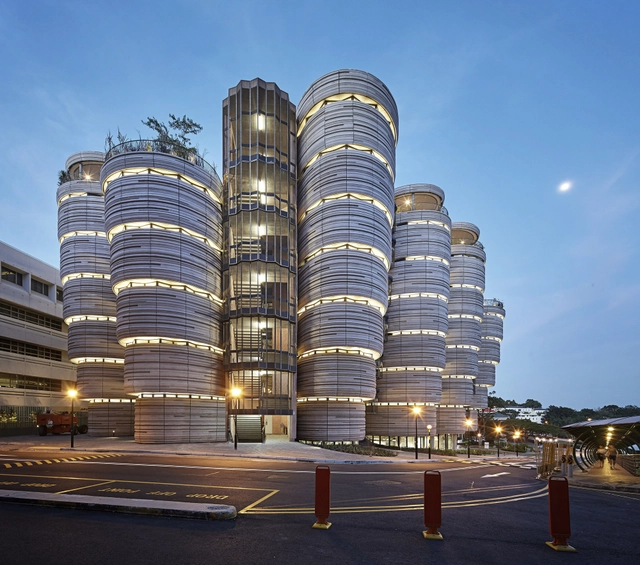
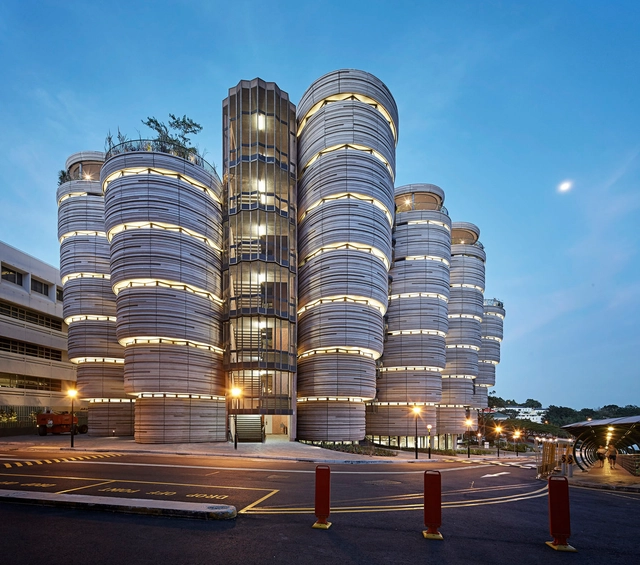
A look at the website of Heatherwick Studio sheds some light on this conundrum. With projects separated into “small,” “medium” and “large,” it is clear that a progression in scale is mirrored by a progression in time, with many of the smallest projects completed in the Studio’s early years, and most of those in the “large” category either recently completed or (more frequently) still on the drawing board. Their most recently completed project is also one of their largest, a “Learning Hub” for Nanyang Technical University in Singapore. How does a design studio that made its name in small projects adapt to such scale? ArchDaily spoke to Thomas Heatherwick about the Learning Hub and the increasing size of his projects to find out.
In light of the recent opening of Mons International Congress Xperience (MICX), Daniel Libeskind hosted a private tour through the conference center, explaining his thinking behind the building’s expressive form. The experience was captured on this short film by Spirit of Space with the intention to open the discussion up to a larger audience.
The building, an important new landmark in the Belgium city of Mons, is described by Libeskind as “an expression of contrasting geometric forms.” Aside form providing function and “lively” spaces for auditoria and conference use, the building aims to be “a hinge between the old city and the new.”













Hufton_Crow-12.jpg?1430883252&format=webp&width=640&height=580)
Hufton_Crow-18.jpg?1430884225&format=webp&width=230&height=230&crop=true)
Hufton_Crow-04.jpg?1430883376&format=webp&width=230&height=230&crop=true)
Hufton_Crow-08.jpg?1430883574&format=webp&width=230&height=230&crop=true)
Hufton_Crow-06.jpg?1430883467&format=webp&width=230&height=230&crop=true)
Hufton_Crow-12.jpg?1430883252)
_Hufton___Crow.jpg?1427821798&format=webp&width=640&height=580)
_Hufton___Crow.jpg?1427820634&format=webp&width=230&height=230&crop=true)
_Hufton___Crow.jpg?1427821656&format=webp&width=230&height=230&crop=true)
_Hufton___Crow.jpg?1427819483&format=webp&width=230&height=230&crop=true)
_Hufton___Crow.jpg?1427821291&format=webp&width=230&height=230&crop=true)
_Hufton___Crow.jpg?1427821798)