Cristobal Palma / Estudio Palma

BROWSE ALL FROM THIS PHOTOGRAPHER HERE

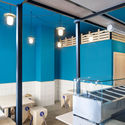
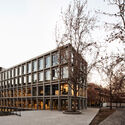
Culinary Experiences: 10 Restaurants and Cafes in Lima

Subscriber Access | 

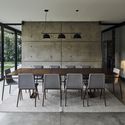
The world of gastronomy is about far more than just food; space plays a vital role in the overall dining experience. To achieve this, architecture transcends mere functionality to cultivate distinct atmospheres through the meticulous curation of light, acoustics, color, texture, and form, ensuring both intimacy and comfort for diners.

The city of Lima—capital of Peru, a preeminent culinary destination—features a diverse array of restaurants and cafés that reflect the country's rich heritage. Below, we present a selection of 10 restaurants and cafés offering unique dining experiences across the city.
Culinary Experiences: 10 Restaurants and Cafes in Lima - More Images+ 16

Interior Design: The Use of Rugs and Tapestries in Latin American Domestic Living

Subscriber Access | 

Originating as protection against low temperatures around 3,500 years ago, carpets and rugs have, over time, evolved into a true art form, reaching a high level of specialization by the 16th century. Rugs, carpets, and tapestries of various shapes, colors, textures, and patterns are integrated into different areas of the home to meet users' needs and enhance spatial comfort, sometimes extending far beyond their original purpose.
Jean Mermoz House: Reconstruction of the timber formwork system as a tribute to lost heritage in Chile

Subscriber Access | 

Following the 60th anniversary of the iconic Casa en Jean Mermoz—a precursor to the ideas of Ciudad Abierta in Ritoque—Igor Fracalossi, PhD, proposed a reconstruction of its wooden formwork system. He knows the building well; since 2012, he has dedicated his research to studying "the most complex residential project in Chile to date.”

While walking through the exhibition of the reconstruction in the gardens and galleries of the Centro Cultural Las Condes in 2022, he explains in detail the innovative and unique construction aspects of this demolished work. The house was originally designed by Fabio Cruz Prieto, architect and founding master of the School of Architecture and Design at the Pontificia Universidad Católica de Valparaíso.

Chile's viticultural landscape and architecture in search of World Heritage status

Subscriber Access | 

Chilean valleys and their development around winemaking are a cultural heritage that currently lacks recognition, according to Pablo Lacoste, the historian leading the initiative to highlight the heritage dimension of Chile's vineyards and designate them as a UNESCO World Heritage Site.

Practical guide and essential considerations for specifying stamped concrete

Subscriber Access | 

Concrete, in its various facets, exhibits an interesting duality thanks to its aesthetic and technical qualities, which have been explored by architects and designers in different typologies and contexts. On the one hand, reinforced concrete displays the strength and durability required for large-scale construction, efficiently withstanding adverse weather conditions. On the other hand, the malleability of stamped concrete allows it to elegantly adapt to complex shapes and imprint patterns on the surface, utilizing texture and pattern to cultivate a distinct atmosphere within the built environment.

Stamped concrete has gained prominence due to its durability and versatility, offering options and designs that adapt to different architectural styles. However, while we are familiar with its use and applications, specifying it requires a meticulous approach to ensure optimal results. Below is a practical guide covering the essential considerations from Melón Hormigones for specifying this innovative material, from pattern selection to proper care and maintenance.

The complete list of projects and initiatives selected for the XXII Chile Biennial: Vulnerable Habitats

From January 14 to 22, 2023, the XXII Chile Architecture and Urbanism Biennial will finally take place in the area surrounding Palacio de La Moneda, Santiago. The theme of this edition, "Vulnerable Habitats," seeks to address the country's urgent challenges surrounding the housing deficit and access to housing, along with the vulnerability of cities and territories reflected in their public spaces, heritage, and environmental issues.

The Architects Association of Chile along with the Ministry of Cultures, Arts, and Heritage, organizers of this event—which held its previous edition in 2019—have recently announced the results of their open calls: 50 works and projects will be part of the National Architecture Exhibition, and 36 initiatives will join the Meetings and Debates Program. See the complete list below.

The XXII Chilean Architecture Biennial opens with four installations around the Palacio de La Moneda

On Saturday, January 14, the latest edition of the Chilean Architecture and Urbanism Biennial opened in the area surrounding La Moneda Palace in Santiago. The theme explored through the exhibitions, lectures, and panel discussions is 'Vulnerable Habitats,' addressing the country's pressing issues surrounding the housing deficit and access to housing, alongside the vulnerability of public spaces, heritage, and the environment in Chilean cities and territories.

The winning projects of the 2019 Building of the Year!

Subscriber Access | 

Last week, we announced the 15 finalists for the 2019 Building of the Year Award, which since 2008 has celebrated the best built architecture in Latin America and Spain, inviting our readers to select their favorite completed projects. Today, the time has come to announce the winners of ODA19.

We are pleased to present three architectural works from Peru, Chile, and Ecuador, where the winners not only showcase the architectural diversity of the region but also serve as examples of the public impact that architecture should deliver. Meet the three winners!

Universities, schools, and workshops transforming Peru's educational architecture

Subscriber Access | 

In this feature, we showcase Peru's progress in the design and construction of educational architecture.

Who has won the National Architecture and Urbanism Award of Colombia?

Subscriber Access | 

The National Architecture and Urbanism Award, presented by the Colombian Society of Architects (SCA), recognizes projects that outstandingly showcase the finest contributions to Colombian architecture.

Laminated Timber Architecture: 17 Notable Buildings in Chile

Subscriber Access | 

Responsibly sourced, wood is a renewable, low-emission resource that, in addition to storing carbon within its composition, features low thermal conductivity and high acoustic absorption, creating comfortable, well-insulated spaces year-round. A well-designed timber building will not only enhance these properties but will also be aesthetically pleasing for its occupants and highly energy-efficient.

From the object to the city, in search of possible poetics: interview with [entre escalas]

Subscriber Access | 

Founded by architect Marina Canhadas in 2018, the practice [entre escalas] emerged from the intersection of professional practice, academic research, and international experience. With a career shaped by competitions, collaborations, and tenures at firms in Brazil and Mexico, Marina has consolidated an approach that values context and building history, particularly in projects dealing with pre-existing structures—one of the firm's primary areas of focus.

[entre escalas]' work stands out for its sensitivity to time and building memory. Renovations of historic townhouses, such as Casa Saracura and Casa Apiacás, reveal a kind of architectural archaeology that seeks to recover original techniques, materials, and even natural flows, reinterpreting these elements to foster new possibilities of use and connection with the surroundings. The act of removing layers—both physical and symbolic—is seen as a way to reveal hidden histories, connecting past and future.

From the object to the city, in search of possible poetics: interview with [entre escalas] - More Images+ 9

Projects in dialogue with Peru's rocky terrain

Subscriber Access | 

With their cliffs and bluffs, the rocky coasts of Peru form a unique landscape of surfaces shaped and reshaped by the erosion of the sea and wind. On these heterogeneous, steeply sloping terrains, designing architecture integrated with the context is no easy task. From volumes embedded into hillsides to houses that incorporate mineral formations into their interior spaces, projects addressing this challenge prompt us to reflect on how to establish a relationship with the natural environment, blurring or tensioning the boundaries between architecture and landscape.

Guillermo Acuña: "We have neglected our humanistic side, the center and heart of our craft"

Subscriber Access | 
Guillermo Acuña: "We have neglected our humanistic side, the center and heart of our craft" - Imagen 2 de 4
Isla Lebe. Image © Cristobal Palma / Estudio Palma

When I look at the architecture of Guillermo Acuña, I am quickly reminded of those well-known Chilean wooden houses scattered across the territory—those that mark distant points on the hills and gently blur the edges of the coastline, those that rise lightly and blend with nature, teaching us about material honesty and a connection to the landscape. Those that remind us of where we come from and of what humans create.

This is why we reached out to the office of GAAA for a brief interview, to hear the story behind their inspirations, purposes, explorations, and future vision.

Loreto Lyon and Cristóbal Molina on the XXII Chilean Architecture Biennial: Vulnerable Habitats

Subscriber Access | 

The XXII Chilean Biennial of Architecture and Urbanism is co-directed by Cristóbal Molina, coordinator of the Architecture Area of the Ministry of Cultures, Arts, and Heritage, and Loreto Lyon, director of activities of the Colegio de Arquitectos de Chile. The outcome of this joint alliance between both institutions has successfully driven this cultural event, which took over the public space around the Palacio de La Moneda to foster debate and community around the theme: "Vulnerable Habitats."

During the event, which closes on the evening of Sunday, January 22, we spoke with Cristóbal Molina and Loreto Lyon to learn more about how the pavilions and installations engage with the central theme. Below is what you cannot miss at the XXII Chilean Biennial of Architecture and Urbanism.

Inflatable Architecture: A Look at the Temporary Structure by Smiljan Radic and Nicolás Schmidt

Subscriber Access | 

Architects Smiljan Radic and Nicolás Schmidt designed an inflatable structure for the XXII Chilean Biennial of Architecture and Urbanism. Located in the urban setting of the Palacio de La Moneda in Santiago, it served as a temporary venue for meetings, debates, and lectures that brought public discussions to the forefront regarding the event's central theme: "Vulnerable Habitats."

Reinterpreting the past: The iconic pavilion in the Plaza de la Constitución designed by Montserrat Palmer in 1972

Subscriber Access | 

The Exhibition Pavilion for the 2023 Chilean Biennial of Architecture and Urbanism was located in the Plaza de la Constitución, just steps from the Palacio de La Moneda. The structure references and reinterprets a pavilion designed on this very site in 1972 by architect Montserrat Palmer for the Ministry of Public Works (MOP) to mark the opening of UNCTAD III—the headquarters of the Third United Nations Conference on Trade and Development in the Third World.

The 10 most popular projects in Peru in 2018

Subscriber Access | 

As the year comes to a close, we look back... what captivated us most? After presenting the best architecture of the year, we now focus on identifying representative projects. Among the wide range of Peruvian works published in 2018, those that had the greatest impact on our platform span various scales and typologies. Below, you will find everything from a private house to a public library, by both established and emerging architects—reflecting architecture for everyone.

May the work continue.