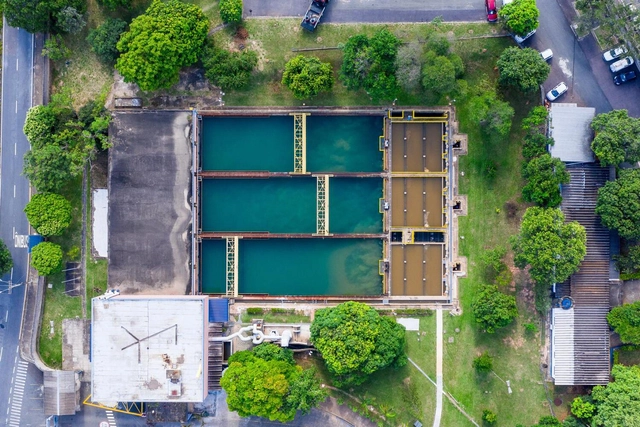
Sanasa Water Treatment Plant in Campinas, São Paulo. Photo: Renan Pissolatti/WRI Brasil
The Metropolitan Region of Campinas is one of Brazil's largest urban centers. With more than three million inhabitants and an annual GDP exceeding R$ 150 billion, it is one of the country's most dynamic economic regions.
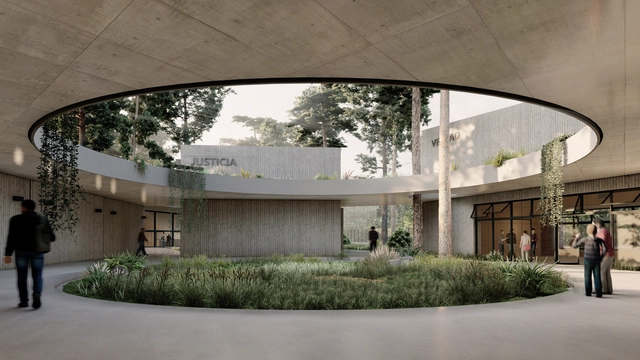
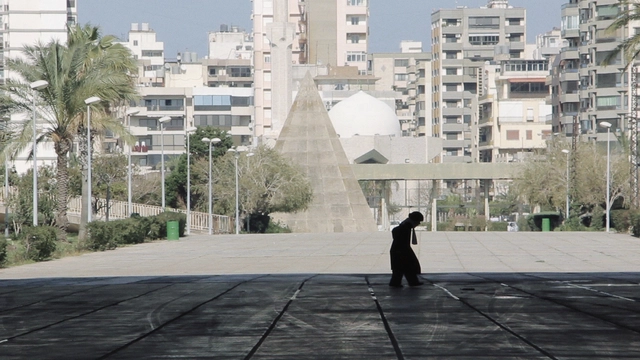
With the aim of bringing visibility to the state terror committed during the Argentine civic-military dictatorship that began in 1976, the Secretariat of Human Rights of the National Ministry of Justice and Human Rights commissioned the Institute of Architecture and Urbanism of the National University of San Martín (IA-UNSAM) to develop an architectural proposal for a new memory space on the grounds of Campo de Mayo, in the province of Buenos Aires.
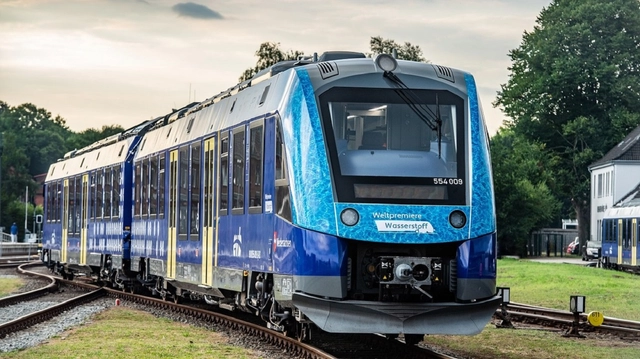
The world’s first hydrogen-powered passenger train service has begun operations in Germany. The 100% hydrogen-fueled rail line debuted in the small town of Bremervörde, near Hamburg. A total of 14 trains will replace diesel locomotives across nearly 100 kilometers of track in the northern part of the country. In addition to Bremervörde, the regional line serves the cities of Cuxhaven, Bremerhaven, and Buxtehude.
Book: The Practice of Urban Sketching, Olhares Publishing
"More than just a drawing book, you are holding a definitive practical guide featuring 25 exercises and simple tricks that will help you dive headfirst into the world of urban sketching. How do you create sketches without being intimidated by a sketchbook you have just bought? How do you produce quick drawings? How do you achieve spatial depth? What should you consider when coloring a sketch? How do you find the best spot to draw?
Book: Politics and Architecture, Olahres Publishing
Nearly a decade after the first edition of Arquitetura e política and following their tenure in institutional politics, the authors revisit the key postulates of contemporary architecture—its responsibility toward society—in this second volume, adapting them to new forms of political engagement that center feminism as a primary component. To this end, they provide a historical and thematic overview of the social role of architects and urban planners, tracing its evolution into the current era of globalization. Drawing on issues such as community life, participation, gender equality, and sustainability, the book identifies and analyzes the contemporary vulnerabilities of architecture.
Book: Architecture and Criticism, Olhares Publishing
Focusing on the relationship between architecture and criticism, this introduction to architectural theory provides the necessary context to understand the mechanisms, limitations, and objectives of the field. It spans from the pioneers of 20th-century architectural criticism to key figures in modern historiography, such as Sigfried Giedion, and the writings of leading architects like Adolf Loos and Le Corbusier. The text explores various interpretations derived from existentialism, phenomenology, iconography, and structuralism, leading up to the current post-structuralist landscape—highlighting figures such as Peter Eisenman, Rem Koolhaas, and Kenneth Frampton. This journey through the 20th century offers a comprehensive understanding of the critical frameworks employed from the field's origins to the present day.
"Architecture and urbanism have the opportunity to offer solutions that involve looking beyond the discipline itself, so that the margins and boundaries of necessity lead us to seek actions outside of standard practice. Positioning ourselves on the margins allows us to see new alternatives, expand the practice, and have a perspective that is not central, but peripheral," say Anna Vergés and Guillem Augé (UNDO), curators of the XII Ibero-American Biennial of Architecture and Urbanism, whose central theme is "Habitar al margen" (Living on the Margins).
OHM Edición 2021. Image Cortesía de Open House Madrid
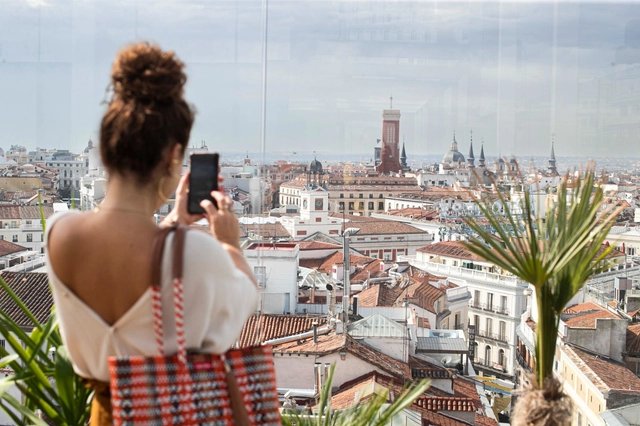
The eighth edition of the Open House Madrid festival returns with a program that includes 93 buildings, 33 studios, 8 routes, 7 activities, and 10 itineraries. Titled "More Open Than Ever," it aims to reflect the welcoming character of the city and, at the same time, its openness to the world.
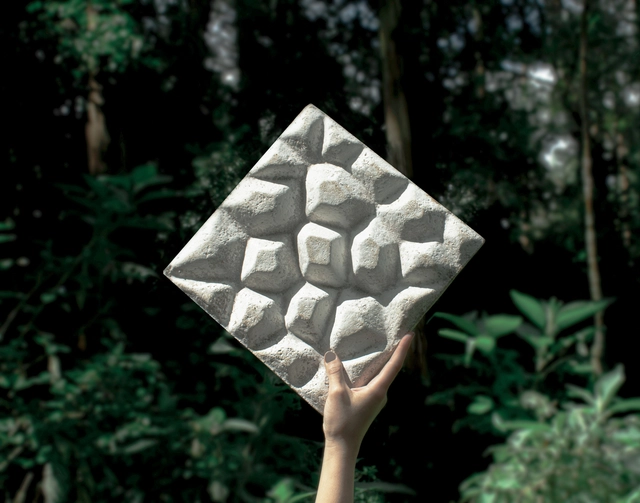
From fungi to architecture: this is how the team at Mushbio introduces their decorative cladding panel inspired by the Andes. Manufactured using parametric design, the panel is made from mushroom mycelium. Beyond contributing to cultural identity by mirroring the topography of the Ecuadorian and Latin American landscape, it offers thermo-acoustic properties, lightness, and a unique aesthetic, bringing nature into interior spaces.
Videos
Bad Bunny - "El Apagón" . Image via YouTube
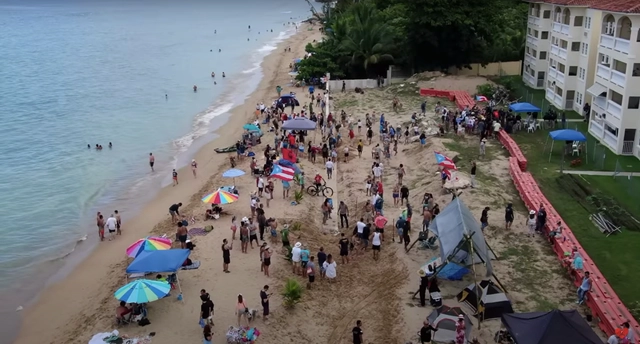
As part of his recent releases over the past few months, the globally renowned reggaeton artist Bad Bunny debuted his new music video for the song "El Apagón," a track from his latest album "Un verano sin ti." Although the song was already streaming across various platforms, few anticipated that the video's release would serve as a powerful political stance on the current situation in Puerto Rico.
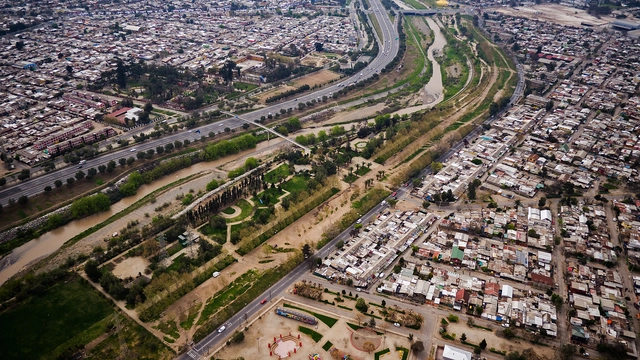
On Thursday, September 14, the first stage of the Mapocho Río Park was inaugurated in Santiago. Designed by the Ministry of Housing and Urbanism, the project is one of the most significant urban works in the Metropolitan Region, spanning a total of 52 hectares and 9 kilometers in length.
Concrete Forms of Resistance. Nick Jordan. Image Cortesia de Arquiteturas Film Festival
Slow Down! is the theme driving the 9th edition of the Arquiteturas Film Festival to the city of Porto, marking a change in both location and organization. Now organized by INSTITUTO under the direction of architect Paulo Moreira, the 2022 edition of the Arquiteturas Film Festival establishes itself as an international platform to discuss and disseminate architectural production through films, exhibitions, and debates.
https://www.archdaily.com/1132141/arquiteturas-film-festival-announces-the-program-for-its-9th-edition-which-will-take-place-in-portoArchDaily Team
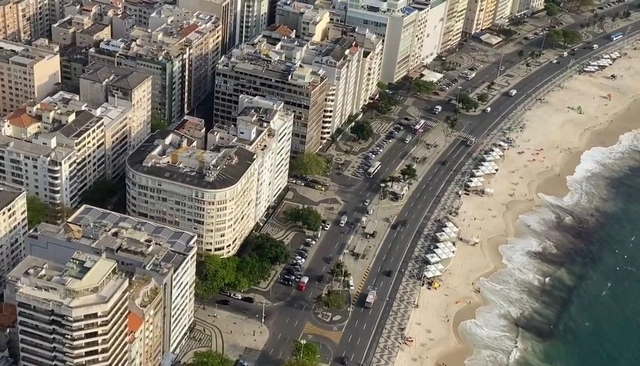
The South Zone waterfront - Publicity. Source: Rio de Janeiro City Hall
Over its 457-year history, the built landscape of Rio de Janeiro has taken shape in diverse ways. During its first few centuries, the city developed around Rua Direita (now Rua Primeiro de Março), consisting primarily of two-story row houses, typically featuring a single door and two windows on the ground floor. This layout stemmed from the measurement standard of the era, the *braça* (fathom), with plots usually measuring three *braças* wide (each *braça* equivalent to 2.2 meters). Rio's land ownership profile has always driven its urban form, and the Portuguese plot—with its narrow frontage and deep lot—defined an era and left an indelible mark on the city's development.
https://www.archdaily.com/1132169/the-urban-landscape-and-the-mathematics-of-the-cityPedro Duarte e Rogerio Goldfeld Cardeman
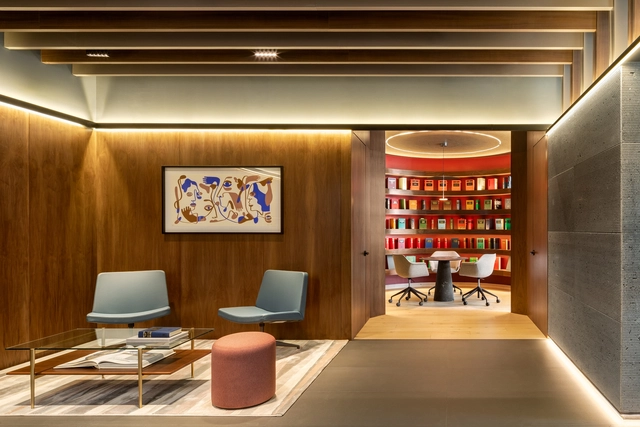
The Mexican firm Faci Leboreiro, led by Carlos Faci and Marina Leboreiro, has been recognized at the Grands Prix du Design in Quebec, Canada, for the interior design of their project Estudio Basalto, receiving the Gold Certification in the Office category. The fifteenth edition of the competition—which celebrates international excellence and exemplary practice among architects and designers—was held at the Théâtre Le Capitole before a jury of prominent professionals and academics.
While the construction industry has been advancing into new fields like nanotechnology and 3D printing for years, it is still one of the most technologically lagging sectors. Many innovations remain purely experimental, and despite constant efforts to reverse this trend, we face a troubling reality: construction is one of the world's most polluting and waste-generating industries.