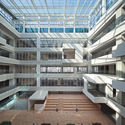
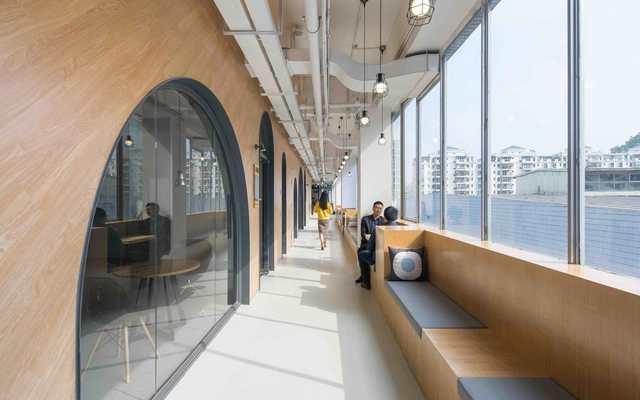
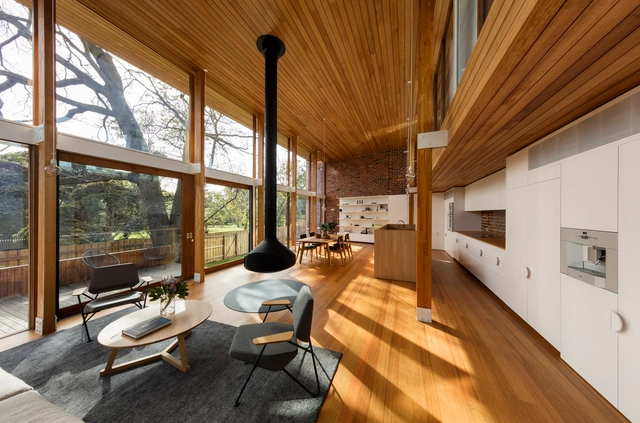
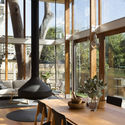
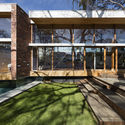
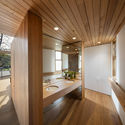
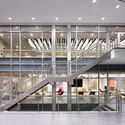
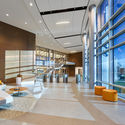
Saint-Gobain’s new corporate headquarters campus in Malvern, PA—the North American home to the world’s largest building materials company—is not a typical corporate campus. As the company approached its 350th anniversary, they set out to build a headquarters that would offer a dynamic showcase for its products.
The company assembled a team of designers from two firms—Bernardon and Jacobs—to transform a long-dormant site consisting of two office buildings into an integrated, world-class headquarters located in the suburbs of Philadelphia.
https://www.archdaily.com/875785/how-the-worlds-largest-building-materials-manufacturer-used-its-own-products-to-create-a-world-class-headquarters-for-its-employeesSponsored Post
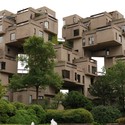
Theorist, architect, and educator Moshe Safdie (born July 14, 1938), made his first mark on architecture with his master's thesis, where the idea for Habitat 67 originated. Catapulted to attention, Safdie has used his ground-breaking first project to develop a reputation as a prolific creator of cultural buildings, translating his radicalism into a dramatic yet sensitive style that has become popular across the world. Increasingly working in Asia and the Middle East, Safdie puts an emphasis on integrating green and public spaces into his modernist designs.
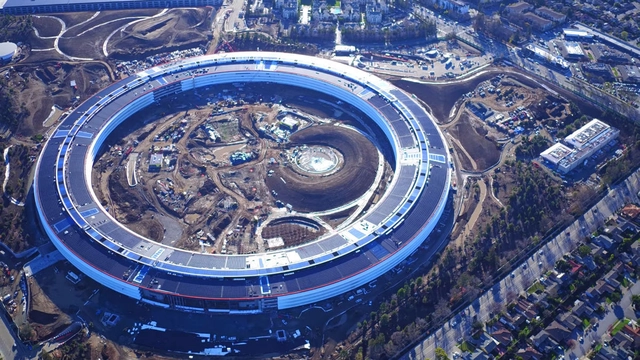
Apple is planting a forest in Cupertino, California. When the company’s new headquarters is completed later this year, 8,000 trees, transplanted from nurseries around the state of California, will surround the donut-shaped building by Foster + Partners. The trees are meant to beautify Apple’s 176 acres (dubbed Apple Park). But they will also absorb atmospheric carbon.
That’s a good thing. Carbon, in greenhouse gases, is a major cause of global warming. Almost everything humans do, including breathing, releases carbon into the atmosphere. Plants, on the other hand, absorb carbon, turning it into foliage, branches, and roots—a process known as sequestration.
Like architecture, food has a way of making us feel a sense of time and place. The act of eating together is ingrained in our human rituals surrounding spaces and how we inhabit them. The space that shelters us during our meal can be bustling or intimate, but nevertheless contributes our memories there, and the experience of eating at a good restaurant goes far beyond the food served in it. For it to be truly immersive, everything is thought of - from the shade of timber to the shape of your knife when you sit down to eat.
We’ve gathered 10 examples from our archive of beautiful restaurants worth a visit – check them out below:
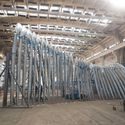
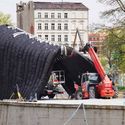
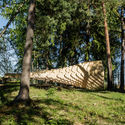
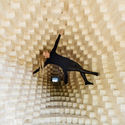
Polish architect, designer, and sculptor Oskar Zieta has unveiled his latest project: the arched NAWA pavilion on an island in Wroclaw, Poland. The pavilion forms part of the European Capital of Culture celebrations following the theme of “Metamorphoses of Culture” and was unveiled in June. The lightweight steel elements that make up the parametrically designed sculpture are made in a unique method called FiDU, a metal-inflating process created by Zieta during his PhD studies in ETH Zurich. Though Zieta has used FiDU successfully for various products (many exhibited in the Salone del Mobile in Milan), the NAWA Pavillion is the first project of this size to use the technology entirely, and is thus coined as “a manifesto of FiDU."
Videos
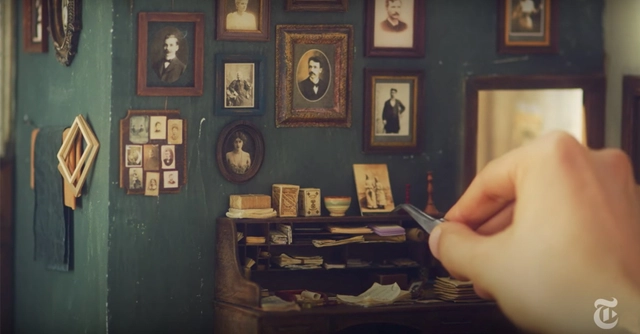
Ali Alamedy's miniature worlds. Image via The New York Times
Although trained as a Control and Computer Engineer,Ali Alamedy has since turned his hand to manufacturing scaled, miniature dioramas. After being forced to leave his home in Iraq, he and his family are now based in Turkey – and it is here that he has honed a skill in constructing these tiny, intricate worlds from a broad range of ordinary materials. All scaled at 1:12, these complex and often hyper-realistic models are inspired by the environments around him, complemented by his experiences and, of course, his imagination. In this study of Alamedy's work, ArchDaily asks: how do you do it?
This free-to-enter, two-stage ideas competition is seeking forward-thinking, imaginative proposals to integrate sustainable placemaking with development and new infrastructure. The focus for the competition is the arc encompassing four of the UK’s fastest-growing and most productive centers: Cambridge, Milton Keynes, Northampton, and Oxford.
Submissions should consider how to provide the homes the area needs: high-quality places that integrate the proposed infrastructure and enhance the identity of the corridor as a single knowledge-intensive cluster while working with its distinctive environmental and cultural character.
Not many people would consider augmented reality particularly useful; it makes for fun dog selfies and other filtered images. But our tunes will probably change with the release of AR Measure™, an app that turns your phone into an accurate ruler. Using augmented reality, the app can calculate distances in 3D spaces captured with your phone's camera.
Created by Laan Labs, the same company who brought us FaceSwap, the app is developed on top of Apple's ARKit framework. How does it work, you ask?



















.jpg?1499918688)
.jpg?1499918313 "© Joana Vilaça")
.jpg?1499918561 "© Joana Vilaça")
.jpg?1499918545 "© Joana Vilaça")
.jpg?1499918614 "© Joana Vilaça")
.jpg?1499918688)









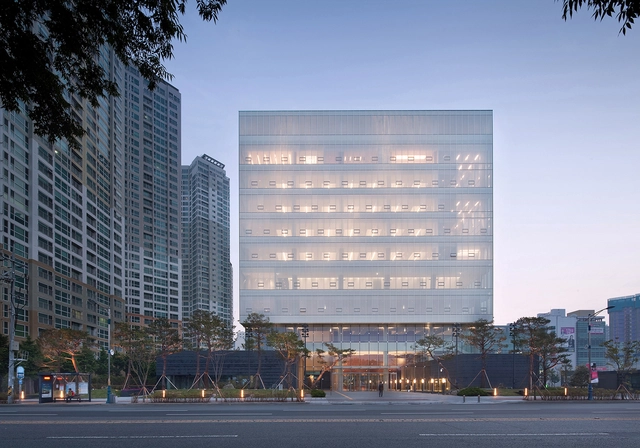

.jpg?1499740368 "© Yoon Junhwan")
.jpg?1499740860 "© Yoon Junhwan")