As the world of Architecture finds itself on the edge over the recent Metaverse and NFT hype, Zaha Hadid Architects is at the forefront of innovation showing us exactly how to utilize Web 3 and its socio-economic opportunities for architects, globally.
With the recent Metaverse hype, let's address the elephant in the room! As more and more people dance around the subject of weather or not it is harmful for sustainably-conscious architecture designers to utilize the Metaverse, I decided to interview Oliver Lowrie, a Director at Ackroyd Lowrie, an award-winning London-based architecture practice dedicated to building the cities of the future, who is already using this technology to enhance Ackroyd Lowrie’s low-energy designs.
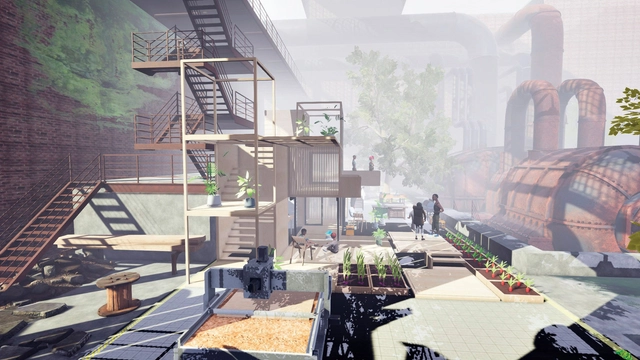
Zaha Hadid Architects - ZHA has unveiled a virtual "libertarian micro-nation" in the metaverse titled The Liberland Metaverse, where residents can buy vacant plots centered around a curated urban core, and access them as avatars. The community features hyper-realistic districts that encourage urban self-governance and zones where the absence of urban planning "allows for a spontaneous order via a free-wheeling discovery process".
A new place for design - State of Address (SOFA) - is a world-first design community on the blockchain, shifting how design and architecture is made, owned and collected.
All aspects of society today are becoming increasingly more digital. Our interconnectedness and speed at which we are able to search and transfer information have made us more accustomed to exploring new ways that technology can impact our lives. Over the last few years, the rise of bitcoin, blockchain, and now the metaverse, has caused architects and designers to reconsider the notion of physical and virtual space. But beyond that, there’s an “in-between” of spaces that will be designed to support the technological escapism that the metaverse and web3 offer. While these virtual worlds are on the frontier of the digitization of everything, architects will play a huge part in designing the real-world physical spaces that can support them.
Michael Beneville opened his studio in the Flatiron district of New York City a decade ago. The renovated two-floor office has 20-foot-high ceilings, custom furniture, and a wall of arched windows that look out onto 19th Street. Beneville and his team haven’t been inside the studio together on a regular basis for months—at least not physically. The employees of the small creative studio, known for its design work on immersive experiences like Las Vegas’s mega–entertainment complex AREA15, are scattered across the country due to the pandemic, but they regularly gather in a virtual replica of the studio for meetings, sitting around a digital table, their avatars carrying digital cups of coffee.
Videos
The Digital Twin . Image via Shutterstock/Videoflow
The emergence of the Digital Twin phenomenon has heralded a great change in terms of urban planning. It essentially presents the city as dynamic, in virtual form. Ensuring every element from the historic fabric, new construction, and public transit is accounted for in one three-dimensional model. Not only does it present key elements in terms of the landscape, but it also encompasses often overlooked conditions such as the presence of light throughout the day, shadows, and the presence of vegetation and trees. All of which contribute to a better preliminary process of site analysis.
Over the past year, NFTs have entered the realm of architecture, prompting conversations over the role of the profession in the future digital economy. From the design of digital real-estate to exhibitions and architecture events exploring its value for the practice and established architecture firms embracing the new medium, NFTs have been embraced by the profession as the promise of a new form of creative production. Discover a round-up of architecture's experiments with NFTs so far, together with a series of Archdaily articles shedding light on the topic.
Nike recently acquired RTFKT, a design studio that was founded in Jan 2020, and is known for its virtual “metaverse-ready sneakers and collectibles”. Metaverse land purchases are making headlines with multi-million dollar price tags. We’ve also seen mainstream adoption for NFT art this year and the sales are expected to surge to $17.7 billion by the end of 2021.
https://www.archdaily.com/974534/why-every-3d-designer-architect-can-benefit-from-the-creator-economy-in-the-metaverseChloe Sun
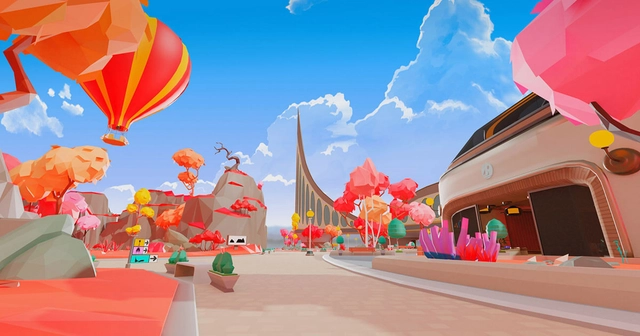
Fashion Street in Decentraland. Image Courtesy of Decentraland
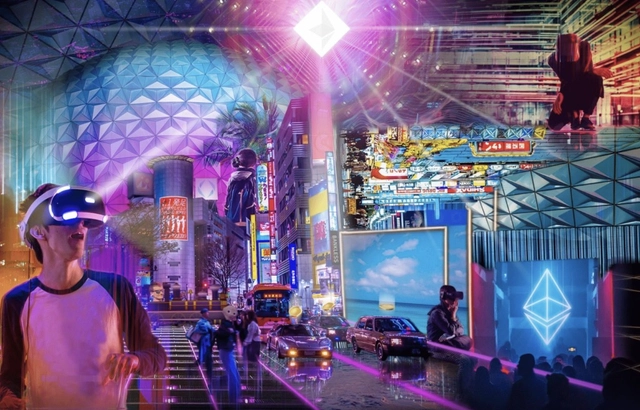
Imagine if a few years ago you woke up to the news that someone paid more than one million dollars for three plots of digital land next to famed rapper Snoop Dogg’s digital mansion. You’d probably ask yourself, “What is digital real estate, and why would someone pay for that?” Over the past year, there’s been a rush to buy properties, art, and land- but all of it exists in a virtual world called the metaverse. Although this world existed long before the pandemic, lockdowns propelled the online world to a new level, catching the attention of private buyers and brokerages alike who began to funnel tier money into this augmented reality. But how did this world emerge, what does the future hold, and can anyone join the virtual world?
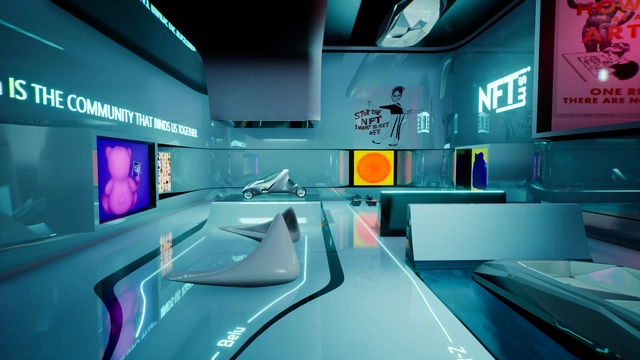
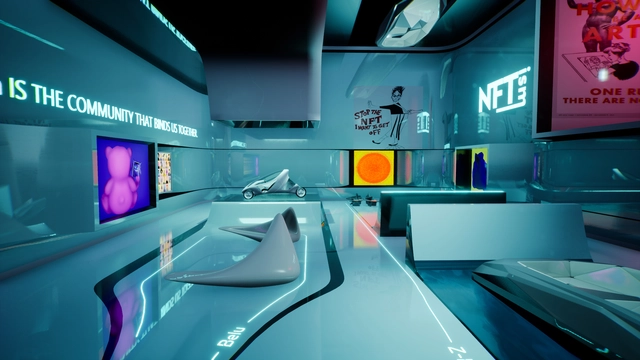
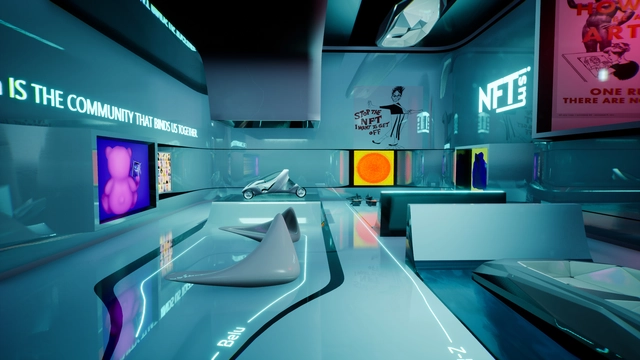
Zaha Hadid Architects have presented "NFTism", a virtual art gallery at Art Basel Miami that explores architecture and social interaction in the metaverse. The gallery features spatial designs created by ZHA that focus on user experience, social interaction, and "dramaturgical" compositions, combined with MMO (massively multiplayer online game) and interaction technological services.
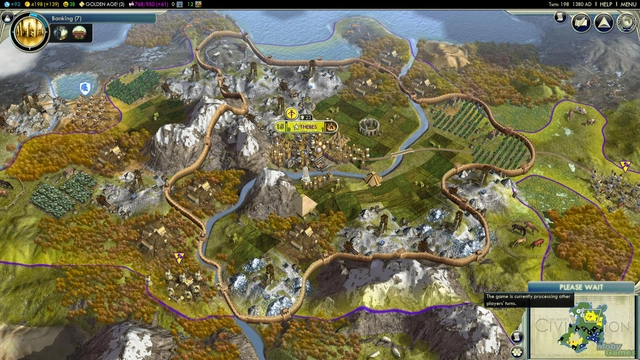
In this new collaboration, originally titled Cartografías del Metaverso (Cartography in the Metaverse), Spanish architects and founders of the blog MetaSpace, Enrique Parra and Manuel Saga, explore the potential of mapping in video games. Mapping can sometimes go beyond the mere role of orientation, as in the Diablo sequel, and become a very important element of the game, as in Civilization and World of Warcraft.
https://www.archdaily.com/782818/cartography-in-the-metaverse-the-power-of-mapping-in-video-gamesEnrique Parra y Manuel Saga
Courtesy of Balenciaga Launches a Video Game for Its Fall 2021 Collection
You might have heard that Mark Zuckerberg wants Facebook to become a Metaverse Company, and earlier this year, Epic Games, the company that develops the Unreal Engine announced that it completed a 1 billion round of funding to support the long-term vision for the metaverse. Metaverse is definitely the hottest buzzword in the tech scene. In this article, we will briefly discuss what is Metaverse, who will build it, and most importantly why it matters for architects, and how can designers play a significant role in this upcoming digital economy?
https://www.archdaily.com/968905/architecting-the-metaverseChloe Sun
.jpg?1649194242&format=webp&width=640&height=580)
.jpg?1647330953&format=webp&width=640&height=580)


.jpg?1632299699&format=webp&width=640&height=580)