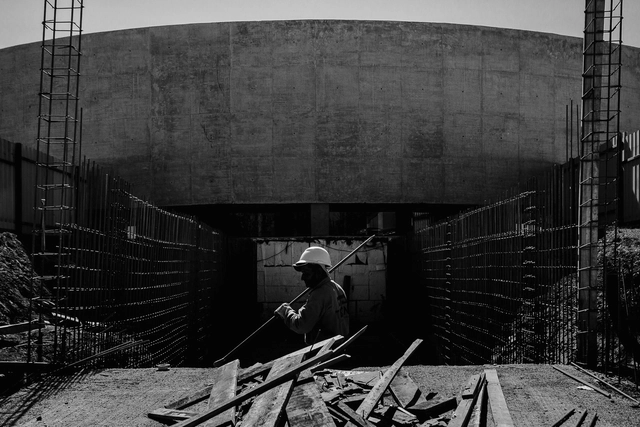
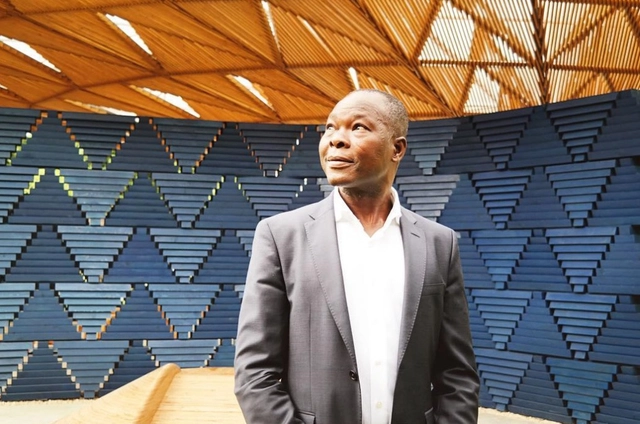
The city of São Paulo will test a pilot project that transforms streets and sidewalks normally reserved for parking spaces into outdoor areas for bars and restaurants. The initiative, named "Ocupa Rua" (Occupy the Street), is led by São Paulo City Hall, the architecture firm Metro Arquitetos Associados, and food critic Alexandra Forbes.
Polis is a (hypothetical) coastal metropolis with a growing population. However, most of its infrastructure was built 100 years ago, lacks maintenance, and is unable to meet the city's future needs.
Compounding these issues, Polis is experiencing damage from rising floods and coastal erosion. Its residents, especially those already impacted by environmental pollution, suffer from heat waves and poor air quality driven by industrial activity and traffic congestion.
https://www.archdaily.com/1124013/integrated-planning-of-nature-based-solutions-the-key-to-urban-resilienceLisa Beyer e James Anderson
The air humidity is famous, reaching mercilessly low levels for anyone who has never visited a desert. Trees with twisted trunks, thick bark, and fuzzy leaves rise from the soil, attempting to defy gravity, but they contort in such a way that it is as if the heat were pushing them back toward the ground. The red earth is omnipresent, adding a touch of drama to every corner, as if the searing temperature whipped the land until it bled. Here in the *cerrado*, there is none of the density of a damp, dark jungle—like some menacing forest out of a Jack London novel, or an immemorial witness in a trance, as seen in a Joseph Conrad novella.
Social Urbanism is an urban intervention strategy created in Medellín that was fundamental in transforming the social reality of the city's impoverished neighborhoods. Brazil already has a success story in Recife: the Compaz (Community Centers for Peace). Drawing on these experiences and with the support of professors from Eafit Urban, the postgraduate program launched by Insper, Itaú Cultural, and Arq.Futuro aims to train managers capable of addressing the complex reality of vulnerable urban centers in Brazil.
Postponed to July 2021, the 27th World Congress of Architects will host virtual debates as part of an open, collaborative platform to gather insights and proposals for addressing contemporary urban challenges.
The countdown to the event begins this week with the release of special content on the social media channels of UIA2021RIO. This includes video testimonials and interviews with speakers, collaborators, and partners discussing post-pandemic urban transformations and the role architects and urban planners should play in society.
The 4th {CURA} Award continues the practice of hosting ideas competitions on themes aligned with current discussions on architecture, the city, and society, focusing on contemporary Brazil. The institutionalization of authoritarian and denialist discourse has become a real threat. For this reason, the competition's theme—a Museum of Democracy—brings forward a necessary discussion on how we treat memory and our history.
Tuesday, July 21, at 8:00 PM: João Whitaker is the guest for the next Meia Hora com o BrCidades. Whitaker, a professor at FAUUSP and former Municipal Secretary of Housing for São Paulo, will discuss housing and the right to the city with Paolo Colosso and Tainá de Paula.
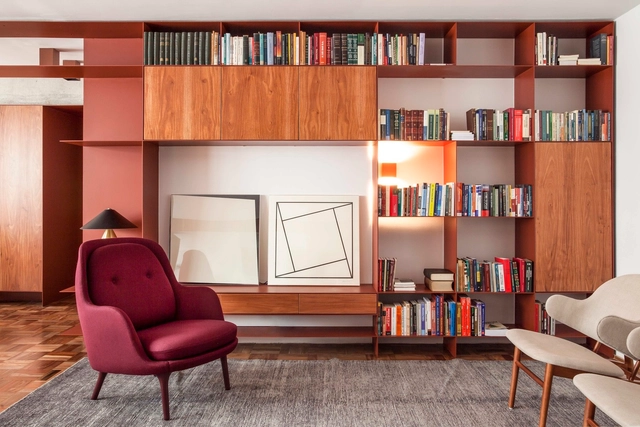
Sheet metal is characterized by an excellent strength-to-weight ratio, meaning it performs exceptionally well under heavy loads despite being lightweight and slender. Because of this, bookshelves made from sheet metal offer impressive storage capacity and have become increasingly popular in apartment design.
A faucet is a mechanical valve used to regulate (release or block) the flow of a fluid (usually water) from plumbing. While turning on a faucet seems almost mundane today, we rarely think about the vast knowledge and technology required to provide water at any given moment with a simple movement of the hand. Yet, between intake, treatment, and distribution to a kitchen or bathroom, water travels a complex path.
Escola da Cidade is broadcasting, for the first time, the inaugural lecture of the Seminar on Culture and Contemporary Reality, delivered in 2002 by Aziz Ab’saber, one of Brazil's most respected and renowned geographers and scientists.
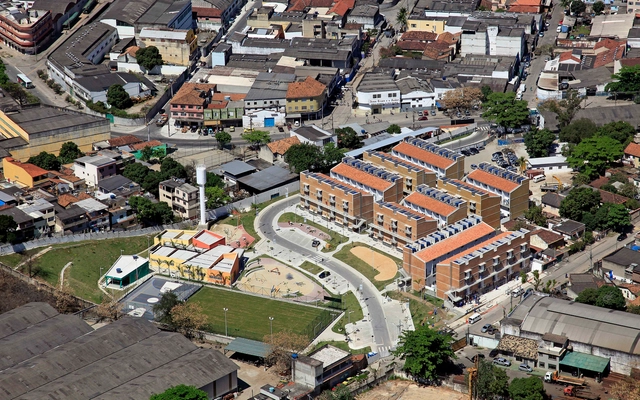
Complexo do Alemão Housing Nucleus, arch. Jorge Mario Jáuregui – RJ 2009. Source: Jorge Mario Jauregui Collection
We must build the city through housing to address the country's housing deficit. Above all, we need not just “houses” but compact housing developments equipped with infrastructure, services, public facilities, and public spaces, featuring highly diverse housing typologies to accommodate a wide variety of family arrangements. The current incentives driving urban land speculation must be redirected through an Urban Reform.
https://www.archdaily.com/1123587/a-reading-of-social-housing-by-jorge-mario-jaureguiJorge Mario Jauregui
On Monday, July 27, at 8:00 PM, Gregório Duvivier will be the guest on the next episode of Meia Hora com o BrCidades. Duvivier is an actor, writer, columnist for Folha, host of HBO's Greg News, and a comedian with the Porta dos Fundos channel. He will discuss humor and democracy with Paolo Colosso and Tainá de Paula. The program will be broadcast live and simultaneously on BrCidades' Facebook, YouTube, and Twitter channels. Click the link, set a reminder, and join BrCidades:
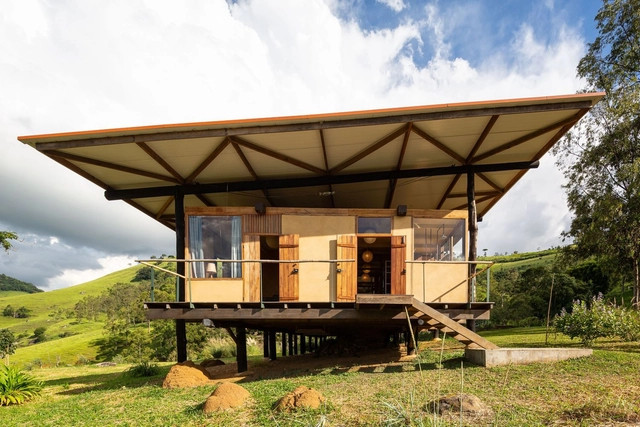
In recent years, metal roofing has increasingly gained ground in architectural projects, from the industrial to the residential scale, especially when there is a need to lighten structural loads or span large distances. In residential architecture, this solution offers a viable alternative to traditional ceramic tiles due to its low cost, rapid installation, and the wide variety of types and models available on the market.
Certain acclaimed architectural works are recognized by details or specific elements designed with such care and inventiveness that they become the immediate reference that comes to mind when we think of these projects.
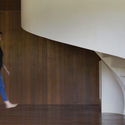
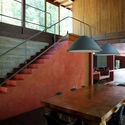
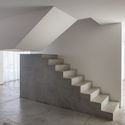
One such element that frequently takes center stage is the staircase. This is evident in classics like Lina Bo Bardi's Solar do Unhão, featuring a singular wooden staircase that organizes the entire open space and defines the scale of the structure, or the iconic helical staircase of the Itamaraty Palace, designed by Oscar Niemeyer with the precise curves that characterize his work.
Renovations of Brazilian modernist buildings prompt a necessary debate on how to preserve and what best practices to employ when intervening in architectural heritage. The challenges of this type of intervention are immense. These projects must be approached with great care to maintain respect for their historical significance, preserving key elements of their composition while simultaneously updating the building to meet contemporary and client demands.