Romullo Baratto is an architect with a PhD from FAUUSP and Managing Editor of ArchDaily. He previously coordinated the editorial team of the 11th São Paulo Architecture Biennial and served as Managing Editor of ArchDaily Brasil, where he led the platform to win the FNA Award—the first time the honor was granted to a media outlet. He collaborated on the editing of the book "Concrete Jungle", published by gestalten, and has curated architecture exhibitions in Brazil, Chile, Denmark, and Italy, as well as delivered lectures and moderated debates in Spain, the United States, and Portugal. His doctoral thesis investigates the urban landscapes of São Paulo through cinema. His work spans academic research and editorial practice, communicating architecture through texts, interviews, lectures, curatorship, and photography. Follow him on Instagram @romullobf.
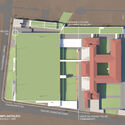
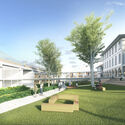
Proposta da equipe Asa, vencedora do concurso. Image Cortesia de Prefeitura de Belo Horizonte
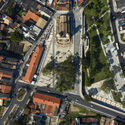
In 2019, to mark its founding anniversary, Belo Horizonte received a gift in the form of an architectural competition. The national contest sought preliminary technical studies for the requalification of the historic and landscape heritage of Bernardo Monteiro Avenue.
This heritage site, characterized by a dense grove of large, leafy Ficus trees, was affected by infestations of the so-called "ficus whitefly." This caused defoliation and dried branches, severely compromising many of the trees, damaging the area's historical-cultural identity and public character, and forcing the relocation of the craft, flower, food, and antique markets that once operated there.
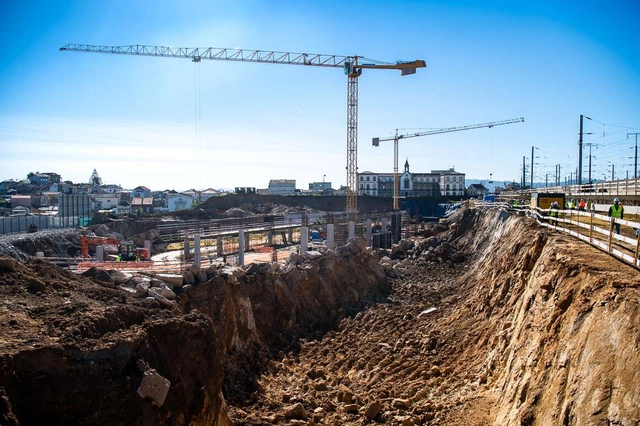
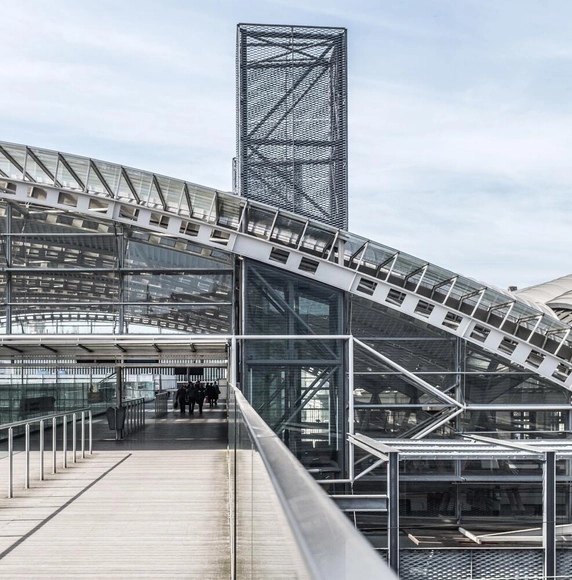
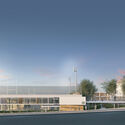
Construction of the Campanhã Intermodal Terminal / Nuno Brandão Costa. Source: Porto.pt
With the goal of introducing the architects, projects, and stories behind landmark Portuguese architecture, Sara Nunes, from the architectural film production company Building Pictures, launched the podcastNo País dos Arquitectos, where she talks with leading figures of contemporary Portuguese architecture.
In this week's episode, Sara talks with Nuno Brandão Costa about the Campanhã Intermodal Terminal project in Porto. You can catch up on other interviews from the No País dos Arquitectos podcast and read the transcript of the interview with Costa below:
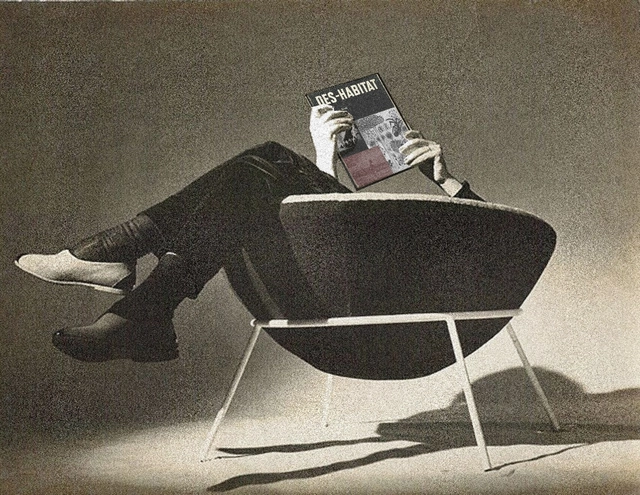
Collage showing Lina Bo Bardi in the Bowl chair holding a copy of "Des-Habitat." Courtesy of Paulo Tavares
Between the 1950s and 1960s, Lina Bo Bardi was the editor of Habitat magazine, known for publishing articles and research on the cultural and artistic expressions of Indigenous peoples. The publication, which remained in circulation until 1965, was a pioneer of the synthesis between universal modernism and local primitivism—a central element in the mythology of Brazilian modernity. Nearly six decades later, architect and curator Paulo Tavares undertakes a sort of "un-editing" of the magazine, putting this notion of synthesis into perspective in light of contemporary debates exploring the intersection of modernity and colonialism. Recently published by n-1 edições, Des-Habitat utilizes graphic and editorial devices to create a near-facsimile of the original publication led by Bo Bardi, overlaying a new layer—critical, revisionist, and necessary—onto a discussion that continues to reveal new ramifications.
Following the themes of previous editions that addressed contemporary issues concerning the built environment, the Arquiteturas Film Festival, taking place from June 1 to 6 in Lisbon, continues to offer an open forum for discussion through personal, collective, and global audiovisual stories from around the world.
The 8th edition of Arquiteturas explores the theme Bodies Out of Space through an exploration of the social construction of space, connected by a thread running through narratives of domination. These are also narratives about an identity that is often stripped away or forced to represent our bodies. Challenging current assumptions, we view this perceptual paradigm—an epitome of the vision of our times—as fundamentally social, spatial, and bodily.
Leuven Station, Belgium. Photo by Bernard Hermant, via Unsplash
The Brazilian Center for Steel Construction (CBCA) has launched its 2021 call for proposals for its Undergraduate Research Scholarship. The nationwide selection process is open to undergraduate students in architecture and civil engineering, who must be supported by an advising professor from the same higher education institution.
A capsule-based transportation system that runs on magnetic propulsion, moving people and cargo at speeds of up to 1,200 km/h using renewable energy, could soon become a reality in Brazil. This futuristic concept is being brought to the country by Hyperloop Transportation Technologies (HyperloopTT), which develops and licenses the Hyperloop—the urban mobility technology originally conceived by Tesla entrepreneur Elon Musk.
Resembling a wingless aircraft without turbines, the Hyperloop has a capacity of up to 50 passengers and operates in a low-pressure environment, allowing it to travel at high speeds with virtually zero friction.
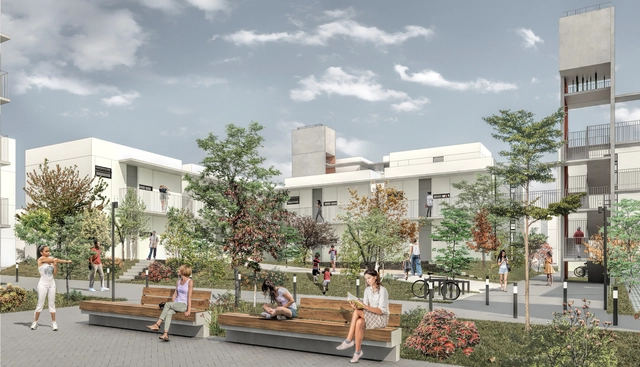
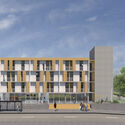
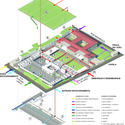
Primeiro lugar: Síntese Arquitetura. Image Cortesia de Secretaria Nacional de Habitação/MDR e Agência Alemã de Cooperação Internacional – Deutsche Gesellschaft für Internationale Zusammenarbeit GmbH (GIZ)
To bring together innovative, sustainable social housing architectural designs that reduce energy consumption. This was the goal of the National Competition of Architectural Ideas for Energy Efficiency in Social Housing, organized by the German government cooperation agency Deutsche Gesellschaft für Internationale Zusammenarbeit (GIZ) GmbH.
Liceu Pasteur is a public institution under private law that is part of the network of French schools abroad, present in 135 countries. In São Paulo, it has been located on Mairinque Street, in the Vila Mariana neighborhood, since 1923, occupying a building designed by Escritório Técnico Ramos de Azevedo, which is listed by São Paulo's municipal heritage preservation agency.
A year and a half of the global coronavirus pandemic has—or should have—made everyone realize the importance of national public health systems. Never before has a health crisis and its impact on society, the economy, and public spaces been so widely discussed and reported.
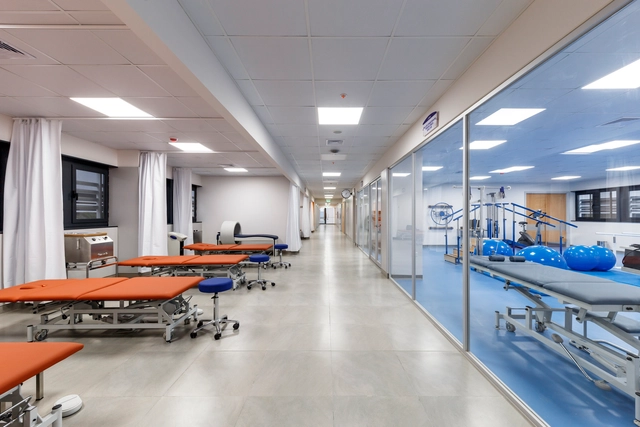
Against this backdrop, to celebrate spaces dedicated to physical and mental health, we have compiled a selection of small- and medium-scale healthcare clinics, medical offices, and therapy centers. These projects, designed for treatment or prevention, prioritize patient well-being above all else.
Yona Friedman (1923-2020) at the Museum Without a Building [Musée sans Bâtiment], held at the CNEAI = Centre National Édition Art Image, Pantin, France (2018). Courtesy
The Memorial da Resistência de São Paulo, an institution of the State Secretariat of Culture, opens the biographical exhibition “Yona Friedman: Democracy” on Saturday, June 26, 2021. Curated by Ana Pato, the Memorial's coordinator, the exhibition presents a selection of works by the French-Hungarian architect, artist, sociologist, and anthropologist Yona Friedman (1923-2020), featuring animations, manuals developed with the UN, installations inside and outside the building, urban interventions in partnership with collectives from the central region, as well as public events in partnership with Sesc Bom Retiro.
Videos
Aerial view of the Za'atri refugee camp. Photo: U.S. Department of State, via VisualHunt
They are architects, but they do not believe architecture alone can fully address the complexity of urban life. Rahul Mehrotra, from India, and Zulu Araújo, from Brazil, came together for the debate on Migrations and Diasporas, part of the June programming for the 27th World Congress of Architects. They shared their experiences and both argued that architecture, in dialogue with other fields of knowledge, must encompass movements of a social and cultural nature. The debate was moderated by engineer Daniella Abreu, Executive Secretary of International Affairs for the State of Santa Catarina.
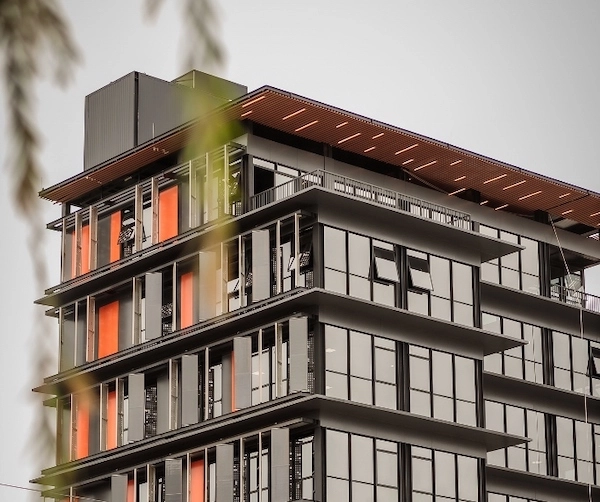
The Level Building, an eight-story corporate building constructed in downtown Tubarão, Santa Catarina, took just 100 days to complete, with 20 of those days dedicated exclusively to on-site assembly. This was made possible by using off-site construction methods, meaning it was fabricated in a factory. Due to its scale and rapid timeline, the off-site building is being hailed as a milestone in Brazilian construction. “It is the largest volumetric off-site building in Latin America,” says Ricardo Mateus, CEO and founder of the construction tech company Brasil ao Cubo, the firm behind the project.
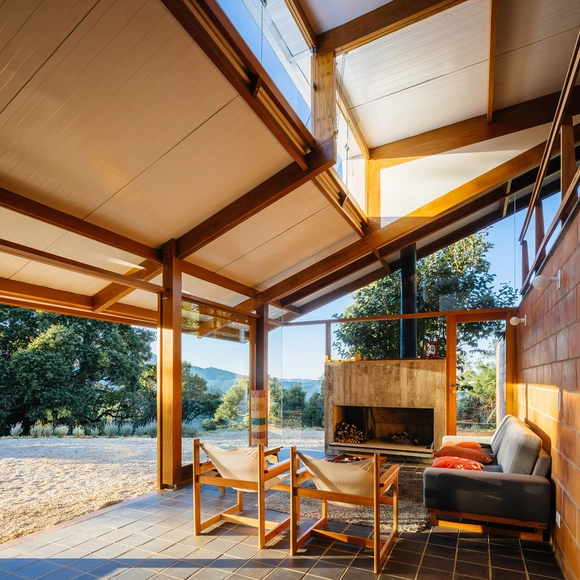
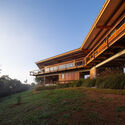
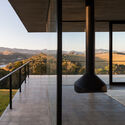
Spanning over 500 kilometers across the states of Rio de Janeiro, São Paulo, and Minas Gerais, the Serra da Mantiqueira has become in recent years one of the favorite destinations for travelers seeking mild climates and a countryside atmosphere. Towns like Gonçalves, Monte Verde, Campos do Jordão, Santo Antônio dos Pinhais, and Camanducaia are just a few of the municipalities in the Mantiqueira region that have attracted a growing number of visitors seeking a closer connection with nature.
The mountain range has altitudes varying between 1,000 and 3,000 meters, resulting in low temperatures for its latitude. Additionally, mist and occasional frost lend the landscape a bucolic character quite distinct from other nearby, lower-elevation areas—an effect that becomes even more pronounced in the winter.
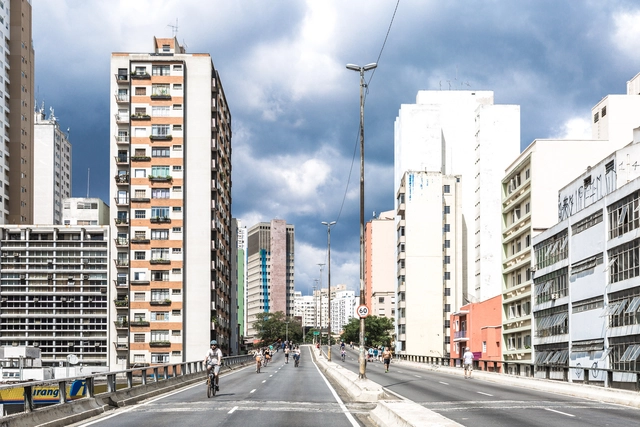
Elevado João Goulart, the "Minhocão", in São Paulo. Photo: iStock by GettyImages
Are Brazilian cities ready to adapt to climate change? Driven by this question, scientists at the University of São Paulo (USP) have developed an index to measure the adaptive capacity of urban centers to the impacts of climate change. The index, called the Urban Adaptation Index (UAI), is described in an article published in the May issue of the scientific journal "Climatic Change".
Developed by researchers from the CiAdapta project, which studies the interactions between climate transitions, cities, and decision-making processes, the UAI aims to evaluate the presence or absence of legal and regulatory frameworks supporting urban interventions related to climate adaptation.
Registration for the 8th Instituto Tomie Ohtake AkzoNobel Architecture Prize has been extended until September 9. Submissions can be made online and free of charge on the award website.
The initiative—aimed at Brazilian or foreign architects who have lived in Brazil for at least two years and present projects built over the last ten years—continues to map contemporary architectural production, highlighting significant projects in the current Brazilian landscape. Commitment to the site and sustainability, as well as design and constructive inventiveness, are key aspects of the evaluation process.
The Institute for Advanced Architecture of Catalonia (IAAC) has launched a scholarship for Brazilian students up to 28 years old. Created in partnership with the Brazilian consulting firm Quanta Consultoria and the IAAC Redes Platform, the Jaime Lerner Scholarship honors the influential urban planner who passed away in May of this year, and covers all tuition costs for the Online Master in Cities (MOeC): Proximity Urbanism, for the 2021-22 academic year.
Following a one-year hiatus imposed by the coronavirus pandemic, Open House Porto (OHP) returns in an adapted format that aims to celebrate the relationship between citizens and public space. On July 3 and 4, the public will be able to visit and explore 16 spaces in Matosinhos, Porto, Vila Nova de Gaia, and, for the first time, Maia, which is making its debut in the event.
On July 2, Brazil celebrated Hospital Day. The date commemorates the founding of the Santa Casa de Misericórdia de Santos Hospital, in the state of São Paulo, in 1945—considered one of the largest in the country—and today serves as a way to honor healthcare professionals, from doctors and nurses to social workers, technicians, and administrative staff.
Naturally, in the current context, this date takes on an even deeper layer of meaning, becoming also an opportunity to celebrate the immeasurable efforts of healthcare professionals who fight daily to ensure the survival of hundreds of thousands of people infected by the coronavirus. To mark the occasion beyond national borders, we have gathered ten Latin American hospital projects here.